AR for the Visually Impaired: Making the World More Accessible
24 March 2026
Imagine navigating through a bustling city with limited or no vision. The world can often feel like an intimidating, obstacle-filled maze. Now, picture wearing a device that instantly helps you "see" or at least "interpret" your surroundings. Sounds like science fiction, right? Well, thanks to advancements in Augmented Reality (AR), that vision is becoming a reality for the visually impaired. AR is not just about fancy Snapchat filters or Pokémon Go anymore; it’s emerging as a game-changer for accessibility.
In this article, we’re diving into how AR is revolutionizing the way visually impaired individuals interact with the world. From helping them read street signs to identifying objects in real-time, AR is breaking down barriers and opening up new possibilities.
What Exactly is AR?
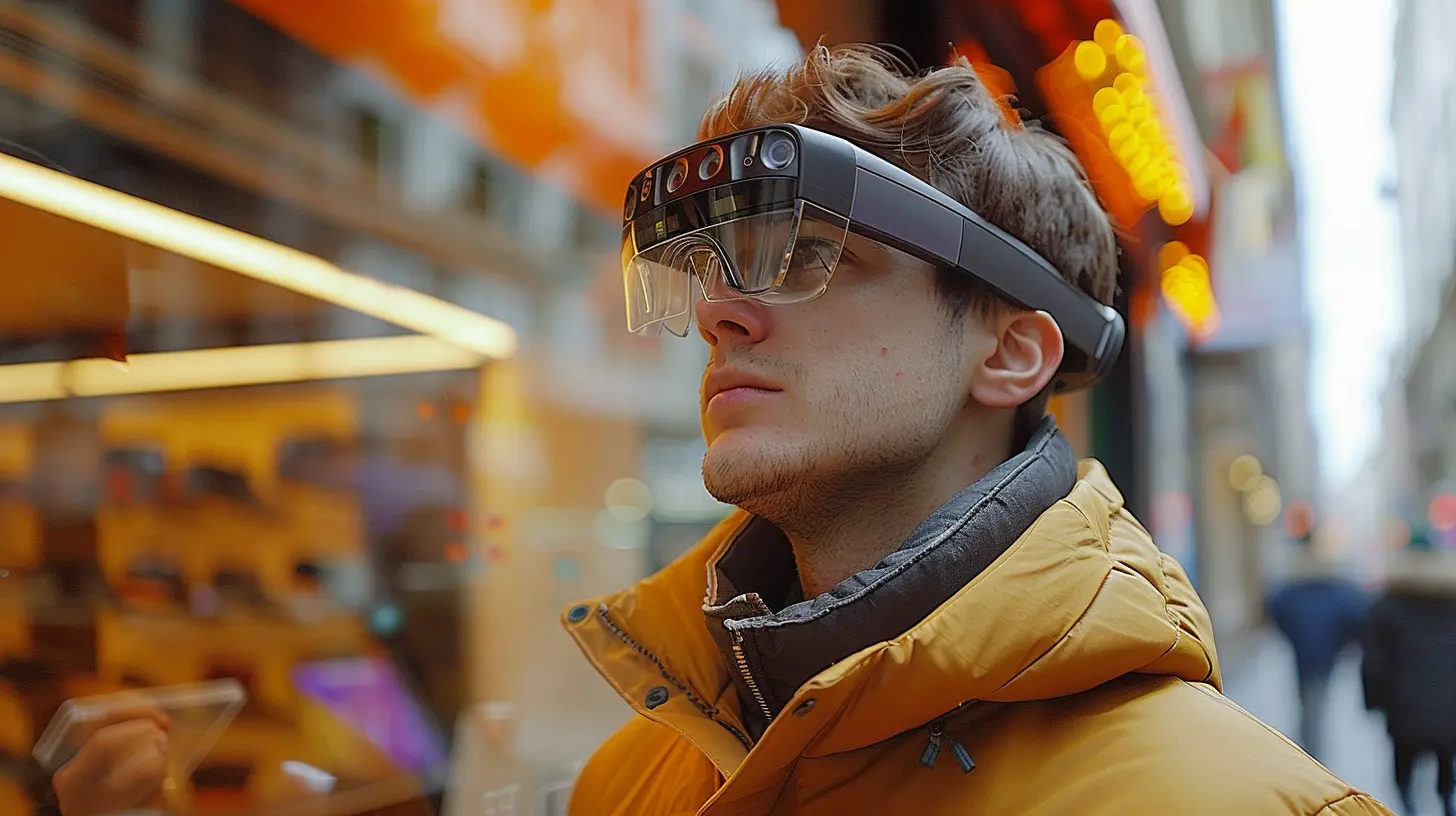
Alright, before we get too deep, let's break down AR in the simplest terms. AR, or Augmented Reality, is a technology that overlays digital information—like images, sounds, or text—onto the real world. Unlike Virtual Reality (VR), which immerses you entirely in a digital space, AR enhances your current environment with helpful data.So, how does this tech help someone who can't see or has limited vision? It’s not as simple as slapping a pair of AR glasses on and calling it a day. The technology involves a combination of advanced sensors, AI, and voice assistance to interpret the surroundings and provide real-time feedback.
The Current Challenges for the Visually Impaired
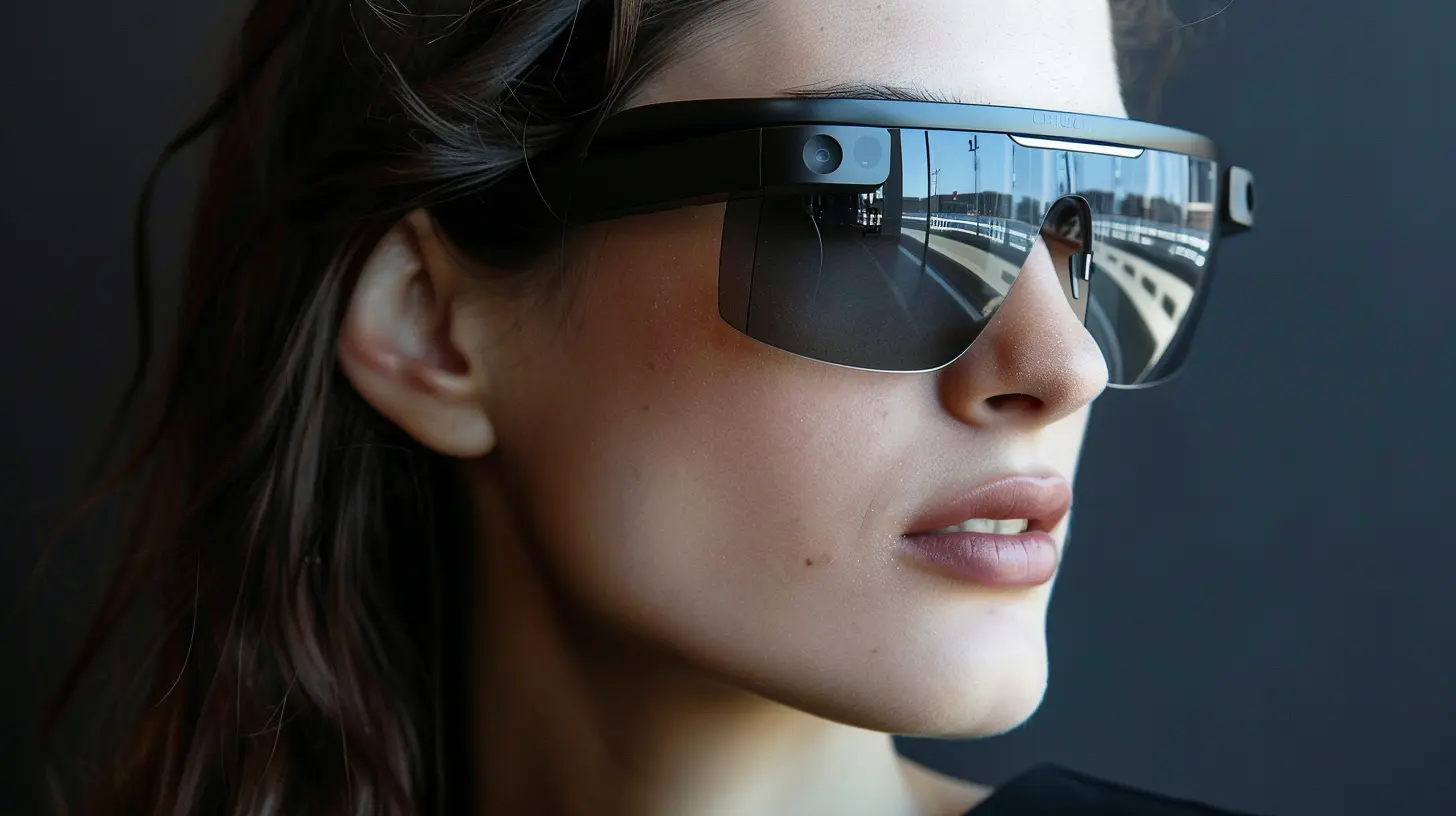
Before we can truly appreciate how AR is making a difference, it’s essential to understand the challenges visually impaired individuals face. Imagine trying to do everyday tasks—crossing the street, shopping for groceries, or even reading a restaurant menu—without being able to see clearly, or at all.While there are existing tools like canes and guide dogs, they’re not always enough. Canes only help detect obstacles on the ground, and guide dogs, while incredibly helpful, can't exactly point out the difference between a restroom sign and an emergency exit. There’s still a gap in providing visual and contextual information.
That’s where AR steps in.
How AR is Making the World More Accessible
1. Object Recognition and Identification
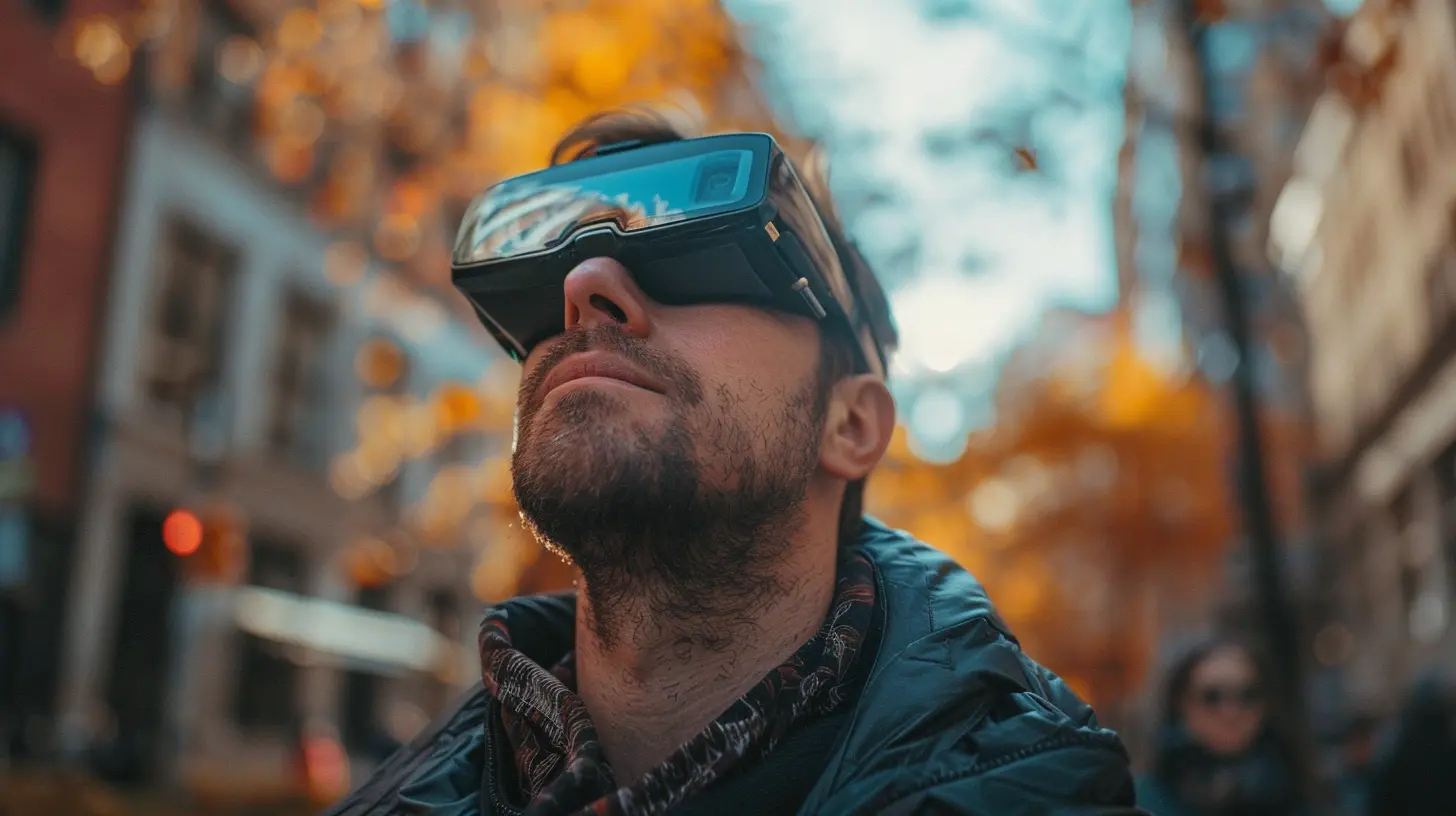
One of the biggest hurdles for the visually impaired is identifying objects around them. Whether it's trying to figure out which can of soup you're holding in the grocery store or figuring out where the nearest bus stop is, AR can help.AR devices equipped with cameras can scan the environment and use AI to recognize objects in real-time. For example, if someone is walking down the street, AR glasses could audibly announce "bus stop 20 feet ahead" or "pedestrian crossing on your left." This kind of contextual awareness can be life-changing.
Think about it this way: it's like having a supercharged guide dog that can not only lead you around but also tell you what’s happening in your environment. And the best part? It keeps learning and getting better over time.
2. Text and Sign Reading
Reading signs, menus, or even text on a smartphone screen can be a monumental task for someone with low vision. With AR, text can be detected and converted into speech in real-time. Imagine walking into a restaurant, scanning the sign with AR glasses, and instantly hearing the menu options read aloud to you.And it's not just large, printed signs either. AR can recognize small text on everyday objects like food labels, medication bottles, or even handwritten notes. It's like having a personal assistant who reads everything for you—without the need to constantly ask for help.
3. Navigation and Wayfinding
Navigating unfamiliar locations is another significant challenge. While GPS can help to some extent, it’s not always accurate enough for someone who relies heavily on precise information. AR-based navigation systems are much more refined.Using a combination of GPS, AI, and AR, these systems can offer turn-by-turn audio instructions that are highly detailed. "Turn right in 10 feet, you are approaching stairs" or "elevator ahead, press button on the left" are the kinds of cues that can make navigation much smoother and safer.
It’s like having a personal guide that never leaves your side and always knows exactly where you are.
4. Facial Recognition and Social Interaction
Let’s face it—social interactions can be tricky for people with visual impairments. Recognizing faces, gauging emotions, or even knowing who is in the room can be daunting. AR is stepping in here, too.Some AR systems are being developed with facial recognition capabilities. These systems can identify people in your immediate vicinity and even provide context, like "John, your neighbor, is 10 feet to your right" or "Sarah, your co-worker, is smiling." This not only helps with social interactions but also makes day-to-day encounters more comfortable.
It’s like having a friend whispering in your ear, telling you who’s around and what’s going on.
5. Enhancing Mobility and Independence
Ultimately, all these features—object recognition, text reading, navigation, and social interaction—combine to give visually impaired users something priceless: independence. Whether it’s walking around the city, shopping, or attending social gatherings, AR empowers users to do things on their own terms.For many, this could mean the difference between staying isolated at home and confidently stepping out into the world. It’s like giving someone the keys to a car they never thought they’d be able to drive—freedom at their fingertips.

AR Devices Leading the Charge
Several companies and startups are already working on AR devices specifically designed for visually impaired individuals. Let’s take a look at a few game-changers:1. Aira
Aira is a wearable AR platform that connects visually impaired users with remote agents. These agents can "see" through the user’s camera and provide real-time audio assistance. Whether it’s reading a sign, finding a product in a store, or navigating a busy street, Aira's AR glasses offer immediate, personalized help.2. OrCam MyEye
OrCam MyEye is a small, discreet AR device that clips onto a pair of glasses. It uses AI to read text, recognize faces, and even identify products. What’s remarkable is how intuitive it is—simply pointing at an object or tapping the side of the device triggers the AR to spring into action.3. Envision Glasses
Envision Glasses are another powerful tool designed for the visually impaired. Equipped with AI and AR, these glasses can read text, describe surroundings, and even help with facial recognition, making daily tasks much more manageable.These devices are just the tip of the iceberg. As AR technology evolves, we’re bound to see more innovations that push the boundaries of what’s possible.
The Future of AR for Accessibility
Looking ahead, the future of AR for visually impaired individuals is incredibly bright. As AI and AR technologies improve, we can expect even more advanced systems that offer better accuracy, faster real-time feedback, and more intuitive interfaces.One exciting possibility is integrating AR with haptic feedback—vibrations that could alert users to obstacles or direct them toward specific objects. Another potential breakthrough could be advances in voice recognition, allowing users to interact with AR devices even more seamlessly.
And let’s not forget the role of 5G. With faster data speeds, AR devices will be able to process and deliver information in real-time with almost zero lag. That means more accurate navigation, quicker object recognition, and an overall smoother experience.
It’s like we’re standing at the edge of a new frontier where technology isn’t just about convenience—it’s about changing lives.
Conclusion: AR as an Empowerment Tool
At the end of the day, AR is more than just a trendy tech gimmick. For visually impaired individuals, it’s a tool for empowerment, independence, and accessibility. It’s about breaking down the barriers that society has unintentionally put up and offering everyone a chance to experience the world fully.We’re only scratching the surface of what AR can do. But one thing is clear—AR has the potential to level the playing field and make the world more accessible for everyone, regardless of their physical abilities. As AR technology continues to evolve, we can look forward to a future where no one is left behind.
all images in this post were generated using AI tools
Category:
Augmented RealityAuthor:

Ugo Coleman
Discussion
rate this article
2 comments
Elin Johnson
This is a wonderful initiative! AR technology can truly empower and enhance the lives of the visually impaired.
April 3, 2026 at 4:21 AM
Ugo Coleman
Thank you! I'm glad you see the potential of AR in making a difference for the visually impaired. Your support means a lot.
Rhea McGhee
Transforming accessibility, AR empowers visually impaired individuals brilliantly.
March 26, 2026 at 3:35 AM
Ugo Coleman
Thank you! It's inspiring to see how AR is making such a positive impact on accessibility for visually impaired individuals.