Augmented Reality as a Tool for Environmental Conservation
18 December 2025
Let's face it — when you first think of Augmented Reality (AR), your mind probably jumps to Pokémon Go, Snapchat filters, or that moment you almost walked into a lamp post while chasing a virtual dragon. We've all been there. But here’s the twist: AR isn’t just for games and goofy face filters anymore. It's donning a superhero cape and stepping into the world of environmental conservation. Yes, really. AR is strapping on its digital boots and charging headfirst into saving the planet — one interactive experience at a time.
So, grab your eco-friendly reusable coffee cup, settle in, and let’s unpack how mixed reality goggles are helping hug trees and clean oceans without even breaking a sweat.
What's AR Got to Do with Saving the Planet?
You might be asking, "How in the pixelated world can virtual unicorns and digital overlays help conserve the environment?" It’s a fair question. On the surface, AR feels more like a cool party trick than a planet-saving device. But peel back the layers, and this tech reveals its earthy, green heart.Imagine walking through a forest and seeing data floating above plants, animals, and trees — showing you their names, health status, or even their carbon storage value. Or what if your kids could explore coral reefs from their living room, complete with narrated fish facts and pollution stats, all thanks to AR? Boom. Education meets awareness, and awareness? That’s the first step to action.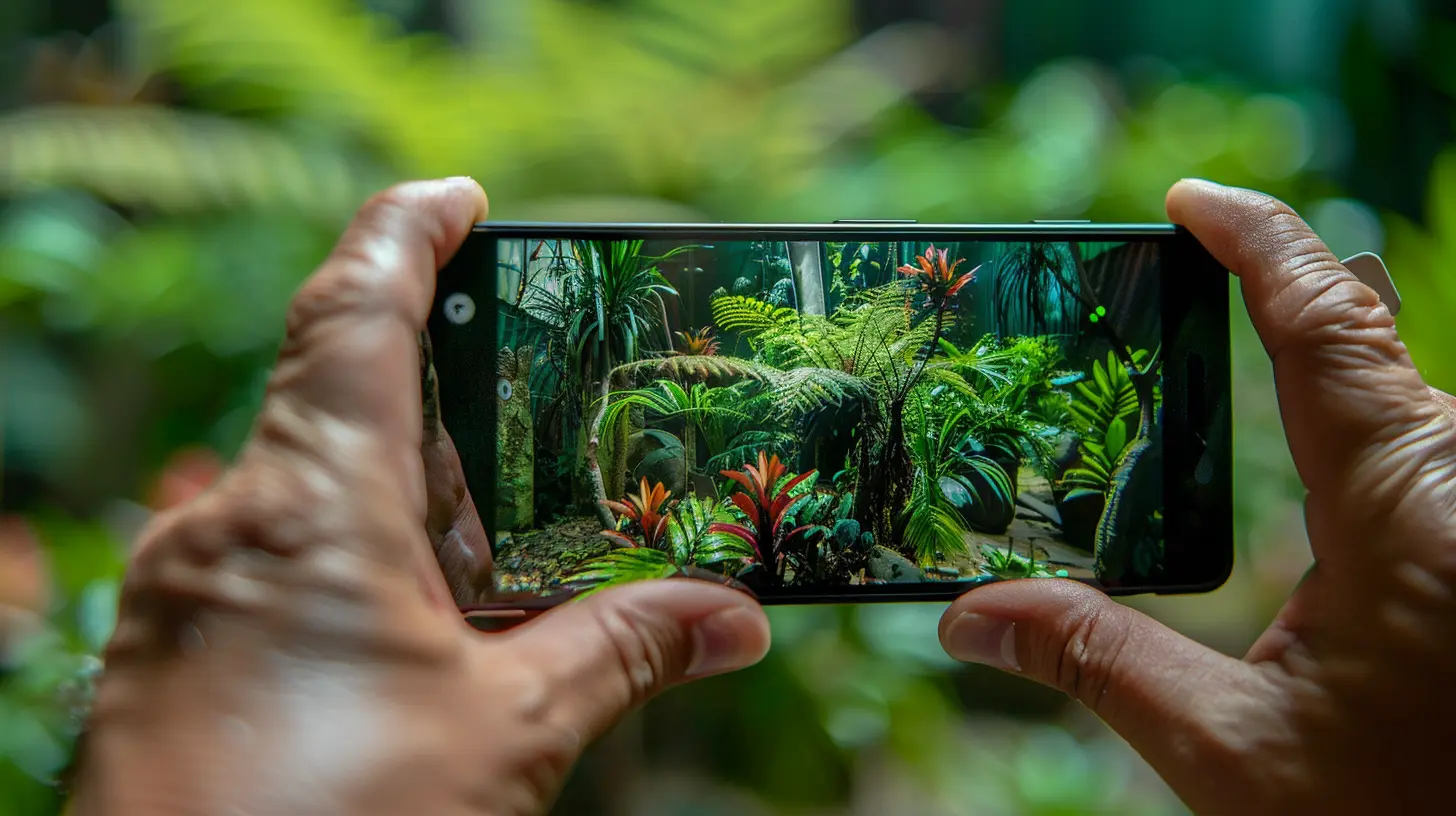
AR in Environmental Education: Nerdy Can Be Cool
Let’s be honest: traditional environmental education can be…yawn-inducing. Textbooks filled with sad polar bears and endless charts don’t exactly scream "engaging." But AR? Oh honey, it flips the script. AR brings storytelling and interactivity to the mix, transforming environmental data from snooze-worthy to seriously cool.For example:
- AR-powered apps in schools can turn biology lessons into immersive rainforest adventures.
- Museum exhibits can go from “Do Not Touch” to “Please Engage,” using AR overlays to bring extinct creatures and climate changes to life.
- Interactive AR games can show the life cycle of ocean plastics or simulate real-time climate effects based on a user’s decisions.
It’s the ultimate sneaky educational tool. Kids think they’re playing; meanwhile, they’re absorbing the science behind climate change and species extinction like digital sponges.
AR for Wildlife Conservation: Because GPS Collars Are So Last Season
Conserving wildlife is like playing the world’s most complicated game of hide-and-seek. Animals are elusive, human encroachment is rising, and poachers are getting sneakier. But AR says, “Challenge accepted.”Here’s how:
- Rangers with AR headsets can see vital animal tracking data in real-time, projected right onto their environment — no more flipping through maps or clunky tablets.
- Drones + AR = real-time anti-poaching surveillance with virtual markers highlighting threats.
- Virtual ecotourism lets users "visit" protected areas without disturbing a single blade of grass or scaring the local wildlife.
It’s like having night vision goggles, a translator for animal behavior, and a secret map — all packed into one magical lens.
Eco-Friendly Urban Planning with AR: Building Cities Without Bulldozing Nature
Urban development and environmental conservation normally mix like oil and water. But with AR, we can start building cities that don’t steamroll over ecosystems like a caffeinated bulldozer.Picture this:
- City planners slap on AR smart glasses and suddenly see real-time overlays of tree canopies, wildlife corridors, or flood-risk zones while at the construction site.
- Architects use AR to simulate the environmental impact of a proposed building before a single brick is laid.
- Citizens can view AR previews of park revamps, give feedback, or vote on eco-friendly options without attending another painfully boring town hall.
It’s sustainable planning, minus the guesswork and mind-numbing PowerPoint slides.
AR and Climate Change Awareness: Guilt Trips Have Never Been So Beautiful
Let’s face it. Climate change is that gloomy dinner guest no one really wants to sit next to. It tosses around scary words like "melting permafrost" and "methane emissions" while everyone else is just trying to enjoy their soup. AR, however, makes the uncomfortable truth visual — and oddly compelling.By using AR experiences:
- People can "stand" in rising floodwaters in their own street (without getting their feet wet).
- They can watch glaciers vanish or wildfires spread across familiar landscapes.
- They can even overlay pollution levels or carbon footprints over local landmarks.
It makes the threat feel personal — and when people feel personally affected, they’re more likely to act. Guilt trips have never looked so high-tech.
Gamifying Conservation: Because Saving the Planet Should be a Little Fun
Let’s be real. People are a whole lot more likely to recycle if there’s a high score involved. Enter the gamification of conservation, courtesy of AR. These aren’t your grandma’s crossword puzzles. These are mission-driven, competition-fueled, eco-conscious digital playgrounds.Some real (and really cool) examples include:
- AR litter hunts that turn city clean-ups into competitive games with leaderboards and rewards.
- Eco AR treasure hunts, where players find and scan conservation-themed markers in real-world locations.
- Virtual tree planting that corresponds with actual trees being planted IRL. (Yes, you can plant a forest from your couch.)
By injecting a bit of dopamine into do-gooding, AR makes saving the planet feel less like homework and more like winning a boss level.
AR's Role in Citizen Science: Everyone’s a Scientist Now, Congrats!
Not everyone has a Ph.D., and that’s perfectly fine. With AR, your grandma, your barista, or your neighbor’s cat (okay, maybe not the cat) can all contribute to environmental research.AR apps allow users to:
- Identify plant and animal species with just a tap, adding data to global research databases.
- Monitor air and water quality using simple sensors enhanced with AR visuals.
- Track migration patterns or seasonal changes — no binoculars or white lab coats required.
It’s like Pokémon Go, but instead of catching imaginary creatures, you’re helping protect real ones. Talk about levelling up.
The Challenges: Because Nothing’s Perfect, Not Even AR
Okay, okay. Before we crown AR as the eco-savior of the decade, let’s throw a little cold water on the pixel party.A few challenges include:
- Access: Not everyone owns a smartphone, let alone a fancy headset. AR needs to be inclusive to make any real dent.
- Battery Consumption: Ironically, running AR experiences can be pretty power-hungry — not ideal when you're trying to save the planet.
- Overreliance: There's a danger in thinking AR alone will solve everything. AR supports conservation, but it doesn’t replace, say, actual policy change or human action.
But hey, every superhero has its kryptonite. Doesn’t mean we throw the cape away.
The Future: Where Do We Go from Here? (Hint: It Involves Holograms)
The future of AR in environmental conservation is more exciting than a Netflix binge without buffering. With tech evolving faster than a caffeinated squirrel, the possibilities are endless.Here’s what’s next:
- Wearable AR tech that you don’t even notice you’re wearing (say goodbye to clunky goggles).
- AI-AR hybrids that not only display eco-data but analyze it in real-time for even smarter decision-making.
- Global AR networks that let researchers and citizens collaborate across continents with shared virtual environments.
Basically, we’re heading toward a world where loving nature doesn’t mean unplugging from technology — it means using it better.
Final Thoughts: When Pixels and Pine Trees Join Forces
So, there you have it — Augmented Reality isn’t just an overhyped tech gimmick. It’s a surprisingly powerful ally in the green revolution. By blending education, science, fun, and a healthy splash of guilt, AR is redefining how we interact with nature — and how we protect it.Is AR going to plant trees by itself? No. But is it going to inspire a new generation to care, act, and maybe even lead? Absolutely.
And if all that comes with cool visuals, interactive data clouds, and an occasional digital bear sighting? Well, sign me up. Mother Earth just got an upgrade.
all images in this post were generated using AI tools
Category:
Augmented RealityAuthor:

Ugo Coleman
Discussion
rate this article
2 comments
Sarina Alvarez
Finally, a way to save trees without hugging them—thanks, augmented reality!" 🌳😄
January 14, 2026 at 5:28 AM
Ugo Coleman
Absolutely! Augmented reality offers innovative solutions for conservation while promoting awareness without physical intervention. Thank you for your support! 🌍✨
Scarlett McRae
Great insights! Augmented Reality could revolutionize conservation efforts by enhancing awareness and engagement. It would be interesting to see specific case studies showcasing its effective applications in the field.
December 22, 2025 at 11:31 AM
Ugo Coleman
Thank you! I completely agree—case studies would provide valuable examples of AR's impact on conservation efforts. I'll consider including them in future discussions.