How Blockchain Will Change Freelancing for Remote Tech Workers
13 August 2026
The freelance economy has grown into a massive global workforce, and remote tech workers sit right at its center. Developers, designers, data scientists, and DevOps engineers now routinely juggle multiple clients across different time zones. But the infrastructure that supports this work still runs on systems designed for a different era. Payment delays, chargebacks, contract disputes, and the constant friction of proving you did the work you said you did are everyday problems.
Blockchain technology promises to address several of these pain points directly. But not in the way most hype articles suggest. It is not about getting paid in Bitcoin or some vague decentralized future. The real changes are more structural, more subtle, and ultimately more useful. This article breaks down exactly how blockchain will reshape freelancing for remote tech workers, what you should adopt now, what to wait on, and what to avoid entirely.
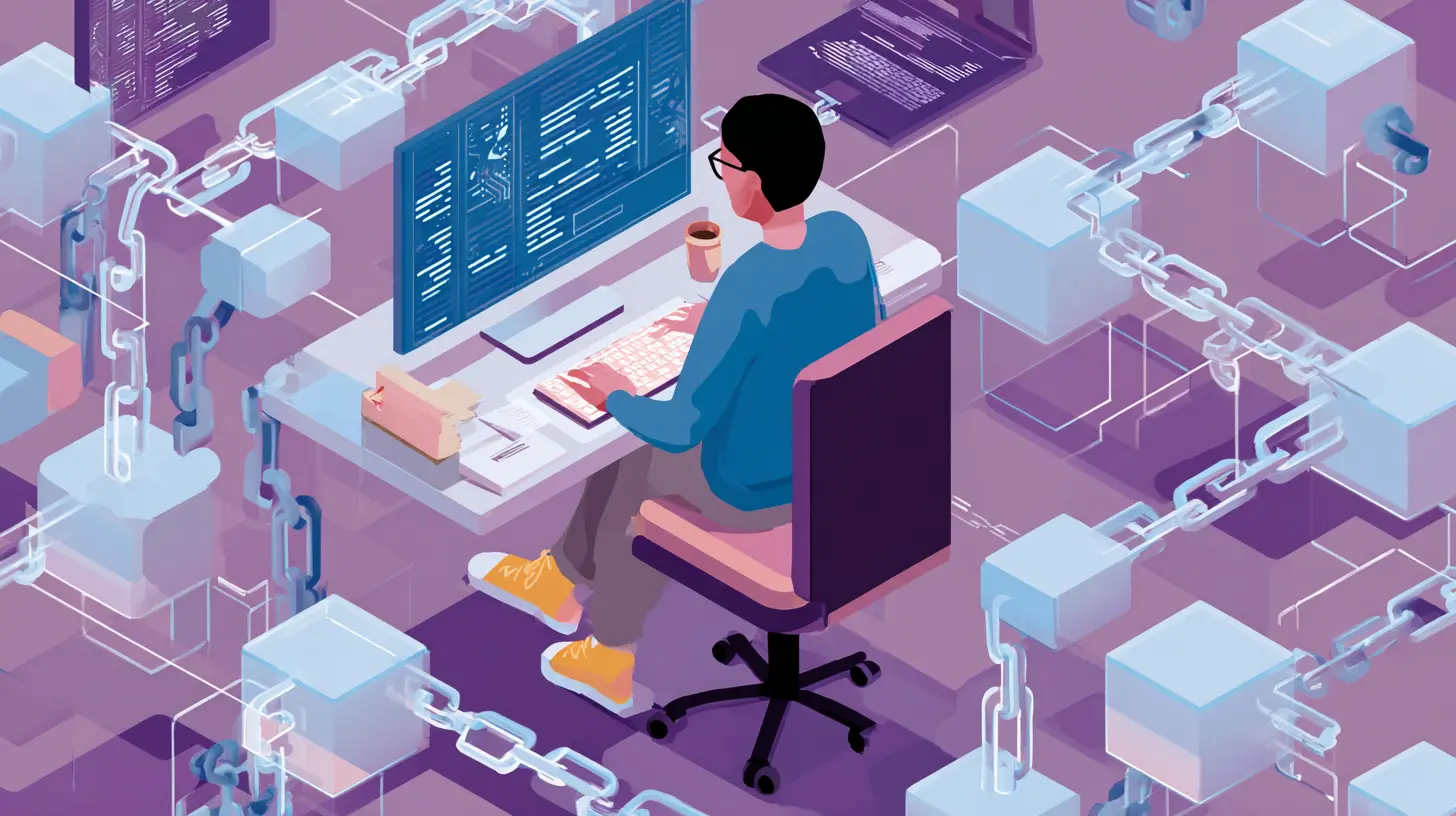
The Core Problem: Trust Without a Middleman
When you freelance remotely, you face a fundamental trust gap. The client does not know if you will deliver quality work on time. You do not know if the client will pay after you deliver. The traditional solution has been to bring in a middleman: Upwork, Fiverr, Toptal, or a payment processor like PayPal or Stripe. These platforms hold escrow, mediate disputes, and enforce contracts. They also take a cut, control your access to clients, and can freeze your account for arbitrary reasons.Blockchain removes the need for a trusted third party by replacing it with a trustless system. Smart contracts automatically execute when predefined conditions are met. Escrow is held in code, not by a company. Payment is released when the work is verified, not when the client decides to click "approve." This is the fundamental shift. The platform stops being the gatekeeper and becomes just a marketplace or an interface.
But here is the nuance: verification is the hard part. A smart contract can easily release funds when a file is uploaded. It cannot easily judge whether that file contains good code. This is why the first wave of blockchain freelancing platforms failed. They assumed code could verify code. It cannot, at least not for complex, subjective work. The solutions that will actually work combine blockchain's escrow and payment rails with human or AI-based verification layers.
Smart Contracts for Payments and Escrow
The most immediate and practical change is in how payments are handled. Right now, a typical remote freelance arrangement works like this: you agree on a rate, maybe you invoice weekly or monthly, and you wait 15 to 60 days for the client's accounting department to process the payment. If the client disputes the invoice, you enter a negotiation that can take weeks.With a smart contract, you and the client agree on milestones before work starts. You deposit the full amount or a percentage into a smart contract escrow. You complete the first milestone and submit it. The client has a set window to review, say 48 hours. If they do not object, the funds are released automatically. If they object, the contract triggers a dispute process, which can involve a third-party arbitrator selected by both of you.
This changes the power dynamic. The client cannot simply withhold payment because they are unhappy with something outside the agreed scope. The escrow is locked. The freelancer cannot run off with the money after doing half the work, because the contract only releases funds for completed milestones. This is not a futuristic concept. Platforms like Request Network and Etherscan-based escrow services already support this, though they are still too technical for mainstream use.
The practical advice here is to start using crypto-native escrow for at least one recurring client. Even if you convert the crypto to fiat immediately, the escrow mechanism itself is the value. You will experience what it feels like to have payment terms that are actually enforced by code rather than by goodwill.

Immutable Records for Reputation and Proof of Work
Reputation is the currency of freelancing. But current reputation systems are fragile. Upwork reviews can be gamed. A client can leave a bad review because they want a discount. A freelancer can create fake accounts to boost their rating. And if a platform decides to ban you, your entire work history disappears with your account.Blockchain offers a different model: portable, verifiable reputation. Each completed project, each payment, each review can be recorded on a public ledger. This record is cryptographically signed and cannot be altered. You own your reputation. If you leave one platform, you take your history with you. If a client wants to verify that you actually built that payment gateway for a well-known startup, they can check the on-chain record.
This is not just about reviews. It is about proof of work in a literal sense. You can timestamp your code commits, your design files, or your system architecture diagrams on-chain. This creates an immutable record of when you did what. In a dispute, you can prove that you submitted the work at a specific time, before the client changed the requirements. This is incredibly valuable for remote workers who often deal with clients in different time zones and shifting deadlines.
The trade-off is privacy. A public blockchain means everyone can see who paid you and how much. For some freelancers, this is a feature. It demonstrates income and reliability. For others, it is a dealbreaker. The solution is to use privacy-focused blockchains or zero-knowledge proofs, but those are still early. For now, you can use sidechains or layer-2 solutions that record a hash of your work rather than the work itself.

Decentralized Identity and Credential Verification
Remote tech workers constantly prove their skills. You have a GitHub profile, a LinkedIn page, a portfolio, and maybe some certifications. All of these can be faked or exaggerated. Blockchain-based decentralized identity (DID) solves this by letting you issue verifiable credentials that are cryptographically signed by the issuer.For example, if you complete a course on a platform like Coursera or pass a certification exam from a recognized body, the issuer can sign a credential that is stored on a blockchain or linked to it. When you apply for a freelance gig, you present this credential. The client can verify it instantly without contacting the issuer or trusting your PDF.
This is especially useful for tech workers because so much of the work is invisible. A developer might have contributed to an open-source project, but proving the exact scope of their contribution is hard. With signed commits and on-chain attestations, you can build a verifiable trail of your actual technical contributions.
But there is a practical limit. Credentials prove that you completed a course or passed a test. They do not prove you are a good teammate, that you communicate well, or that you can handle ambiguous requirements. Those soft skills still require human judgment. So use DID for what it is good for: eliminating the cost and friction of basic verification. Do not expect it to replace a technical interview.
Token-Based Incentives and Client Relationships
Another change is the emergence of token-based incentives. Some platforms are experimenting with reputation tokens that you earn for completing projects and building trust. These tokens can be used to unlock better projects, lower platform fees, or even participate in platform governance.This sounds appealing, but you need to be careful. Many token systems are just loyalty points dressed up in crypto clothing. They do not have real value outside the platform. The ones that do have value are tied to the platform's success, which means you are essentially taking on investment risk in addition to your freelance work. If the platform fails, your tokens become worthless.
The more interesting use case is client-specific tokens. A company that hires a lot of freelancers might issue a token that represents a stake in their reputation or a discount on future work. This creates a long-term relationship that goes beyond a single contract. But this is speculative and still rare. My advice is to treat any token compensation as a bonus, not as a core part of your income. Always calculate your effective hourly rate based on the fiat value you can actually withdraw.
Global Payments Without Banking Barriers
Remote tech workers are not all in the US or Europe. A huge portion of the freelance workforce is in countries with unstable currencies, strict capital controls, or expensive cross-border payment systems. For these workers, blockchain is not a convenience. It is a lifeline.If you are in Nigeria, Argentina, or Vietnam, getting paid in US dollars through traditional channels often involves high fees, long delays, and sometimes outright refusal by local banks. Cryptocurrency lets you receive payment in a stablecoin like USDC or DAI, which is pegged to the dollar, and then convert it to local currency when the rate is favorable. You avoid the 5 to 10 percent cut that remittance services take.
This is already happening at scale. Many freelancers in these regions now request payment in USDC directly to their wallets. The transaction takes minutes, costs pennies, and does not require a bank account. The main risk is the volatility of the conversion point, but stablecoins mitigate that. The other risk is regulatory uncertainty. Some countries have banned or restricted crypto. You need to understand your local laws before adopting this approach.
The practical tip is to use a two-wallet strategy. Keep one wallet for receiving crypto and another for spending or converting. This separates your business income from your personal assets and makes tax reporting easier.
Decentralized Arbitration and Dispute Resolution
Disputes are the worst part of freelancing. The current system relies on platform support teams that are often unresponsive and biased toward whoever pays them more, which is usually the client. Blockchain introduces the possibility of decentralized arbitration.Smart contracts can include a dispute resolution mechanism where a randomly selected panel of peers reviews the evidence and votes on the outcome. This is similar to how some DAOs (decentralized autonomous organizations) operate. The key difference is that the arbitrators are incentivized to be fair because their reputation and staked tokens are on the line.
This is not perfect. Peer review of complex technical work is difficult. A panel of generalists may not understand why a particular code architecture is better or whether a bug was the freelancer's fault or the client's fault. But it is often better than the current alternative, which is a support ticket that gets answered by a bot.
For high-stakes projects, you can agree on a specialized arbitrator, someone with deep domain expertise who is paid to review the dispute. This is more expensive but more reliable. The key is to define the dispute resolution process in the smart contract before the work starts, not after a problem arises.
Common Misconceptions and Mistakes to Avoid
There is a lot of bad information about blockchain and freelancing. Here are the most common misconceptions and the mistakes that come from them.First, "blockchain means you do not need contracts." This is false. Smart contracts are code, and code has bugs. You still need a written agreement that defines the scope, the deliverables, and the acceptance criteria. The smart contract just automates the execution of that agreement. If the agreement is vague, the code will be vague, and you will have a mess.
Second, "you will get paid instantly." Blockchain transactions are fast, but the verification of work is not. If you submit a milestone, the client still needs time to review it. The smart contract can release funds automatically after a timer, but that does not mean the client will accept the work. They can still trigger a dispute. So the speed gain is in the settlement, not in the approval.
Third, "crypto payments are anonymous." Most blockchains are pseudonymous, not anonymous. Your wallet address is public, and with enough analysis, it can be linked to your identity. If you want privacy, you need to use privacy-focused coins or tools, which are often harder to use and less accepted.
Fourth, "blockchain eliminates the need for platforms." This is partially true. You no longer need a platform for escrow or payment, but you still need a platform for discovery and matching. How do you find clients? How do you market yourself? The platforms that succeed will be the ones that use blockchain for the trust layer but still provide a good user experience for finding work.
The biggest mistake I see is freelancers jumping into blockchain projects without understanding the technology. They accept a contract that pays them in a token that has no liquidity, or they use a smart contract template that has a vulnerability. You do not need to be a blockchain expert, but you do need to understand the basics of how wallets, gas fees, and smart contracts work. Otherwise, you will lose money.
Practical Steps to Start Using Blockchain Today
You do not need to wait for the perfect platform. Here is a realistic roadmap.Start by setting up a non-custodial wallet like MetaMask or Phantom. This is your identity in the crypto world. Keep your private keys safe. Use a hardware wallet if you are handling significant amounts.
Next, learn how to send and receive a stablecoin like USDC or DAI. Practice with a small amount. Understand gas fees and how they vary depending on network congestion. On Ethereum, fees can be high. On layer-2 networks like Polygon or Arbitrum, they are much lower.
Then, find one client who is willing to try a smart contract escrow for a small project. You can use a service like Request Network or a simpler platform like Apprentice. The goal is to experience the flow: client deposits funds, you do the work, you submit, funds are released. Once you have done this a few times, you will understand the practical limitations and benefits.
Finally, start building your on-chain reputation. Upload hashes of your key project files to a service like IPFS and record the hash on-chain. Get a verifiable credential from a course or certification you have completed. This is a slow process, but it compounds over time.
When Blockchain Is Not the Right Solution
Blockchain is not a magic wand. There are cases where it is overkill or even harmful.If you are working with a large enterprise client, they are probably not ready to use crypto. Their legal and finance departments will not approve payments in stablecoins. Pushing blockchain on them will just create friction. In that case, stick with traditional invoicing and payment methods.
If your projects are small and fast, like a quick logo design or a one-hour bug fix, the overhead of setting up a smart contract is not worth it. The gas fees, the time to explain the process to the client, and the complexity of dispute resolution are all disproportionate to the value of the project.
If you are in a jurisdiction with strict crypto regulations, you need to be careful. Some countries tax crypto as property, which creates a headache for everyday transactions. Others have banned certain coins. Do your own research and consult a local accountant before making any major changes to how you get paid.
The Long-Term Outlook
In five to ten years, blockchain will likely be the default back-end for freelance payments and contracts, not because it is trendy, but because it is more efficient. The user interface will be hidden. You will not think about smart contracts or wallets. You will just see a button that says "create contract" and "release payment." The underlying technology will be invisible, like how you do not think about TCP/IP when you send an email.The real winners will be the freelancers who understand the fundamentals now. You will know how to structure a smart contract, how to verify a credential, and how to protect your reputation on-chain. This knowledge will give you an edge in negotiating with clients and choosing platforms.
The losers will be those who wait for the perfect solution and then have to catch up in a hurry. The technology is not perfect, but it is good enough to start using for specific use cases. The key is to be selective. Use blockchain where it adds clear value, and keep using traditional methods where they work better. This is not an either-or choice. It is a tool in your toolkit, and a good freelancer knows which tool to use for which job.
all images in this post were generated using AI tools
Category:
Digital Nomad TechAuthor:

Ugo Coleman
Discussion
rate this article
1 comments
Catherine McEvoy
This article highlights an exciting shift for freelancers. Blockchain has the potential to empower remote workers by enhancing security and transparency in transactions. Great insights here!
August 24, 2026 at 3:15 AM
Ugo Coleman
Thanks for your thoughts! I'm glad you found the insights valuable. Blockchain really does open up new possibilities for freelancers.