How Edge Computing Will Enhance Remote Product Teams in 2026
30 April 2026
Alright, grab your favorite caffeinated beverage—maybe that third cup of coffee you’re holding like a lifeline—and let’s talk about something that sounds like sci-fi but is actually creeping into your home office faster than a notification from your boss at 11 PM. I’m talking about edge computing. And no, it’s not some fancy new yoga pose for your router. It’s the quiet, grumpy, but brilliant cousin of cloud computing that’s about to save your remote product team from the digital equivalent of a broken-down minivan on a highway.
By 2026, remote work won’t just be a thing—it’ll be the thing. We’ve all been there: you’re on a video call, your Wi-Fi hiccups, your colleague’s face freezes mid-sentence like a glitched-out meme, and suddenly you’re all shouting “You’re on mute!” at each other. It’s chaos. But edge computing? It’s the bouncer at the club of productivity, kicking latency out the back door and letting your team actually get stuff done.
So, let’s dive into how this unsung hero will make your remote product team feel less like a bunch of isolated hamsters running on separate wheels and more like a well-oiled, geographically scattered machine.
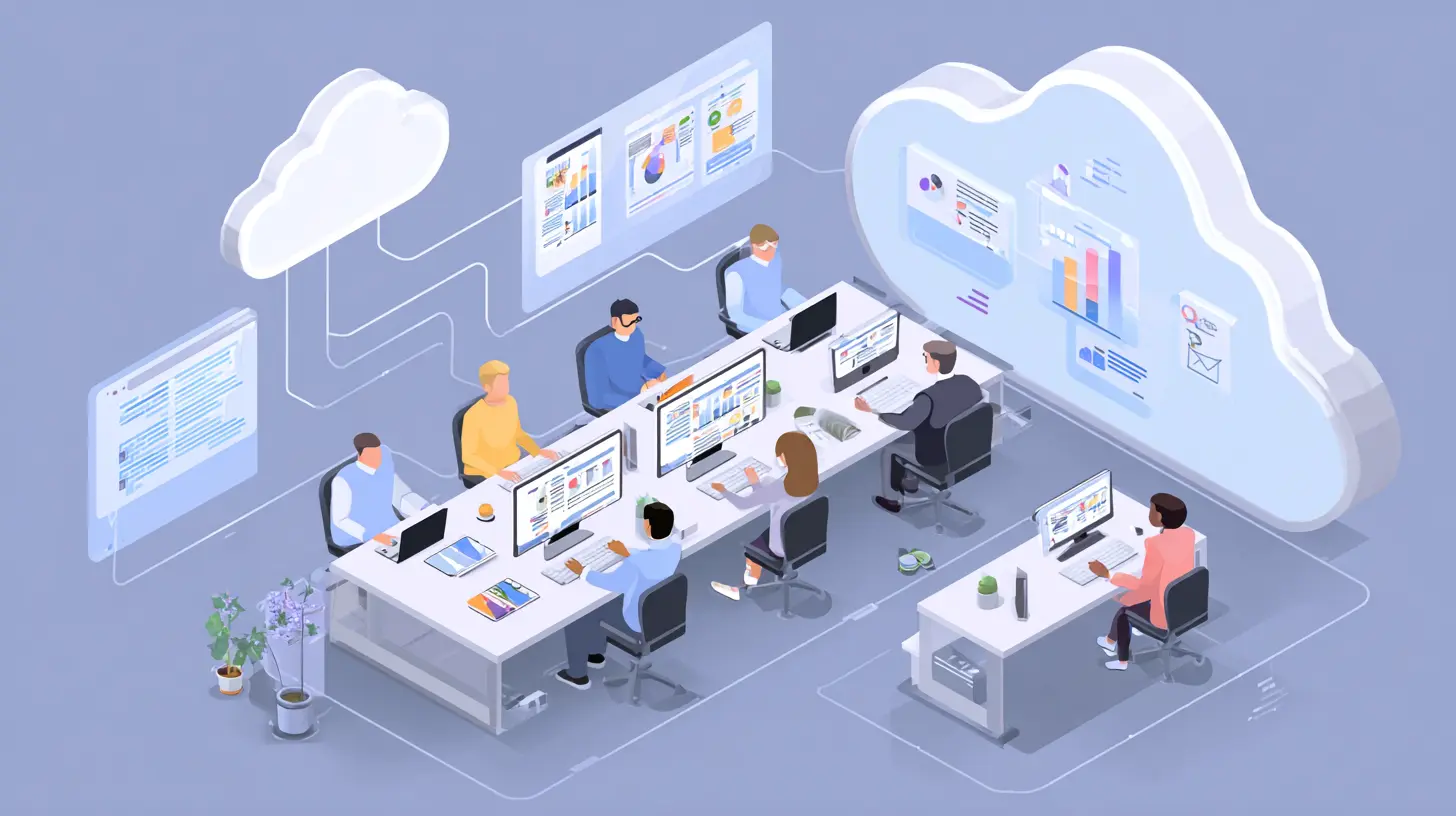
What Even Is Edge Computing? (And Why Should You Care?)
Imagine you’re in a giant library, and you need a specific book. Cloud computing is like sending a librarian on a bicycle to the main archive across town. It works, sure, but it takes time, and if the weather’s bad (read: internet traffic), you’re waiting forever. Edge computing is like having a mini-library in your own living room. The book is right there. You grab it, read it, and move on with your life.In nerdier terms, edge computing processes data closer to where it’s generated—on your device, a local server, or a nearby “edge node”—instead of sending it all the way to a distant cloud data center. For remote product teams, this means faster responses, less lag, and fewer moments where you want to throw your laptop out the window.
Think of it as the difference between ordering a pizza from a place three blocks away versus a place three states away. Sure, both are pizza, but one arrives hot and fresh, and the other arrives cold and sad. By 2026, your remote team will be eating hot pizza, metaphorically speaking.
The Latency Monster: Why Your Team’s Productivity Is Being Eaten Alive
Let’s be real: latency is the gremlin that lives under your desk and steals your focus. Every time you click a button in a collaborative tool and wait two seconds for a response, that’s a tiny piece of your soul (and your deadline) vanishing. Multiply that by a dozen teammates across time zones, and you’ve got a productivity black hole.Edge computing slays this monster by doing the work locally. Imagine a product designer in Tokyo and a developer in São Paulo working on the same 3D model. With cloud-only setups, every drag, drop, and rotation has to travel thousands of miles. With edge computing, the processing happens on each person’s device or a nearby edge server, syncing only the essential changes. It’s like they’re in the same room, arguing over the same pixel, but without the actual smell of bad office coffee.
By 2026, your remote team won’t tolerate lag. They’ll expect real-time collaboration that feels like telepathy. Edge computing makes that possible, and it’s not just about speed—it’s about not wanting to scream into the void.
Real-Time Collaboration Without the “You’re Frozen” Dance
Raise your hand if you’ve ever been in a meeting where someone says, “Can you see my screen?” and the answer is always “No, it’s just a green square.” We’ve all been there. It’s the universal remote work experience, like having a cat walk across your keyboard or realizing you’ve been on mute for ten minutes.Edge computing changes this by offloading the heavy lifting. Instead of streaming a full video feed from a cloud server halfway across the planet, edge nodes process and compress the data locally. Your video call becomes crisp, your screen shares are instant, and your colleague’s face stops looking like a Picasso painting gone wrong.
But it’s not just about video calls. Think about collaborative design tools like Figma or Miro. In 2026, edge computing will let multiple team members interact with the same canvas simultaneously, with changes appearing in milliseconds. No more “Wait, did you just move that sticky note?” No more accidental overwrites. It’s like having a digital whiteboard that actually works, even when your internet is acting like a grumpy teenager.
And for product managers? That means less time troubleshooting tech and more time arguing about whether the button should be blue or slightly-darker-blue. Priorities, people.
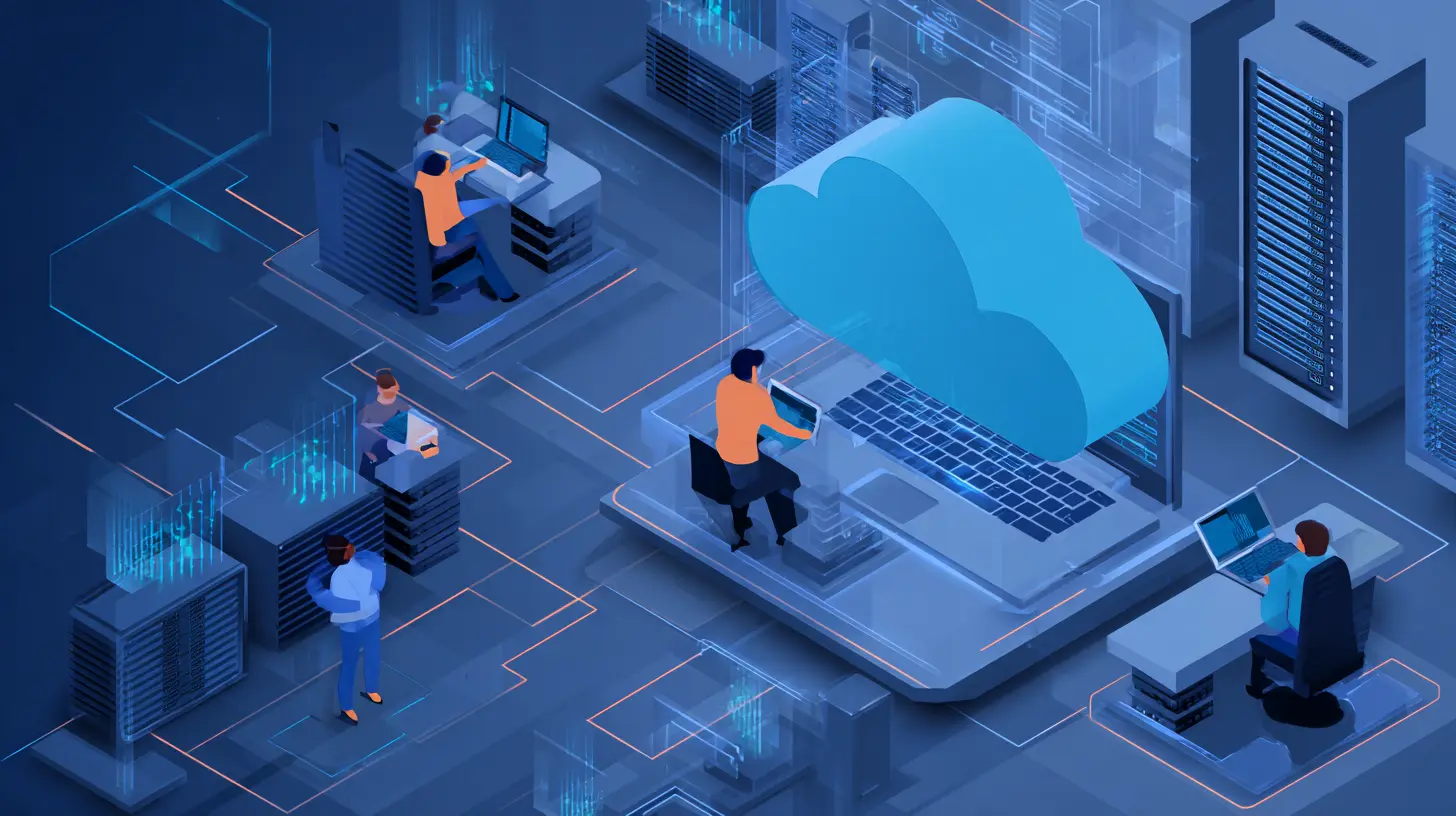
Data Sovereignty and the “Where Is My Stuff?” Panic
Here’s a fun scenario: Your remote team spans three continents, and your company stores data in a cloud server in Virginia. But your teammate in Berlin is working on a project that involves sensitive customer info. Suddenly, GDPR rears its regulatory head, and you’re knee-deep in compliance paperwork.Edge computing solves this mess by letting you process and store data locally, right where it’s generated. Your Berlin teammate’s data never leaves Germany. Your Tokyo teammate’s data stays in Japan. The cloud still exists for backup and heavy analysis, but the sensitive stuff stays close to home.
It’s like having a safe in every room of your house instead of one giant vault in the basement. You can access what you need without waking up the whole neighborhood. For remote product teams, this means fewer legal headaches, faster approvals, and no more panicked Slack messages asking, “Is this data allowed to be here?”
By 2026, data sovereignty won’t be a nice-to-have; it’ll be a must-have. Edge computing is the bouncer that checks IDs at the door.
The “Internet Goes Down” Apocalypse (And How Edge Computing Saves Your Bacon)
Let’s paint a picture: You’re a product manager in a remote cabin (because, hey, you’re living the dream). Suddenly, a squirrel chews through the main internet cable, and you’re offline. In a cloud-only world, you’re dead in the water. No emails, no Jira, no Slack. You might as well be on a desert island with a coconut for a phone.Edge computing gives you a lifeline. Because processing happens locally, your apps can still function even when the internet takes a nap. You can edit documents, review designs, and even run simulations on your device. Once the internet comes back, everything syncs up seamlessly. It’s like having a backup generator for your brain.
For remote product teams, this is a game-changer. Imagine a developer in a rural area with spotty connectivity. With edge computing, they can keep coding, testing, and pushing updates without waiting for the cloud gods to smile upon them. The team stays productive, and the only casualty is a few minutes of your sanity while the squirrel gets its comeuppance.
Security: The Digital Lock That Keeps the Trolls Out
Remote work is a security nightmare. Every device is a potential backdoor, and every coffee shop Wi-Fi is a hacker’s playground. Cloud computing concentrates all your data in one place, which is like putting all your eggs in a basket labeled “Please Steal Me.”Edge computing spreads the risk. Data is processed and stored across multiple local nodes, so even if one node gets compromised, the rest of your team isn’t toast. It’s like having a fleet of decoy cars instead of one shiny, vulnerable vehicle.
By 2026, your remote product team will use edge computing to enforce granular security policies. For example, a designer’s laptop can process sensitive mockups without ever sending them to the cloud. A developer’s local edge node can run code analysis without exposing the source code to prying eyes. And if a device is stolen? The data is encrypted and useless without the local keys.
It’s not just about keeping the bad guys out; it’s about keeping your team sane. No more “Did I accidentally share the wrong folder?” panic. Edge computing lets you sleep at night, even if your coworker’s password is “password123.” (Don’t do that, by the way. Seriously.)
The “Too Many Tools” Problem: Edge Computing as the Great Unifier
Let’s be honest: remote product teams have a tool for everything. A tool for chat, a tool for tasks, a tool for design, a tool for code, a tool for tracking what you ate for lunch (okay, maybe not that last one). The result? Tool fatigue. You spend more time switching between apps than actually working.Edge computing can act as a local orchestrator. Imagine a local edge node that integrates your Slack messages, your Jira tickets, and your GitHub commits, processing them in real-time without round-tripping to the cloud. Notifications pop up instantly, status updates sync without delay, and your workflow feels less like a circus and more like a well-rehearsed play.
By 2026, edge computing will blur the lines between tools, making them feel like one cohesive system. You’ll open one interface, and everything just works. It’s like having a universal remote that actually controls your TV, soundbar, and streaming device without needing a PhD in buttonology.
The “AI at the Edge” Revolution (Because We Can’t Stop Talking About AI)
You knew this was coming, right? AI is the glitter of the tech world—it gets everywhere. But in 2026, the real magic won’t be in the cloud; it’ll be at the edge. Imagine an AI assistant running locally on your laptop that helps you write code, auto-generate meeting notes, or even predict which feature will cause the most user complaints.Because edge computing processes AI models locally, you get instant feedback without waiting for a cloud server to think. It’s like having a tiny genius living inside your computer, whispering advice instead of shouting it from a distant data center.
For remote product teams, this means faster iterations. Your designer can use an AI tool to generate mockups on the fly. Your developer can get real-time code suggestions that don’t lag. Your project manager can ask, “What’s the risk level of this release?” and get an answer before they finish their sentence. It’s not just efficient; it’s borderline magical.
And the best part? Privacy. Since the AI runs locally, your proprietary data never leaves your device. No one’s snooping on your secret sauce. It’s like having a personal chef who never tells anyone your recipe.
The Human Side: Less Tech Headaches, More Human Connection
Here’s the thing about remote work: the tech is supposed to enable connection, but often it gets in the way. You spend so much time fighting with tools, syncing files, and waiting for uploads that you forget to actually talk to your teammates. Edge computing removes those barriers.When latency drops, when tools feel instant, when data is secure, and when the internet can go down without stopping work, you get back what matters: time. Time to have real conversations. Time to brainstorm without interruptions. Time to build trust with people you’ve never met in person.
By 2026, your remote product team won’t just be more productive; they’ll be happier. And a happy team ships better products. It’s a simple equation, but edge computing is the variable that makes it work.
The Not-So-Distant Future: What You Can Do Today
You might be thinking, “This all sounds great, but I’m not a tech wizard. How do I prepare for 2026?” Fair question. Start small. Look for tools that already leverage edge computing—some video conferencing apps do this. Experiment with local AI models. Talk to your IT team about edge nodes for your most critical data.The key is to shift your mindset from “everything in the cloud” to “the cloud is the backup, the edge is the muscle.” By 2026, this won’t be a trend; it’ll be the standard. And those who adapt early will be the ones laughing (and shipping) while the rest are still waiting for a file to upload.
Wrapping It Up: Edge Computing Is the Unsung Hero of Remote Work
So, here we are. We’ve laughed at frozen video calls, mourned dead internet connections, and dreamed of a world where latency is a myth. Edge computing isn’t just a technical upgrade; it’s a cultural shift for remote product teams. It’s the difference between feeling like you’re working alone in a silo and feeling like you’re part of a real team, even if you’re 10,000 miles apart.By 2026, your remote product team will be faster, more secure, and more human. And edge computing will be the quiet engine making it all happen. So, go ahead. Embrace the edge. Your team—and your sanity—will thank you.
Now, if you’ll excuse me, I need to go yell at my router. Old habits die hard.
all images in this post were generated using AI tools
Category:
Tech For Remote WorkAuthor:

Ugo Coleman
Discussion
rate this article
2 comments
Miles Mercado
This article highlights a crucial shift in how remote product teams will operate. As edge computing evolves, I can see it solving latency issues and boosting collaboration, ultimately leading to more innovative solutions.
May 6, 2026 at 5:06 AM
Ugo Coleman
Thanks for your thoughts! I agree, edge computing will play a key role in improving collaboration and innovation for remote teams. Exciting times ahead!
Vex Jackson
Edge computing could redefine collaboration for remote product teams, enabling real-time data processing and decision-making, ultimately fostering innovation and efficiency in a distributed landscape.
May 2, 2026 at 4:24 AM
Ugo Coleman
Absolutely, edge computing will empower remote teams by streamlining real-time data access and collaboration, driving both innovation and efficiency in 2026.