How Machine Learning Enhances Smart Home Personalization
18 August 2026
Walk into a modern smart home and you will notice something strange. The lights are already at the right brightness. The thermostat has adjusted before you felt warm. Your favorite playlist starts playing in the kitchen while you cook, but stays silent in the bedroom. None of this happens because you pressed a button or set a schedule. It happens because the house learned you.
That is the core promise of machine learning in smart homes. Not automation that follows rigid rules, but personalization that adapts to your actual behavior. The difference matters more than most people realize.
The Shift from Rule-Based Automation to Learned Behavior
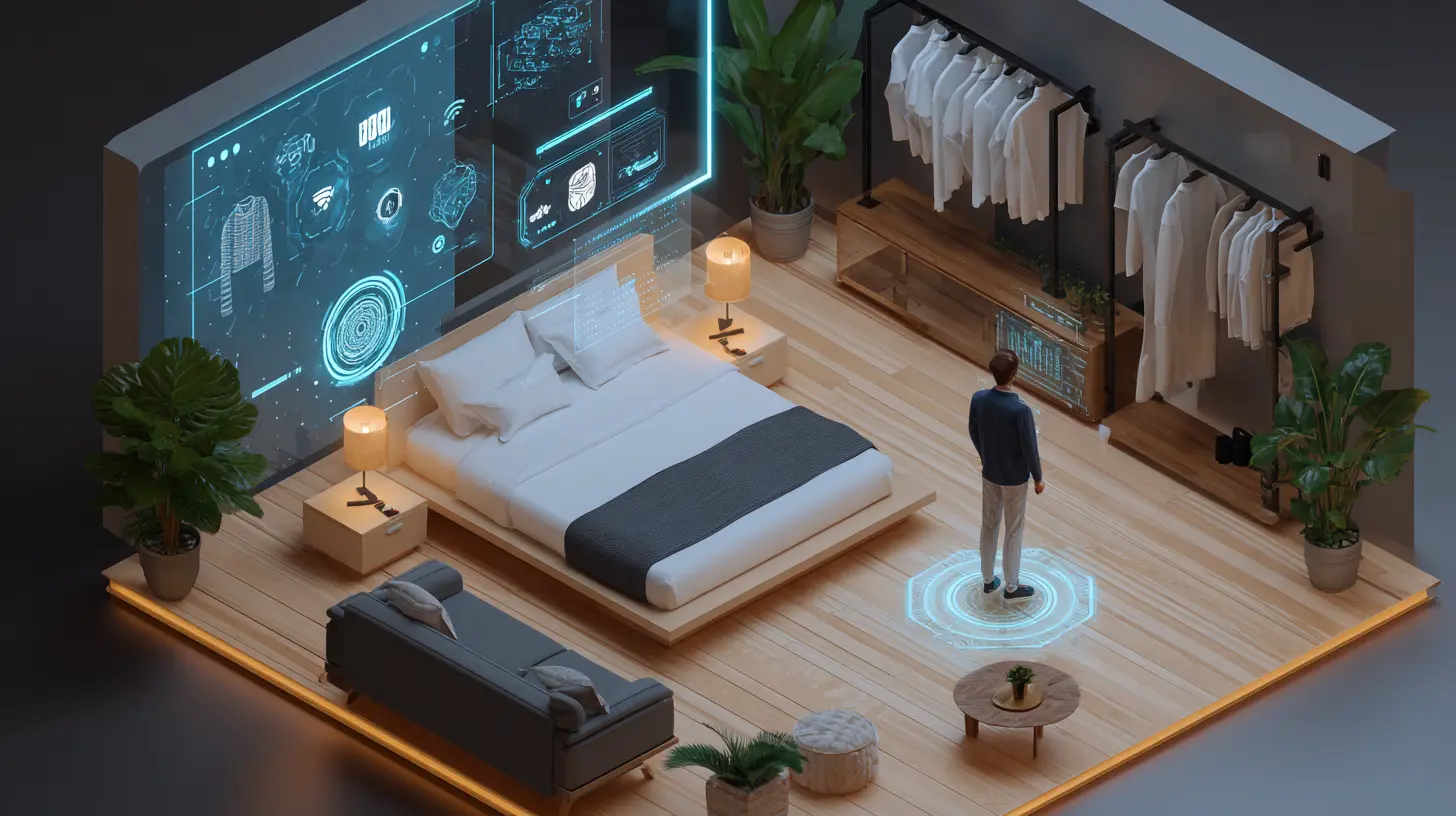
Early smart home systems relied on "if this then that" logic. You set a motion sensor to turn on lights at 7 PM. You programmed the thermostat to drop to 68 degrees at bedtime. These rules worked, but they were brittle. They assumed your life followed a fixed pattern. The moment you stayed late at work, traveled, or simply had an unusual Sunday, the system failed you.Machine learning changes this fundamentally. Instead of you defining the rules, the system observes your behavior over time and builds a predictive model of your preferences. It does not just respond to triggers. It anticipates needs.
Consider a smart thermostat with basic scheduling versus one with machine learning. The scheduled version follows your preset times. The learning version notices that you typically lower the temperature at 10:15 PM on weekdays, but at 11:30 PM on weekends. It notices that when you come home from a run, you prefer it cooler. It notices that your morning routine shifts by twenty minutes during summer months. Over time, it builds a nuanced picture that no manual schedule could capture.
This is not about replacing user control. It is about reducing the cognitive load of managing your environment. You should not have to think about your thermostat any more than you think about your heartbeat.
How the Technology Actually Works
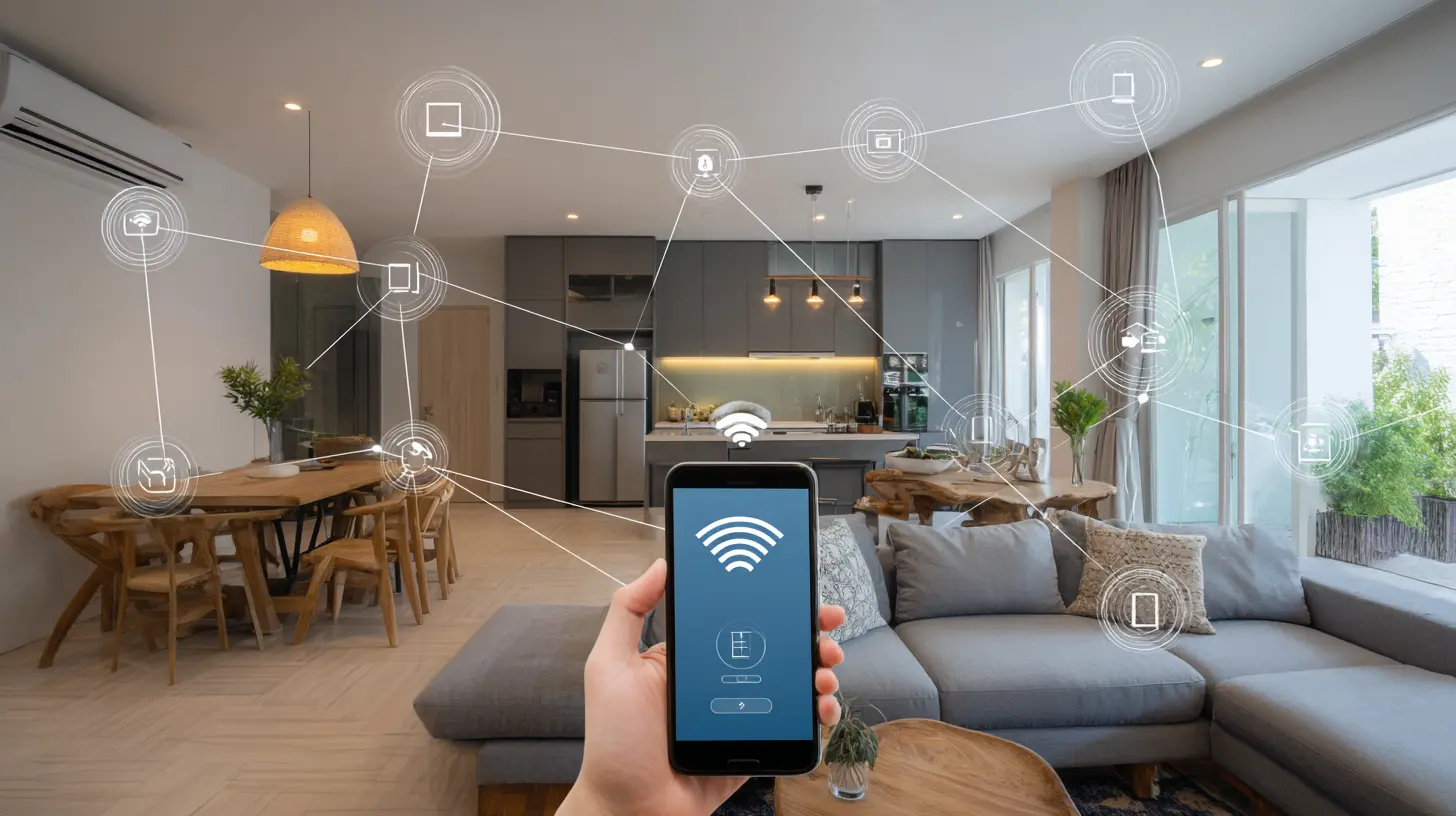
Machine learning in smart homes typically uses a few core techniques. Understanding them helps you make better purchasing decisions and set realistic expectations.Supervised Learning for Preference Classification
Some systems use supervised learning, where the model is trained on labeled data. For example, a smart lighting system might ask you to rate scenes as "relaxing" or "energizing." Over time, it learns to classify new combinations of brightness, color temperature, and timing based on your past ratings.The strength of this approach is that it is transparent. You know why the system made a decision because you helped train it. The weakness is that it requires effort. Many users abandon the labeling process after the first week, which degrades the model's accuracy.
Unsupervised Learning for Pattern Discovery
More advanced systems use unsupervised learning. Here, the algorithm finds patterns in your data without any labels. It might cluster your daily routines into distinct "modes" such as morning rush, focused work, evening relaxation, and deep sleep. It then associates different device states with each mode.This approach requires no user effort, which is a huge advantage. But it can produce surprising results. The system might discover that you always watch TV at 8 PM, but it does not know why. It just knows the pattern exists. If your life changes significantly, the model can take time to adapt.
Reinforcement Learning for Continuous Optimization
Reinforcement learning is the most sophisticated approach, though it is less common in consumer products. Here, the system takes actions and receives feedback in the form of rewards. For example, a smart HVAC system might adjust temperature settings and observe whether you manually override them. If you do not override, that is a positive reward. If you do, that is a negative signal.Over time, the system learns a policy that minimizes your overrides while maintaining comfort. This is powerful because it optimizes for your actual satisfaction rather than a predefined schedule. The downside is that reinforcement learning can behave unpredictably during the exploration phase, which is why many manufacturers avoid it for comfort-critical systems.
The Role of Contextual Data
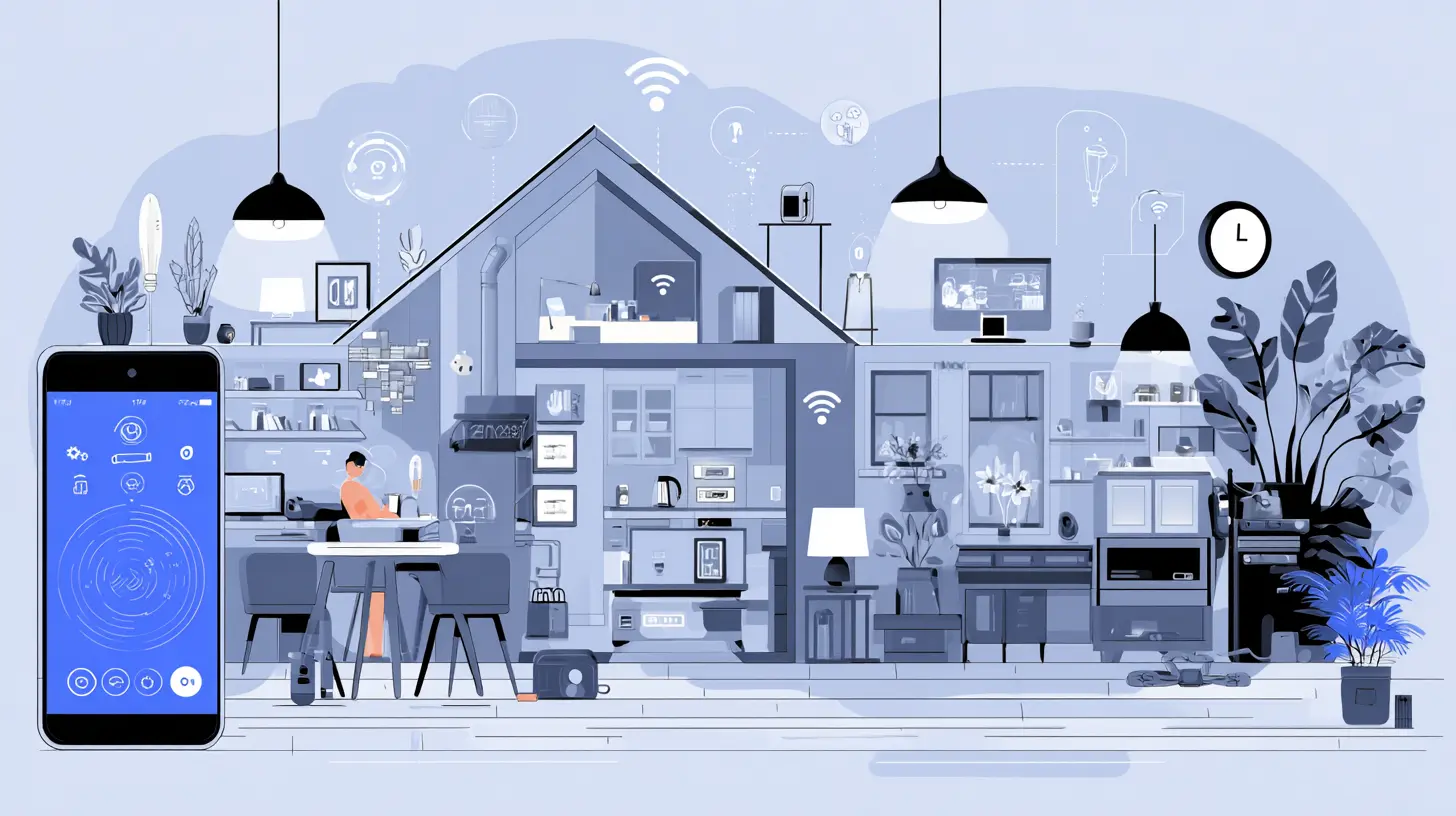
Machine learning becomes far more powerful when it incorporates contextual data beyond your immediate device usage. Location data from your phone, weather forecasts, calendar events, and even time of year all contribute to a richer model.A well-designed system knows that you are driving home because your phone's GPS indicates movement toward your address. It knows traffic conditions and can estimate your arrival time. It can then pre-cool or pre-heat your home so that it reaches the ideal temperature just as you walk through the door. This is not magic. It is a predictive model combining multiple data streams.
The key insight is that personalization is not just about what you do inside the home. It is about how your life outside the home affects your needs inside it. A system that only looks at indoor sensor data will always be reactive. A system that incorporates external context can be proactive.
Real-World Examples That Matter
Let us look at specific scenarios where machine learning delivers tangible value.Lighting That Matches Your Circadian Rhythm
Basic smart bulbs let you choose color temperature manually. Learning systems go further. They track your sleep-wake cycle based on when you are active around the house, when you use your phone in bed, and when you wake up. They then gradually shift lighting from cool blue tones in the morning to warm amber tones in the evening.This is not just about aesthetics. Circadian lighting has documented effects on sleep quality and alertness. A learning system can adjust this automatically, even accounting for seasonal changes in daylight. You do not need to remember to change your lighting schedule. The house handles it.
Audio That Follows You
Multi-room audio systems with machine learning can track which rooms you occupy and what you listen to in each. You might prefer podcasts in the kitchen, instrumental music in the home office, and silence in the bedroom. The system learns these patterns and automatically routes audio to the correct zones.The nuance here is that context matters. On weekends, you might want music in the bedroom while you read. The system learns that this correlates with the time of day and your phone's activity. It does not assume your weekday preferences apply universally.
Security That Distinguishes Between Family and Strangers
Camera-based security systems with machine learning can recognize individual faces. This goes beyond simple motion detection. The system learns to identify family members, regular guests, delivery personnel, and unknown individuals. It can then tailor alerts accordingly. A family member arriving at 3 AM triggers a gentle notification. An unknown person loitering at the same hour triggers a loud alert and recording.This is a significant improvement over traditional motion sensors, which cannot distinguish between a burglar and a neighbor's cat. The trade-off is privacy. Face recognition requires storing biometric data, which raises legitimate concerns about data security and potential misuse.
The Trade-Offs You Need to Consider
Machine learning personalization is not universally beneficial. There are real trade-offs that every homeowner should understand before investing.Privacy Versus Convenience
The fundamental tension is that personalization requires data. The more the system knows about you, the better it can serve you. But that data can be compromised, sold, or subpoenaed. A smart home that knows your daily schedule, your health patterns, and your social habits is a goldmine for advertisers and a potential target for hackers.You need to decide what level of convenience justifies what level of data exposure. Some users are comfortable sharing everything with a major tech company. Others prefer local processing where data never leaves the home. The latter is more private but often less capable because the model cannot benefit from cloud-scale computing.
False Comfort and Over-Reliance
There is a subtle danger in becoming too dependent on predictive systems. If your smart home always adjusts to your preferences, you lose the ability to notice when something is wrong. For example, a learning thermostat might mask the fact that your HVAC system is degrading because it compensates by running longer. You might not notice the inefficiency until your energy bill spikes.Similarly, if the system always plays the music you like, you might not discover new genres. If it always sets the lighting to your preferred brightness, you might not realize that your eyesight is changing. Personalization can create a feedback loop that narrows your experiences.
The Cold Start Problem
Machine learning models need data to work. When you first install a smart home system, it knows nothing about you. The first week or two will feel clumsy. The system will make incorrect assumptions and require manual corrections.Some manufacturers try to mitigate this by asking you to complete a profile during setup. This helps, but it is not the same as learned behavior. You should expect a ramp-up period and be patient. If you give up after three days because the system does not understand you, you will never experience the benefits.
Common Misconceptions About Smart Home Machine Learning
Many people have incorrect assumptions about what these systems can and cannot do. Let me address the most common ones.Misconception: The System Reads Your Mind
No, it does not. It reads patterns in your behavior. There is a difference. The system cannot know that you are feeling stressed today and want warmer lighting. It can only know that on past days when you were stressed, you manually adjusted the lighting warmer. It then predicts that you might want the same adjustment now.This distinction matters because it sets realistic expectations. The system is not sentient. It is a statistical pattern matcher. It will sometimes be wrong, and that is acceptable as long as it is wrong less often than a manual system.
Misconception: More Data Always Means Better Personalization
This is false. More data can lead to overfitting, where the model becomes too tailored to historical patterns and fails to generalize to new situations. For example, if you go on vacation for two weeks, the system might struggle because your normal patterns are absent. It might keep trying to wake you up at 6 AM even though you are in a different time zone.Quality of data matters more than quantity. A system that accurately tracks your presence and absence is more valuable than one that records every button press but cannot distinguish between intentional actions and accidental touches.
Misconception: Machine Learning Is Only for Expensive Systems
While high-end systems do have more advanced algorithms, even budget-friendly smart home devices now include basic learning capabilities. Many smart plugs, bulbs, and thermostats under fifty dollars can learn simple schedules and adjust based on your usage patterns. The sophistication varies, but the barrier to entry is lower than most people think.Best Practices for Getting the Most Out of Smart Home Personalization
If you want to maximize the value of machine learning in your smart home, follow these practical guidelines.Start with a Single System
Do not try to build a fully personalized smart home overnight. Start with one system, such as a learning thermostat or smart lighting. Let it observe your behavior for at least two weeks. Make manual adjustments when it gets things wrong. This feedback is essential for the model to improve.Once you are satisfied with that system, add another. Trying to integrate and personalize everything at once will overwhelm you and degrade the learning process because the systems will interfere with each other.
Provide Consistent Feedback
When the system makes a mistake, correct it immediately. If the thermostat sets the temperature too high, adjust it right away. If the lighting is too dim, change it. The more consistent your feedback, the faster the model converges on your preferences.Avoid the temptation to just live with minor annoyances. Every uncorrected error teaches the model that its behavior was acceptable. Over time, small errors compound into a system that feels increasingly wrong.
Review Your Privacy Settings Regularly
Machine learning systems often update their privacy policies and data handling practices. Review these settings at least once a year. Understand what data is being collected, where it is stored, and who has access to it. If a manufacturer changes its terms in a way you do not like, consider switching to a different brand.Do Not Disable Learning Features Out of Frustration
It is common to feel annoyed during the learning phase. The system makes mistakes that a simple schedule would not. But disabling the learning feature entirely is a mistake. Instead, give it more time and provide more feedback. The long-term payoff is worth the short-term frustration.Consider Local Processing for Sensitive Data
If you are concerned about privacy, look for systems that process data locally on a hub or edge device rather than sending everything to the cloud. Local processing is less flexible because the model cannot be updated as easily, but it offers much stronger privacy guarantees. Some systems offer hybrid approaches where sensitive data stays local while anonymized patterns are sent to the cloud.
The Future of Smart Home Personalization
The current state of machine learning in smart homes is impressive, but it is still early. Several developments are likely to shape the next few years.Cross-Device Contextual Awareness
Today, most smart home systems learn from a single device or a single brand's ecosystem. The future will involve models that integrate data from multiple manufacturers. Your smartwatch, your car, your refrigerator, and your lighting system will share a unified model of your preferences. This will enable much richer personalization.The challenge is interoperability. Competing companies are reluctant to share data. Industry standards like Matter are helping, but true cross-device learning remains a work in progress.
Federated Learning for Privacy
Federated learning is a technique where the model is trained across multiple devices without raw data leaving those devices. Each device learns locally and only shares model updates, not personal data. This could solve the privacy versus personalization dilemma.Google has experimented with federated learning for keyboard prediction. Similar approaches are being developed for smart home systems. If this becomes mainstream, you could get the benefits of cloud-scale learning without sacrificing privacy.
Emotion and Health Awareness
Future systems may incorporate physiological data from wearables to personalize your environment based on your stress levels, heart rate, or sleep quality. For example, if your smartwatch detects elevated stress, the home could dim the lights and play calming music. If it detects poor sleep quality, the thermostat could adjust to a cooler temperature the next night.This is promising but raises significant ethical questions. Who decides what "stress" means? How do you prevent the system from making unwanted changes based on biometric data? These are not technical problems but design and policy problems that need careful consideration.
Making the Decision
Before you invest in machine learning smart home products, ask yourself a few honest questions.Do you actually want your home to anticipate your needs, or do you prefer explicit control? Some people find predictive systems unsettling. They want to flip a switch and know exactly what will happen. There is nothing wrong with that preference. Machine learning is not objectively better. It is different.
Are you willing to put in the effort during the learning phase? If you are not patient with initial mistakes, you will be disappointed. The technology is not magic. It requires your participation to work well.
How much are you willing to trade for convenience? If privacy is your top priority, you might prefer a simpler, rule-based system that does not collect behavioral data. That is a valid choice. The best smart home is not the most advanced one. It is the one that fits your values and lifestyle.
Machine learning enhances smart home personalization by shifting the burden from you to the system. It learns your patterns, adapts to your changes, and anticipates your needs. But it requires trust, patience, and a willingness to share data. If you can accept those conditions, the payoff is a home that feels less like a collection of gadgets and more like an extension of yourself.
all images in this post were generated using AI tools
Category:
Smart Home TechnologyAuthor:

Ugo Coleman
Discussion
rate this article
1 comments
Natalie Powell
If my toaster starts recommending breakfast based on my mood, I'm both impressed and slightly concerned. Machine learning really knows how to invade every corner of life!
August 18, 2026 at 3:37 AM
Ugo Coleman
I hear you! It is fascinating how machine learning is shaping our daily routines, even in unexpected ways. It can be both exciting and a little unnerving.