Machine Learning and Robotics: A Match Made for the Future
2 February 2026
Imagine a world where machines don’t just follow instructions but learn, evolve, and adapt on their own. Creepy? Maybe a little. Exciting? Absolutely. This isn’t the plot of some sci-fi blockbuster—it’s happening right now. Machine Learning (ML) and Robotics are coming together in ways that are transforming our daily lives, industries, and, quite possibly, the very fabric of our future.
But how exactly did ML and Robotics become this power couple of the tech world? What makes them such a perfect match? Let’s peel back the curtain and take a deep dive into the intriguing—and slightly mysterious—union that is shaping our next technological leap.
What Is Machine Learning, Really?
Let’s start with the basics. You’ve probably heard the term "machine learning" thrown around a lot. But what does it actually mean?At its core, machine learning is a type of artificial intelligence that allows computers to learn from data without being explicitly programmed. Think of it like teaching a child. You show them a few examples, and over time, they start recognizing patterns. Show an ML model a bunch of pictures of cats and dogs, and eventually, it'll figure out which is which—even if it's never seen that particular image before.
The magic? It's all in the data. The more you feed it, the smarter it gets.
And Robotics? What’s That All About?
Now, robotics—well, that's more about the "body" part of things. Robots are machines that can carry out a series of actions automatically. From the robotic arms in car manufacturing plants to the autonomous vacuums buzzing around our homes, robots are physical systems doing the heavy lifting (literally).But here’s the kicker: On their own, most robots are kind of… dumb. They follow pre-set commands and don’t adapt well to new situations. Enter machine learning.
The Moment These Two Worlds Collide
When you fuse ML with robotics, something incredible happens. You take a machine that can move and act in the real world and give it the brainpower to make decisions, learn from its environment, and adapt to changes. It’s like giving your robot a brain that gets smarter every day.This is the match made for the future.
But how exactly is this combo changing our world? Let’s get into it.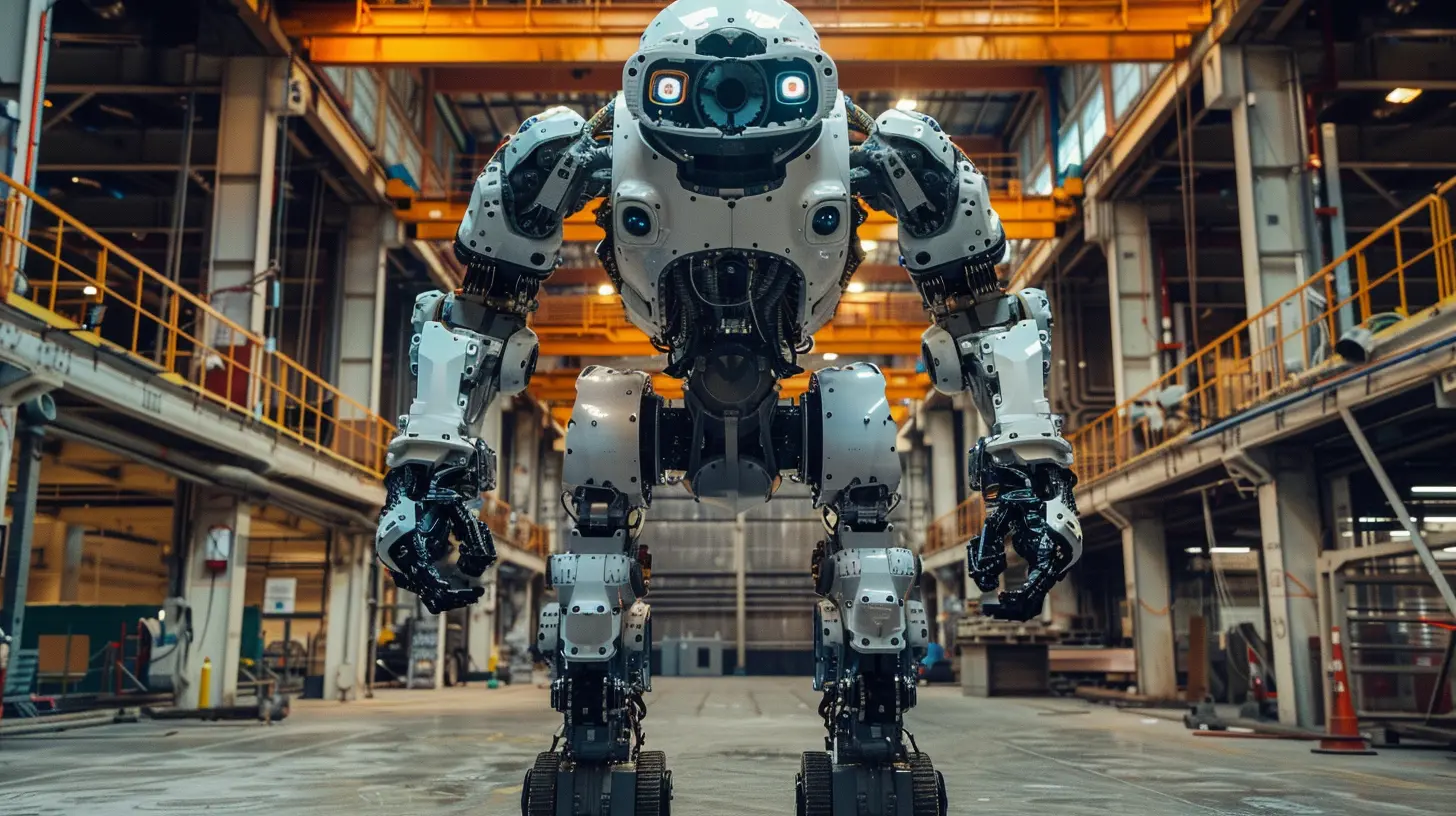
Self-Learning Robots: From Fantasy to Reality
Remember the old cartoons where robots would mess things up hilariously because they followed their programming too literally? Those days are fading fast.With ML, robots are now learning in real-time. Take Boston Dynamics’ robots, for example. They’re not just performing backflips and parkour (though that’s seriously impressive), they’re learning how to balance, recover from slips, and even navigate complex environments.
In warehouses, robots learn the best walking paths. In agriculture, they detect weeds vs crops using image recognition. This isn’t just automation—it’s smart automation.
AI-Powered Eyes, Ears, and Touch
Machine learning isn't confined to brains. It’s also empowering robots with better senses:- Computer Vision: Robots can see and recognize objects, people, and obstacles. Think facial recognition, but for everything.
- Natural Language Processing (NLP): Robots can now understand—and respond to—human speech. Virtual assistants today are just the beginning.
- Tactile Feedback: ML helps robots “feel” pressure and texture, learning how to hold a delicate object without crushing it.
With ML, robots don’t just act—they perceive.
Real-World Applications: It’s Already Happening
Still skeptical? Let’s look at where ML-powered robotics is already making waves:1. Healthcare
Surgical robots are getting more precise, and with ML, they’re learning from thousands of past procedures. Imagine a robot surgeon that can correct itself mid-operation. Wild, right?Care robots are also helping elderly patients, learning routines and preferences. They’re offering companionship and support right where it’s needed.
2. Autonomous Vehicles
Driverless cars are essentially robots on wheels, powered heavily by ML. They process thousands of pieces of data every second—other cars, pedestrians, road signs—and make split-second decisions. It’s not just Tesla anymore; every major automaker is racing toward this future.3. Manufacturing
In smart factories, robots adapt to new products with minimal reprogramming. They recognize defective items, optimize production lines, and even "co-work" with humans side-by-side.4. Space Exploration
NASA’s Mars rovers aren’t just remote-controlled toys—they use ML to navigate the Martian terrain and make decisions when Earth is too far away to call home.The Synergy Explained: Why They Work So Well Together
Here’s the deal. Machine learning gives robots the ability to:- Learn from previous tasks
- Adapt to new environments
- Improve accuracy over time
- Make autonomous decisions
And robotics gives ML:
- A real-world testing ground
- Physical actions to carry out decisions
- A tangible interface to interact with the world
By themselves, each is powerful. Together? They're a technological force of nature.
Challenges on the Horizon
Of course, it’s not all sunshine and AI rainbows. There are real challenges we’ve got to address:- Data Dependency: ML needs tons of data. And sometimes, especially in robotics, that data is hard to gather or label.
- Ethical Concerns: Should robots make life-or-death decisions? What if they replace too many human jobs?
- Safety: A robot learning on the fly can sometimes make erratic moves. In high-risk environments, that’s a big deal.
- Cost: Building and training smart robots ain’t cheap. Small businesses may struggle to keep up.
These hurdles are real—but not insurmountable.
What's Next? Peek Into the Future
Let’s get a little bold here.Picture factories with zero human workers, just fleets of collaborative robots (cobots) optimizing workflows in real-time. Or how about home assistants that learn your mood based on how you speak and act accordingly—bringing you a warm tea when you're down.
In disaster zones, robotic responders could navigate collapsed buildings, learning from each rescue attempt to get better and faster. In education, robot tutors could evolve their teaching style based on each student’s progress.
We’re not imagining anymore. We’re building it.
The Human Touch: Are We Replacing Ourselves?
Here’s where the conversation gets interesting. As robots and ML become more intelligent, adaptable, and independent, where does that leave us?Are we building our replacements… or our collaborators?
I’d argue the latter. These technologies aren’t about removing the human touch—they’re about amplifying it. Many of today’s ML-powered robots are designed to work with us, not instead of us. They reduce the dull, dirty, and dangerous jobs while we focus on creativity, empathy, and innovation.
So instead of fearing the rise of the machines, maybe it’s time we danced with them.
TL;DR: Why This Duo Is the Future
- Machine Learning is the "brain"—it learns from data.- Robotics is the "body"—it acts in the world.
- Together, they create systems that can perceive, decide, and act all on their own.
- From cars to caregivers to Mars explorers, ML + Robots are already transforming our world.
- Challenges exist, but the potential? It’s off the charts.
Final Thoughts: Embrace the Merge
If the 20th century was about building machines, the 21st is about making them smart. And we’re just getting started.What happens when your mechanical buddy can truly understand you? What’s next when our machines become part of our daily conversations and routines?
Machine Learning and Robotics aren’t just intersecting—they’re merging. And in that union lies one of the most transformative stories of our time.
Stay curious. Stay inspired. Because the future isn’t just coming—it’s learning from us every step of the way.
all images in this post were generated using AI tools
Category:
Machine LearningAuthor:

Ugo Coleman
Discussion
rate this article
2 comments
Macey McNulty
Integrating machine learning with robotics promises transformative advancements, enhancing not only efficiency but also our ability to solve complex challenges. The future looks incredibly promising.
February 24, 2026 at 6:04 AM
Ugo Coleman
I completely agree. The synergy between machine learning and robotics truly opens up exciting possibilities for innovation and problem-solving. The future is bright indeed!
Sonya Newman
This article effectively highlights the transformative potential of integrating machine learning with robotics. The future looks promising as these technologies evolve together. However, it's crucial to address ethical considerations and workforce impacts to ensure a balanced progression that benefits society as a whole.
February 2, 2026 at 4:44 AM
Ugo Coleman
Thank you for your insightful comment! I completely agree that while the integration of machine learning and robotics holds great promise, we must carefully consider the ethical implications and workforce impacts to create a positive future for all.