The Environmental Impact of Digital Nomadism
28 October 2026
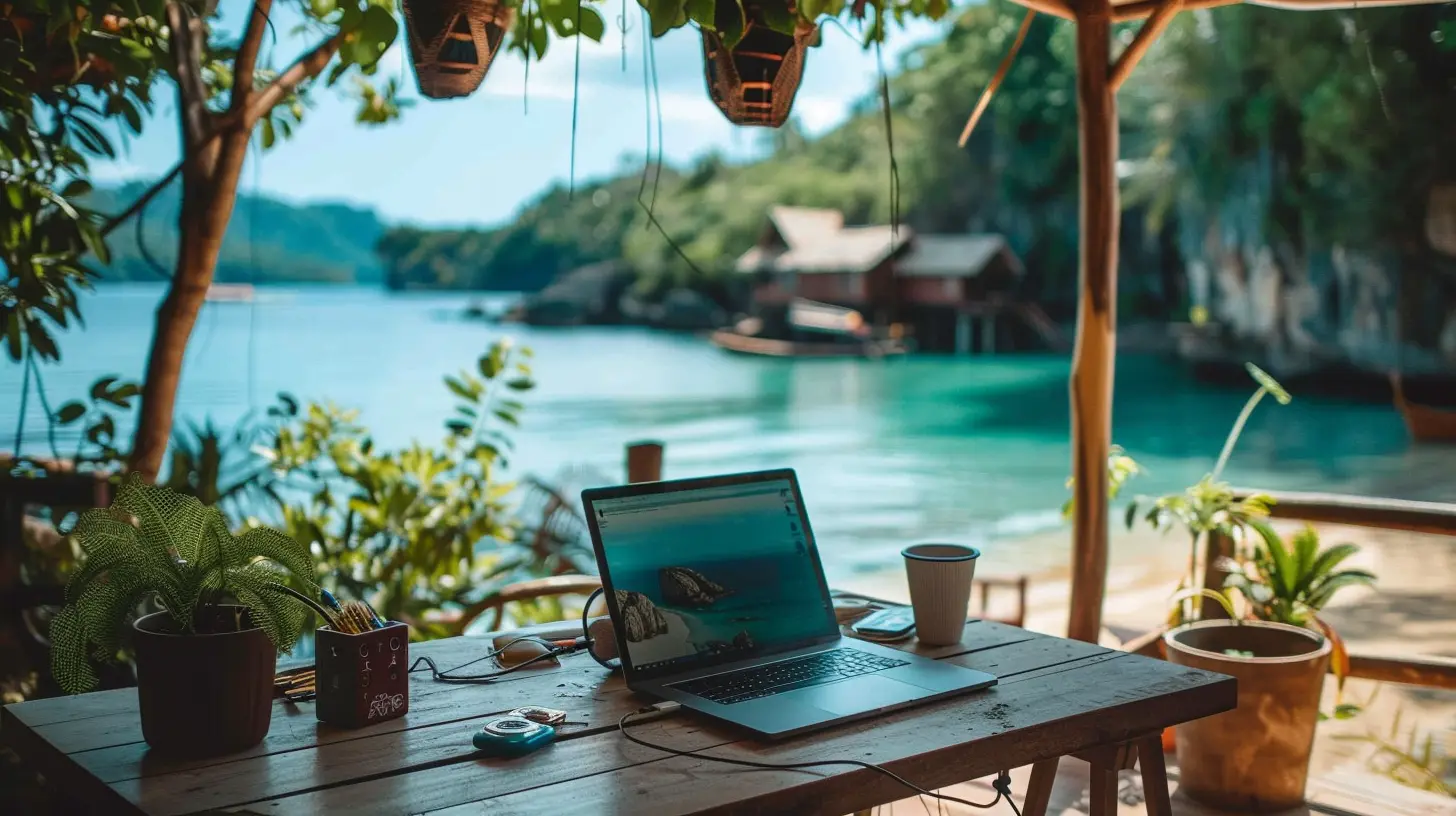
Picture this: you are answering emails from a beach cafe in Bali, your laptop powered by a solar panel, your smoothie bowl made from locally grown fruit. You feel light. You feel green. You feel like you have escaped the corporate machine and its carbon footprint.
Then you book a flight to Lisbon for next month. And another to Mexico City three weeks after that.
The environmental story of digital nomadism is more complicated than the postcard version. It is a lifestyle built on aviation, short-term rentals, and disposable consumer goods, yet it is often marketed as a lighter way to live. Both things can be true at once: remote work genuinely reduces some environmental pressures while relocating constantly creates others. Anyone who wants to travel and work responsibly needs to understand the full ledger, not just the flattering entries.
This article walks through that ledger in detail. We will look at where the emissions actually come from, which trade-offs are worth making, which common beliefs do not hold up, and how to build a nomadic life that is genuinely lighter on the planet without turning it into a joyless accounting exercise.
The Core Tension: Mobility Versus Stuff
Most environmental advice for settled people boils down to buying less, driving less, and using less energy at home. Digital nomads often do well on the first two and badly on the third, because they do not really have a home.Think about what a typical remote worker in a fixed city owns: an apartment with insulation, a fridge, a washing machine, maybe a bike, and a car that sits idle most of the week. Now think about a nomad: no car, fewer possessions, but a new flight every few months, a rotating cast of apartments, and a habit of buying cheap replacements for things they left behind.
The comparison is not obvious. A nomad who flies long-haul four times a year can easily out-emit a car commuter who never leaves town. A nomad who stays put for six months at a time, uses trains, and eats locally can beat almost anyone. The lifestyle is not inherently green or dirty. It is a set of choices, and the choices matter enormously.

Where the Emissions Actually Come From
If you want to reduce your footprint as a nomad, you need to know which activities dominate it. In rough order of impact for most people living this way:Aviation
Flying is almost always the single largest line item. A long-haul return flight can produce more emissions than months of everyday living in a well-insulated apartment. Short-haul flights are disproportionately bad per kilometer because takeoff and landing burn a large share of the fuel. This is why the number of flights you take matters more than the total distance in many cases.Accommodation
Short-term rentals and hotels have a hidden cost. Hotels often run air conditioning around the clock, launder towels daily, and maintain pools and common areas. Apartments vary wildly. A well-run guesthouse with natural ventilation and a fan can be dramatically lighter than a glass tower with a 24-hour climate system. The building matters, but so does how you use it.Food
Food is a big and often overlooked category. Eating out constantly means more food waste, more packaging, and less control over sourcing. Cooking in a rented kitchen with local ingredients is usually lighter, though not always, since small apartments often lack efficient appliances and you may end up buying staples you cannot finish before moving on.Ground Transport
Scooters, ride-hailing apps, and rental cars add up. In many nomad hubs, the default is a motorbike, which is efficient per trip but noisy and polluting in aggregate. Walking, cycling, and public transport remain the lightest options, and choosing a neighborhood where those work is one of the highest-leverage decisions you can make.Stuff
The nomad life encourages a strange relationship with possessions. You own little, but you rebuy often. Cheap chargers, umbrellas, clothes for a climate you did not pack for, kitchen gadgets you leave behind. Every replacement carries embodied emissions from manufacturing and shipping. The minimalist aesthetic can hide a disposable reality.
The Counterintuitive Wins
It would be unfair to focus only on the costs. Remote work and nomadism deliver real environmental benefits that are easy to dismiss.No daily commute. If your alternative is a two-hour round-trip drive, working from a laptop anywhere is a clear win. This is the strongest argument for remote work generally, and it holds for nomads too.
Less car ownership. Many nomads go years without owning a vehicle. Car manufacturing is emissions-intensive, so avoiding ownership is meaningful, provided you are not just renting cars constantly.
Smaller living spaces. Nomads tend to occupy compact apartments, which use less energy for heating and cooling than large suburban homes. A studio with a fan beats a house with central air.
Seasonal migration. Following mild weather instead of fighting extreme heat or cold can cut energy use for climate control, if you choose destinations thoughtfully and avoid the trap of flying to escape every season.
Lower consumption of durable goods. Fewer wardrobes, fewer appliances, fewer gadgets. The embodied carbon savings are real, even after accounting for replacements.
The honest conclusion is that nomadism can be a net win, but only when the aviation footprint stays modest. Flights are the swing factor. Get those under control and the rest of the lifestyle tends to compare favorably with settled alternatives.

Common Misconceptions Worth Retiring
A few beliefs circulate in nomad communities that do not survive scrutiny."Remote work is automatically green"
Remote work reduces commuting, but it also enables a flight-heavy lifestyle that commuting never required. The net effect depends entirely on how far and how often you travel. Treating remote work as an environmental free pass is a mistake."Carbon offsets make flying fine"
Offsets are a contested tool. Some projects deliver real, verifiable reductions; others overstate benefits or would have happened anyway. Buying offsets can be a reasonable last step after reducing flights, but it is not a substitute for flying less. Think of it as a patch, not a cure."Staying in eco-hotels solves it"
Eco-certifications vary in rigor, and the building's performance matters less than how it is operated. A certified hotel running full air conditioning and daily laundry can be heavier than a modest apartment where you manage your own energy use. Certifications help, but behavior matters more."Living minimally means living lightly"
Minimalism reduces clutter, not necessarily emissions. If minimalism means constantly rebuying cheap items, the environmental case weakens. Durable, repairable possessions you keep for years usually beat a revolving door of budget replacements."Digital nomads have tiny footprints because they own nothing"
Ownership is only part of the picture. Mobility, accommodation, and food dominate the footprint for most nomads. Owning little while flying often is not a green combination.A Practical Framework for Lighter Nomadism
Rather than a list of tips, it helps to have a decision framework. The goal is to spend your environmental budget where it counts and stop worrying about the small stuff.Step 1: Cap your flights
Decide on a maximum number of flights per year and treat it as a hard budget. For many people, one long-haul return trip plus a couple of short hops is a reasonable ceiling. Then design your itinerary around that cap instead of booking first and justifying later.Step 2: Slow down
Staying longer in fewer places is the single most effective change most nomads can make. A three-month stay amortizes one flight across a season of low-impact living. A one-week stopover does the opposite. Slow travel also tends to produce better work, deeper relationships, and cheaper rent.Step 3: Choose ground transport by default
Pick neighborhoods where you can walk or cycle to groceries, cafes, and coworking spaces. Use trains for regional moves where the infrastructure allows. Save ride-hailing for exceptions, not routines.Step 4: Treat accommodation as an environmental choice
Ask about air conditioning, laundry policies, and whether the building has natural ventilation. A fan and an open window often beat a compressor. Small behavioral choices, like turning off the AC when you leave and washing clothes in cold water, add up over months.Step 5: Eat like a local, cook like a local
Shop at markets, cook with seasonal ingredients, and carry a reusable bottle and bag. Eating out is part of the fun, but making it the exception rather than the default reduces waste and packaging significantly.Step 6: Buy durable, repair, and carry
Invest in a few well-made items: a reliable laptop, a durable backpack, quality clothing for the climates you visit. Repair rather than replace. Carry what you need so you are not buying emergency replacements in every new city.Step 7: Offset what remains
Once you have reduced what you can, offset the residual footprint with projects you have actually researched. Treat offsets as the final step, not the first.
The Trade-Offs Nobody Talks About
Every green choice in nomad life involves a trade-off, and pretending otherwise leads to bad decisions.Slow travel versus opportunity. Staying longer is greener, but it means missing places and people. The right balance depends on your goals. If your priority is seeing many countries, you will fly more, and you should own that trade-off rather than greenwash it.
Cheap flights versus carbon budgets. Budget airlines make frequent travel affordable, which is exactly why they increase emissions. A cheap ticket is not a green ticket. If you fly, fly deliberately.
Local food versus convenience. Markets and cooking take time. Some nomads genuinely cannot cook in their accommodation. Be honest about your constraints and optimize within them rather than pretending a hotel breakfast is a farm-to-table experience.
Digital tools versus digital waste. Remote work runs on cloud services, video calls, and devices. The energy cost of data centers and networks is real, though modest per person compared to flights. Streaming in high definition and hoarding files is not the main problem, but it is not nothing either. The bigger digital issue is device turnover: replacing laptops and phones every year or two carries significant embodied emissions.
What Cities and Communities Could Do Better
Individual choices matter, but infrastructure shapes them. Nomad hubs could make the green choice the easy choice by improving public transport, expanding cycling lanes, offering coworking spaces with strong energy performance, and encouraging longer-stay visas that reduce churn. Landlords could invest in efficient cooling and insulation. Platforms could surface energy information alongside price. None of this is exotic; it is mostly a matter of incentives and transparency.Nomads can push gently for these things by choosing providers that take efficiency seriously and by asking questions. Markets respond to demand, slowly but genuinely.
A Realistic Bottom Line
Digital nomadism is neither a planetary villain nor a green paradise. It is a lifestyle with a distinctive emissions profile: low on commuting and possessions, high on aviation and accommodation churn. The people who do it lightly tend to share a few habits. They fly less than they could. They stay longer than average. They walk and cycle. They cook. They buy durable things and keep them. They treat offsets as a cleanup step, not a license.If you are considering this life, the most useful question is not "is nomadism green?" but "what would make my version of it green?" Answer that honestly, cap your flights, slow your pace, and the rest follows. The beach cafe can stay in the picture. Just make sure the flight there is one you actually counted.
all images in this post were generated using AI tools
Category:
Digital Nomad TechAuthor:

Ugo Coleman