The Future of Remote Work Tech in 2026 and Beyond
15 April 2026
Remember March 2020? We scrambled to make remote work function with whatever tools we had. A laptop propped on cookbooks, a shaky home Wi-Fi connection, and the endless "you're on mute" chorus. That was emergency remote work. Fast forward to today, and it’s clear the genie isn’t going back in the bottle. But what we have now is just the prototype. The real transformation—the seamless, intuitive, and surprisingly human evolution of distributed work—is just over the horizon. By 2026 and beyond, the technology supporting remote work won't just facilitate where we work; it will fundamentally redefine how we think, create, and connect. Let's pull back the curtain on that future.

Beyond the Grid: The Death of the "Digital Office" Replica
For years, our remote tech stack has been trying to digitally replicate the physical office. We have virtual "rooms," digital "whiteboards," and chat channels that mimic hallway conversations. It’s like trying to build a car by designing a faster horse. By 2026, this metaphor will shatter. The future isn't about replicating the office; it's about transcending it entirely.Think of it this way: the office was a one-size-fits-all container for work. The future of remote tech is about creating a dynamic, personalized ecosystem that molds itself to the task, the team, and the individual. We’re moving from a place you go to a state you inhabit. This means the very idea of a centralized platform (like a single video call app that tries to do everything) will fragment into a constellation of specialized, interoperable tools. Your "workspace" in 2026 might be a fluid combination of a VR design studio, an AI-powered deep focus module, and an asynchronous video hub, all working in concert without you ever needing to "switch" apps manually. The container disappears, and the work takes center stage.
The Rise of Context-Aware Workspaces
How will this feel? Imagine your digital environment possessing a gentle, helpful awareness. Your tools will understand not just what you're doing, but the context of your work. Start writing a project brief, and your system automatically surfaces the latest analytics report and schedules a low-focus block on your team's calendar to avoid interruptions. Join a brainstorming session, and the UI shifts—dimming notifications, bringing collaborative canvases to the fore, and even adjusting the virtual "lighting" to encourage creativity.This isn't science fiction; it's the logical endpoint of integrating AI, ambient computing, and data from our work patterns. The tech will fade into the background, becoming an intuitive extension of our intent rather than a series of hurdles to clear. It’s the difference between manually adjusting the temperature, lights, and music in every room you enter versus having a smart home that anticipates your preferences and sets the perfect ambiance as you walk through the door. Remote work tech will become that perceptive.

The AI Co-Pilot: From Assistant to Integrated Teammate
We’re familiar with AI as a tool—a chatbot that answers questions, a grammar checker, a scheduler. By 2026, AI will evolve from a tool you use to a co-pilot embedded in the fabric of your workday. This won't be about AI taking jobs; it will be about AI augmenting human potential in remote settings, filling the gaps that distance creates.The Emotional and Logistical Bridge
One of the biggest losses in remote work is the subtle, unspoken communication—the quick glance that says "I'm confused," the energetic body language of agreement, the spontaneous post-meeting debrief. AI co-pilots will begin to bridge this emotional and contextual gap.Picture this: You're in a complex cross-timezone negotiation over a document. Your AI co-pilot, analyzing language tone, edit history, and communication patterns, might give you a gentle nudge: "Kira in Berlin has suggested three alternatives to Clause 4. Her phrasing indicates high openness to compromise. Recommend highlighting the option closest to your initial goal to build consensus." Or after a tense meeting, it could summarize not just the action items, but the sentiment, noting: "The engineering team showed high confidence on the timeline but low sentiment on the design specs. A follow-up async video from the design lead clarifying user intent is suggested."
This AI won't just manage your calendar; it will manage your collaborative energy. It will identify when a thread is best moved from text to a quick video, when a project is suffering from "digital ghosting" (people silently disengaging), and when it's time to schedule a purely social, agenda-less virtual coffee. It becomes the ultimate facilitator for human connection.
Immersion Over Imitation: Spatial Computing & The VR/AR Threshold
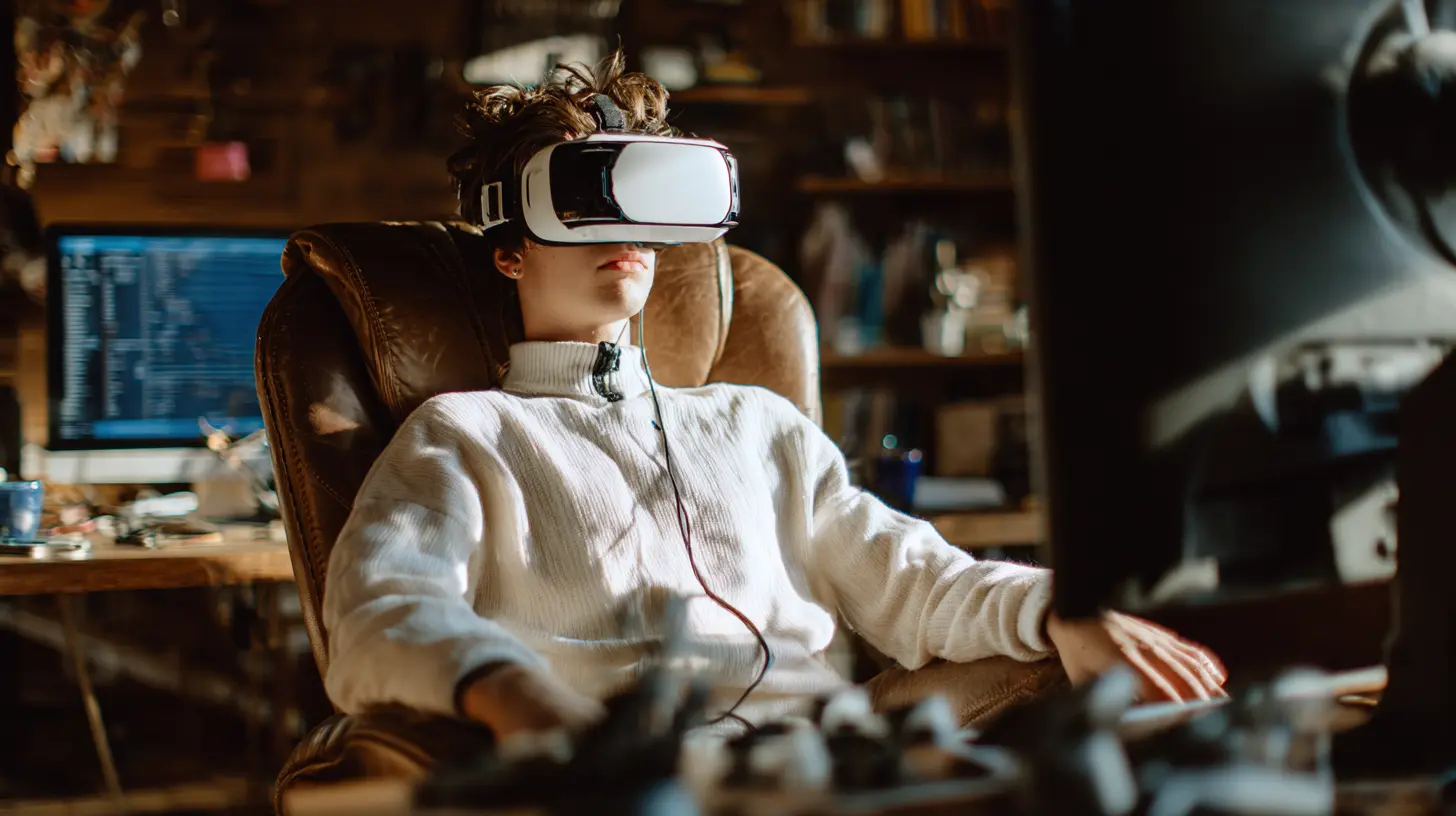
The buzz around the Metaverse has been loud, but by 2026, the hype will crystallize into practical, powerful tools. We won't all be living in VR goggles, but spatial computing—technology that understands and blends with the physical space around us—will become a standard layer in the remote work tech stack.The Hybrid Reality Workspace
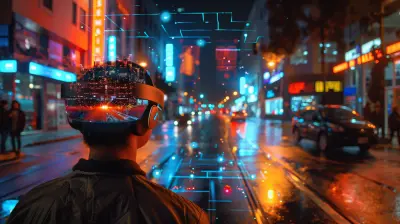
Forget the flat screen. Your next major project kickoff might happen in a hybrid-reality space. You’re physically at your kitchen table, but through lightweight AR glasses or a sophisticated screen, your teammates appear as holographic avatars around a 3D model of the product you’re designing. You can walk around it, point to components, and manipulate prototypes with gestures that feel as natural as pointing your finger. This is spatial computing: merging digital objects and people into your real-world environment in a way that feels cohesive.For deep collaborative work like design, architecture, or complex data visualization, VR will offer unparalleled "presence." The feeling of being there with someone, sharing a virtual space where you can make eye contact, use natural gestures, and focus on a shared object without distraction, is a quantum leap over today's gallery-view video calls. It solves the "single screen" problem, where we’re forced to choose between seeing someone's face and seeing the work. In a VR workspace, you can have both, naturally.
The Asynchronous 3D World
And it won't all be real-time. Imagine recording a 3D "walkthrough" of a financial model or a new website architecture. Your colleague, halfway across the world, can put on their AR glasses later and step into your recording, pausing, zooming, and leaving voice notes pinned to specific parts of the model. It’s like the evolution from a flat email to a Loom video, but into three dimensions. This makes deep, complex knowledge transfer asynchronous—preserving nuance and context that a 2D document or video simply cannot.
Hyper-Automation & The Invisible Workflow
A colossal amount of remote work is still administrative overhead: scheduling, note-taking, updating project statuses, chasing approvals, and formatting documents. By 2026, this "work about work" will be largely automated—not in clunky, rule-based ways, but through intelligent, learning systems.The Self-Running Project
Your project management tool will evolve into a project orchestration engine. At the start of a project, you’ll define the goal, constraints, and team. The AI will then draft the initial plan, assign tasks based on historical performance data and current bandwidth, set up automated check-in systems, and even predict bottlenecks before they happen. When a delay in one task occurs, it doesn't just turn a card red; it automatically reschedules dependent tasks, notifies impacted team members with revised deadlines, and suggests reallocation of resources.Documentation will write itself in the background. Meetings will have AI-generated transcripts, summaries, and action items that are instantly integrated into task lists and calendars. Expense reports, time tracking, and compliance logs will be passively compiled from your digital activity. This hyper-automation will free up what remote workers need most: long, uninterrupted stretches of time for deep, creative, and strategic thinking. It turns the manager—and the individual contributor—from an administrative overseer into a true pilot.
The Human-Centric Security Blanket
With this explosion of connected, ambient, and AI-driven tech, security and privacy become paramount—and more complex. The castle-and-moat security model (secure the corporate network perimeter) is already obsolete in a remote world. The future lies in zero-trust architecture and behavioral biometrics.By 2026, security won't just be about passwords and VPNs. It will be continuous and invisible. Your work system will constantly verify your identity based on a combination of factors: your typing rhythm, your typical access patterns, the way you hold your device, even your location patterns. It will understand that a login attempt from your home office at 10 AM is normal, but the same attempt to access a sensitive financial file from a new device in a different country at 2 AM is not.
Furthermore, security will extend to your well-being. "Digital hygiene" tools will evolve from simple screen-time trackers to advanced guardians of your focus and mental space. They will intelligently filter notifications not just by app, but by the cognitive load required. They might "lock down" your workspace two hours before a big presentation to prevent last-minute distractions or suggest a "communication detox" period after six back-to-back meetings. In the future, the most secure system will also be the one that best protects your human capacity to work sustainably.
Conclusion: The Seamless Tapestry of Work and Life
So, what does the remote worker’s day look like in 2026 and beyond? It’s less about "remote" as a location and more about "optimized" as a state. You move fluidly through modes of work: deep-focus pods in your home, immersive collaborative sessions in VR with your global team, asynchronous reviews of 3D models, and all of it orchestrated by an AI co-pilot that handles the friction.The technology itself becomes like electricity—ubiquitous, essential, and invisible when it’s working perfectly. It won't ask us to adapt to the limitations of the office metaphor. Instead, it will finally adapt to the limitless, varied, and profoundly human ways we actually think and create. The goal is no longer to connect to an office, but to connect more meaningfully to our work and to each other, unbounded by geography but deeply enhanced by technology that feels less like a tool and more like a part of us. The future isn't just working from home; it's working from potential.
all images in this post were generated using AI tools
Category:
Tech For Remote WorkAuthor:

Ugo Coleman
Discussion
rate this article
2 comments
Winter Powell
I'm fascinated by the potential innovations in remote work tech. How do you envision AI shaping collaboration tools and work-life balance in the coming years?
April 21, 2026 at 2:26 AM
Ugo Coleman
AI will likely enhance collaboration tools by making them more intuitive and personalized. We may see smarter scheduling assistants, improved communication platforms that understand context, and tools that help maintain boundaries for work-life balance. This could create a more seamless and productive remote work experience.
Asher McNeil
Exciting innovations await in remote work!
April 19, 2026 at 3:33 AM
Ugo Coleman
Absolutely! The future of remote work tech is full of potential, and I can't wait to see what's next.