The Future of Workspaces for Global Travelers in 2026
29 April 2026
Picture this: You’re sipping a flat white in a co-working space in Lisbon at 9 AM, jumping on a Zoom call with a client in Tokyo, then editing a project file for a team in New York by noon. By 2 PM, you’ve packed your laptop bag and hopped on a train to Porto, where your “office” for the afternoon is a sun-drenched library with free Wi-Fi and a view of the Douro River. Sound like a fantasy? For many global travelers, this is already Tuesday. But by 2026, this lifestyle won’t be a niche—it’ll be the new default.
I’ve been a digital nomad for over five years, hopping between 30 countries, and let me tell you: the workspace game is changing faster than you can say “passport stamp.” In 2026, the way we work while traveling isn’t just about finding a reliable outlet or a strong Wi-Fi signal. It’s about rethinking the very concept of an office—turning it into something fluid, intuitive, and deeply personal. So grab your favorite travel mug, settle in, and let’s explore what the future holds for workspaces for global travelers in 2026.
The Death of the Fixed Desk: Why “Your Seat” Is Dead
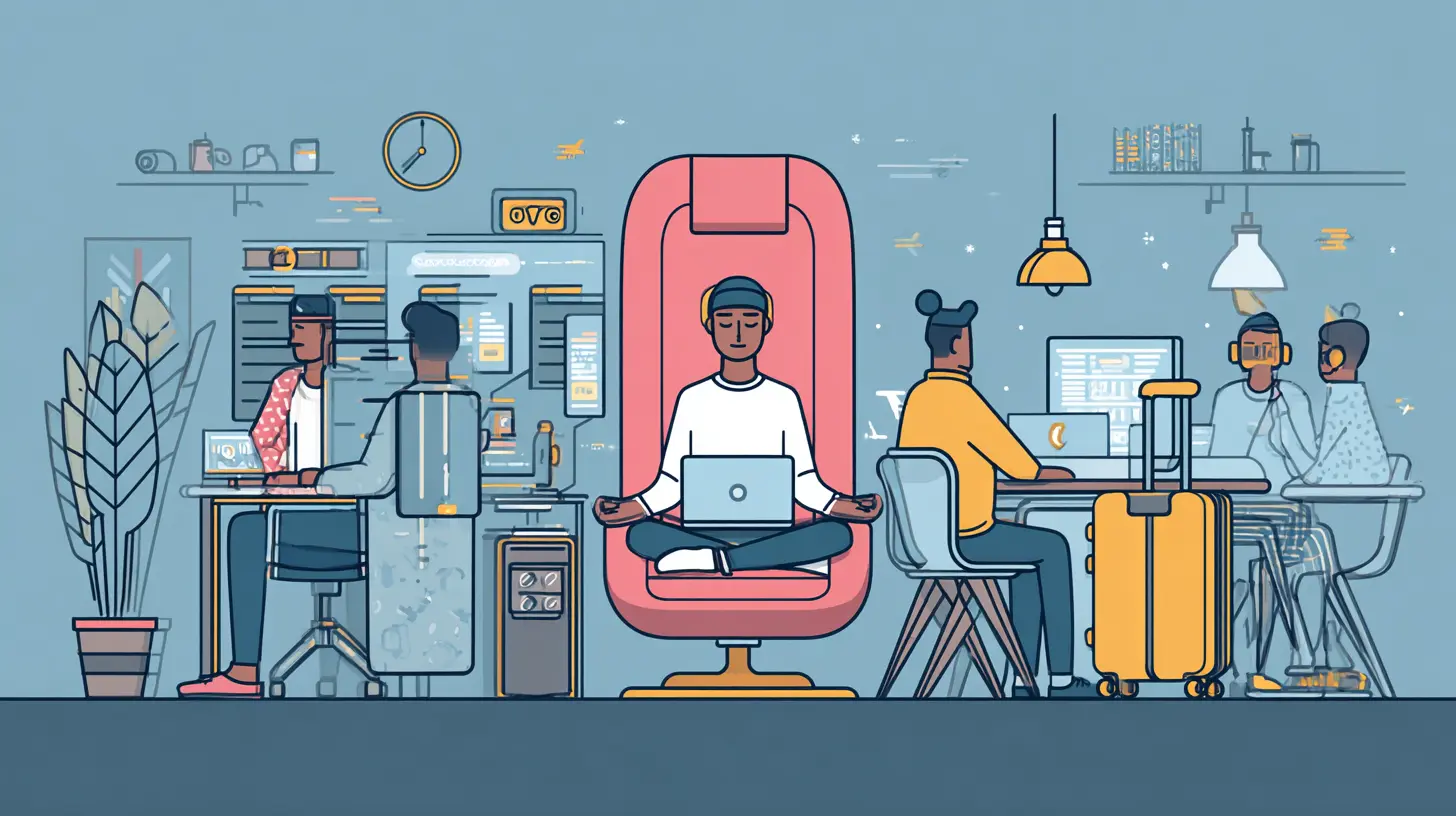
Remember when offices had assigned desks? That little plaque with your name, the family photo, the stress ball collection? Yeah, that’s about as relevant as a fax machine in 2026. For global travelers, the idea of a fixed workspace is not just impractical—it’s laughable. You’re not a plant; you don’t need to root yourself in one spot.In 2026, workspaces are designed to be transient, modular, and on-demand. Think of them like a pop-up restaurant: here today, gone tomorrow, but always perfectly curated for the moment. Co-working spaces, for instance, have evolved into “work hubs” that let you book by the hour, day, or even by the “activity.” Need a quiet zone for deep focus? There’s a soundproof pod for that. Craving collaboration? There’s a communal table with whiteboard walls and integrated digital screens. The key here is frictionless access—no contracts, no membership fees, just a tap on your phone and you’re in.
But it goes deeper. In 2026, your “desk” is wherever you are, and it’s smart. Imagine a chair that adjusts its lumbar support based on your biometric data from your smartwatch, or a desk that rises to your exact height automatically when you sit down. That’s not sci-fi; that’s the reality for travelers who’ve embraced the “ambient workspace.” The fixed desk is dead because the fixed worker is dead. You’re a butterfly, not a paperweight.
Connectivity Beyond the Hotspot: The Rise of 7G and Satellite Mesh Networks
Let’s be real: nothing kills the vibe of a global traveler faster than a spinning wheel of death on a video call. In 2025, we’re still wrestling with spotty Wi-Fi in hostels and coffee shops. But by 2026, connectivity will be as ubiquitous as oxygen. I’m not exaggerating.Enter 7G networks and satellite mesh systems. You’ve heard of Starlink, right? Well, in 2026, satellite internet isn’t just for remote cabins in Montana—it’s for everyone. Imagine landing in a tiny village in the Andes, pulling out a pocket-sized satellite receiver the size of a smartphone, and getting 1Gbps speeds within seconds. No more hunting for cafes with “good Wi-Fi” (which, let’s face it, is always a gamble). The network is you.
But here’s the game-changer: mesh networks that piggyback on other travelers’ devices. Think of it like a friendly neighborhood Wi-Fi, but global. If you’re in a remote co-working space in Bali and the local infrastructure falters, your laptop can automatically connect to nearby devices—other travelers, smart furniture, even street lamps—to create a decentralized, encrypted connection. It’s like a digital handshake that says, “Hey, I’ve got bandwidth to share.” For global travelers in 2026, connectivity isn’t a luxury; it’s a utility, like water or electricity. And it’s always on.
The “Third Place” Revolution: Beyond Coffee Shops and Libraries
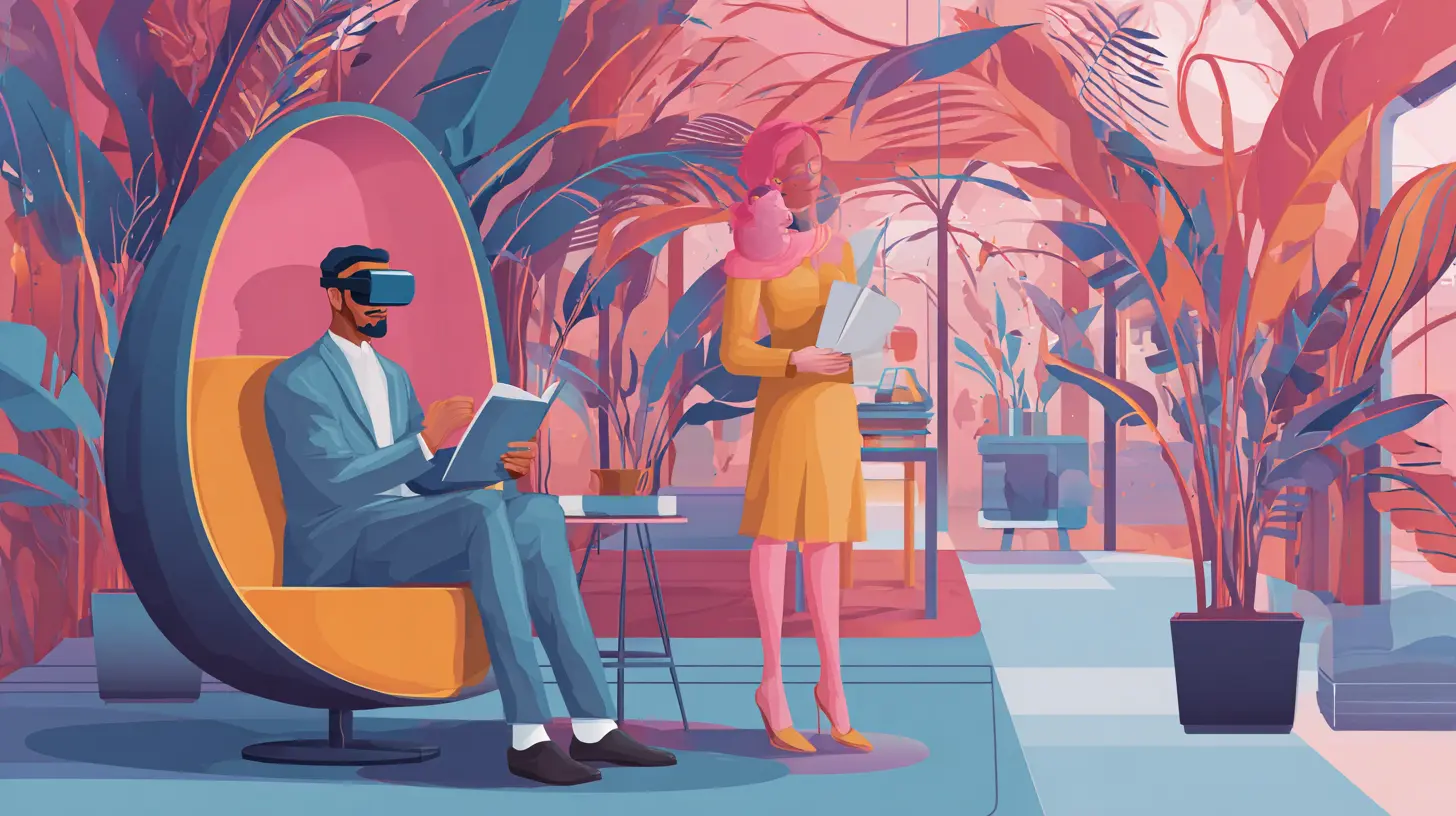
Sociologist Ray Oldenburg coined the term “third place” to describe spaces that aren’t home or work—think coffee shops, bookstores, and pubs. In 2026, the third place is getting a massive upgrade for travelers. We’re talking about spaces that blur the line between work, leisure, and community so seamlessly that you forget you’re even working.Imagine a “work lounge” inside a boutique hotel in Marrakech that doubles as a tea house and a gallery. You’re typing away on your laptop while a local artist paints murals on the wall behind you. Or a co-working space in Berlin that transforms into a DJ club at 6 PM, with the same desks becoming cocktail tables. The point is, in 2026, workspaces are designed to feel like experiences, not obligations.
For travelers, this is a godsend. You don’t have to choose between being productive and being present. Instead, you can work from a rooftop in Chiang Mai that has a built-in herb garden (free mint for your mojito, anyone?) or a floating office on a canal in Amsterdam. These spaces are hyper-local—they reflect the culture of the city you’re in, not some generic corporate design. And they’re curated by algorithms that learn your preferences. If you’re a morning person who needs natural light and silence, your app will suggest a sun-drenched library in Tokyo. If you’re a night owl who thrives on background chatter, it’ll point you to a lively co-working café in Medellín. The third place isn’t just a physical location anymore; it’s a personalized ecosystem.
AI-Powered Personal Workflow Assistants: Your Digital Sherpa
Let’s talk about the elephant in the room—or rather, the AI in your pocket. By 2026, every global traveler will have a personal workflow assistant that’s smarter than your average Siri or Alexa. I’m talking about an AI that anticipates your needs before you even think of them.Here’s how it works: You’re flying from Buenos Aires to Barcelona. Your AI assistant knows your flight time, your jet lag patterns, and your work schedule. It automatically pre-books a workspace near your hotel that opens at 7 AM local time (because it knows you’ll be awake at 4 AM thanks to the time zone shift). It syncs your calendar with the local co-working space’s booking system, adjusts the lighting and temperature in your pod based on your past preferences, and even orders your usual oat milk latte from the café downstairs—all before you’ve touched down.
But it doesn’t stop at logistics. This AI is a content assistant, too. It summarizes your emails, prioritizes your tasks, and even writes drafts for you. For a content writer like me, this is a double-edged sword. But honestly, it’s a lifesaver when you’re juggling deadlines across time zones. The AI doesn’t replace your creativity; it handles the grunt work so you can focus on the big ideas. Think of it as a digital sherpa, carrying the heavy backpack of admin tasks while you enjoy the view.
Sustainable Workspaces: The Green Revolution on the Road
Here’s a truth bomb: the global traveler lifestyle has a carbon footprint problem. All those flights, all that single-use coffee cups, all that energy-guzzling tech. By 2026, that’s no longer acceptable—not to the planet, and not to the travelers themselves. Workspaces are going green, and I mean really green.Imagine a co-working hub in Costa Rica that runs entirely on solar power and collects rainwater for its plants. Or a workspace in Copenhagen that’s built from recycled shipping containers and uses geothermal heating. For travelers, sustainability isn’t just a badge of honor; it’s a requirement. Many workspaces in 2026 will offer “carbon-neutral credits” as part of your booking fee, offsetting your stay through reforestation projects or renewable energy investments.
But it’s also about the little things. Smart desks that power down your devices when you step away. Biodegradable keyboards made from algae. Chairs upholstered with ocean-recovered plastics. The workspace of 2026 is designed to make sustainability effortless. You don’t have to think about it—the infrastructure does the heavy lifting. And for travelers who care about leaving a place better than they found it, that’s a huge win.
The Hybrid Accommodation-Work Model: Live-Work-Play in One
One of the biggest headaches for global travelers is juggling accommodation and workspace. You book an Airbnb, but the Wi-Fi is trash. You find a great co-working space, but it’s a 30-minute commute from your hostel. In 2026, this friction disappears with the rise of “work-stays.”These are purpose-built spaces that combine hotel rooms, co-working areas, gyms, and social lounges under one roof. Think of them as all-inclusive resorts for digital nomads. You check in, and your “room” is actually a suite with a built-in standing desk, a noise-canceling window, and a smart bed that adjusts to your sleep cycle. Downstairs, there’s a co-working floor with private phone booths, podcast studios, and even 3D printers for side projects.
But the real magic is in the community. These work-stays host weekly networking events, skill-sharing workshops, and cultural excursions. You’re not just sleeping and working; you’re living a lifestyle. Brands like Selina and Roam have been pioneers, but by 2026, every major city will have a dozen such options. The line between work and leisure is so blurred that you might as well call it “wurkisure.” And honestly? It’s glorious.
The Rise of “Micro-Offices” in Unexpected Places
What if your workspace could fit in your backpack? In 2026, micro-offices are becoming a reality. These are portable, modular units that you can set up anywhere—a park bench, a train station, a beach. We’re not talking about a laptop stand here; we’re talking about fully equipped, compact pods.Imagine a briefcase that unfolds into a soundproof booth with a built-in monitor, keyboard, and noise-canceling panels. Or a “smart scarf” that doubles as a privacy screen and a microphone array for calls. These micro-offices are powered by ultra-thin solar panels and connect to satellite networks. For global travelers, they’re the ultimate freedom tool. You can work from the summit of a mountain in Nepal or the middle of a desert in Morocco, and nobody would know you’re not in a traditional office.
But here’s the twist: these micro-offices are also social. They come with AR (augmented reality) features that let you see virtual colleagues sitting next to you, making remote collaboration feel more human. It’s like having a co-working space in your pocket. As one nomad friend told me, “It’s not about escaping the office; it’s about bringing the office with you, but only the good parts.”
The Psychological Shift: Embracing the “Fluid Identity”
All this technology and infrastructure is great, but let’s not forget the human element. By 2026, global travelers will have to grapple with a psychological shift: the death of the “work-life balance” myth. Instead, we’ll embrace a “work-life integration” that’s fluid, messy, and beautiful.Workspaces in 2026 are designed to support this integration. They have nap pods for when jet lag hits, meditation rooms for mental clarity, and even “digital detox zones” where you’re encouraged to leave your devices behind. The workspace isn’t just a place to be productive; it’s a place to be human. For travelers, this is crucial. You’re not a machine churning out code or content; you’re a person navigating new cultures, new foods, and new rhythms. The best workspaces of 2026 will honor that.
There’s also a growing emphasis on “slow travel” workspaces. Instead of hopping cities every week, travelers are spending months in one place, renting a small apartment and working from a local hub. The workspace becomes a home base, a community anchor. It’s less about the Instagram shot of your laptop on a beach and more about building genuine connections. In 2026, the most successful global travelers will be those who prioritize depth over breadth.
A Final Thought: Your Workspace, Your Rules
So, what does all this mean for you, the global traveler in 2026? It means you have more choice than ever before. You can work from a floating office in Amsterdam, a sustainable pod in Costa Rica, or a micro-office on a train through the Swiss Alps. The technology is there, the infrastructure is there, and the culture is shifting.But here’s the real secret: the future of workspaces isn’t about the gadgets or the design. It’s about reclaiming your agency. You get to decide what “work” looks like for you. You get to choose the environment that fuels your creativity, the community that supports your growth, and the rhythm that honors your energy. The workspace of 2026 is a mirror of your values—flexible, sustainable, connected, and deeply personal.
So, are you ready to pack your bags and embrace this future? Because it’s already knocking on your door. And trust me, it’s going to be one hell of a ride.
all images in this post were generated using AI tools
Category:
Digital Nomad TechAuthor:

Ugo Coleman
Discussion
rate this article
2 comments
Juliet Hamilton
So, in 2026, my office is a coffee shop in Bali, and my main struggle is choosing between another latte or a stronger Wi-Fi signal. The future is wild, folks.
April 30, 2026 at 3:58 AM
Ugo Coleman
Sounds like a dream! Just make sure the coffee is good enough to fuel all that remote work.
Gavin McClendon
Finally, a workspace that offers stronger Wi-Fi than my willpower to actually see the sights. 🙌
April 29, 2026 at 11:28 AM
Ugo Coleman
Glad to hear the Wi-Fi is winning! Staying connected while exploring is key.