The Rise of Space Tourism and What It Means for Humanity
11 June 2026
Space tourism sounds like something straight out of a sci-fi novel, right? Just a few decades ago, the idea of regular folks heading to space was nothing more than a futuristic fantasy. But here we are, standing at the dawn of a new era where booking a trip to orbit is slowly becoming a reality.
Billionaires are battling it out in the great space race, ticket prices are (sort of) creeping down, and the dream of sipping coffee while floating in zero gravity is no longer reserved for astronauts. But what does this mean for humanity? Is space tourism just a rich person's playground, or is it the stepping stone to something much bigger?
Let’s dive into this cosmic adventure and see where it takes us. 
The Dawn of Space Tourism: From Dream to Reality
Space tourism didn’t just pop up overnight. It has been brewing for decades, waiting for technology and ambition to catch up.The first-ever “space tourist” was Dennis Tito, an American businessman who paid a whopping $20 million in 2001 to hitch a ride to the International Space Station (ISS) aboard a Russian Soyuz spacecraft. That was just the beginning.
Fast forward to today, and private companies like SpaceX, Blue Origin, and Virgin Galactic are leading the charge, making space travel more accessible—well, relatively speaking.
So, how did we go from government-controlled space missions to private companies offering joyrides beyond Earth’s atmosphere? It all boils down to three things:
- Advancements in technology – Reusable rockets have significantly reduced launch costs.
- Billionaire-backed ventures – Elon Musk, Jeff Bezos, and Richard Branson have invested billions into making space tourism a viable industry.
- Public fascination – The idea of floating in space and gazing at Earth from above is something that captivates people worldwide.
It’s no longer a question of “if” space tourism will take off; it’s now a question of “when” it will become affordable for the average person. 
Who’s Leading the Race? Meet the Players
If space tourism were a blockbuster movie, these would be the main characters:1. SpaceX – Elon’s Galactic Ambitions
Elon Musk isn’t just aiming for space tourism—he’s thinking much bigger. His company, SpaceX, has developed reusable rockets like the Falcon 9 and Starship, which are expected to revolutionize space travel.Musk’s ultimate goal? Colonizing Mars. But in the meantime, SpaceX is offering private missions, including all-civilian spaceflights like the Inspiration4 mission in 2021.
2. Blue Origin – Jeff Bezos’ Space Playground
Jeff Bezos, the founder of Amazon, is behind Blue Origin, a company that aims to make space tourism accessible—starting with suborbital joyrides.Their New Shepard rocket has already taken civilians, including 90-year-old William Shatner (yes, Captain Kirk himself), on brief space trips. The experience includes a few minutes of weightlessness and a breathtaking view of Earth before descending back home.
3. Virgin Galactic – Branson’s Space Roller Coaster
Richard Branson’s Virgin Galactic is targeting thrill-seekers with its spaceplane-style flights. These trips offer a taste of zero gravity and a jaw-dropping space view—without actually going into orbit.Branson even beat Bezos to space in 2021, proving that competition in this industry is fiercer than ever. 
What Space Tourism Means for Humanity
Now, let’s get philosophical for a second. Beyond the flashy headlines and billionaire flexes, what does space tourism really mean for us as a species?1. A New Perspective on Earth
You know that feeling when you’re on an airplane and you suddenly realize how tiny everything looks? Now, imagine that times a thousand.Astronauts often talk about the "Overview Effect"—a profound shift in perspective when seeing Earth from space. It makes them appreciate our planet’s beauty and fragility. If more people, especially world leaders, got that perspective shift, maybe we’d start taking environmental issues more seriously.
2. The Gateway to Deep-Space Exploration
Today, we’re talking about short space trips; tomorrow, we might be planning vacations on the Moon or even Mars.Space tourism is helping fund research and development in space travel. The more frequent the flights, the cheaper and more efficient space technology will become. This could be the stepping stone to colonizing other planets—or at least setting up a nice cosmic Airbnb on the Moon.
3. Potential Boost in Scientific Innovation
Think of space tourism as the moon landing of the 21st century. Just like the Apollo missions led to countless technological advancements (hello, GPS and Velcro), space tourism could lead to new discoveries in materials, medicine, and even human biology.Who knows? Maybe one day, thanks to space research, we’ll have cures for major diseases or sustainable solutions for Earth’s energy crisis. 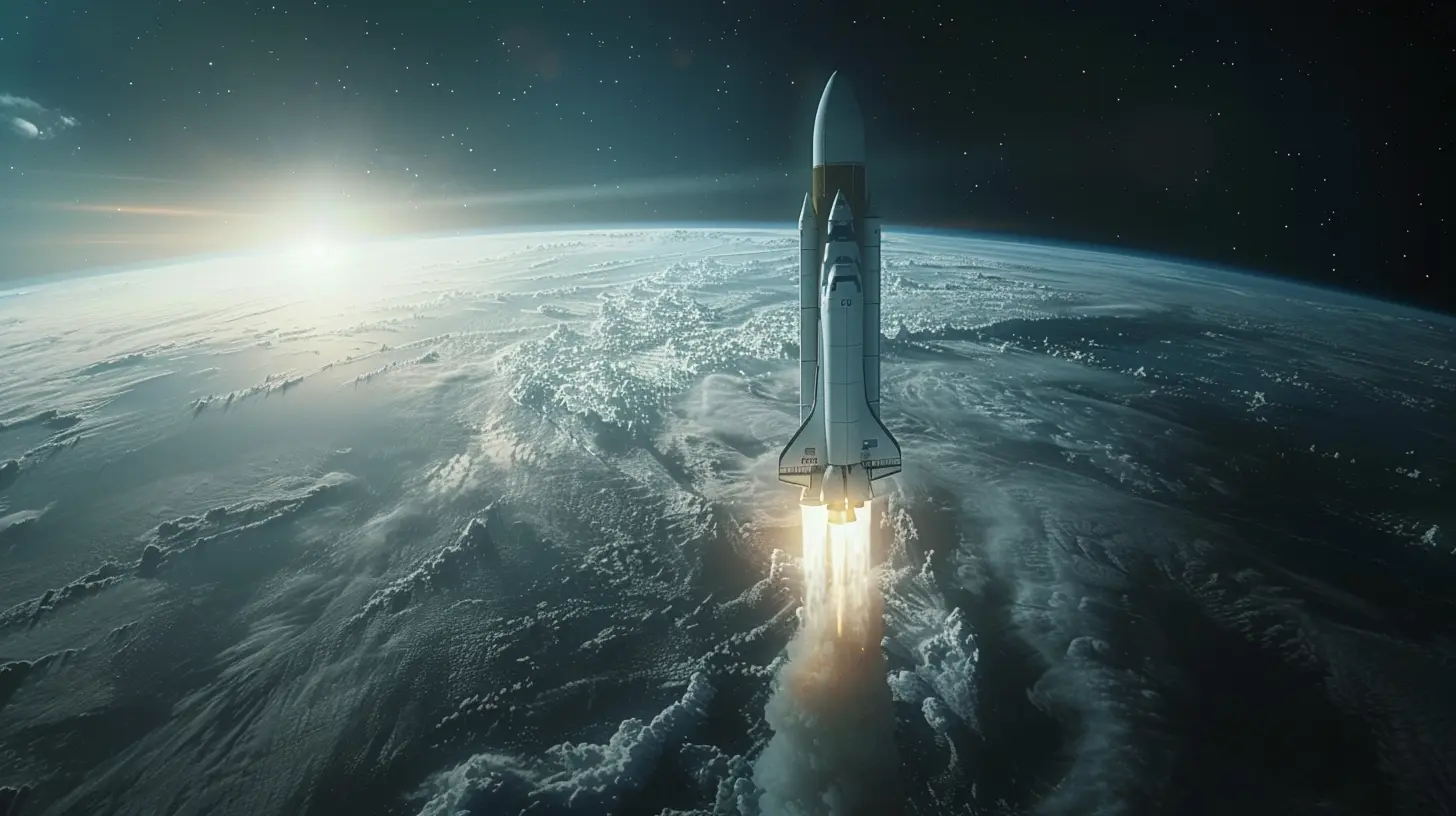
The Challenges & Ethical Dilemmas of Space Tourism
Before we start planning our zero-gravity vacations, let’s talk about the not-so-glamorous side of space tourism.1. The Price Tag – Only for the Ultra-Rich?
Right now, space tourism is a rich person’s hobby. Tickets range from hundreds of thousands to millions of dollars. Until prices drop dramatically, this industry will remain a luxury experience for the elite.But hey, remember when air travel used to be ridiculously expensive? Over time, costs decreased, and now budget airlines exist. Maybe space tourism will follow the same path.
2. Environmental Impact – A Cosmic Carbon Footprint
Rocket launches aren’t exactly eco-friendly. Each launch emits a significant amount of carbon dioxide and other pollutants.If space tourism scales up, we need to find sustainable solutions—because it would be ironic if exploring space came at the cost of damaging our own planet.
3. Space Junk – A Growing Problem
With more flights comes more debris. Earth's orbit is already cluttered with defunct satellites, expired spacecraft, and random bits of junk.If we don’t manage space debris properly, we could end up turning our orbit into a cosmic junkyard, making future space travel unsafe.
So, Will We All Be Space Tourists Someday?
It’s only a matter of time before space tourism becomes mainstream. Sure, it might take decades before the average person can afford a ticket, but if history has taught us anything, it’s that technology tends to advance faster than we expect.Think about it—just over a century ago, flying in an airplane was a wild idea. Today, it’s as common as hopping on a bus. Who’s to say the same won’t happen with space travel?
The real question is: Would you take the plunge into space if given the chance? Would you trade your beach vacation for a zero-gravity experience?
One thing’s for sure—humanity has always been drawn to the unknown. Space is no longer just for astronauts; it's becoming the next great adventure for all of us. And who knows? The next time you book a vacation, it might just come with a boarding pass to the stars.
all images in this post were generated using AI tools
Category:
Space TechnologyAuthor:

Ugo Coleman
Discussion
rate this article
1 comments
Marley McQuade
Space tourism is not just a dream anymore; it's becoming a reality. As private companies innovate, we may witness a new era of exploration and opportunity. This development could enhance our understanding of space and inspire future generations to reach for the stars.
June 14, 2026 at 3:47 AM
Ugo Coleman
Absolutely, it's an exciting time for space exploration. The advancements in space tourism are opening doors for future discoveries and inspiring people to think beyond our planet.