The Role of Exoplanet Research in Understanding Our Own Solar System
28 May 2026
Ever wondered what lies beyond our solar system? It’s a question that has captivated human curiosity for centuries. But thanks to advancements in technology, we're now closer than ever to answering it. One of the most intriguing methods scientists are using to explore the cosmos is exoplanet research. It’s not just about discovering planets orbiting distant stars—it’s also about unlocking the secrets of our own backyard, our solar system.
In this article, we’re diving deep into how studying exoplanets can actually shed light on the mysteries of our own solar system. Buckle up because we're about to explore some mind-blowing stuff!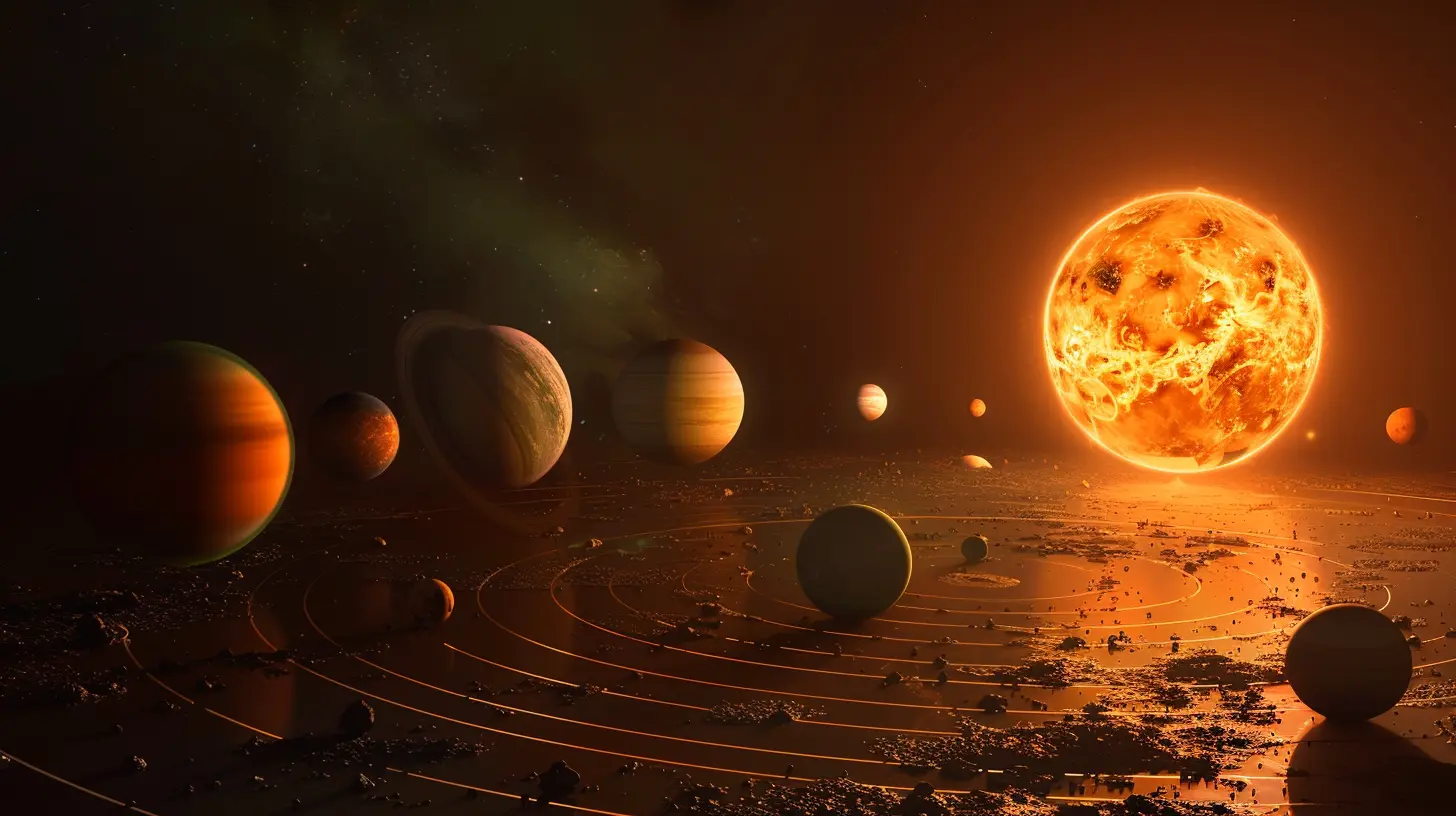
What Are Exoplanets?
Let’s start with the basics. An exoplanet is any planet that exists outside our solar system. These planets might be similar to Earth or vastly different. Some may be rocky, others gas giants, and some could even be entirely made of water!The idea of planets beyond our solar system was once pure speculation. But in 1992, astronomers confirmed the first exoplanet discovery, and since then, thousands more have been found, thanks to advanced telescopes like NASA’s Kepler and TESS missions.
Now, you might be wondering: how does studying these distant worlds help us understand our own solar system better? Let’s dive into that next.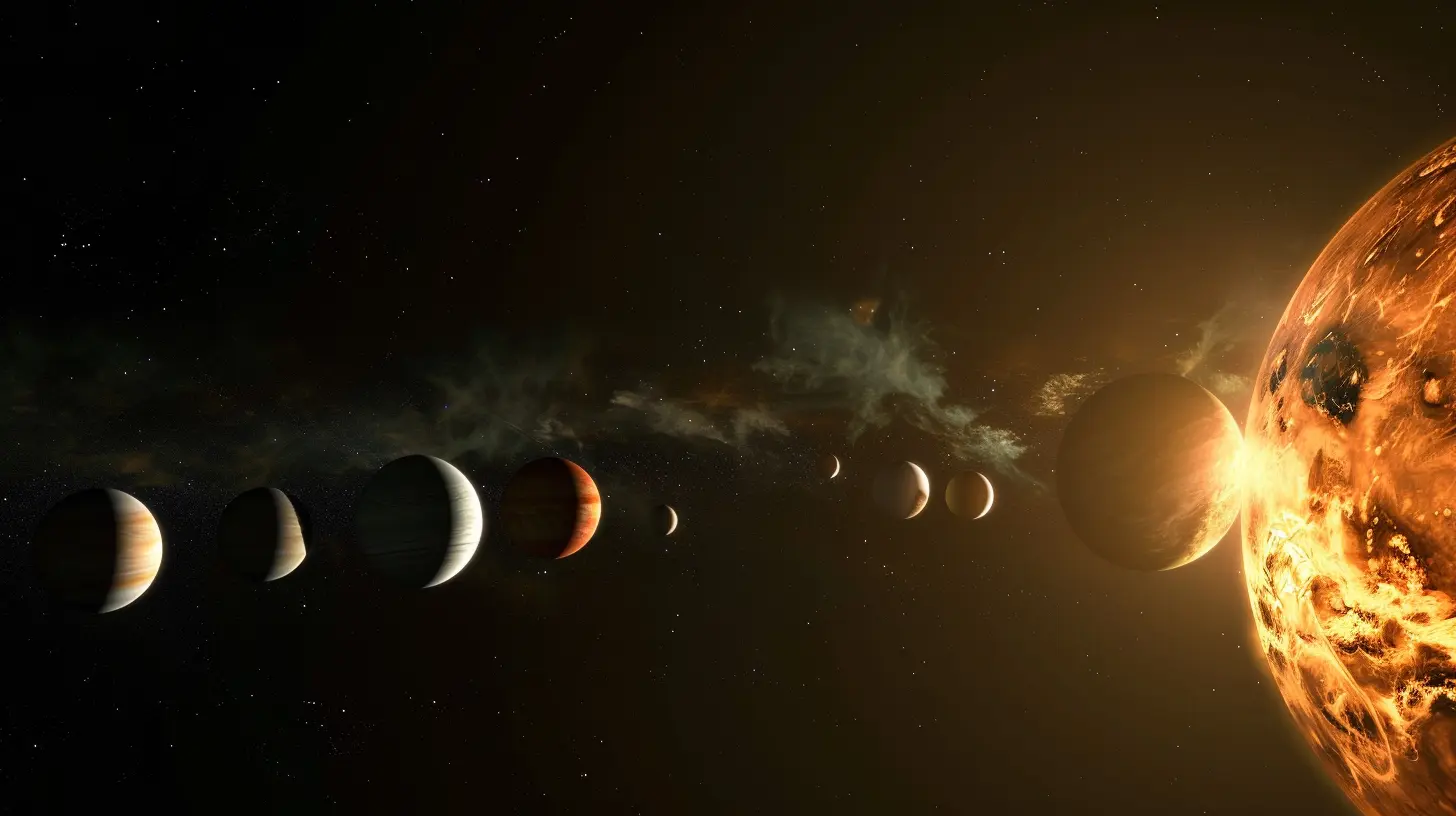
The Connection Between Exoplanet Research and Our Solar System
At first glance, exoplanets and our solar system seem like apples and oranges. Why would looking at planets trillions of kilometers away help us understand the planets we already know? Well, the answer lies in comparison.Think of it like this: Imagine you’re trying to understand the behavior of a cat. You could watch one cat all day, every day—but if you observe a hundred cats, you’d get a much better idea of what’s normal behavior and what’s unique. The same goes for planets.
By studying thousands of exoplanets, scientists can identify patterns that help them understand how solar systems form and evolve—including our own. Let’s break it down further.
1. Exoplanets Provide Clues About Planet Formation
One of the biggest questions in astronomy is how planets form. Our solar system gives some clues, but it only offers one example to study. By looking at other solar systems, scientists can gather more data and refine their theories.For instance, many exoplanets have been found in what’s called the “habitable zone,” the region around a star where liquid water could exist. Studying these planets helps scientists understand how Earth ended up in its sweet spot for life. It also raises questions—why don’t other planets in our solar system support life, even though they’re not too far from Earth?
In addition, when we observe how planets form in other systems, we can start to notice patterns. Some exoplanets form much closer to their stars than any of our planets. This has led scientists to rethink long-standing ideas about how planets form and move over time.
2. Exoplanet Atmospheres: Windows into Our Past and Future
Exoplanet research isn’t just about finding planets—it’s also about studying their atmospheres. By analyzing the light that passes through or reflects off an exoplanet’s atmosphere, scientists can determine its composition. This is key to understanding whether a planet could support life, but it also teaches us something about our own planets.For example, Venus and Earth are similar in size and location, but their atmospheres are wildly different—Venus is a scorching hellscape, while Earth is teeming with life. By studying exoplanets with atmospheres like Venus, we can better understand why these two planets evolved so differently.
It’s like looking at a “before and after” of our own solar system. What if Earth’s atmosphere had taken a different path? Could we have ended up like Venus?
3. The Role of Gas Giants in Planetary Systems
Gas giants—like Jupiter and Saturn—play a huge role in shaping solar systems. They can influence the orbits of smaller planets, act as shields by sucking in stray asteroids, or even fling objects out of the system entirely.When we look at exoplanets, we find gas giants in unusual places, like very close to their stars (these are called “hot Jupiters”). This has led scientists to rethink how gas giants form and move. Could Jupiter have migrated through the solar system in its early days? Some evidence suggests it might have, and studying exoplanets helps us build a clearer picture of how that could have happened.
In fact, the more gas giants we find in other systems, the more we realize how lucky we might be. Jupiter’s movement could have played a critical role in creating the stable environment that allowed Earth to develop life.
4. Exoplanets and the Search for Life
Of course, one of the biggest goals of exoplanet research is finding life beyond Earth. But even if we don’t find E.T., the search for life on exoplanets tells us a lot about the conditions that make life possible—and helps us understand how life developed here.Scientists are particularly interested in “biosignatures,” chemical markers that indicate the presence of life. By studying exoplanets, we can learn what biosignatures might look like on planets with different atmospheres and environments. This, in turn, helps us understand Earth’s own biosignatures and the conditions that allowed life to flourish here.
And who knows? If we find life on an exoplanet, it might even give us clues about the origins of life on Earth. There’s a theory called “panspermia” that suggests life might have been seeded on Earth by comets or asteroids carrying microbes from other planets. Exoplanet research could help us test that theory.
The Technology Behind Exoplanet Discovery
Now, you might be wondering, “How exactly do scientists find these exoplanets?” After all, they’re incredibly far away and often too dim to see directly. The answer lies in some really clever techniques.1. The Transit Method
This is the most common way to detect exoplanets. When a planet passes in front of its star (from our point of view), it causes a slight dimming of the star’s light. By carefully measuring these tiny dips in brightness, scientists can detect the presence of a planet and even estimate its size.2. The Radial Velocity Method
This method looks for “wobbles” in a star’s movement. As a planet orbits a star, its gravity pulls on the star slightly, causing it to move in a tiny circle. By measuring the star’s motion, scientists can infer the presence of a planet and estimate its mass.3. Direct Imaging
While it’s incredibly difficult to directly photograph an exoplanet (since they’re so dim), it’s not impossible. With advanced techniques like coronagraphs (which block out the star’s light), astronomers have been able to capture images of a few exoplanets.Each of these methods has its strengths and weaknesses, and together, they give us a fuller picture of the exoplanets we’re discovering.
What’s Next for Exoplanet Research?
The field of exoplanet research is still in its infancy, but the future looks incredibly exciting. With the launch of the James Webb Space Telescope, we’re about to get an even better look at these distant worlds. This telescope is designed to study the atmospheres of exoplanets in unprecedented detail. Who knows what we might find?We’re also developing new ways to look for life. The next generation of telescopes will be able to directly image Earth-like planets and search for biosignatures. In the coming decades, we might finally answer one of humanity’s biggest questions: Are we alone in the universe?
Final Thoughts: Why Exoplanet Research Matters
So, what’s the takeaway here? Exoplanet research isn’t just about finding strange new worlds—it’s about understanding our own. By studying how planets form, evolve, and interact with their environments, we can learn more about the history of our solar system and the future of our planet.In a way, exoplanet research is like holding up a mirror to the universe. The more we learn about other planets, the more we understand about ourselves.
The next time you look up at the night sky, remember: Out there, somewhere, is a planet just like ours, waiting to be discovered. And who knows? The secrets of that distant world might hold the key to unlocking the mysteries of our own.
all images in this post were generated using AI tools
Category:
Space TechnologyAuthor:

Ugo Coleman
Discussion
rate this article
2 comments
Allegra McDonald
This article effectively highlights the parallels between exoplanets and our solar system, yet it could delve deeper into how findings directly impact Earth's future.
September 14, 2026 at 2:56 AM
Ugo Coleman
Thanks for your feedback! I appreciate your point and will consider expanding on the implications for Earth's future in future discussions.
Echo Cole
This article beautifully highlights the connection between exoplanet research and our solar system. It's inspiring to see how exploring distant worlds helps us appreciate our own home.
June 7, 2026 at 4:14 AM
Ugo Coleman
Thank you for your kind words! I'm glad you found the connection inspiring. Exploring exoplanets truly deepens our understanding of home.