The Role of Low Earth Orbit Satellites in Global Connectivity
3 February 2026
Imagine a world where internet access is as easy and universal as turning on a light switch, regardless of whether you're in the heart of Manhattan or on a boat in the middle of the Pacific. Sounds like sci-fi, right? Well, thanks to Low Earth Orbit (LEO) satellites, this vision is becoming more real every single day.
These satellites — tiny tech marvels orbiting closer to Earth than their traditional counterparts — are flipping the connectivity game on its head. So grab your favorite beverage, settle in, and let’s unpack how LEO satellites are reshaping global connectivity in the most exciting ways possible.
🌍 What Are Low Earth Orbit (LEO) Satellites?
Before we go dancing in the digital clouds, it helps to understand what LEO satellites actually are. Think of LEO satellites as the agile hummingbirds of space tech. They orbit the Earth at altitudes ranging between 160 km and 2,000 km — that's way closer than the older geostationary beasts chilling at 35,786 km.Because LEO satellites are so close to Earth, they can zoom around the planet in about 90 to 120 minutes. That’s fast — like, blink-and-they’re-gone fast. And here’s where it gets cool: this proximity allows them to provide high-speed, low-latency internet that feels snappy and responsive, especially compared to old-school satellite internet.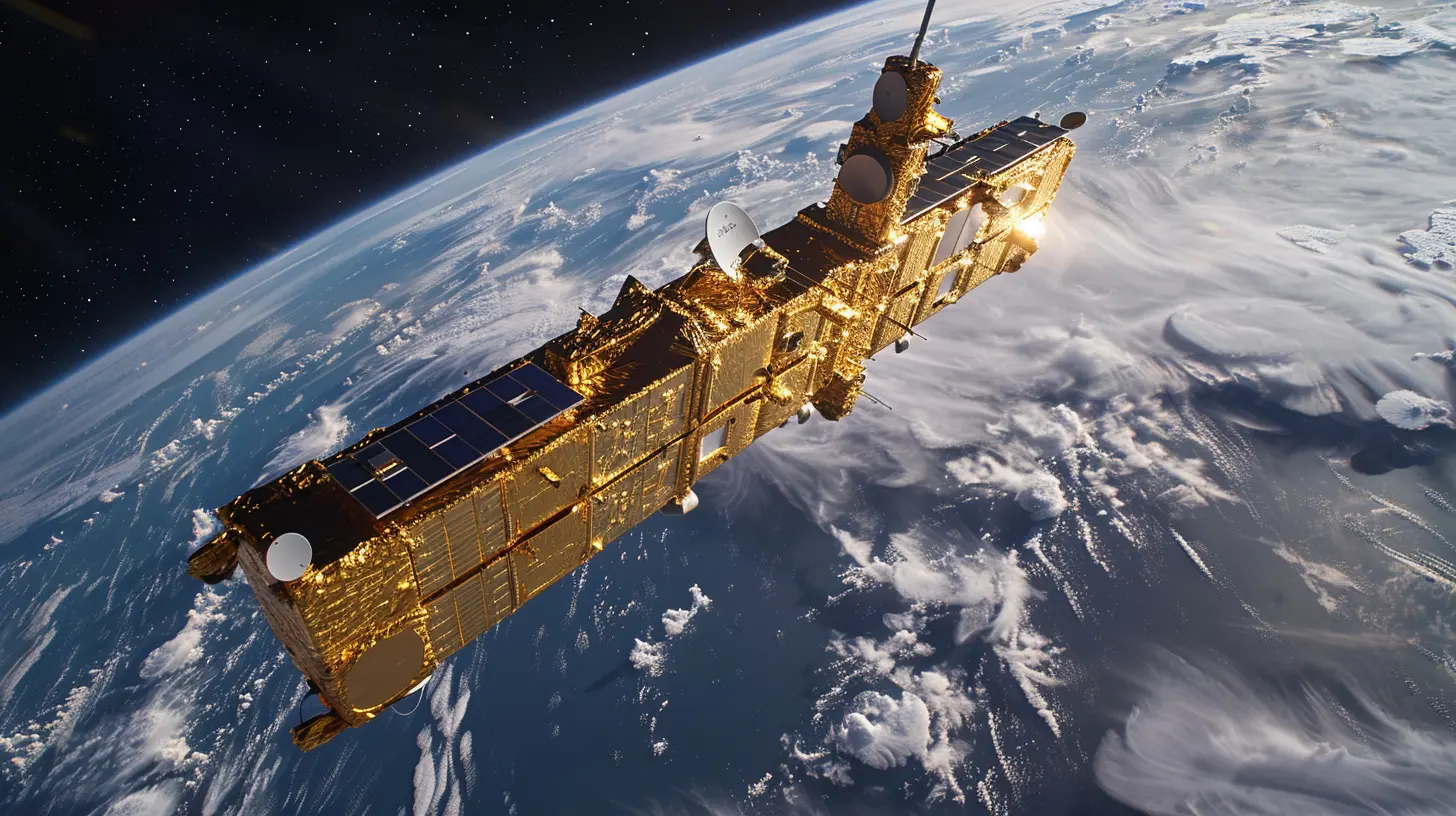
📡 Why Are LEO Satellites a Game-Changer for Internet Connectivity?
Ever tried loading a webpage in a remote area and felt like you were communicating with Mars? That’s latency in action. The further the signal has to travel, the longer it takes. Enter LEO satellites: they slash latency, boosting speed and performance dramatically.Let’s break down the magic:
⚡ Low Latency = Faster Connection
Because LEO satellites are so close to Earth, sending and receiving data doesn’t take as long. Traditional satellites can take up to 600 milliseconds round-trip. LEO satellites? We're talking 20-40 milliseconds — way more competitive with fiber.🌐 Global Coverage, Even in the Boonies
One major bonus of LEO networks is their potential to provide internet across every inch of the globe — forests, deserts, oceans, you name it. No cables required. This is especially huge for rural and underserved communities that traditional broadband just doesn’t reach.🚀 Scalable and Flexible
LEO satellite networks aren't tied down like terrestrial infrastructure. Need to upgrade capacity? Just launch more satellites into orbit. It’s modular innovation — just like adding new apps to your phone without needing a whole new device.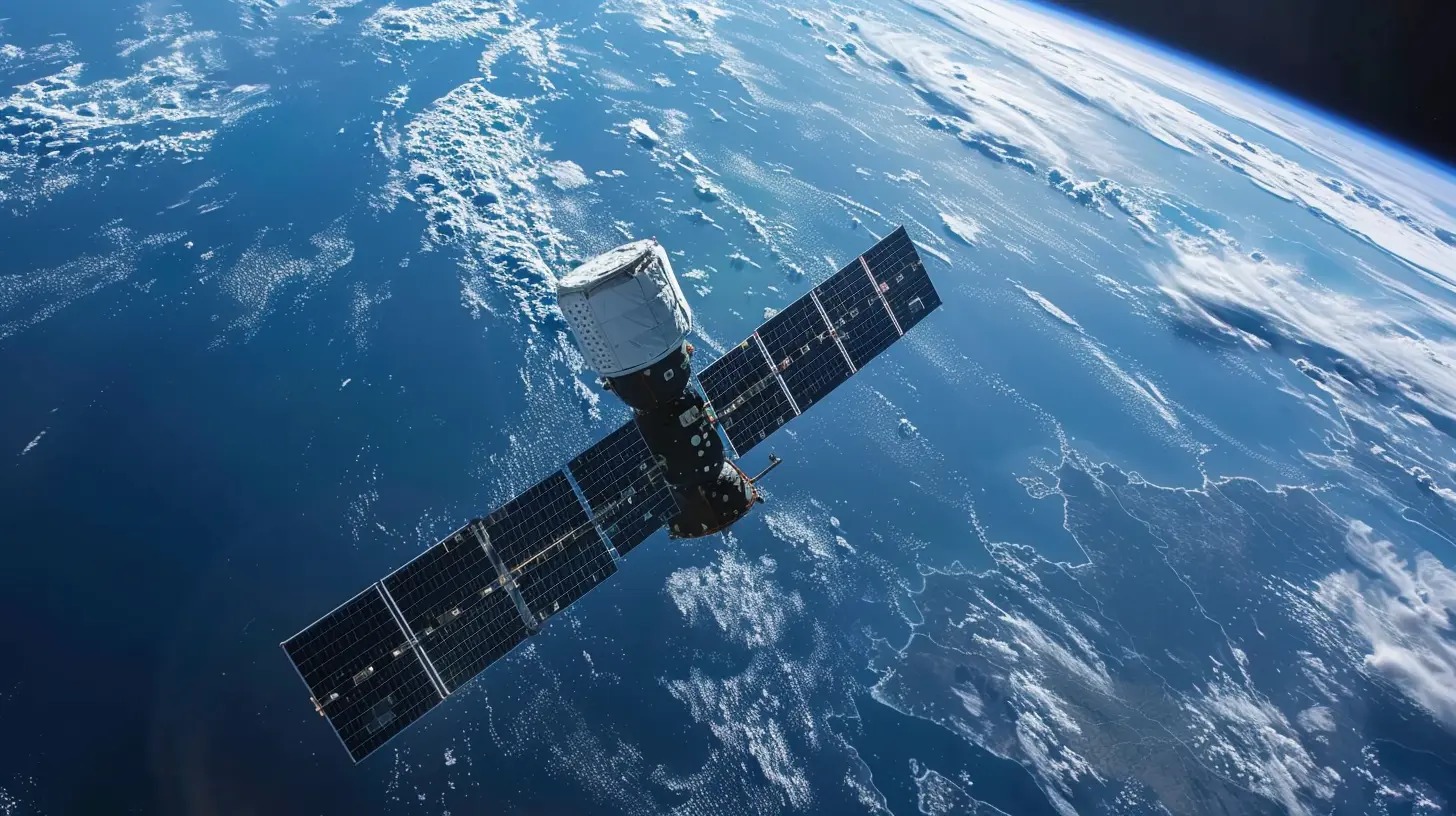
🌍 How LEO Satellites Are Bridging the Global Digital Divide
Okay, let’s get real for a second. Nearly 2.6 billion people around the world still don’t have reliable internet access. That’s a third of humanity left in digital darkness. LEO satellites are stepping up as the knight in shiny (orbital) armor to fix that.Picture a child in a remote Alaskan village, a farmer in rural Kenya, or an entrepreneur on a small island in the Philippines. These are real people whose lives could be transformed through accessible internet. Education, healthcare, economic opportunities — all open up when people are connected.
And LEO networks have the magic sauce to deliver that connection without digging trenches for fiber or putting up miles of cell towers.
🛰️ Who’s Leading the Charge in LEO Satellite Networks?
If you’ve caught wind of SpaceX’s Starlink lately, you're already familiar with a major player. But it’s not a one-horse race. Several tech giants are investing heavily in LEO constellations to dominate the skies:🌟 Starlink by SpaceX
Probably the most talked-about LEO initiative, Starlink already has over 4,000 satellites in orbit with plans to increase that number big time. It’s offering beta services across North America, Europe, parts of Asia, and even Antarctica.💼 OneWeb
Backed by the UK government and Bharti Global, OneWeb is targeting global broadband coverage with a planned fleet of 648 LEO satellites. Their goal? Connect the unconnected.🛰️ Amazon's Project Kuiper
Yes, Amazon wants a bite of the sky, too. Project Kuiper has approval to deploy over 3,000 satellites to provide broadband to the underserved. Talk about prime delivery, huh?🇨🇳 China’s GW Constellation
China isn’t sitting on the sidelines. The country has ambitious plans to launch its own LEO network, further fueling this orbital race.Each of these constellations could offer faster, more reliable, and more widespread internet access. It's like a modern-day space race — but instead of moon landings, we’re racing toward universal internet coverage.
🔄 LEO Satellites vs Traditional Satellites: What’s the Difference?
Think of it like comparing a sports car to a freight train. Both get you from point A to B, but one is agile, quick, and responsive, while the other is slow and steady.| Feature | LEO Satellites | Traditional (Geo) Satellites |
|--------|----------------|-------------------------------|
| Altitude | 160–2,000 km | ~35,786 km |
| Latency | 20–40 ms | 500–600 ms |
| Coverage Area | Smaller but scalable | Large fixed area |
| Speed | High | Moderate |
| Cost to Deploy | Lower per unit | Higher |
| Maintenance | Replaceable & modular | Complex |
Bottom line? LEO satellites are fast, flexible, and fine-tuned for the digital age. Traditional satellites still have roles to play (like TV broadcasting), but when it comes to broadband, LEO is the rising star.
💡 Challenges of LEO Satellite Networks
Okay, it’s not all sunshine and rocket fuel. Rolling out LEO satellite networks comes with its own set of challenges. Let's keep things honest and check out the bumps in the road:🚦 Space Traffic Jams
With thousands of satellites zipping around, space is getting pretty crowded. There’s growing concern about potential collisions and space debris — think cosmic bumper cars, but way scarier.📵 Latency Still Depends on Ground Infrastructure
Even LEO satellites need ground stations to relay data. In places where that’s lacking, performance can still lag. So while we're going wireless in the sky, the Earth-side gear still matters.💸 Cost to Consumers
While LEO satellite internet promises lower prices in the long term, current hardware (like Starlink's dish) isn’t exactly budget-friendly for everyone… yet. Prices are expected to drop as the tech matures, but we’re not quite there.🔄 Constant Replacement
Unlike their high-orbit cousins, LEO satellites don’t last forever — usually about 5-7 years. That means continuous launches and replacements. It’s like maintaining a fleet of digital hummingbirds that need to be swapped out regularly.🌈 The Bright Future of LEO Satellites
Despite the growing pains, the future is looking incredibly bright — and fast. As technology improves and companies scale out their satellite constellations, we can expect:- Cheaper and faster internet for rural and urban users alike
- Seamless connectivity for IoT devices everywhere
- Better infrastructure for smart cities and autonomous vehicles
- Emergency communication networks in disaster zones
- Enhanced global collaboration for education, work, and healthcare
Oh, and let’s not forget — LEO satellites are creating tons of jobs in innovation, engineering, data science, and more. It’s a whole new economy forming in orbit!
🛠️ How You Can Get Connected via LEO Satellites
Curious how you can actually use this tech? If you’re in an area where traditional internet is flaky at best, LEO internet might already be available.Here’s how to get started:
1. Check availability on the provider’s website (like Starlink.com).
2. Order a kit, which usually includes a small satellite dish and modem.
3. Set it up at home — it's pretty plug-and-play.
4. Connect to high-speed internet, even off the beaten path!
The user experience is steadily improving, and more providers are entering the market, meaning more competition and lower prices ahead.
🚀 Final Thoughts: Are LEO Satellites the Future of Global Connectivity?
In one word? Absolutely.LEO satellites are more than just flying boxes in space — they’re digital bridges connecting people, communities, and entire nations. They have the power to bring billions online, drive education forward, improve healthcare delivery, and open up global markets to entrepreneurs in the most isolated regions.
Sure, there are hurdles. But the momentum is too strong, the need is too pressing, and the potential is just too good to ignore. We’re on the cusp of a connected revolution, and it’s happening thousands of kilometers above our heads.
So next time you marvel at the stars, remember — some of them might just be delivering broadband.
all images in this post were generated using AI tools
Category:
TelecommunicationAuthor:

Ugo Coleman
Discussion
rate this article
2 comments
Lorelei Dorsey
Low Earth Orbit satellites are revolutionizing global connectivity, bridging digital divides and empowering communities worldwide. The future is bright—let's harness this technology to unite our planet!
February 22, 2026 at 7:50 PM
Ugo Coleman
Thank you for your insightful comment! Indeed, low Earth Orbit satellites are pivotal in enhancing global connectivity and fostering community empowerment. Together, we can leverage this technology for a more connected world.
Dulce Barrett
This article sheds light on the fascinating impact of low Earth orbit satellites on global connectivity. I'm intrigued by how these technologies can bridge gaps in communication and enhance access worldwide. Excited to see future developments!
February 6, 2026 at 1:28 PM
Ugo Coleman
Thank you for your enthusiasm! It's exciting to see how low Earth orbit satellites can truly transform global communication and access. Stay tuned for more developments!