Top Collaboration Tools That Will Dominate Remote Work by 2027
19 May 2026
Let's be real for a second. Working from home in 2024 feels a lot like the Wild West, but instead of horses and six-shooters, we have laggy Zoom calls and a blinking cursor that judges your silence. We have traded the water cooler for a Slack channel that is either a ghost town or a dumpster fire of GIFs. We are all supposed to be "thriving" in this digital paradise, but half the time I am just trying to figure out why my microphone stopped working right before I had to speak.
But here is the thing: we are not going back. The genie is out of the bottle. By 2027, remote work won't be a perk; it will just be how work works. The tools we use today are clunky, noisy, and frankly, a little desperate. They are trying to be everything to everyone. But the tools that will dominate in three years? They will be different. They will be quiet. They will be smart. And they will finally stop pretending that a virtual meeting is the same as a real one.
So, grab your third cup of coffee, mute yourself if you have to, and let's look into the crystal ball. Here are the collaboration tools that will actually rule the remote world by 2027.

The Death of the "Meeting" (And the Rise of Async)
Let's start with the biggest lie in remote work: the meeting. We have all been there. You block out two hours for "deep work," and then someone schedules a 30-minute "sync" that takes 45 minutes to figure out a decision that could have been an email. By 2027, we are going to look back at calendar invites the way we look at fax machines. They are a relic.The tools that will win are the ones that embrace asynchronous communication. This is fancy talk for "not forcing everyone to be online at the same time."
Loom 2.0 (or whatever it becomes)
Loom is already the MVP of async. You record your screen, you talk, you send the link. Done. No scheduling. No "can you hear me now?" But by 2027, Loom (or a competitor) will be so much more than a screen recorder. It will be your primary communication interface.
Imagine this: You get a Loom from your boss. But instead of just a video, the AI has already transcribed the key action items. It has highlighted the two moments where your boss said "urgent" and automatically created a task in your project management tool. It even suggested a reply based on the tone of the video. You don't watch the whole thing; you just read the summary and reply with a quick text.
This is the future. It is the death of the "checking in" meeting. You will use video to explain complex things, and text to handle the simple stuff. The tool that makes this transition painless will be the king of the hill.
Why it wins: It respects your time. It treats your brain like a finite resource, not a bottomless bucket. It is the opposite of the "reply all" email chain from hell.
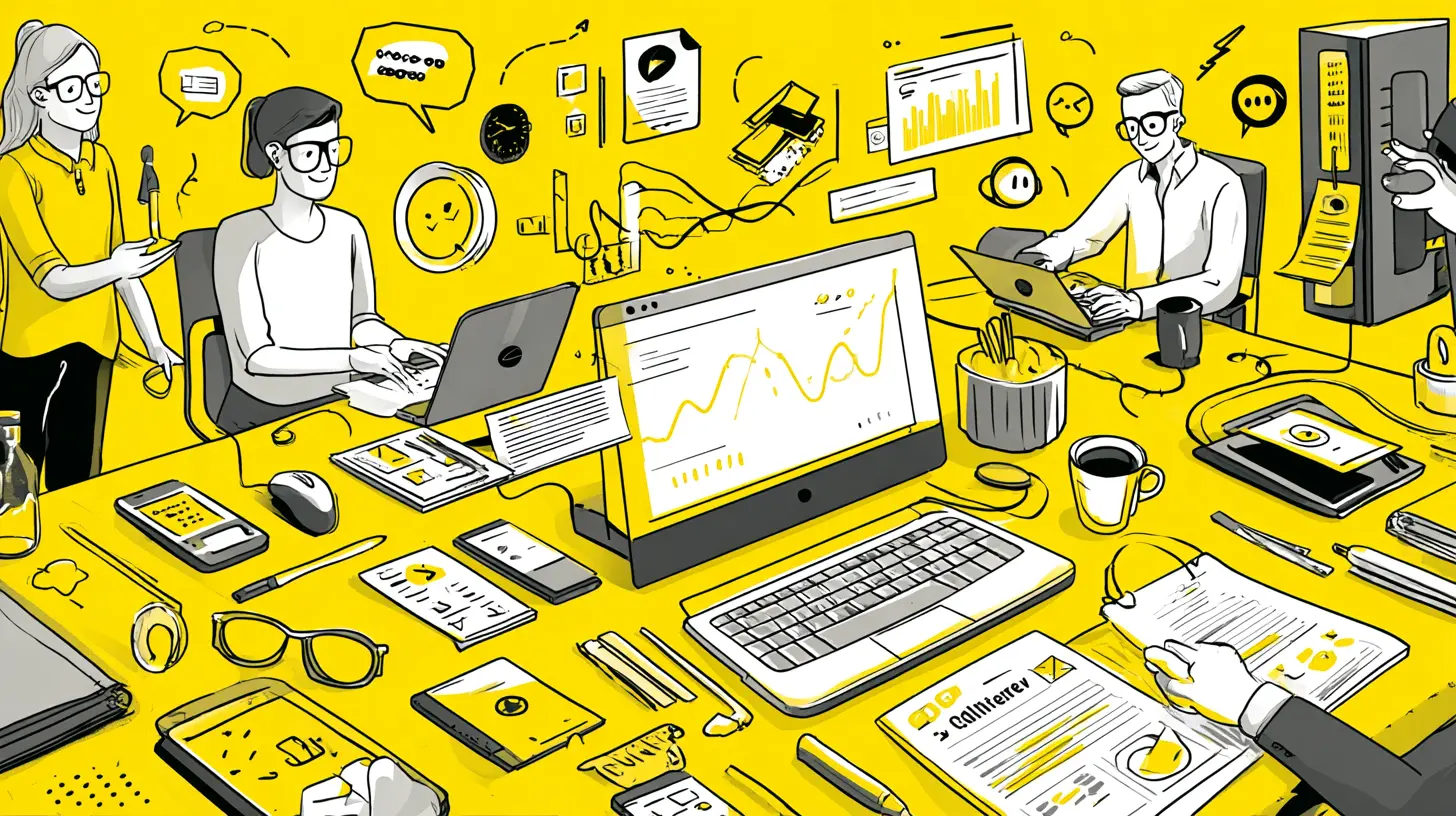
The "Digital Office" That Doesn't Suck
We have tried the metaverse. We tried the virtual reality offices where you walk around as a cartoon avatar. It was weird. It was lonely. It made people feel like they were in a video game that no one wanted to play. The future of the "digital office" is not about pretending you are in a physical space. It is about ambient presence.Spatial Audio Tools (like Oculus Workrooms but on your laptop)
By 2027, the best collaboration tool will be the one that makes you forget you are on a call. Think about it. In a real room, you can whisper to the person next to you. You can hear someone shuffle papers. You know who is talking without looking at a grid of faces.
The tools that will dominate use spatial audio to create this feeling. You will be in a "room" with your team. When your colleague speaks, their voice will sound like it is coming from their position in the virtual room. It sounds subtle, but it is a game-changer. Your brain stops feeling like it is listening to a podcast and starts feeling like it is actually in a conversation. You stop interrupting people because you can sense when they are about to speak.
Why it wins: It reduces "Zoom fatigue." Your brain doesn't have to work as hard to decode the audio. It feels natural. It feels human. And in a world of remote work, feeling human is the ultimate luxury.
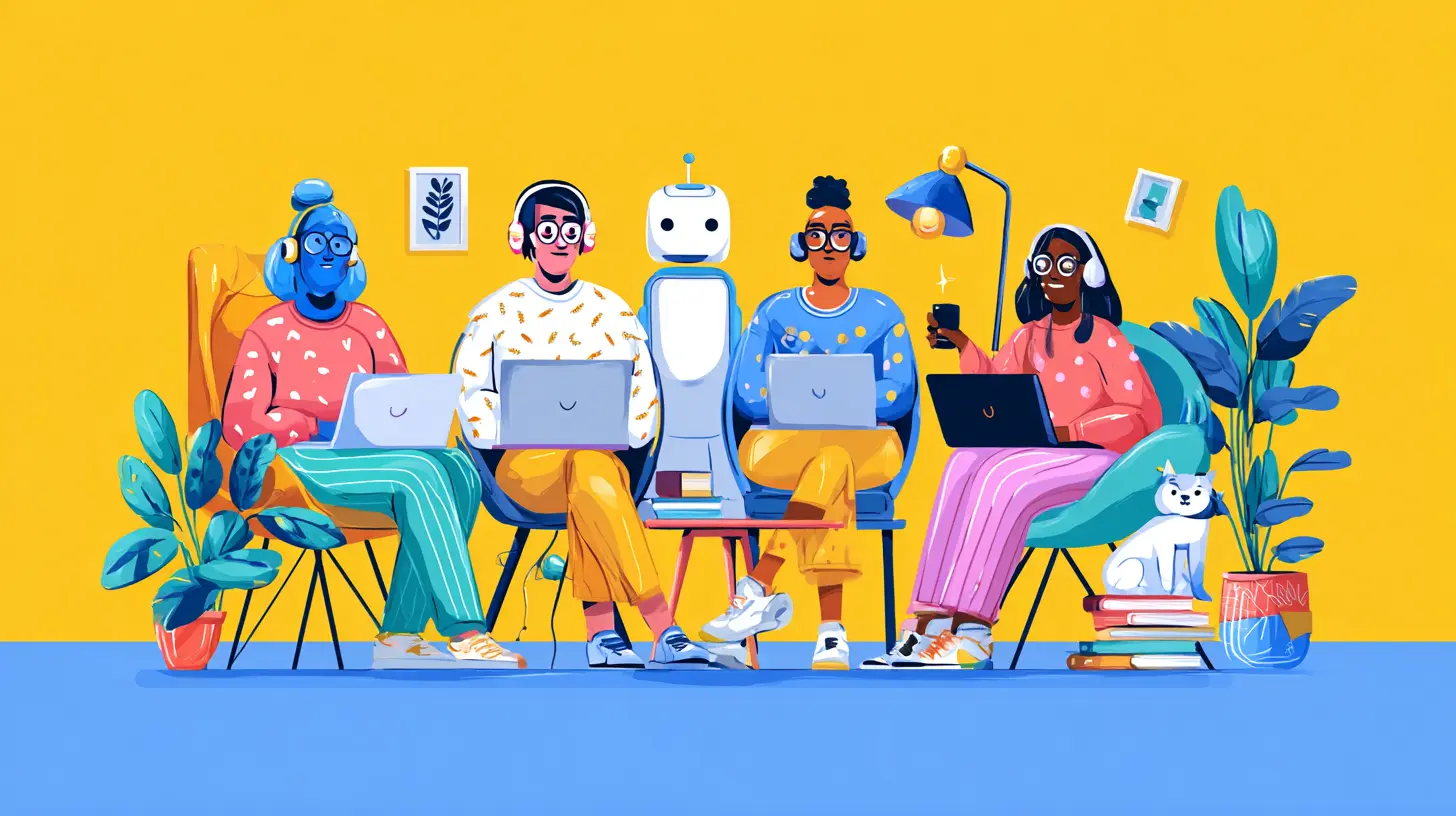
The AI That Does Your Busywork (Not Your Job)
Everyone is scared of AI taking their job. But the smartest companies know that AI is not a replacement; it is a super-powered assistant that hates meetings as much as you do. The tools that dominate will be the ones that seamlessly integrate AI to handle the stuff you hate doing.The "Smart" Project Manager (Asana / Monday.com on Steroids)
Current project management tools are just digital to-do lists with a lot of buttons. You have to update the status. You have to assign tasks. You have to chase people. It is a job in itself.
By 2027, the PM tool will do this for you. You will finish a design, and the AI will automatically update the task status, notify the developer, and suggest a deadline based on historical data. It will look at your calendar and say, "Hey, you have a lot of deep work time tomorrow. Do you want to block out two hours to review that pull request?"
It will even predict bottlenecks. "Warning: The marketing team is spending too much time in meetings. Their project velocity has dropped 15%. Suggest blocking off 'no meeting Wednesdays.'"
This tool doesn't just track work; it facilitates flow. It removes the friction of managing the work so you can focus on actually doing the work. It is the difference between driving a manual car and having a self-driving Tesla. You still have to tell it where to go, but you don't have to shift gears.
Why it wins: It cuts the administrative overhead by 80%. It turns you from a project manager into a project visionary.
The Death of the "All-in-One" Nightmare
Let's talk about the elephant in the room. We have all been burned by the "super app." The one that promises to replace Slack, Zoom, Google Docs, and your calendar. It usually ends up being mediocre at everything. It is the Swiss Army knife of software. It can open a wine bottle, but it makes a terrible knife.The tools that dominate in 2027 will not try to do everything. They will be best-in-class, deeply integrated.
Notion 2.0 (The Brain of the Company)
Notion is already a cult favorite. It is a wiki, a database, and a document editor all in one. But it is still a bit of a blank canvas. By 2027, Notion will be the "operating system" for your company. It will be the single source of truth.
But it won't do video calls. It won't do chat. It will just be the place where knowledge lives. You will link your Notion page to your project manager. You will embed your Loom video in a Notion doc. Your AI assistant will pull data from Notion to answer questions.
Why it wins: It is a hub, not a highway. It is the place you go to find information, not the place you go to process information. It is quiet. It is organized. It is the library, not the coffee shop.
The Tool That Makes You Feel Like a Team (Even When You're Alone)
This is the hardest nut to crack. How do you build culture when you never see each other? The answer is not "virtual happy hours." Those are forced and awkward. The answer is serendipity.Donut 2.0 (or a similar "water cooler" tool)
Donut currently pairs you up with a random coworker for a coffee chat. It is a good start. But by 2027, these tools will be predictive. They will analyze who you work with, what projects you have in common, and what your interests are. They will propose a spontaneous 5-minute voice chat, not a scheduled 30-minute meeting.
"Hey, you and Sarah from Sales just finished a project. You are both working on similar client issues. Want to jump into a quick voice room to compare notes?"
It will create "micro-moments" of connection. It will be the digital equivalent of bumping into someone in the hallway. It won't feel forced because it is contextually relevant. It is not "let's be friends." It is "let's solve this problem together."
Why it wins: It builds trust and camaraderie without adding to your calendar. It makes the team feel like a team, not a collection of freelancers.
The Final Boss: The "Focus" Tool
Let's be honest. The biggest problem with remote work is not communication. It is distraction. It is the endless notifications. It is the "quick question" that derails your entire afternoon.By 2027, the most important tool will be the one that helps you disconnect.
The "Deep Work" Mode
Imagine a tool that integrates with your calendar, your project manager, and your chat. When you enter "Deep Work" mode, it automatically:
- Sets your Slack status to "Do Not Disturb" with a message that says "I will respond at 2 PM."
- Blocks your calendar for the next 2 hours.
- Suggests a playlist of focus music.
- Even sends an automated message to your team: "User is in a flow state. Please do not ping unless the building is on fire."
This tool doesn't just help you work; it protects your work. It is the bouncer at the club of your brain. It says, "Sorry, you can't come in right now. The boss is thinking."
Why it wins: It solves the burnout crisis. It recognizes that the most valuable thing a knowledge worker has is not their time, but their attention. And attention is a fragile, precious resource.

The Bottom Line
So, what is the takeaway? By 2027, the tools that dominate will not be the loudest or the most feature-packed. They will be the quiet ones. The ones that respect your time. The ones that foster connection without forcing it. The ones that do the boring stuff so you can do the interesting stuff.We are moving from a world of "constant connection" to a world of "intelligent connection." The tools that win will be the ones that understand that a remote team is not a problem to be solved, but a community to be nurtured. They will be the ones that make you feel like you are working with your team, not just alongside them.
So, stop stressing about the future. Stop chasing the shiny new tool. Look for the one that makes you feel less busy and more productive. Look for the one that helps you do your best work, then helps you log off and go live your life. Because that, my friends, is the only future worth working toward.
Now, please unmute yourself. I think the dog needs to go out.
all images in this post were generated using AI tools
Category:
Tech For Remote WorkAuthor:

Ugo Coleman
Discussion
rate this article
2 comments
Craig Lopez
Great insights on the future of remote collaboration tools. I appreciate how you highlighted the emerging trends and user needs. As remote work continues to evolve, it will be interesting to see how these tools adapt. Looking forward to seeing which ones truly stand out by 2027.
August 30, 2026 at 4:56 AM
Starling Ellison
Exciting insights! Can't wait to see these tools evolve.
June 1, 2026 at 2:33 AM
Ugo Coleman
Thanks for your enthusiasm! It's an exciting time for collaboration tools.