Top Tech Trends That Will Shape the Future of Remote Work
8 August 2026
Remote work is no longer a temporary experiment or a fringe benefit. It is the default operating system for millions of knowledge workers, and the tools we use to make it function are evolving at a pace that most organizations struggle to keep up with. The next five years will not be about incremental improvements to video calls or chat apps. They will be about fundamentally rethinking what it means to collaborate, manage, and build company culture when no one is in the same room.
This article is not a list of gadgets. It is an analysis of the structural shifts in technology that will determine whether remote work becomes a sustainable, high-performance model or collapses under the weight of poor tooling and human burnout. I will cover the trends that matter, the trade-offs you need to understand, and the practical steps you should take before adopting any of them.

The End of the Video Call as the Center of Gravity
For the past four years, the video call has been the default answer to remote collaboration. It is also the single biggest source of fatigue, context loss, and productivity drain in distributed teams. The future is not better video. The future is less video.Asynchronous-First Communication Tools
The most important shift is the move from synchronous communication to asynchronous workflows. Tools like Loom, Grain, and Async are not just recording tools. They are changing the fundamental contract of how teams share information. Instead of scheduling a 30-minute meeting to review a design, a team member records a 10-minute walkthrough of the screen, annotates the key decisions, and posts it to a shared channel. The rest of the team watches it when they are in their deep work zone, not at 2 PM when their energy is crashing.Why this works: it respects attention as a finite resource. A meeting forces everyone to be present at the same time, regardless of their cognitive state. An async video or written update allows each person to engage with the material at their peak. The trade-off is that you lose the immediate back-and-forth that often sparks creative solutions. The best practice is to use async for status updates, design reviews, and progress reports, but keep synchronous time for brainstorming, conflict resolution, and complex problem-solving.
The common mistake is treating async tools as a replacement for all meetings. That does not work. You need a clear policy: async for information sharing, sync for decisions that require debate. If you do not define this, you will end up with async updates plus the same number of meetings, which is worse than before.
Spatial Computing and the Virtual Office
The metaverse hype has cooled, but the underlying technology is quietly improving. Spatial computing, which includes VR headsets and AR overlays, is moving from gaming to practical workplace applications. The promise is not a cartoon avatar world. It is the restoration of spatial awareness that remote work destroys.When you are in a physical office, you know who is available, who is deep in thought, and who is open to a quick question. That ambient awareness is almost impossible to replicate with a flat grid of faces on a screen. Spatial tools attempt to solve this by creating a persistent virtual space where your avatar occupies a position, and you can see who is near you, who is in a meeting room, and who has stepped away.
The realistic use case for the next three years is not full-immersion VR. It is mixed reality on devices you already own. Think of a shared whiteboard that you can see through your laptop camera, where a colleague in another country is drawing next to you in real time. Or a 3D model of a product that you can rotate and annotate together, instead of sharing a static screenshot.
The trade-off is hardware cost and physical comfort. Wearing a headset for eight hours is not viable for most people. The best approach is to use spatial tools for specific high-value activities: product design reviews, architectural walkthroughs, and complex data visualization. Do not try to make your entire workday spatial.

AI as the Remote Work Operating System
Artificial intelligence is not a feature you bolt onto your stack. It is becoming the layer that connects your calendar, your documents, your messages, and your project management system. The remote work trends that will matter most are the ones that use AI to reduce the friction of distance.Intelligent Meeting Summaries and Action Item Extraction
The most immediately useful AI application is not generating content. It is capturing and structuring what already happened. Tools like Otter.ai, Fireflies, and the native transcription in Zoom and Teams are getting better at distinguishing between a casual remark and a committed action item. The next generation of these tools will not just transcribe. They will infer ownership, assign deadlines based on the conversation context, and automatically create tasks in your project tracker.Why this matters for remote work: in an office, you can catch someone in the hallway to clarify what they meant by "we should follow up." In a remote setting, that clarification requires a new meeting or a direct message, which interrupts their flow. An AI that can extract a clear action item with the responsible person and a due date eliminates that friction.
The common mistake is trusting the AI blindly. These systems still make errors in speaker identification and context. The best practice is to use AI summaries as a first draft, but require a human to review and approve any action items before they are pushed to a project management tool. Otherwise, you will end up with duplicate tasks and phantom deadlines.
AI-Powered Knowledge Management
Remote teams suffer from a specific disease: tribal knowledge that lives in the heads of individuals and never gets written down. The solution is not a wiki that no one updates. It is an AI system that actively mines your communication channels, documents, and meeting recordings to build a searchable knowledge base.Imagine asking your internal chatbot, "What was the decision on the pricing model for the Q3 launch?" and getting a concise answer with a link to the exact meeting recording and the relevant document. That is the promise of retrieval-augmented generation applied to your company's internal data. Tools like Glean and Notion AI are already moving in this direction.
The trade-off is privacy and data governance. You are feeding your most sensitive information into an AI system. You need to be very clear about where that data is stored, who has access to it, and whether it is used to train the underlying model. The best practice is to start with a narrow use case, such as onboarding documentation or product specs, and only expand to broader corporate knowledge after you have tested the accuracy and security.
The misconception is that AI will replace the need for documentation. It will not. AI makes documentation more valuable because it can surface it at the right moment. But garbage in, garbage out. If your team does not write down decisions, the AI has nothing to retrieve.

The Rise of the Digital Employee Experience Platform
Remote work is not just about the tools you use to do the job. It is about the entire experience of being an employee. The next major trend is the consolidation of HR, IT, and communication tools into a single digital employee experience platform.Unified Identity and Access Management
The first step is solving the identity problem. In a remote setup, you have a corporate laptop, a personal phone, a cloud-based email, a project management tool, and a chat app. Each has its own login. The future is a single sign-on that follows you across all these systems, with adaptive authentication that checks your location, device health, and behavior patterns.Why this matters: it reduces friction and improves security. A remote worker should not have to remember 15 passwords or go through a two-factor authentication process every time they switch from Slack to Jira. The best systems use context to determine risk. If you are logging in from your usual home network at your usual time, the system trusts you. If you are logging in from a coffee shop in another country at 3 AM, it asks for additional verification.
The trade-off is that centralized identity creates a single point of failure. If the identity provider goes down, everyone is locked out. The best practice is to have offline fallback mechanisms and to ensure that critical systems can operate in a degraded mode for short periods.
The Employee Wellbeing Data Problem
A controversial but inevitable trend is the use of data to monitor employee wellbeing. This is not the same as spyware that tracks keystrokes. It is the analysis of work patterns to detect burnout risk. For example, if an employee is sending messages at 11 PM every night, or their meeting load has doubled, or they are taking no breaks between video calls, the system flags this for a manager to have a check-in conversation.The reason this is necessary: remote work removes the visual cues of burnout. In an office, you can see that someone looks exhausted or is skipping lunch. In a remote setting, you only see their output, and by the time their output drops, the burnout is severe.
The trade-off is privacy. Employees will resist any system that feels like surveillance. The best practice is to make this data visible only to the employee themselves, with the option to share it with their manager. The system should be framed as a personal wellbeing assistant, not a performance monitor. If you use it as a disciplinary tool, you will destroy trust and make the data worthless.
The Evolution of the Physical Workspace
Remote work does not mean the end of offices. It means the end of the office as a default location. The future is a network of flexible spaces that are integrated with your digital tools.Smart Booking and Dynamic Space Allocation
The old model of assigned desks and fixed meeting rooms is dead. The new model is dynamic space allocation, where employees book space on demand, and the building adjusts its lighting, temperature, and technology setup based on who is coming in that day.The technology behind this is a combination of IoT sensors, mobile apps, and AI scheduling. When you book a desk for Tuesday, the system knows you are a video-heavy worker, so it assigns you a desk near a quiet zone with a high-quality camera and a strong microphone. If you are coming in for a team workshop, it reserves a room with a large display and whiteboards.
Why this works: it reduces real estate costs and improves the experience for the people who do come in. The trade-off is that you need to maintain a baseline of technology in every space, which can be expensive. The best practice is to start with a pilot floor, measure utilization, and then scale.
The Hybrid Meeting Room
The most technically challenging problem in remote work is the hybrid meeting, where some people are in a room and others are on screens. The current state of hybrid meetings is terrible. The remote participants feel like ghosts, and the in-room participants forget they are there.The future is a room designed for hybrid, not a room with a camera added. This means multiple cameras that track the active speaker, ceiling microphones that pick up individual voices, and large screens placed at eye level so remote participants appear life-size. The key is that the remote participants must be able to see the faces of the in-room people, not just the back of their heads.
The trade-off is cost. A properly designed hybrid room costs tens of thousands of dollars. The best practice is to have one or two high-quality hybrid rooms per office and to mandate that any meeting with remote participants uses those rooms, rather than trying to make every room work for every scenario.
Security and Trust in a Distributed Environment
The biggest threat to remote work is not productivity loss. It is security. When your workforce is spread across hundreds of home networks, your attack surface expands dramatically. The trends in this area are not about building higher walls. They are about assuming the walls will be breached.Zero Trust Architecture
Zero Trust is not a product. It is a mindset. The core principle is that no device, user, or network is trusted by default. Every request for access must be verified, regardless of whether it comes from inside the corporate network or outside.In practice, this means moving from a VPN-based model to a cloud-based identity and access management system. Instead of giving employees access to the entire corporate network, you give them access to specific applications. This limits the blast radius if a device is compromised.
The trade-off is user experience. Zero Trust can be frustrating if implemented poorly. The best practice is to use continuous authentication, where the system is silently checking the user's behavior and device health in the background, rather than forcing them to re-authenticate every few hours.
The Home Network Blind Spot
Most remote workers use a home router that is not managed by their IT department. This is a security gap. The future trend is the managed home network, where the company provides a secure router that automatically segments work traffic from personal traffic, applies firmware updates, and detects anomalous behavior.This is a hard sell for employees who do not want their employer controlling their home internet. The alternative is to provide a secure VPN client that runs on the corporate laptop and encrypts all traffic, but this does not protect against a compromised home router that is redirecting DNS queries.
The best practice is to offer the managed router as an opt-in benefit, not a requirement. For high-risk roles, such as finance or legal, make it mandatory. For others, provide training on how to secure their home network and offer a stipend for better equipment.
The Future of Management and Organizational Structure
Technology is not just changing the tools. It is changing the structure of the company itself. The trends above will not work if you keep the same management hierarchy.The Shift from Hours to Outcomes
The most significant cultural change is moving from measuring time to measuring outcomes. This is not a new idea, but technology is finally making it feasible. With AI-powered project tracking, you can see the actual progress of a project, not just the number of hours logged.Why this matters: remote work makes it impossible to see if someone is "working" in the traditional sense. You cannot look over their shoulder. So you have to define what success looks like and measure that. This requires a shift from activity-based management to objective-based management.
The trade-off is that some work is not easily measured in outcomes. Creative work, research, and strategic thinking are not linear. The best practice is to use outcome measurement for tasks that are discrete and time-bound, and to use peer reviews and qualitative feedback for more complex work.
The Rise of the Fractional Expert
Remote work enables a new organizational model: the fractional expert. Instead of hiring a full-time data scientist or a full-time UX researcher, you hire them for 20 hours a week, or for a specific project. This is enabled by the same asynchronous tools and knowledge management systems that make remote work possible.The advantage is access to top talent that you could not afford on a full-time basis. The disadvantage is that fractional experts do not have the same context or loyalty as full-time employees. The best practice is to use fractional experts for clearly scoped projects with defined deliverables, and to ensure that they have access to your knowledge management system so they can get up to speed quickly.
Practical Steps for the Next 12 Months
The trends above are broad. Here is what you should actually do in the next year to prepare.First, audit your meeting culture. If you are still having daily status meetings, stop. Replace them with an async update channel and a weekly review. Measure the number of meetings per person per week and set a hard limit.
Second, invest in one AI tool that solves a specific problem. Do not buy a suite of AI features. Pick one pain point, such as meeting transcription or knowledge search, and solve it well. Get your team comfortable with that tool before adding more.
Third, redesign your physical office, if you have one, for hybrid meetings. If you do not have an office, invest in a high-quality home setup for your employees, including a good microphone and camera. The laptop microphone is not acceptable for professional communication.
Fourth, start a conversation about data privacy. Before you implement any wellbeing monitoring or AI analysis, talk to your employees about what is acceptable and what is not. Get their input on the design of the system. This will save you from a mutiny later.
Fifth, train your managers. The skills required to manage a remote team are different from the skills required to manage an in-person team. They need to learn how to communicate expectations clearly, how to provide feedback without visual cues, and how to build trust without proximity. This is not a soft skill. It is a technical skill that requires practice.
The Bottom Line
The future of remote work is not about finding the perfect video call app. It is about building a system that respects human attention, provides security without friction, and measures value instead of hours. The technology is ready. The question is whether your organization is ready to change its habits.The companies that will thrive are the ones that treat remote work as a design problem, not a compliance issue. They will experiment, measure, and iterate. They will not copy the playbook of a big tech company because that playbook may not fit their culture. They will build their own.
The tools are getting better. The AI is getting smarter. The physical spaces are getting more integrated. But none of that matters if you do not have a clear philosophy about how work gets done. Start with the philosophy, then choose the tools. The technology will follow.
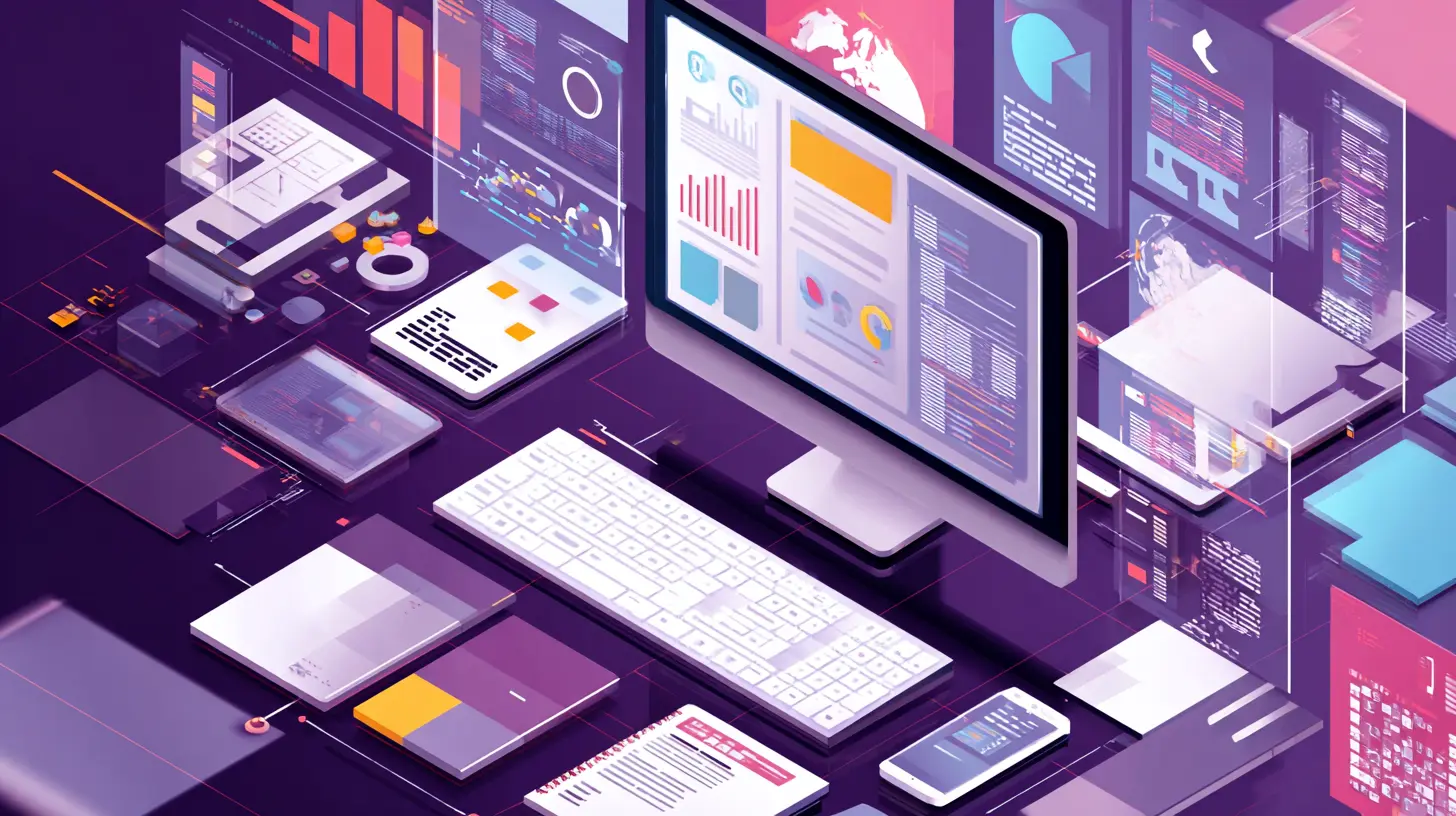
all images in this post were generated using AI tools
Category:
Digital Nomad TechAuthor:

Ugo Coleman
Discussion
rate this article
1 comments
Thornewood Snyder
These emerging tech trends will redefine remote work, enhancing collaboration and productivity while addressing challenges like communication and work-life balance.
August 11, 2026 at 4:49 AM
Ugo Coleman
Absolutely, these trends are set to transform how we connect and work, making remote collaboration smoother and more effective. It's an exciting time for the future of work.