Wearable Health Tech That Can Predict Medical Events
23 October 2026
For most of the history of consumer wearables, the value proposition was simple: measure what you did yesterday. Step counts, sleep duration, resting heart rate. Useful, yes, but backward-looking. The interesting shift over the past several years is that wearables are moving from describing your past to forecasting your future. Not in a mystical sense, but through continuous physiological monitoring, pattern recognition, and increasingly sophisticated machine learning models that can flag deviations before a person feels symptoms.
This matters because the human body is often a poor narrator of its own problems. Atrial fibrillation can be silent. Sepsis can smolder for hours before a fever spikes. A seizure can begin with changes in heart rate variability that precede visible convulsions by minutes. The clinical promise of predictive wearables is to shorten the gap between physiological onset and human awareness. The engineering challenge is to do that without drowning users and clinicians in false alarms.
This article examines what these devices actually do, where the science is solid, where it is still maturing, and what to consider before trusting a wrist-worn algorithm with your health.

What "Predictive" Really Means in Wearables
The word predict gets used loosely in marketing. It helps to separate three distinct capabilities that are often conflated.Detection is the identification of an event as it happens or shortly after. A smartwatch that alerts you to an irregular rhythm during an episode is detecting, not predicting.
Early warning is identifying subtle physiological changes that precede a clinical event by minutes to hours. This is the sweet spot for many current systems, such as sepsis risk scores derived from wearable vital signs.
Forecasting is estimating the probability of an event days or weeks ahead based on longitudinal patterns. This is the hardest category and the one with the most uncertainty.
Most consumer devices today excel at detection, are improving at early warning, and are still experimental at forecasting. Understanding which bucket a product falls into protects you from overtrusting it. A device that says "your heart rhythm looks irregular" is making a very different claim than one that says "you may develop a cardiac event next week." The first is a measurement. The second is a statistical inference with wide error bars.
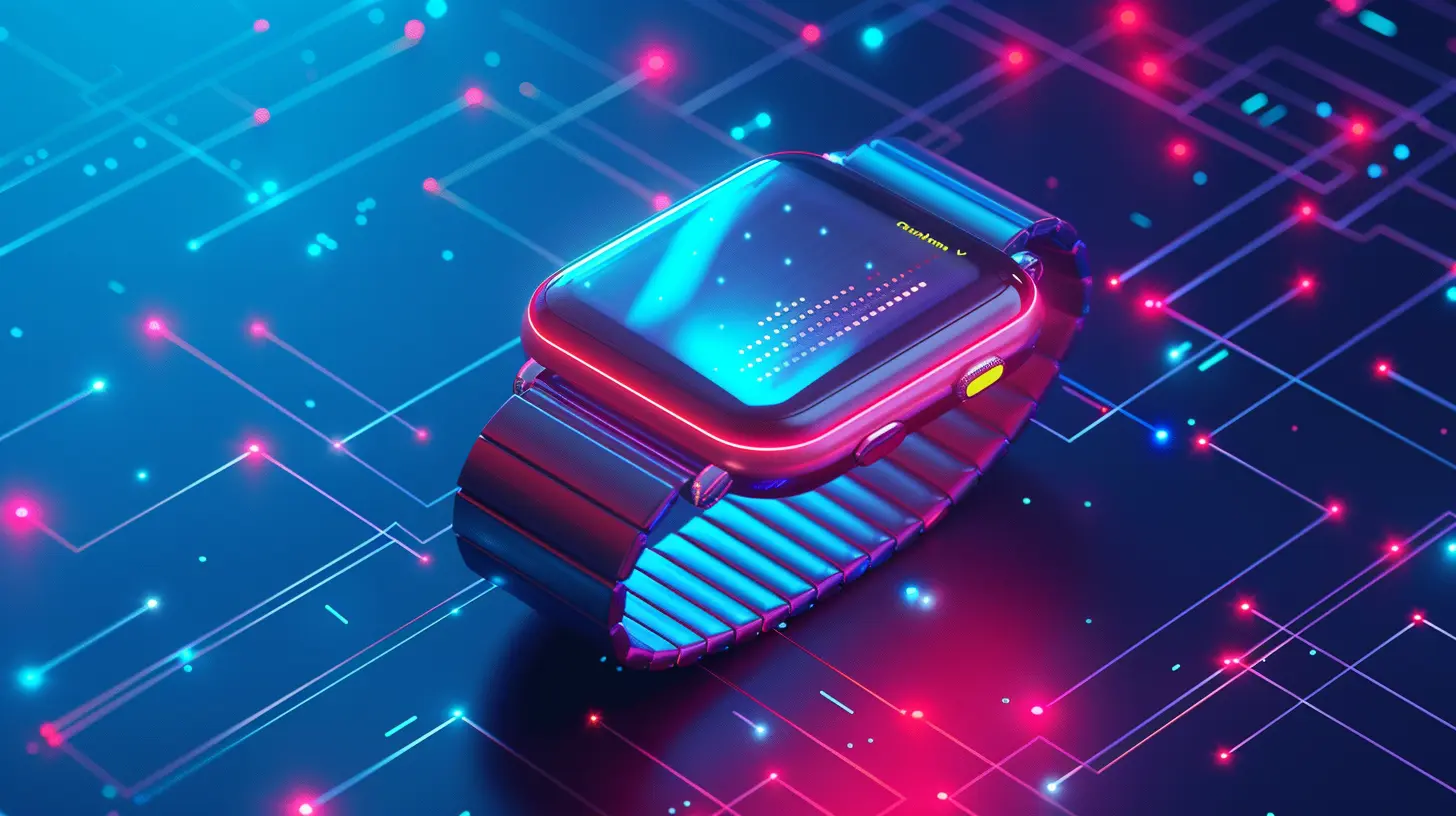
The Physiological Signals That Make Prediction Possible
Predictive wearables rely on a surprisingly small set of signals, each with strengths and blind spots.Heart rate and heart rate variability
Optical sensors using photoplethysmography, or PPG, shine light into the skin and measure blood volume changes. From this, devices derive heart rate and heart rate variability, the variation in time between heartbeats. HRV is a proxy for autonomic nervous system activity. A sustained drop in HRV can indicate stress, illness onset, or recovery strain. This is why some wearables flag "unusual" readings before you feel sick. The limitation is that PPG is sensitive to motion, skin tone, wrist temperature, and poor contact. A cold hand or a loose strap can produce garbage data.Blood oxygen saturation
Pulse oximetry estimates oxygen saturation, or SpO2, using two wavelengths of light. Consumer-grade SpO2 is useful for trend monitoring, particularly during sleep, where it can flag repeated desaturation events suggestive of sleep apnea. It is not a substitute for a clinical pulse oximeter, and readings can drift with movement or poor perfusion.Electrocardiography
Some wearables include electrodes that capture a single-lead ECG when the user touches the device. This is far more specific than PPG for arrhythmia detection, particularly atrial fibrillation. Single-lead ECG cannot diagnose all cardiac conditions, but it has become a legitimate screening tool when paired with clinician review.Skin temperature
Continuous temperature monitoring is less about absolute numbers and more about deviation from your personal baseline. A sustained elevation of a few tenths of a degree, combined with other signals, can precede symptomatic illness. This is the logic behind several illness-detection features.Electrodermal activity and motion
Electrodermal activity reflects sweat gland activity and sympathetic arousal. Combined with accelerometry, it supports seizure detection in some dedicated devices and stress or recovery insights in consumer ones.Continuous glucose monitoring
For people with diabetes, CGM is the most mature predictive wearable category. Modern systems can alert users to impending hypoglycemia before glucose drops to dangerous levels, and trend arrows let users act proactively. This is a genuine, well-validated example of prediction in daily use.
Real-World Categories and What They Actually Deliver
Cardiac arrhythmia detection
Smartwatches with ECG and PPG have been cleared by regulators in several countries for atrial fibrillation notifications. The mechanism is straightforward: irregular RR intervals on PPG trigger a prompt to take an ECG, and the ECG trace is analyzed for AFib patterns. The clinical value is real, especially for people with risk factors who might otherwise remain undiagnosed. The trade-off is false positives, which generate anxiety and follow-up costs, and false negatives, which can create false reassurance. Neither is trivial. A negative reading does not rule out paroxysmal AFib that simply was not happening during the measurement window.Hypoglycemia prediction
CGM systems use trend algorithms to forecast glucose direction and can alarm before a low occurs. This is arguably the most mature predictive category because the physiology is well understood and the feedback loop is tight. Users learn to trust trend arrows and act on them. The lesson here is instructive: prediction works best when the underlying physiology is measurable, the time horizon is short, and the user can take immediate corrective action.Illness and infection early warning
Several wearable platforms have introduced features that flag physiological deviations consistent with illness onset, often combining temperature, respiratory rate, heart rate, and HRV. These are best understood as "something may be off" signals rather than diagnoses. Their value is highest in high-stakes contexts such as monitoring healthcare workers or vulnerable populations, and lowest when users overinterpret a single flagged day. A late night, alcohol, or intense training can mimic illness signatures.Seizure detection and prediction
Dedicated wearable devices, often worn on the wrist or arm, use accelerometry and electrodermal activity to detect convulsive seizures. Detection performance for generalized tonic-clonic seizures is reasonably established in some devices. Prediction, meaning warning of a seizure before it occurs, remains an active research area and is not something to rely on for safety-critical decisions. The distinction matters enormously for patients and caregivers.Fall detection and pre-fall risk
Fall detection is event detection, not prediction, but some systems now analyze gait and balance trends to flag elevated fall risk over time. This is a slower form of forecasting and is particularly relevant for older adults. The practical value depends heavily on response infrastructure: a detection without a responder is just a log entry.Mental health and stress signals
Wearables increasingly infer stress, burnout, and mood-related patterns from HRV, sleep, and activity. These are probabilistic and highly individual. They can be useful as reflection tools but should not be treated as clinical assessments. The evidence base is thinner here than for cardiac or metabolic applications.
How Prediction Algorithms Actually Work, and Why They Fail
Most predictive wearable systems follow a similar pipeline: acquire signal, filter noise, extract features, compare against a model, and generate an alert. The model may be a simple threshold, a personalized baseline, or a trained classifier. Each stage introduces error.Personal baselines beat population thresholds. A resting heart rate of 55 is normal for a trained runner and concerning for someone whose baseline is 75. Good systems learn your normal and flag deviations from it. This is why onboarding periods matter and why a device is least reliable in its first weeks.
Context is everything. An algorithm that does not know you just ran a marathon, flew across time zones, or had three glasses of wine will misread physiology. The best implementations incorporate activity context, sleep history, and user input. The worst generate alarms from isolated data points.
Class imbalance is a structural problem. Serious medical events are rare. A model tuned to catch every event will produce many false alarms; a model tuned to minimize false alarms will miss events. There is no free lunch. This is why regulatory review, transparent performance reporting, and clinician involvement matter more than the elegance of the algorithm.
Alert fatigue is the silent killer. If a device cries wolf repeatedly, users disable alerts, and the system's effective sensitivity drops to zero. The design of the alert, including its urgency, explanation, and suggested action, is as important as the detection accuracy.
What the Evidence Supports, and What It Does Not
It is worth being precise about the state of the field, because marketing language blurs lines that clinicians care about.Well supported: CGM-based hypoglycemia alerts; single-lead ECG for AFib detection in appropriate populations; pulse oximetry trend monitoring for sleep-disordered breathing screening; step and activity tracking for behavioral change.
Promising but not settled: multi-signal illness early warning; wearable-derived sepsis risk scores in hospital settings; gait-based fall risk forecasting; seizure detection for specific seizure types.
Speculative or early: long-horizon forecasting of cardiac events from consumer wearables; mental health prediction; generalized "you will get sick in three days" claims.
The honest framing is that wearables are excellent at generating high-quality longitudinal data and increasingly good at flagging deviations. They are not diagnostic devices, and the gap between a flag and a diagnosis is where clinicians, confirmatory testing, and judgment live.
Practical Advice Before You Buy or Rely on One
Match the device to the question. If you have palpitations, an ECG-capable watch is more relevant than a sleep tracker. If you have diabetes, CGM is in a different category of usefulness than any general wellness wearable. Buy for the specific signal you need, not the feature list.Check regulatory status. In the US, look for FDA clearance or approval for the specific claim. In Europe, look for CE marking under the Medical Device Regulation for medical claims. Wellness claims and medical claims are not the same, and the distinction is meaningful.
Commit to the baseline period. Give the device weeks of consistent wear before trusting its deviations. Inconsistent wear produces inconsistent baselines and unreliable alerts.
Treat alerts as prompts, not verdicts. A flagged irregular rhythm warrants a conversation with a clinician, not panic and not dismissal. A flagged illness signal warrants rest and attention, not a diagnosis.
Know the failure modes. Loose straps, cold extremities, tattoos, dark skin pigmentation in some optical sensors, and motion artifact all degrade signal quality. If readings look implausible, they probably are.
Plan the response path. An alert is only useful if there is someone or something to act on it. For older adults living alone, pair detection with a response service. For chronic conditions, make sure your clinician knows what data you are bringing.
Do not let a device replace symptoms. If you feel unwell, that matters more than a normal reading. Wearables supplement clinical judgment; they do not override it.
Common Misconceptions Worth Correcting
"If it were serious, my watch would catch it." No consumer wearable is validated to rule out serious events. Absence of an alert is not evidence of health."More data means better health." Data without interpretation and action is noise. The value comes from the loop: signal, insight, behavior or clinical action, feedback.
"Prediction means certainty." Every predictive system outputs probabilities. A 70 percent risk score means 30 percent of the time it is wrong for that individual.
"Consumer and medical-grade are the same." They are not. Medical-grade devices undergo validation against clinical reference standards and carry labeled indications. Consumer devices may use similar sensors but different validation and claims.
"AI makes it automatically trustworthy." Model performance depends on training data, population representativeness, and real-world validation. A sophisticated model trained on unrepresentative data can be confidently wrong.
Where This Is Heading
The trajectory is toward multi-signal fusion, longer personal baselines, and tighter integration with clinical workflows. Two developments are worth watching. First, the shift from episodic measurement to continuous ambient monitoring, which increases the chance of catching transient events. Second, the maturation of regulatory pathways for software as a medical device, which will determine which predictive claims reach the market with evidence behind them.The most credible near-term gains are likely in chronic disease management, post-operative monitoring, and elder care, where the time horizon is short, the physiology is measurable, and the response path is clear. The most overhyped claims will remain in broad, long-horizon forecasting, where the underlying science is genuinely hard.
A Balanced Bottom Line
Predictive wearable health tech is real, useful, and improving, but it is not magic. The devices that work best share three traits: they measure a signal with a clear physiological link to the event, they personalize to your baseline, and they operate on a time horizon short enough for you or a clinician to act. When those conditions hold, as with CGM and AFib detection, the value is substantial. When they do not, the technology is best treated as an interesting signal generator rather than an oracle.The right posture is informed skepticism. Use these devices to extend your awareness, not to replace it. Bring their outputs to clinical conversations. Understand their failure modes. And remember that the most important predictive system you own is still the one between your ears, especially when it tells you something feels wrong.
all images in this post were generated using AI tools
Category:
Tech NewsAuthor:

Ugo Coleman