Artificial Intelligence in Mission Control: Enhancing Space Exploration
26 January 2026
Let’s be honest—space is the most mind-blowingly mysterious and captivating frontier we’ve got. It’s where stars are born, planets collide, and the laws of physics get all wobbly. But have you ever wondered how we humans manage to poke our noses into such an unforgiving and vast expanse? Well, a massive shout-out goes to mission control.
Mission control is like the brain behind every space mission. It’s where scientists and engineers sit (probably half-glued to their coffee cups), making real-time decisions that could make or break multi-billion dollar space projects. But now, there’s a new brainy kid on the block—Artificial Intelligence (AI).
Yes, AI is stepping into mission control, and it's not just dipping a toe—it’s cannonballing right in! This tech isn’t just making things faster or fancier; it's revolutionizing how we explore space.
So, buckle up and let’s blast off into the world of AI in mission control.
What Exactly Is Mission Control?
Before we talk AI, let's understand what mission control is all about.Mission control is like the ultimate command center. Think NASA’s Johnson Space Center in Houston or ESA’s Space Operations Centre in Germany. These places are the lifeline between Earth and space missions. Every spacecraft, from satellites to Mars rovers to crewed missions like the International Space Station (ISS), depends on mission control for guidance, communication, and troubleshooting.
They monitor data, track spacecraft trajectories, handle emergencies, and ensure everyone on board (if it's a human-crewed mission) stays safe. In short? They’re the space babysitters, engineers, and doctors rolled into one.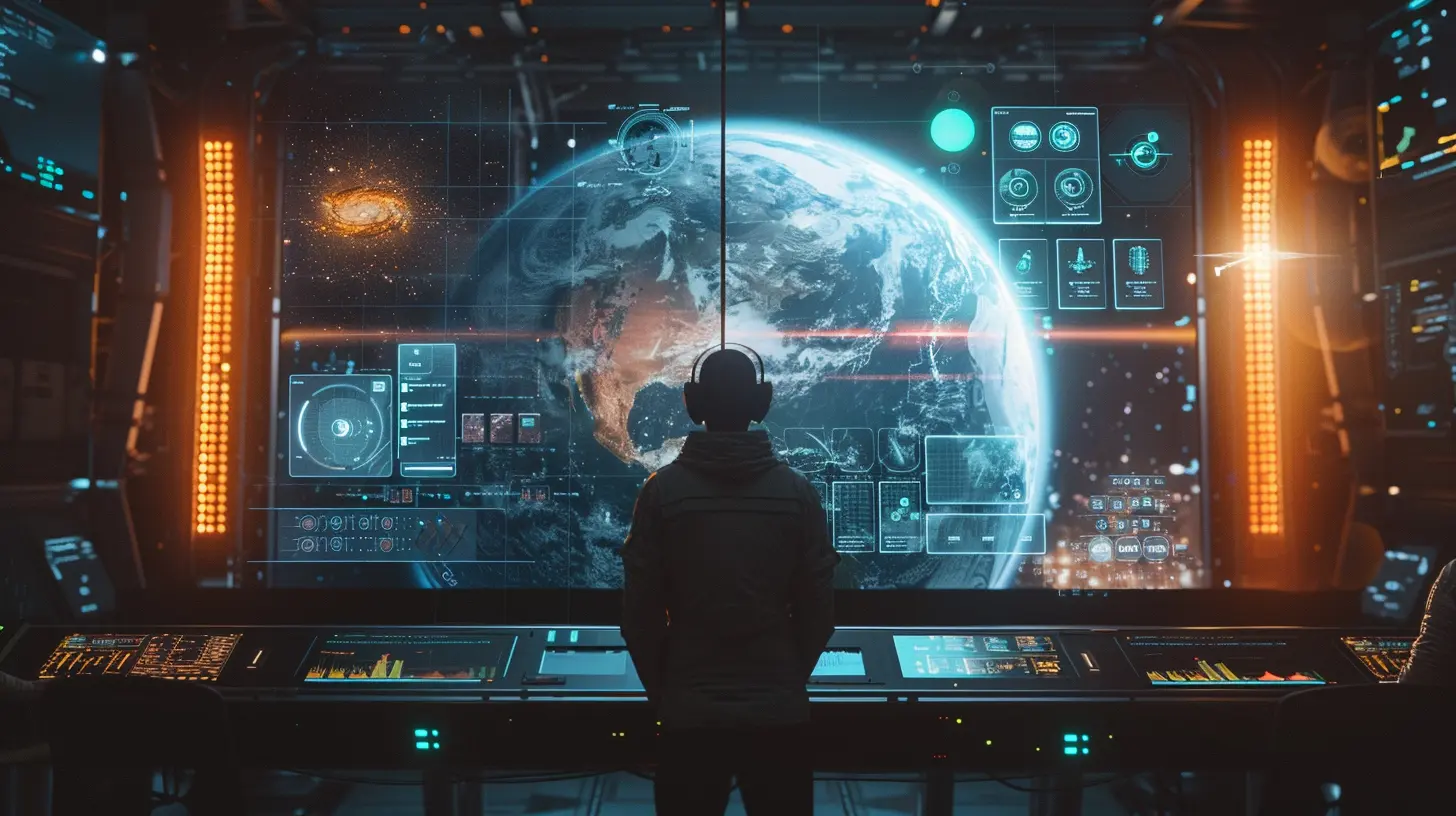
Enter Artificial Intelligence: Not Just a Sci-Fi Trope
Remember HAL 9000 from _2001: A Space Odyssey_? Terrifying as he was, he gave us a peek into the idea of AI in space. Thankfully, today’s AI isn’t trying to toss astronauts out of airlocks.At its core, AI is all about machines simulating human intelligence. Through machine learning (ML), neural networks, natural language processing (NLP), and other fancy techy stuff, AI systems can learn, adapt, and make decisions. That’s a massive deal when you're dealing with the unpredictable environment of space.
So, where does AI fit within mission control? In more ways than you'd think.
AI’s Role in Modern-Day Mission Control Systems
1. Real-Time Data Analysis
Imagine millions of data points streaming in from a Mars rover. Speed, temperature, radiation levels, terrain info—you name it. Now imagine a human trying to make sense of all that while sipping their lukewarm coffee. Yikes.AI crunches that data in real-time. It detects patterns, flags anomalies, and even predicts potential failures. This means engineers can focus more on making the big strategic decisions, while AI handles the nitty-gritty.
2. Predictive Maintenance
Spacecraft don’t have roadside assistance. If something goes wrong, you better hope someone on Earth can figure it out before the whole mission goes sideways.AI can forecast hardware problems before they actually happen. By recognizing wear-and-tear patterns in machine behavior, AI gives mission control a heads-up. It's like having a cosmic mechanic onboard that never takes a smoke break.
3. Autonomous Decision Making
When you're communicating with something millions of miles away, the delay gets real. For Mars, signals can take anywhere from 5 to 20 minutes to go one way. Imagine trying to remote-control a rover with that kind of lag.That’s where AI steps up. Onboard AI can make split-second decisions without waiting for Earth. For example, if the rover spots something interesting (let’s say, a strange rock that might contain clues about life), it can decide to take a closer look without phoning home first.
This kind of autonomy isn’t just convenient—it’s vital.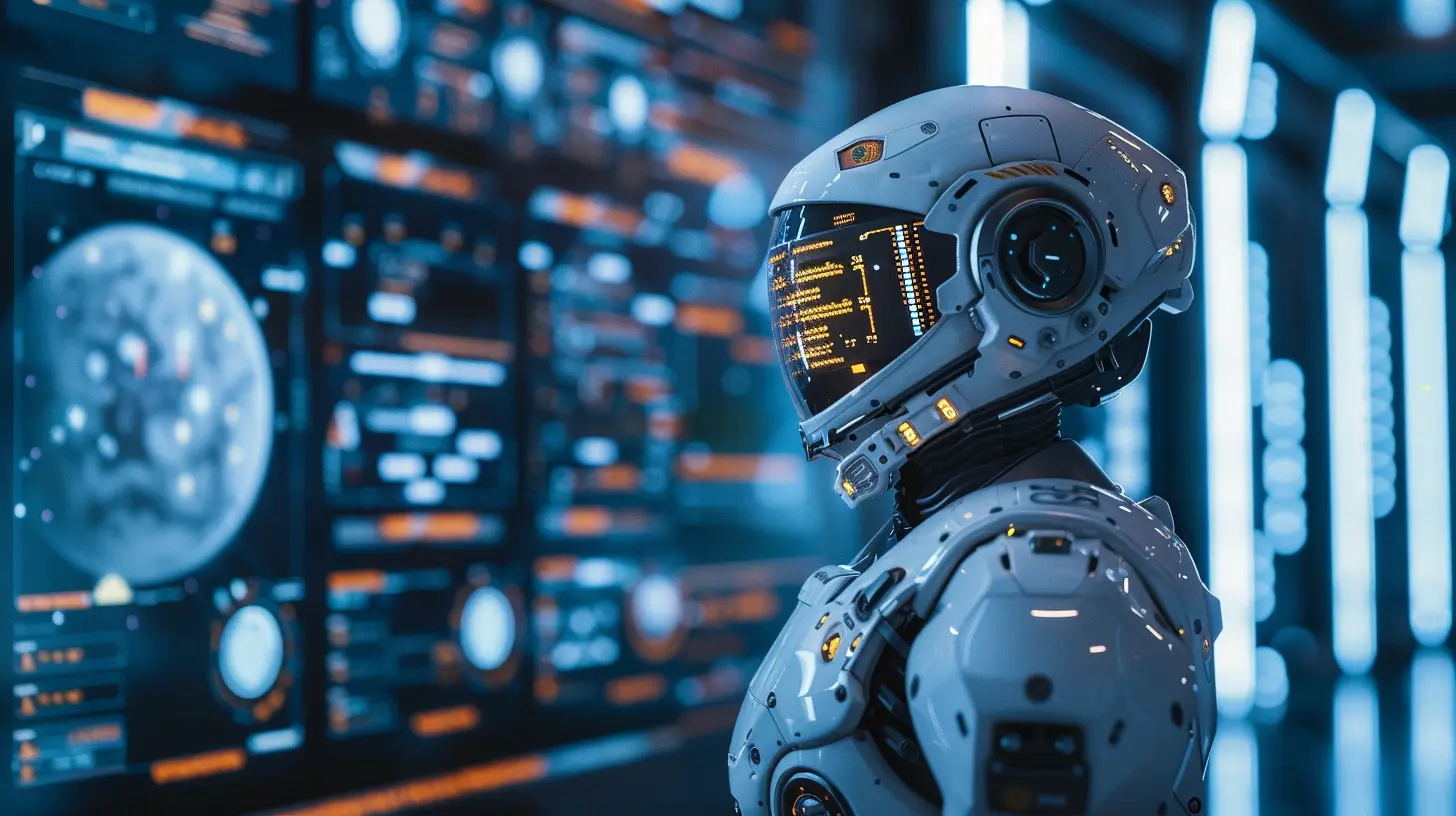
Space Missions Already Powered by AI
AI in space isn't some far-off fantasy—it’s happening right now.1. NASA’s Mars Rovers
NASA has been using AI for years. Take the Mars rovers—Curiosity and Perseverance. These rovers have autonomous navigation systems powered by AI that allow them to analyze terrain and avoid obstacles all by themselves. No joystick required.And that’s not even the best part. The AI onboard sorts out which rock samples are worth collecting and sends only the most valuable data back to Earth, saving precious bandwidth.
2. ESA’s Gaia Mission
The European Space Agency’s Gaia spacecraft is mapping the stars like an interstellar cartographer. It’s collecting data on over a billion stars, and guess what’s helping to process that mind-boggling amount of information? Yep—AI.AI algorithms sift through terabytes of data, identify celestial objects, and help build the most accurate 3D map of our galaxy yet.
3. CIMON – The Floating AI Assistant
Crew Interactive Mobile Companion (CIMON) is basically an Alexa for astronauts—but smarter, sassier, and floating around the ISS. Developed by Airbus and IBM, CIMON helps astronauts with tasks, answers their questions, and even detects stress in their voices. It’s like an AI therapist in zero gravity.The Benefits of AI in Mission Control
We're not just using AI because it sounds cool (though, let’s be honest—it does). The perks are seriously game-changing.Reduced Human Error
Even the most brilliant engineers can miss a beat. AI systems, when trained properly, aren't distracted, tired, or emotionally swayed. They just do their job—day in, day out.Faster Decision-Making
Time is everything in space missions. AI cuts through the clutter and delivers insights fast, helping teams act quicker during emergencies or critical moments.Scalability
As we aim for bigger missions—think Mars colonies or interstellar probes—AI allows us to scale operations without needing hundreds of extra human operators.Cost Efficiency
Fewer malfunctions, better planning, quicker missions—all thanks to AI—translate to lower costs. And in the space biz, that’s a huge win.Challenges of Using AI in Space Exploration
Of course, it's not all smooth sailing—or smooth space-faring.Reliability Concerns
You can’t reboot a system on a spacecraft the same way you reboot your phone. AI systems must be robust, foolproof, and tested like crazy before they’re deployed. A glitch out there could mean total mission failure.Ethical Implications
What if an AI makes a decision that jeopardizes human life or alters a mission’s goal? Defining the moral boundaries of AI is still a work in progress.Data Limitations
AI learns from data. In space, data is limited, especially for missions exploring uncharted territories. This makes training AI models a challenge.The Future: AI and the Cosmic Horizon
So, what's next?AI-Powered Space Stations
Future space habitats might be run almost entirely by AI—optimizing life support, monitoring crew health, and managing daily operations.AI in Deep Space Missions
Long-duration missions to Jupiter’s moons or even Proxima Centauri (far-fetched, but hey) will require spacecraft to be almost fully autonomous. AI will be at the helm for navigation, system checks, and even scientific experiments.AI + Robotics = A Dream Team
Picture robotic arms on lunar bases fixing stuff, 3D printing tools, and even constructing habitats—all coordinated by AI. It’s not sci-fi anymore. We’re almost there.Final Thoughts: Why This Matters to You (Yes, You)
You might not be planning a vacation to Titan anytime soon, but what happens in mission control matters here on Earth. AI isn’t just changing space exploration—it’s pushing our understanding of what's possible.And let's be real—space is hard. It’s risky, expensive, and filled with unknowns. But AI arms us with tools to minimize those risks, stretch our dollar, and unlock the secrets of the cosmos without always needing a human in the loop.
So the next time you hear about a successful landing on Mars or a new planet discovered light-years away, remember—there’s a strong chance AI had a hand in it.
Mission control isn’t just manned by humans anymore. The age of artificial intelligence in space is here, and it’s taking us where no robot—or human—has gone before.
all images in this post were generated using AI tools
Category:
Space TechnologyAuthor:

Ugo Coleman
Discussion
rate this article
2 comments
Robert Palmer
AI's integration in mission control promises to optimize decision-making and enhance the efficiency of future space exploration missions.
February 16, 2026 at 1:11 PM
Ugo Coleman
Thank you! Indeed, AI's role in mission control is crucial for improving decision-making and streamlining operations in space exploration.
Arwen Snyder
AI transforms mission control, paving the way for deeper exploration.
January 26, 2026 at 4:16 AM
Ugo Coleman
Thank you for your comment! Indeed, AI is revolutionizing mission control, enabling us to explore deeper and more efficiently than ever before.