Augmented Reality in Education: Revolutionizing the Classroom Experience
22 March 2026
Education has come a long way from chalkboards and overhead projectors. Today, technology is at the forefront of transforming the way students learn and teachers teach. Among the most exciting innovations is Augmented Reality, or AR. If you're picturing holograms and headsets from a sci-fi movie, you're not far off. But AR is not just about flashy tech; it's about creating immersive, interactive learning experiences that genuinely enhance the classroom. In this article, we'll explore how Augmented Reality is revolutionizing education and why it might be the most significant shift in how we learn since the advent of the internet.
What is Augmented Reality? A Quick Refresher
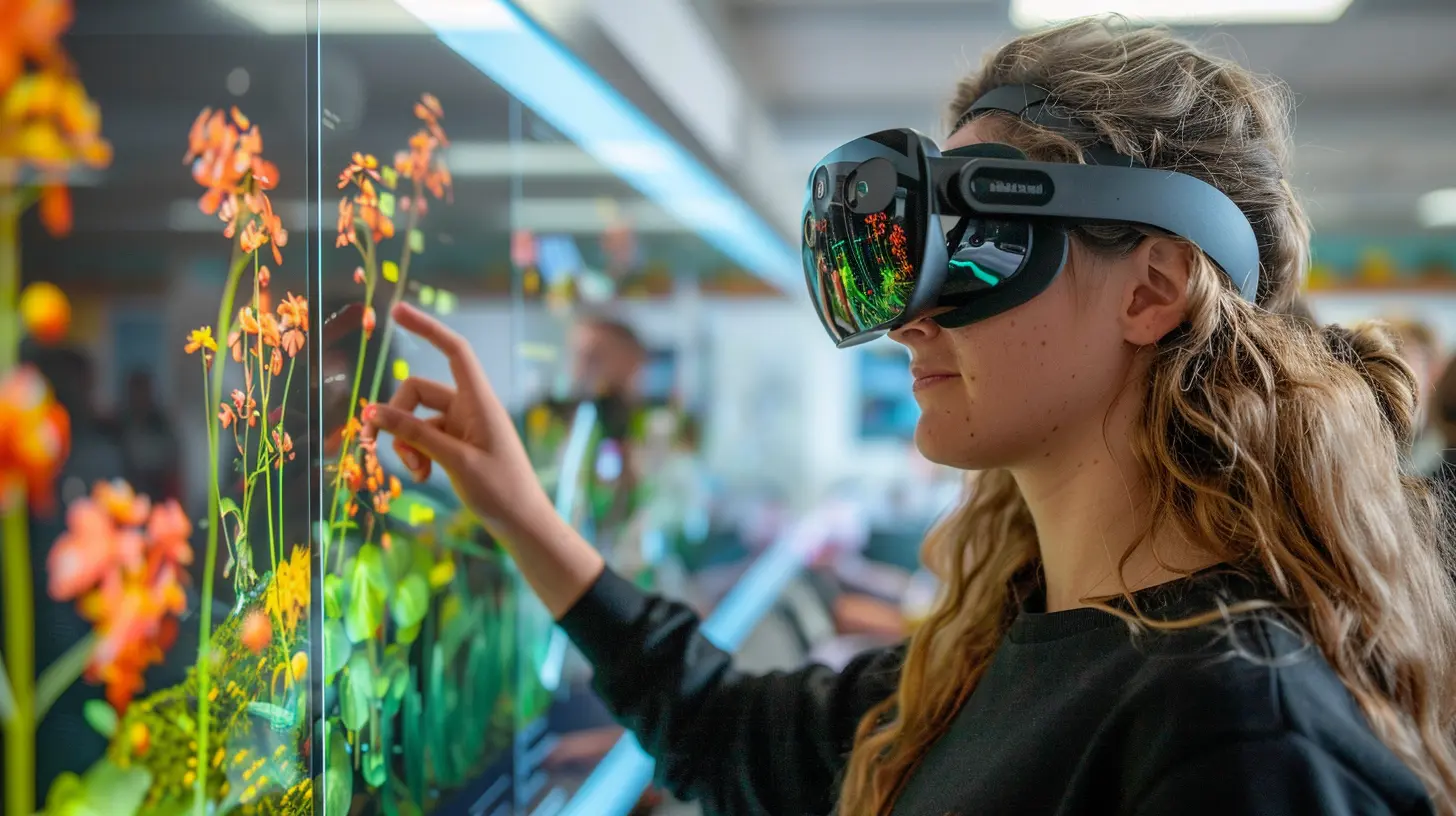
Before we dive into its impact on education, let's make sure we're all on the same page about what Augmented Reality actually is. AR overlays digital content—such as images, videos, or 3D models—onto the real world. Unlike Virtual Reality (VR), which immerses you in a fully digital environment, AR enhances your current surroundings. Think of it as a digital layer added to the real world, giving you extra information or interactive elements.For example, imagine pointing your smartphone at a historical landmark and seeing information or animations pop up on your screen explaining its significance. That's AR in action! Now, imagine that same concept applied in a classroom setting. Sounds exciting, right?

Why Augmented Reality in Education?
So, why is AR becoming such a game-changer in education? The short answer: it makes learning more engaging, interactive, and effective. Traditional methods of teaching often rely heavily on textbooks, static images, and lectures, which can be dry and passive. AR, on the other hand, turns learning into an active experience.Students don’t just read about a concept—they see it unfold before their eyes. Visualizing complex math problems, exploring the human body in 3D, or even taking virtual field trips to ancient civilizations are all possible with AR. This kind of hands-on learning can significantly improve retention and understanding.
Personalized Learning
One of the most significant advantages of AR is that it allows for personalized learning. Every student learns at their own pace, and AR can cater to that. If a student is struggling, AR applications can provide additional explanations or practice problems tailored to their needs. On the flip side, students who are excelling can access more advanced content to challenge themselves.It’s like having a tutor for every student, but instead of a human tutor, it’s a smartphone or tablet guiding them along the way—pretty futuristic, right?

AR in Different Subjects: A Breakdown
Let’s break it down subject by subject to see how AR might change the game in various areas of study.1. Science
Science is one of the subjects where AR shines the brightest. Imagine studying biology and instead of looking at a flat diagram of the human body, you can see a 3D model projected right in front of you. You can rotate it, zoom in, and explore each organ in detail.In chemistry, students can watch molecules interact in real-time, seeing chemical reactions unfold before their eyes. Physics lessons can become more dynamic by visualizing forces, trajectories, and other abstract concepts in a tangible way. AR transforms science from a subject of reading and memorization into an exploratory adventure.
2. History
History class is often criticized for being boring, especially when students are expected to memorize dates and events from long ago. But AR can bring history to life. Imagine walking into a classroom, putting on a set of AR glasses, and suddenly finding yourself in Ancient Rome or the middle of a World War II battlefield. You can explore historical events as if you were there, watching crucial moments unfold.This immersive experience makes history more relatable and engaging for students, helping them not only to learn but to feel connected to the past.
3. Mathematics
Math is abstract and often difficult for students to grasp, especially when it comes to higher-level concepts like geometry or calculus. AR can make these abstract concepts more concrete by providing visual representations.For instance, a teacher explaining the Pythagorean Theorem could use AR to project a triangle into the classroom, allowing students to manipulate its sides and angles to see how it all fits together. This kind of visualization can make complex math problems much easier to understand.
4. Languages
Learning a new language can be challenging, but AR can help make it more interactive. Picture this: you're learning Spanish, and you point your phone’s camera at everyday objects in the classroom. As you do, the Spanish word for each object hovers above it, helping you learn vocabulary in real-time.AR can also assist in pronunciation. Imagine a virtual language tutor appearing in the corner of your screen, offering you real-time feedback on how you're pronouncing words. It’s like having a native speaker with you at all times.
5. Art and Design
Art classes are all about creativity, and AR opens up new avenues for artistic expression. Students can use AR to create 3D sculptures or paintings that exist in the virtual world but are projected into the real one. Imagine designing a building in architecture class and being able to “walk through” your design in AR before even starting construction.AR also provides tools for learning art history. Imagine being able to see famous works of art in 3D or watching an artist’s technique unfold right in front of you. It’s a whole new way to appreciate and understand art.
The Benefits of Augmented Reality in Education
Now that we've looked at how AR can be applied to different subjects, let's talk about the broader benefits it brings to the table.1. Increased Engagement
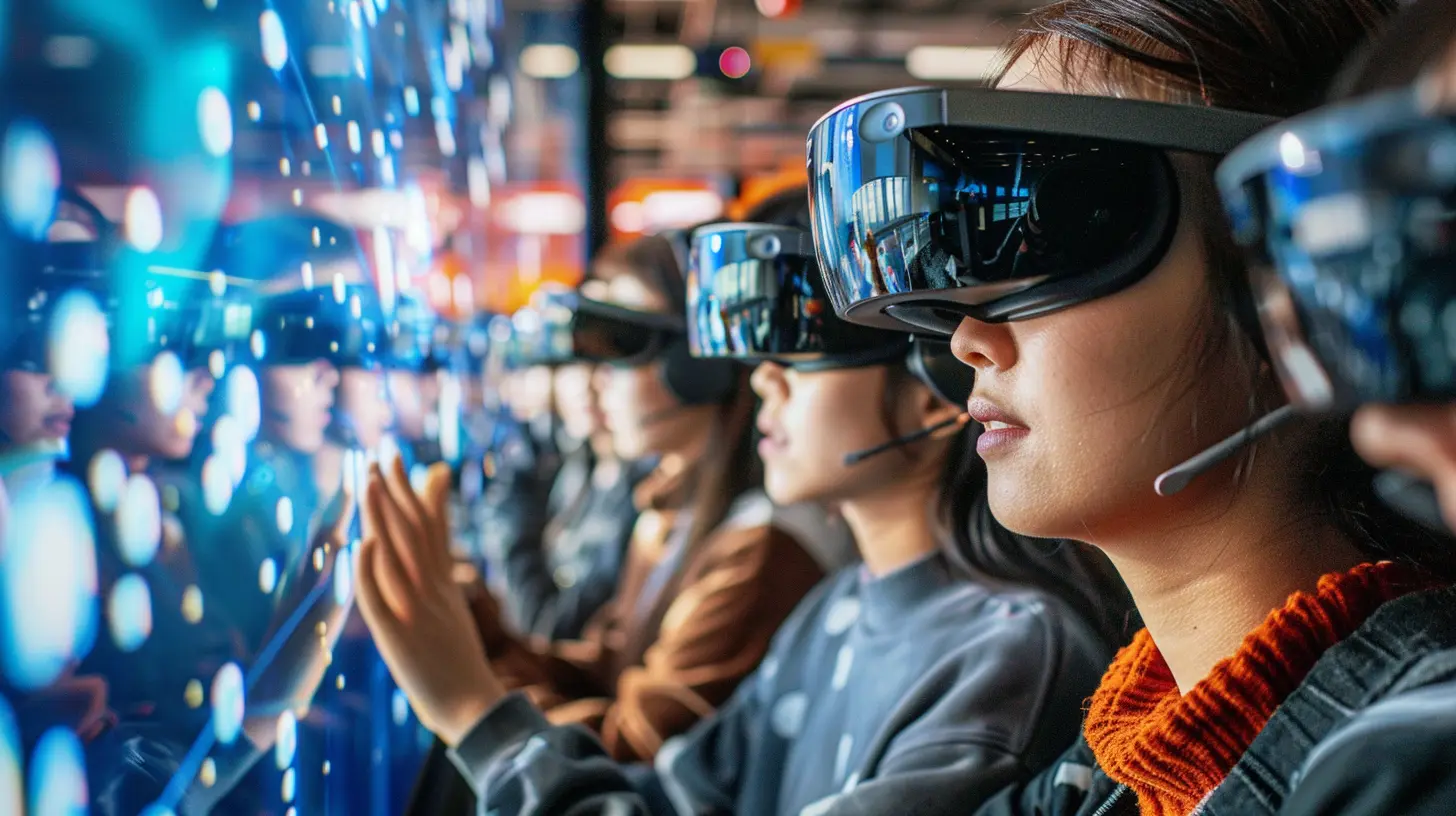
Students today are digital natives. They've grown up with smartphones, tablets, and the internet. So, it's no surprise that traditional teaching methods don't always hold their attention. AR, however, speaks their language. By blending the physical and digital worlds, AR creates an interactive experience that keeps students engaged.2. Improved Retention
When students are actively involved in their learning process, they’re more likely to retain information. Studies have shown that interactive learning experiences—like those provided by AR—can improve both understanding and retention of complex subjects.It's one thing to read about the solar system, but it's another to hold a 3D model of it in your hands and explore each planet up close.
3. Accessibility
AR can make education more accessible for students with different learning styles and abilities. For example, students with dyslexia or other reading challenges can benefit from AR applications that provide audio explanations or interactive visual aids. AR can also be used to create simulations for students with physical disabilities who may not be able to participate in certain hands-on activities.4. Collaboration Opportunities
AR also fosters collaboration. Imagine students working together to solve a problem, but instead of just discussing it, they can manipulate a 3D model together in real-time. This kind of interactive teamwork can help build communication and problem-solving skills, which are crucial for success in the 21st century.Challenges and Considerations
Of course, no technology is without its challenges, and AR is no exception. One of the biggest barriers to widespread AR adoption in schools is cost. While AR applications can be accessed via smartphones or tablets, these devices aren’t always available to every student, especially in underfunded schools.There’s also a learning curve. Teachers need training to understand how to integrate AR into their lesson plans effectively. It’s not enough to just throw in some cool tech; it has to serve an educational purpose.
Lastly, there’s the issue of screen time. As much as AR enhances learning, it also requires students to spend more time on devices. Striking a balance between digital and traditional learning methods is essential to ensure students aren’t glued to screens all day.
The Future of AR in Education
Despite these challenges, the future of AR in education looks incredibly promising. As technology continues to evolve, we can expect AR to become more affordable and accessible. Eventually, AR could become as standard in the classroom as textbooks and whiteboards are today.The rise of 5G technology will also play a role in making AR more seamless and integrated into everyday learning. Faster internet speeds and lower latency will allow for more sophisticated AR experiences, like real-time collaboration between students in different parts of the world.
Conclusion: A New Era of Learning
Augmented Reality is not just a novelty; it's a powerful tool that has the potential to revolutionize education. By making learning more interactive, immersive, and personalized, AR can help students not just learn but understand and retain complex information in ways that traditional teaching methods simply can't match.Whether it's exploring the human body in 3D, walking through historical events, or solving math problems in real-time, AR is opening up new possibilities for how students engage with the world around them. As this technology continues to evolve, the classroom of the future might look more like something out of "Star Trek" than we ever imagined.
all images in this post were generated using AI tools
Category:
Augmented RealityAuthor:

Ugo Coleman
Discussion
rate this article
2 comments
Carly Banks
Great article! It’s inspiring to see how augmented reality is reshaping education. I believe these innovative tools can truly enhance learning experiences and engagement for students. Excited to see where this technology will take us next!
March 24, 2026 at 8:42 PM
Ugo Coleman
Thank you! I'm glad you found the article inspiring. The potential of augmented reality in education is indeed exciting, and I look forward to seeing how it evolves!
Sable Carr
Exciting future for learning awaits!
March 23, 2026 at 4:19 AM
Ugo Coleman
Absolutely! The possibilities with augmented reality in education are truly inspiring. I can't wait to see how it transforms learning.