Fusion Power in Space: The Quest for Unlimited Energy
26 February 2026
Let’s face it—our energy game on Earth is getting a bit messy. Fossil fuels are on their way out (and thank goodness), renewables are great but not always reliable, and nuclear fission—while powerful—comes with its own baggage. Now imagine this: an engine that runs on the same stuff that powers the stars. Sounds sci-fi, right? But that’s the magic of fusion power, and it’s not just for Earth anymore. We’re now dreaming about using it... in space.
Welcome to the next big leap. In this article, we’re diving deep into how fusion power could change the way we explore and live in space. Buckle in—we’re talking stars, spaceships, and the pursuit of nearly limitless energy.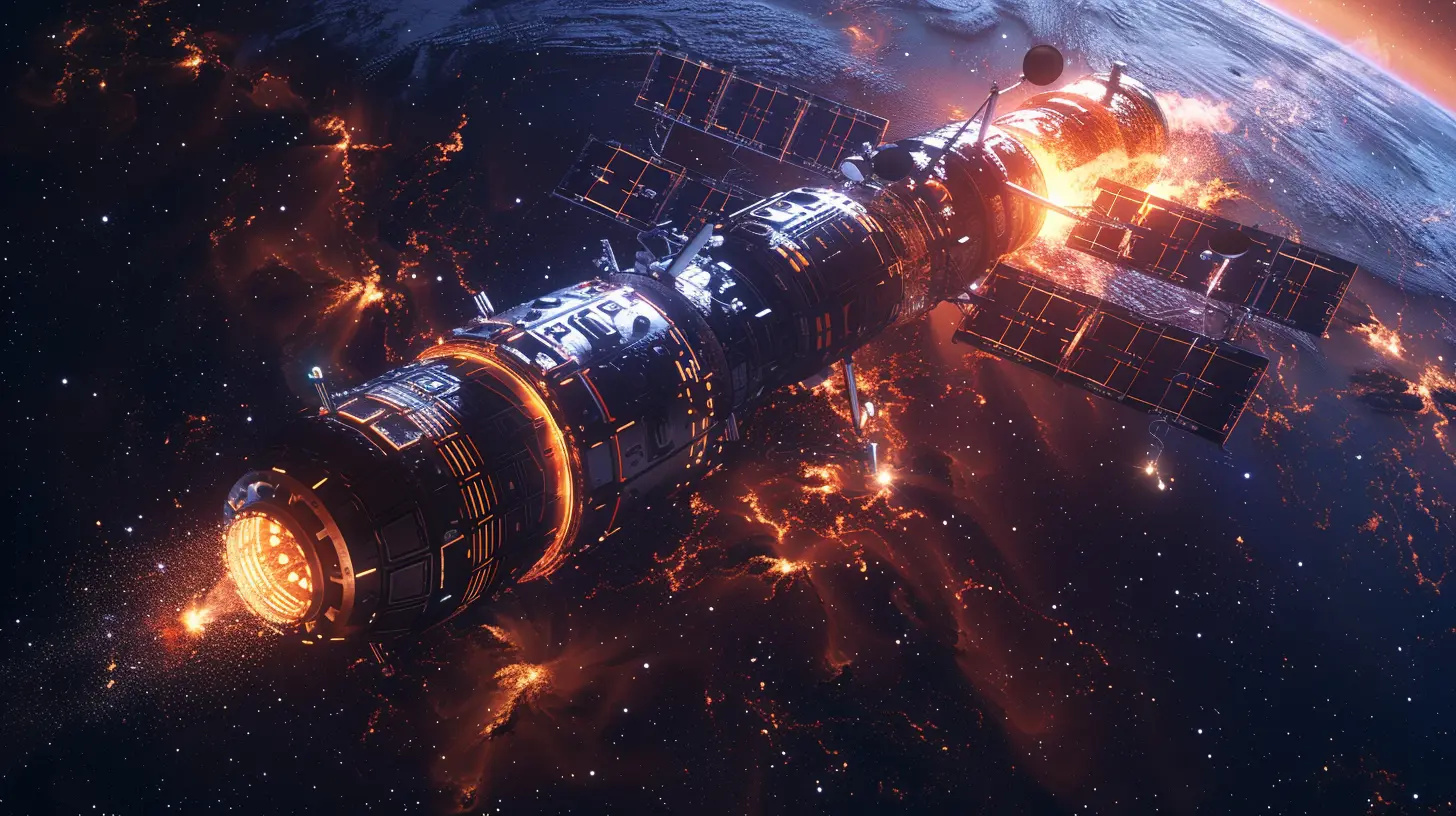
So, What Is Fusion, Anyway?
Alright, let’s not get too bogged down in physics, but here's the gist.Fusion is the process where two light atomic nuclei (like hydrogen) slam together to form a heavier nucleus (like helium), and in the process, release a ton of energy. It’s the same reaction that powers our Sun. Unlike fission—the splitting of atoms—fusion doesn’t create long-lived radioactive waste. It’s cleaner, more efficient, and if we can get it to work, it could be the single most powerful energy source we’ve ever had.
Sounds perfect, right? Well, there’s a catch: we haven’t cracked the code yet—not on Earth, at least.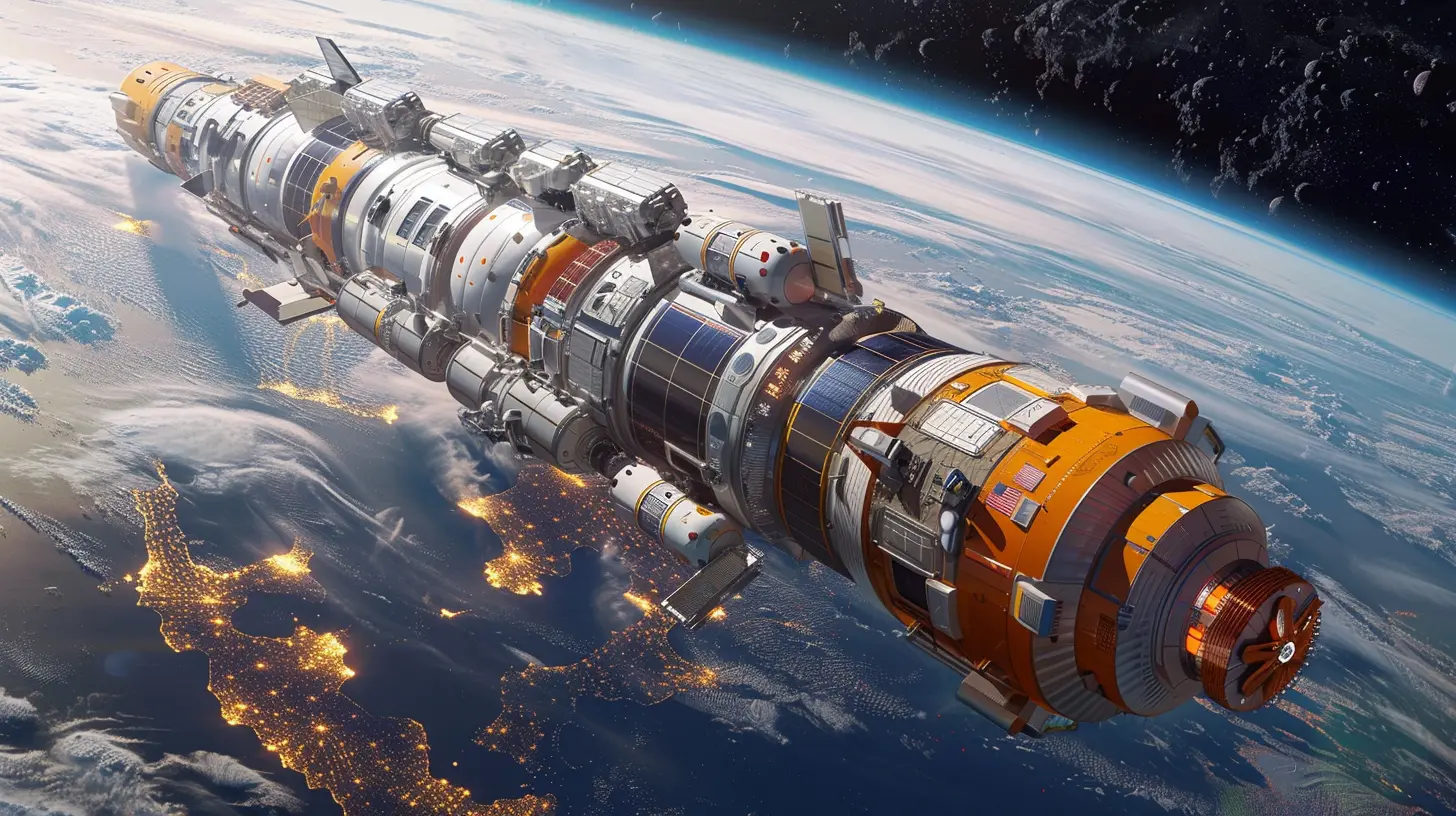
Why Space? Isn’t It Hard Enough on Earth?
Good question. Developing fusion reactors here on Earth is already a herculean task. So why should we even think about building them in space?Here’s the thing—space actually solves some of fusion’s biggest problems. Let me explain.
1. Cooling Is Easier… Seriously
Fusion reactions generate insane amounts of heat. On Earth, we have to build massive cooling systems to keep things from melting down. In space? Just vent the heat into the cold, vast vacuum. No need for bulky cooling towers—space itself provides a perfect chill.2. No Atmospheric Containment Hassles
The Earth's atmosphere complicates things when it comes to plasma containment and magnetic fields. In space, you don’t have air resistance messing with your magnetic fields or plasma flow. It’s like an empty cosmic laboratory, ready for experiments.3. Radiation Is Less of a Problem
Fusion does produce some neutron radiation, which isn’t great for living tissue. On Earth, that’s a big issue. But in space, you can just send your fusion reactor out a few hundred meters on a tether—or better yet, operate it on unmanned systems far from crew quarters.
The Cosmic Potential of Fusion Power
Now let’s get to the juicy bit—why fusion power in space could be a total game-changer.Interplanetary Travel Becomes a Breeze
Right now, traveling through space is painfully slow. Take Mars, for instance. With current chemical rockets, it takes around 6 to 9 months to get there.But fusion propulsion? That could cut the trip to just 3 months—maybe even less. It’s all about how much energy to weight ratio you’re packing. Fusion rockets promise insane thrust with relatively low fuel mass compared to chemical systems.
That means faster travel, shorter missions, and less radiation exposure from cosmic rays for astronauts.
Deep Space Missions Suddenly Make Sense
Want to go to Jupiter’s moons? Or even the outer edge of our solar system? Fusion makes that not just possible—but practical. With enough power, we can send probes or even humans to explore places we've only dreamed of.Fusion could enable missions that last for decades, and that’s where it gets really exciting. Think long-term planetary outposts or autonomous mining rigs powered indefinitely by onboard fusion cores.
Powering Lunar and Martian Bases
Imagine trying to run a base on the Moon or Mars using solar power. There are long nights (up to 14 Earth days on the Moon!), dust storms, and logistics nightmares.Bring in a compact fusion reactor, and suddenly, your base has round-the-clock, reliable power. You could support agriculture, water purification, oxygen generation—all without worrying about power interruptions.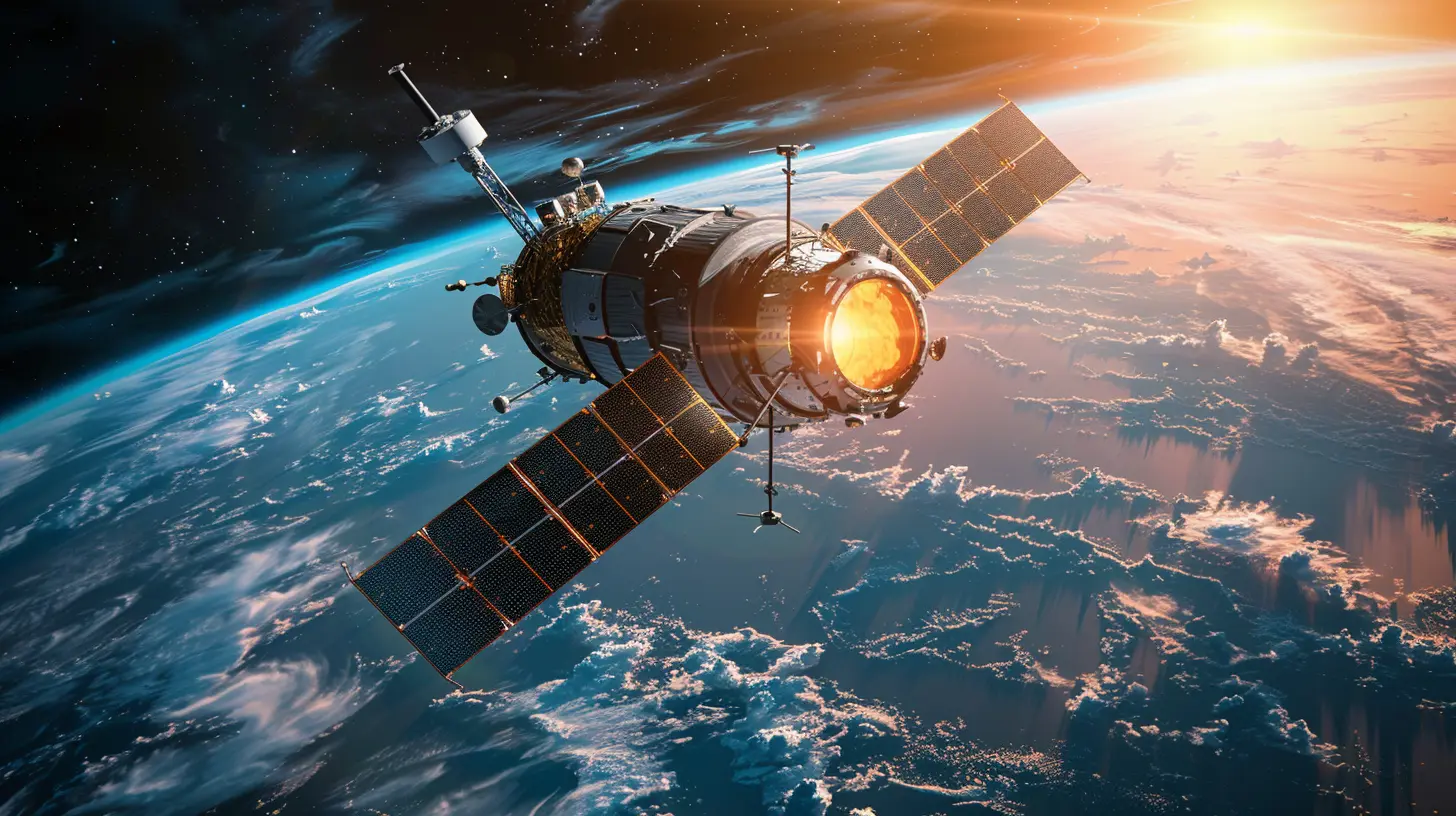
Meet the Tech: Fusion Reactor Designs for Space
So how exactly would these reactors work? Let’s break down a few of the leading concepts that might just power the future:1. Tokamaks in Orbit?
Tokamaks are donut-shaped devices that use a mix of magnetic fields to confine plasma. On Earth, they’re huge and heavy. But smaller, high-temperature superconducting versions are being prototyped.Companies like Tokamak Energy and Commonwealth Fusion Systems are working on designs that could, in theory, be adapted for use in space. Think mini tokamaks—rugged, efficient, and light enough for launch.
2. Magnetic Mirror Fusion
This one’s getting attention from NASA. Magnetic mirrors use magnetic fields to bounce plasma back and forth in a tube-like chamber, heating it enough for fusion.Mirrors are relatively simple, more compact, and potentially perfect for space applications. They could even double as propulsion systems.
3. Direct Fusion Drive (DFD)
Developed by Princeton Plasma Physics Lab, the DFD merges fusion generation and propulsion in one neat package. It uses a type of mirror fusion, providing both thrust and electric power.The best part? It’s super efficient. Some models could operate for years without refueling, using just a few kilograms of helium-3.
Helium-3: Space’s Secret Fuel?
Speaking of helium-3… this isotope is like a cheat code for fusion fuel. It produces almost no radioactive waste and can yield insane amounts of energy. The catch? It’s crazy rare on Earth.But guess where it’s not rare? The Moon.
Yep, lunar regolith (moon soil) is packed with helium-3 thanks to billions of years of solar wind exposure. That raises the possibility of future mining operations that extract helium-3 and send it to fuel fusion reactors both on the Moon and in orbit.
Could we see future “fuel farms” on the Moon? Maybe. Fusion power might not just take us to the stars—it might reshape how we value space resources altogether.
The Challenges (Because Nothing’s Ever That Easy)
We’ve been painting a pretty picture so far, but let’s talk brass tacks. Fusion in space isn’t without its hurdles:Reactor Miniaturization
Most fusion reactors on Earth are the size of buildings. We need versions that are compact enough to fit on a rocket, withstand launch stresses, and operate autonomously. That’s a tall order.Materials That Can Take the Heat
Fusion involves extreme temperatures—millions of degrees. We’ll need materials that can survive not just the heat but the relentless neutron bombardment.Autonomy and Safety
You can’t exactly send a repair crew every time something breaks. Space fusion reactors have to be almost entirely autonomous with built-in redundancies and safety protocols.Cost… For Now
Fusion research is expensive. Space operations are expensive. Combine the two, and you've got a pretty hefty price tag. But like all tech, costs will fall with time and scale.Who’s Working on This? (And No, It’s Not Just NASA)
Let’s give some credit where it’s due. A number of organizations and private companies are throwing their hats into the fusion + space ring.- NASA: Actively researching fusion propulsion through projects like the NIAC-funded Direct Fusion Drive.
- ESA (European Space Agency): Investing in fusion-related studies for space power generation.
- Helion Energy: Working on a compact pulsed-fusion reactor design that’s getting serious attention.
- Tae Technologies & Zap Energy: Exploring next-gen plasma confinement that could scale down for space.
- Blue Origin & SpaceX: While not directly building fusion tech, they’re creating the launch platforms and cargo systems that will eventually carry these reactors.
The Future of Fusion: Closer Than You Think?
It’s tempting to think of fusion in space as a 22nd-century dream. But progress has been quietly ramping up. We’re not decades away anymore—we’re seeing real prototypes, real designs, and even small reactors with promising results.Fusion power in space could be a reality within the next 10 to 20 years, especially for robotic systems and propulsion. Full-blown crewed fusion missions? Maybe a few decades out—but not impossible.
Imagine a future where humanity has outposts around the solar system, all powered by small suns humming in the dark. It’s poetic, really—we’re building stars to chase the stars.
Final Thoughts: Why You Should Care Now
Fusion power in space isn’t just about science fiction fantasies or cool tech. It’s our ticket to a sustainable, exploratory, and exciting future beyond Earth.This is the kind of innovation that doesn’t just benefit astronauts—eventually, it’ll come full circle and transform life back home too. Clean power, global energy equity, off-world industry—it all starts with cracking the fusion nut.
So next time someone says fusion is “always 30 years away,” just smile and say, “Only in space-time.
all images in this post were generated using AI tools
Category:
Space TechnologyAuthor:

Ugo Coleman
Discussion
rate this article
2 comments
Raine Sanders
Exciting potential for clean energy in space!
March 7, 2026 at 5:30 AM
Ugo Coleman
Absolutely! Harnessing fusion power in space could revolutionize energy access and sustainability on Earth.
Wynter Curry
Exciting possibilities ahead—fusion could redefine energy in space!
March 4, 2026 at 4:19 AM
Ugo Coleman
Absolutely! Fusion holds the potential to revolutionize space travel and energy sustainability, opening new frontiers for exploration.