How 3D Printing is Revolutionizing Space Exploration
2 June 2026
We’ve always looked up at the sky, dreaming of the stars, imagining life on other planets, or just trying to figure out what’s out there. Well, it turns out—we’re getting closer. Not just with powerful telescopes or faster rockets, but with something you might not expect: 3D printing.
Yeah, the same tech used to make plastic toys at home or prototype car parts is now playing a massive role in space. And I’m not talking about just printing a few gadgets here and there. 3D printing, also known as additive manufacturing, is reshaping the way we build, transport, and even live in space.
Let’s dive into how this game-changing technology is fueling the next space race, one printed layer at a time.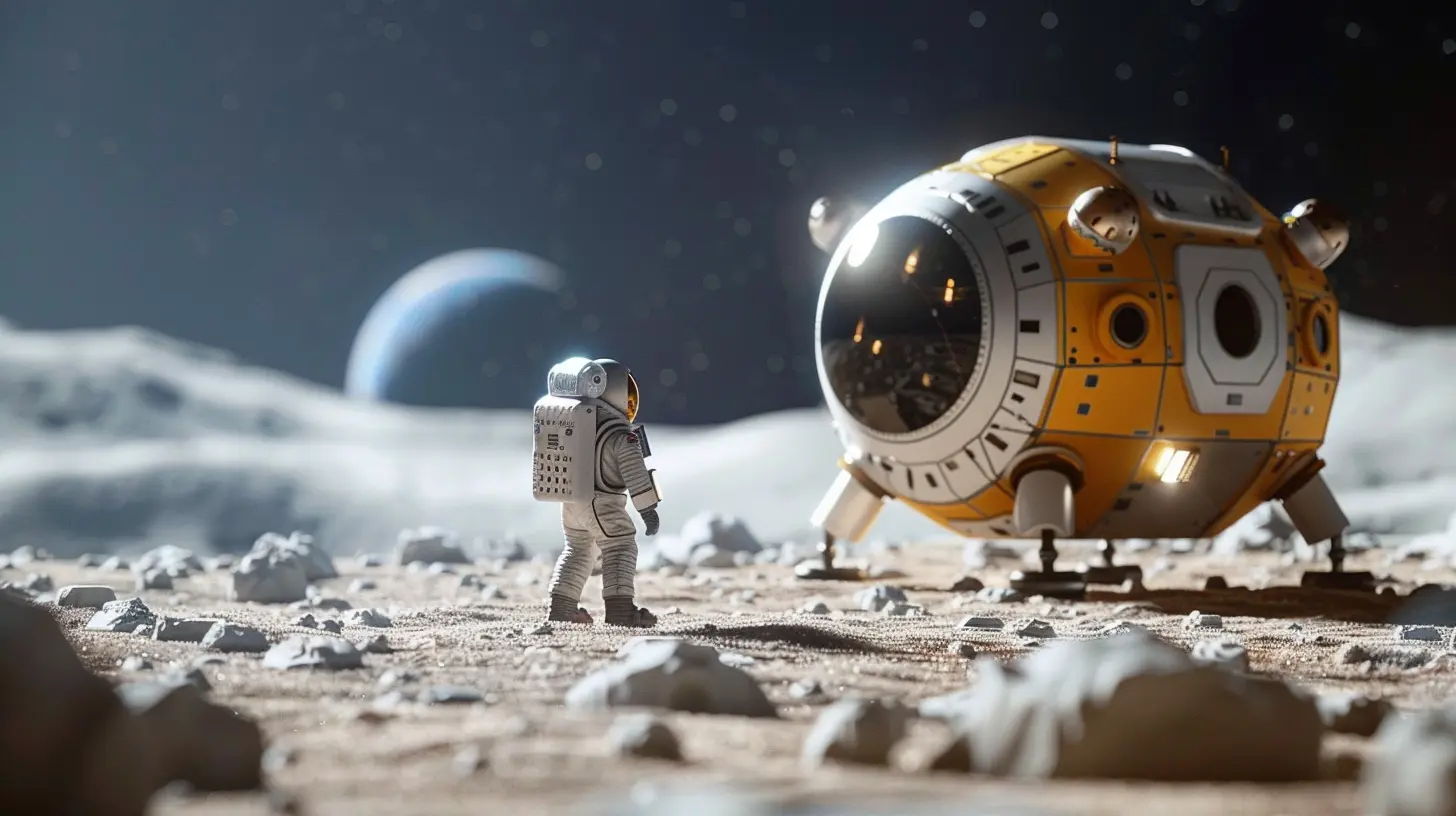
What Is 3D Printing in a Nutshell?
Okay, before we zoom off into orbit, let’s get grounded for a second.3D printing is a process where material (like plastic, metal, or even lunar dust) is added layer by layer to build an object from the ground up—literally. Unlike traditional manufacturing, which often involves cutting or molding, 3D printing works by laying down only what’s needed, exactly where it’s needed. Think of it like frosting a cake one layer at a time—with precision.
It’s efficient, sustainable, and offers freedom like no other manufacturing method. That freedom becomes even more valuable when you’re 250,000 miles from Earth on the Moon—or farther.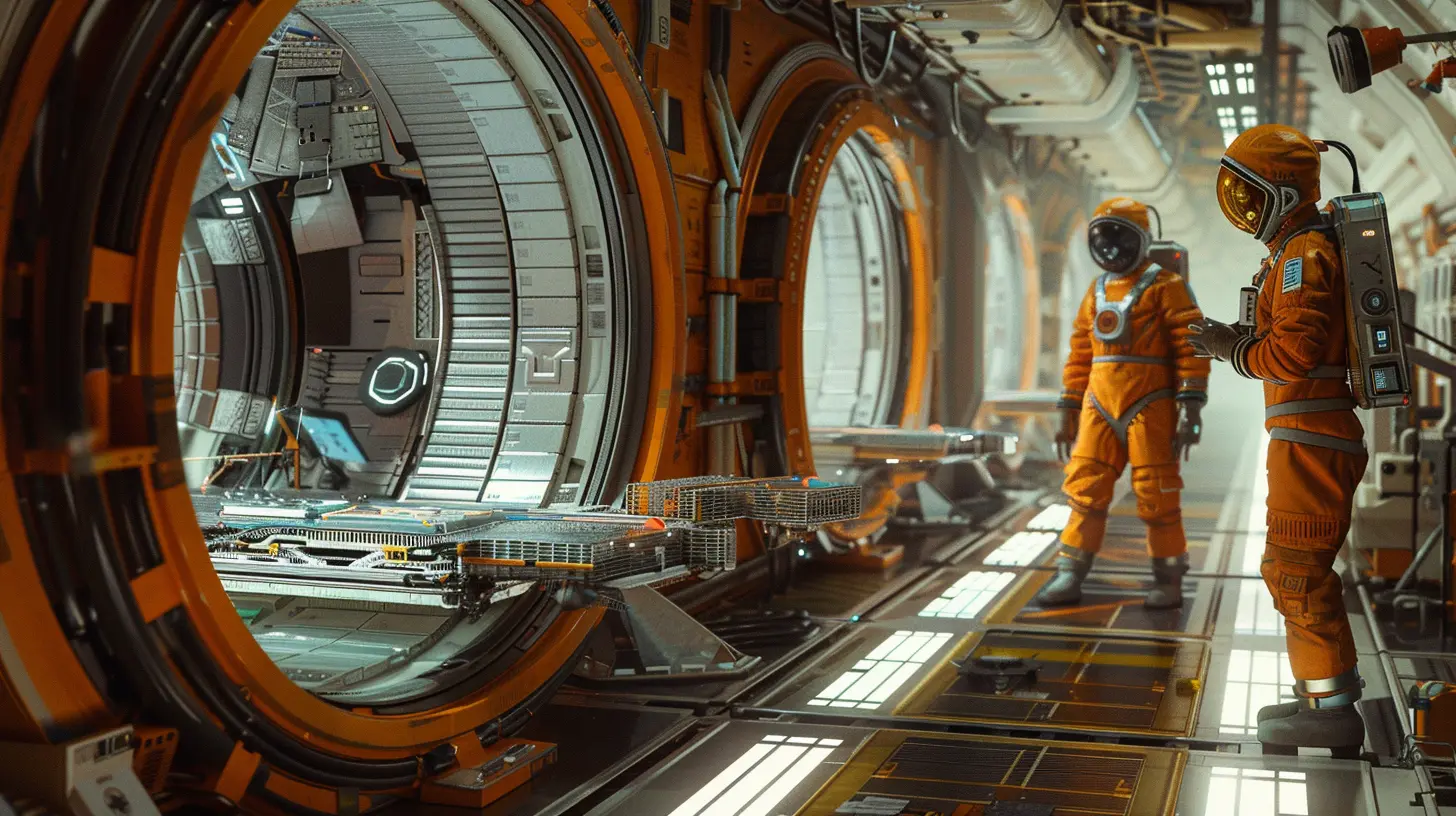
The Problem with Traditional Space Manufacturing
Let’s be real—getting things into space is ridiculously complex and expensive.We're talking about launching multi-ton rockets just to deliver a few kilograms of tools or parts. Every extra pound is a financial burden, thanks to launch costs that can run into thousands of dollars per kilogram. And what happens when something breaks on Mars? You can’t just run to the hardware store.
Traditional space missions require everything to be pre-planned, pre-packed, and double-checked on Earth. It’s like going on a road trip where you're not allowed to stop or buy anything along the way.
This is where 3D printing steps in like a cosmic superhero.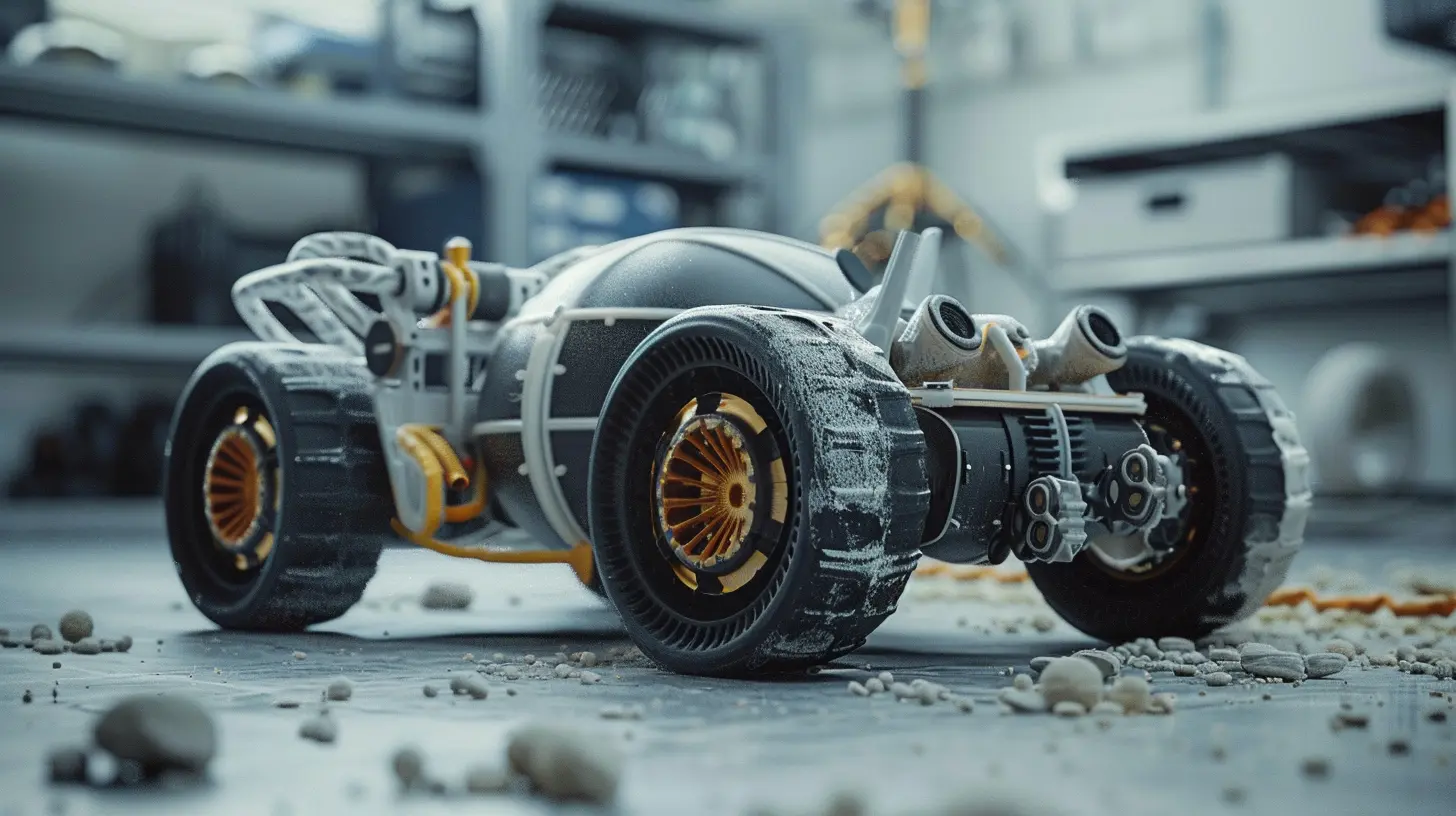
Manufacturing in Microgravity: Yeah, It’s a Thing
You might be wondering, “How the heck do you print something in space where there’s no gravity?”Good question! That’s one of the major hurdles scientists and engineers have been tackling. But guess what? They’ve already done it.
In 2014, the first 3D printer was installed aboard the International Space Station (ISS). Since then, astronauts have used it to print custom tools, replacement parts, and even medical devices—on demand. No need to wait months for a resupply mission from Earth.
The printer doesn't rely on gravity like printers here on Earth do. Instead, it uses extrusion methods that work in microgravity, securing each layer despite the floating environment. It’s like trying to stack pancakes on a rollercoaster, but the chefs figured it out.
On-Demand Tools: MacGyver in Space
Ever watched a sci-fi movie where the astronaut builds some last-minute gadget to save the day? That’s not fantasy anymore.With 3D printing, astronauts can design and manufacture custom tools as needed. In 2015, a wrench was printed on the ISS using digital blueprints sent from NASA—no shipping involved.
This kind of flexibility is crucial. Imagine needing a specialized wrench or valve and having the ability to just hit “print” from your laptop in orbit. It’s like having a universal Swiss Army knife that adapts to whatever problem comes your way.
Building Structures on the Moon and Mars
Think printing a wrench in space is cool? Wait till you hear this.NASA, ESA, and private companies like SpaceX are exploring ways to use 3D printing to build habitats on the Moon and Mars. And not with traditional materials—they’re experimenting with using local resources like lunar regolith (basically moon dust) or Martian soil to 'print' bricks and structures.
Why carry bricks when you can just print them on-site?
This approach, called In-Situ Resource Utilization (ISRU), is a game-changer. It saves massive amounts of weight and cost by eliminating the need to carry building materials from Earth. It’s like camping on the Moon and setting up your tent using the surrounding rocks instead of packing everything in a trailer.
Rockets Built with 3D Printers? You Bet
3D printing is not just being used off-Earth. Down here, companies like SpaceX, Relativity Space, and Rocket Lab are using it to manufacture actual rocket components—and in some cases, entire rockets.Relativity Space, for instance, has created the Terran 1, a rocket with 85% of its parts made using 3D printing. This cuts down on build times, labor, and cost. They can go from blueprint to launch-ready rocket in weeks instead of months or years.
And these aren’t just test toys—they’re launching real payloads into orbit.
Here, 3D printing allows for more complex geometries that are lighter and more efficient—features you simply can’t get with traditional machining. It’s as if rockets are evolving from Lego blocks to living sculptures.
Medical Emergencies in Space? Just Print a Solution
Getting sick in space isn’t just inconvenient—it can be deadly. There’s no ER on Mars, and medevac isn’t an option.Researchers are now working on 3D bioprinting technologies that could one day allow astronauts to print medical supplies—or even tissues and organs—on long-duration missions. Got a bone fracture on the Moon? Imagine printing a biocompatible cast. Need stitches on Mars? Print some artificial skin on the spot.
This science is still in its early stages, but it’s progressing fast. And in deep space, where resources are limited, this could mean the difference between life and death.
Less Waste, More Efficiency: A Sustainability Boost
Space travel isn’t just expensive—it’s wasteful. Every component sent into orbit must be reliable, redundant, and often discarded after a single use.3D printing disrupts that model. It promotes a “repair, reuse, and recycle” mentality.
Some experimental printers on the ISS are even designed to recycle plastic waste onboard—turning it back into usable filament for future prints. Imagine turning yesterday’s broken casing into tomorrow’s tool handle. It’s like space-age composting, and the Earth smiles every time it happens.
Private Space Companies Are Going All In
It’s not just NASA that’s hyped about 3D printing. Private companies are betting big on this tech.- SpaceX uses 3D printing to make parts for its Raptor engines.
- Blue Origin incorporates printed components in its BE-4 engine.
- Relativity Space, as mentioned, wants to 3D print 95%+ of its future rockets.
Why the rush? Simple: Speed, cost, and innovation. 3D printing enables rapid prototyping and iterations. Instead of waiting months to test a new engine design, companies can have a functional part in days.
This agility is what’s pushing the New Space economy forward—and fast.
3D Printing: The Great Equalizer in Space
Let’s zoom out. One of the biggest impacts of 3D printing in space isn’t just technological—it’s philosophical.Access to space has always been limited to a few countries and elite organizations. Now, with 3D printing lowering costs and barriers, smaller nations and startups can dream bigger. You no longer need a nation-sized budget to build components or test ideas.
It’s kind of like how the internet democratized knowledge—additive manufacturing is democratizing space. And that’s a beautiful thing.
The Future: What’s Coming Next?
We’ve only scratched the surface.In the next few decades, 3D printing will likely:
- Build entire self-sustaining habitats on Mars and the Moon
- Enable long-term missions to Jupiter and beyond
- Create artificial organs in orbit for emergencies
- Manufacture satellites and space tools right in orbit, reducing Earth launches
- Recycle space junk into usable components
It’s not just a tool—it’s a foundation for the next generation of exploration.
Final Thoughts: A Cosmic Leap Forward
3D printing isn’t just a flashy tech trend—it’s a revolution. One that’s quietly rewriting the rules of space exploration. From printing rocket parts on Earth to creating habitat modules on the Moon, we’re seeing a shift from relying solely on what we bring, to working with what we’ve got—right there in the stars.It’s efficiency. It’s ingenuity. And it’s incredibly human.
We’ve always looked up and wondered what’s possible. Now, with a printer in space, the answer might very well be: Anything.
all images in this post were generated using AI tools
Category:
Space TechnologyAuthor:

Ugo Coleman
Discussion
rate this article
1 comments
Summer Abbott
This article highlights an exciting shift in space exploration. The potential of 3D printing to create tools and parts on-demand could truly change the way we approach missions. It's fascinating to see innovation pushing boundaries in this field.
June 7, 2026 at 4:14 AM
Ugo Coleman
Thanks for your insights! 3D printing really is a game changer for space missions. Exciting times ahead!