How Augmented Reality Could Transform Space Missions
4 April 2026
Let’s face it—space is hard. It’s remote, risky, and relentlessly complex. And while we’ve made jaw-dropping advancements over the past few decades, space missions still come packed with challenges that test human ingenuity to its limits. But what if we could take a page from sci-fi and bring a bit of high-tech magic into the real world? That’s where Augmented Reality (AR) steps in.
In this article, we’re diving into how AR could revolutionize future space missions—from training astronauts to fixing broken gear millions of miles away. Buckle up, because we’re about to go on a journey that’s equal parts science and imagination.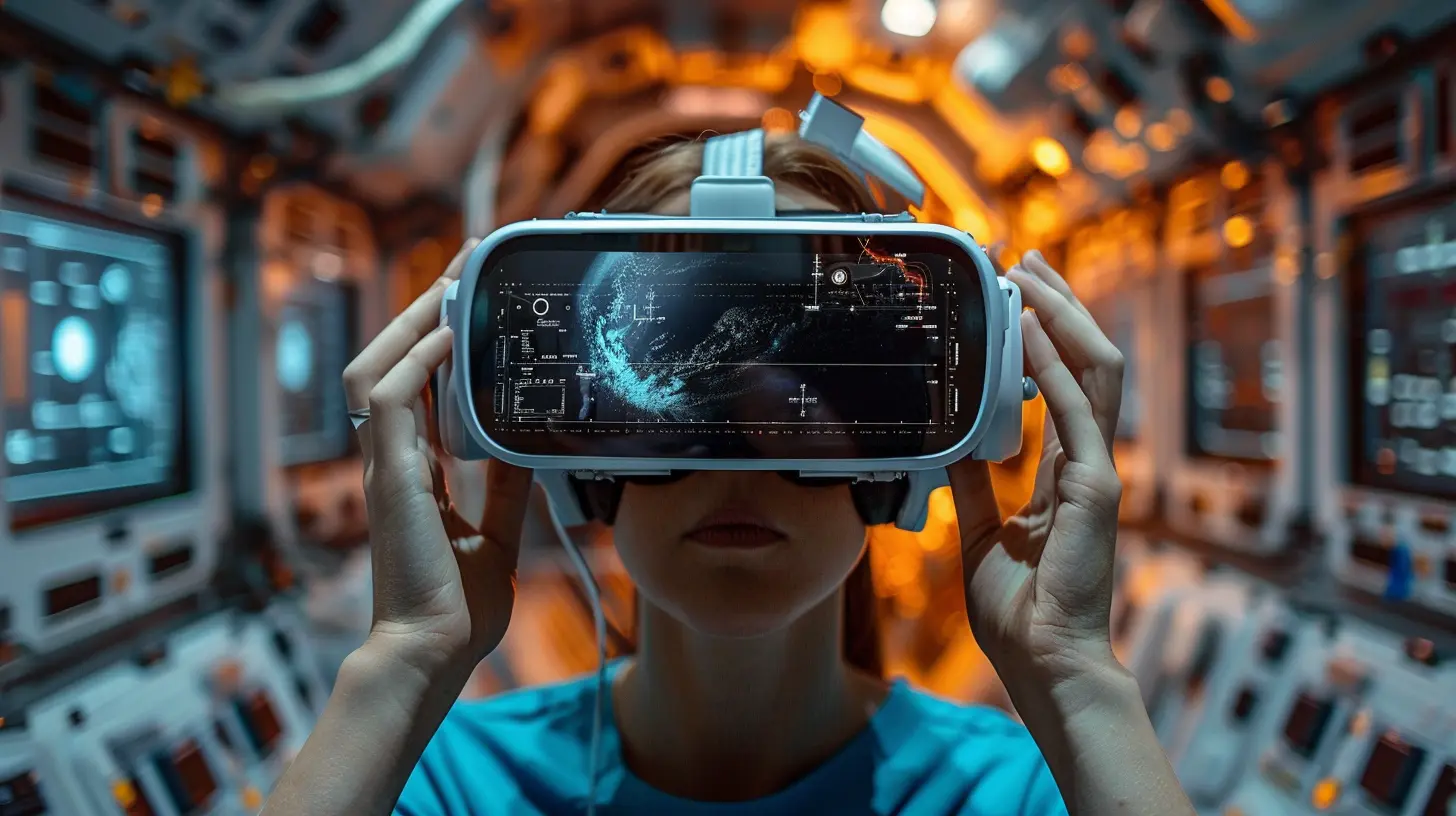
What Exactly Is Augmented Reality?
Okay, before we zoom off into orbit, let’s break it down.Augmented Reality overlays digital content on the real world. Unlike Virtual Reality (which drops you inside an entirely virtual environment), AR adds helpful visuals, data, or models to your actual surroundings—kind of like Iron Man’s visor or Pokémon GO on steroids.
It’s already changing the way we shop, game, and work here on Earth. But how can AR find its place among the stars?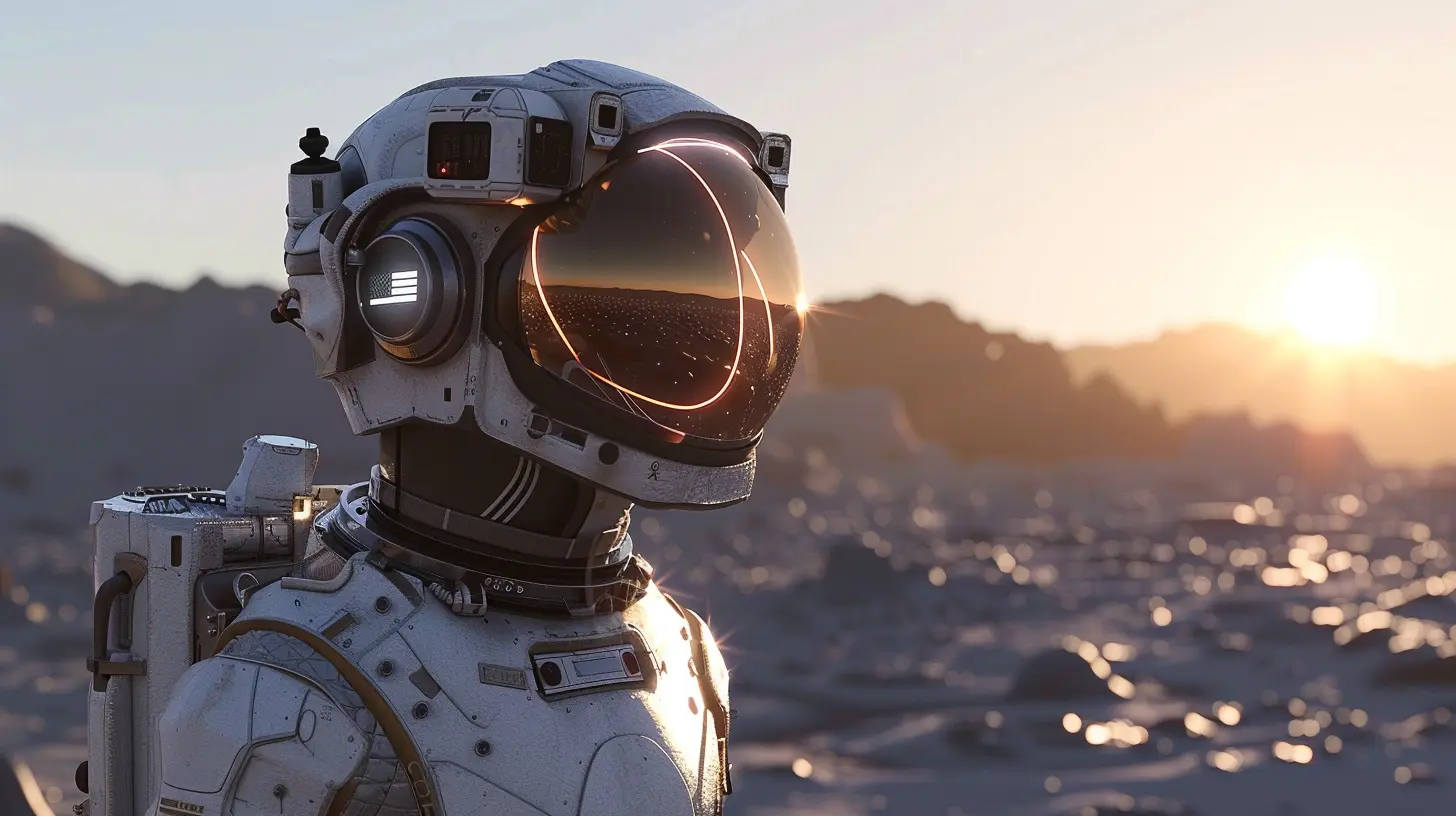
AR in Space: More Than Just Fancy Tech
This isn’t about tossing trendy gadgets into zero gravity. AR has real, mission-critical potential to solve space-specific problems.Think of it as a Swiss army knife for astronauts, mission controllers, and scientists. With AR, they can visualize complex data in intuitive ways, make faster decisions, train smarter, and even fix things without flipping through a thousand-page manual.
Let’s dig into the many ways AR could shake up the future of space exploration.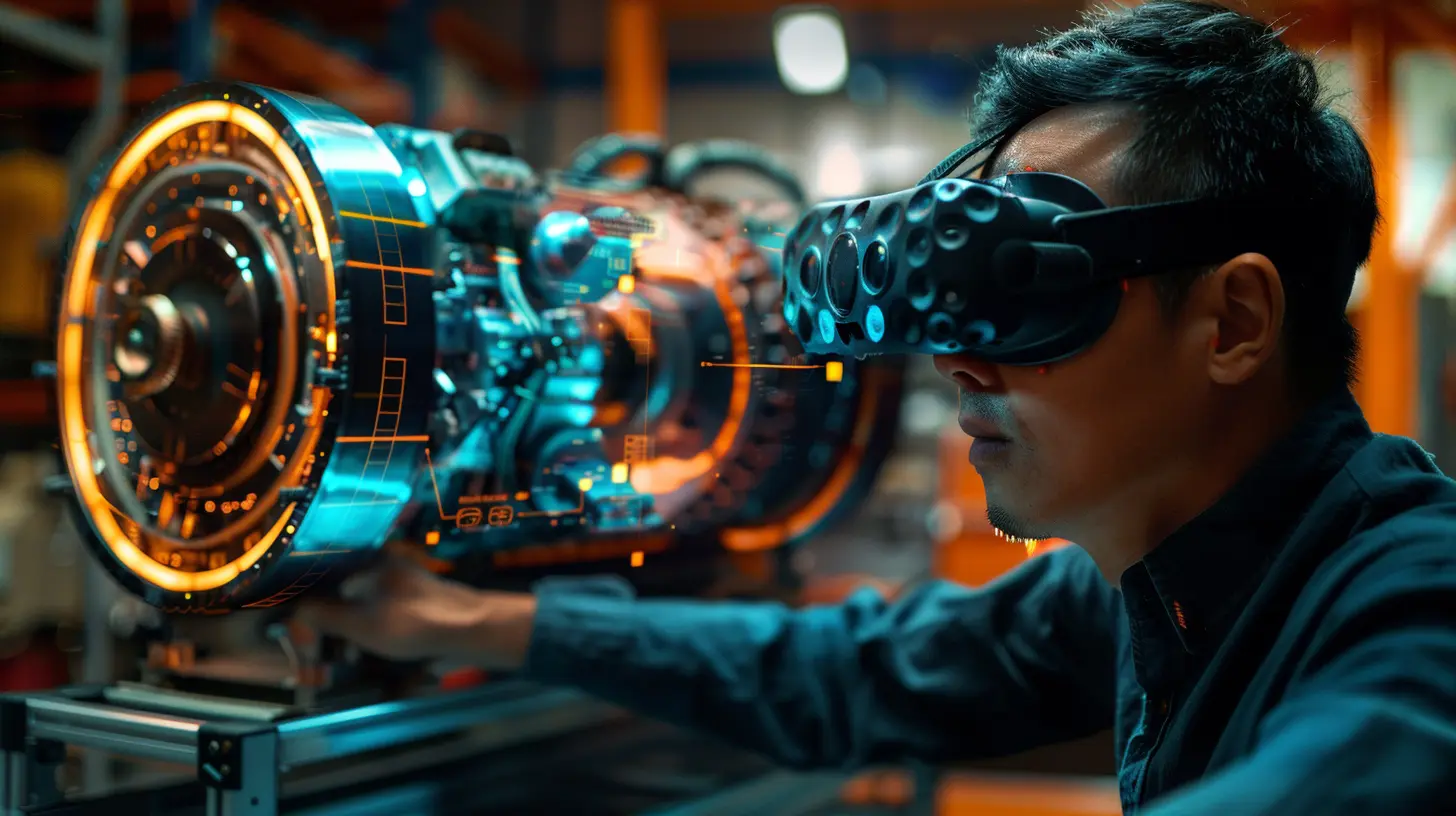
1. Next-Level Astronaut Training
You can’t exactly practice a Mars walk in your backyard, can you?That’s one of the biggest hurdles in preparing astronauts. Simulating space conditions is expensive, limited, and often incomplete.
AR fills the gap beautifully.
Imagine putting on an AR headset during training and seeing a Martian landscape pop up around you—complete with real-time mission objectives, hazards, and interactive scenarios. Astronauts can rehearse spacewalks, equipment handling, emergency procedures, and scientific experiments right here on Earth—no rockets required.
It’s like flight simulation but for interplanetary travel. And it could dramatically improve their readiness and confidence before they ever leave the ground.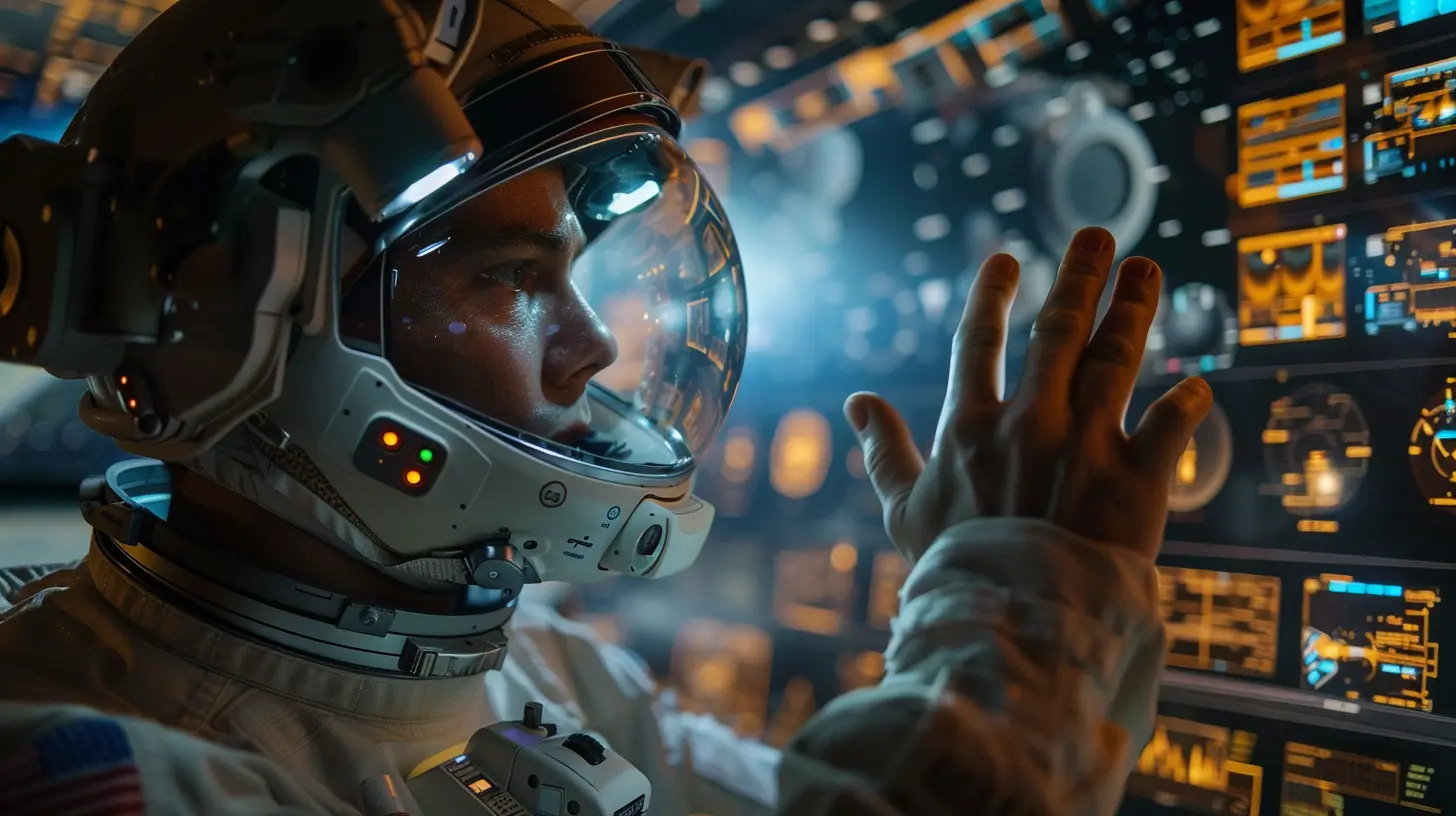
2. Real-Time Mission Assistance
Let’s say you’re an astronaut on the Moon, and a part of your rover mysteriously stops working. You’re staring at wires, gears, and circuits—not your average DIY project.With AR, instead of flipping through a clunky manual or calling Houston for help, you could get step-by-step holographic instructions right in your visor. Think visual overlays showing you exactly where to plug, twist, or replace.
Even cooler? Ground control engineers could guide you remotely by drawing or highlighting in your vision, kind of like a cosmic version of telestration (those marker lines sportscasters use on TV).
That means faster repairs, fewer errors, and fewer "uh-oh" moments in space.
3. Enhanced Navigation on Alien Terrains
Have you ever tried GPS hiking in the wilderness? Now imagine doing that in a spacesuit on Mars with zero natural landmarks and communication delays.AR can turn that intimidating scenario into something surprisingly manageable.
Using built-in sensors and preloaded maps, AR can guide astronauts in real-time across planetary surfaces. Visual waypoints, terrain warnings, and mission objectives can appear in front of them without taking their eyes off the terrain.
It’s like Google Maps for astronauts—except instead of telling you to "turn left at Starbucks," it might say, "Caution: Crater ahead."
4. Boosting Team Collaboration from 240,000 Miles Away
Communication is already a beast in space missions—especially with the whole "speed of light" delay (talk about a slow Zoom call!).But AR can help bridge that gap.
Mission control teams can see what astronauts see from afar through AR streaming. They can also annotate objects, highlight tools, share 3D models, and even simulate outcomes in real time.
It’s like having a two-way whiteboard between Earth and orbit. That kind of clarity and collaboration can make all the difference during high-pressure situations like docking, EVA tasks, or emergency troubleshooting.
5. Mission Planning and Simulation
Before we set foot on Mars, we better know exactly what we’re doing.AR can help mission designers and planners visualize every detail—from base layouts and rover paths to construction sequences and resource management.
Picture mission managers walking through a virtual 3D Mars base using AR glasses, tweaking designs, testing workflows, and collaborating like they’re at a real job site. This level of immersion brings potential problems to light early, before they result in delays or disasters in space.
It’s planning on a whole new level of depth (literally and figuratively).
6. Augmented Scientific Research On-Site
Space exploration isn’t just about survival; it’s about discovery. And scientists need tools that help them capture, analyze, and interpret data in the field.AR can turn astronauts into on-the-spot researchers with instant lab capability.
Think scanning a rock sample on Mars and instantly seeing data overlays about its composition, history, or origin. Or pointing at a dust storm and seeing predictive models hover in the air.
That kind of rapid insight not only saves time but could even let astronauts make game-changing decisions right on the spot—without waiting for Earth to weigh in.
7. Health Monitoring and Emergency Care
Space isn't exactly gentle on the human body. Between radiation, microgravity, and isolation, astronauts face serious health risks.Now imagine being able to see a graphical overlay of your biometric data just by looking in a mirror—or getting real-time coaching during a medical emergency.
AR makes all of that possible.
Doctors on Earth could guide crew members through complex medical procedures using visual aids projected in their AR gear. “See that red outline? That’s where to make the incision.” No guesswork. No panic.
For long-term missions, where medical experts can’t just "beam aboard," this could be a literal lifesaver.
8. Reducing Cognitive Load and Stress
Astronauts wear a lot of hats—scientist, engineer, medic—you name it. And juggling all those roles while living inside a glorified metal tube can put a huge strain on their brainpower.AR can ease that burden.
By offering context-sensitive help, reminders, checklists, and visual prompts, AR prevents information overload. It’s like having a personal assistant strapped to your helmet.
Imagine finishing a complex task and having a message pop up: "Great job. Next step: run oxygen diagnostics." No flipping through tablets or second-guessing what to do next.
That kind of support makes daily survival feel a whole lot more doable.
Are There Any Downsides?
Of course, no tech is perfect.AR in space comes with its own set of hurdles—including hardware durability, battery consumption, UI complexity, and the risk of sensory overload. Plus, let’s not forget the weight and size constraints of spacebound equipment.
But the pace of innovation is fast. AR headsets are getting lighter, more powerful, and more intuitive every year. As we refine the tech on Earth, we build a stronger case for taking it to the stars.
Final Thoughts
Space exploration is entering a new era—one with private space companies, lunar outposts, and ambitions to reach Mars. But we’re going to need more than just rockets to get there.Augmented Reality stands to be one of the most important tools we bring on board. It can empower astronauts, streamline missions, enhance safety, and open up entirely new possibilities for discovery.
It’s not about turning astronauts into cyborgs—it’s about giving them superpowers when and where they need them most.
So next time you imagine the future of space, don’t just picture rockets and rovers. Picture astronauts walking with holographic maps on dusty Martian soil, or mission control sketching solutions in real-time through a digital lens.
Because with AR on our side, space might feel a little less alien—and a lot more achievable.
all images in this post were generated using AI tools
Category:
Space TechnologyAuthor:

Ugo Coleman
Discussion
rate this article
2 comments
Paul Bennett
Exciting possibilities! AR could truly redefine our understanding and exploration of space.
April 7, 2026 at 11:50 AM
Ugo Coleman
Absolutely! AR has the potential to enhance our exploration experiences, making space more accessible and interactive.
Niva Rios
Forget space suits; with augmented reality, astronauts might just need a good pair of glasses and a Wi-Fi connection! Imagine zooming past the stars while scrolling through space memes—talk about a cosmic upgrade to the mission briefing!
April 6, 2026 at 3:41 AM
Ugo Coleman
That would be a wild blend of science fiction and modern tech! Imagine the possibilities of merging real-time data with a fun twist on the cosmos.