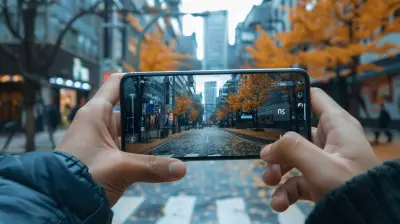
How Deep Learning is Changing the Face of Image Recognition
24 January 2026
If you’ve ever unlocked your smartphone with your face, tagged a friend on Facebook, or searched for something using an image, you’ve witnessed the magic of deep learning in image recognition. It's not science fiction anymore — it's real, and it's reshaping how machines see the world.
So, what’s all the buzz about? Let’s dive into how deep learning is revolutionizing image recognition, changing industries, and making our lives easier — one pixel at a time.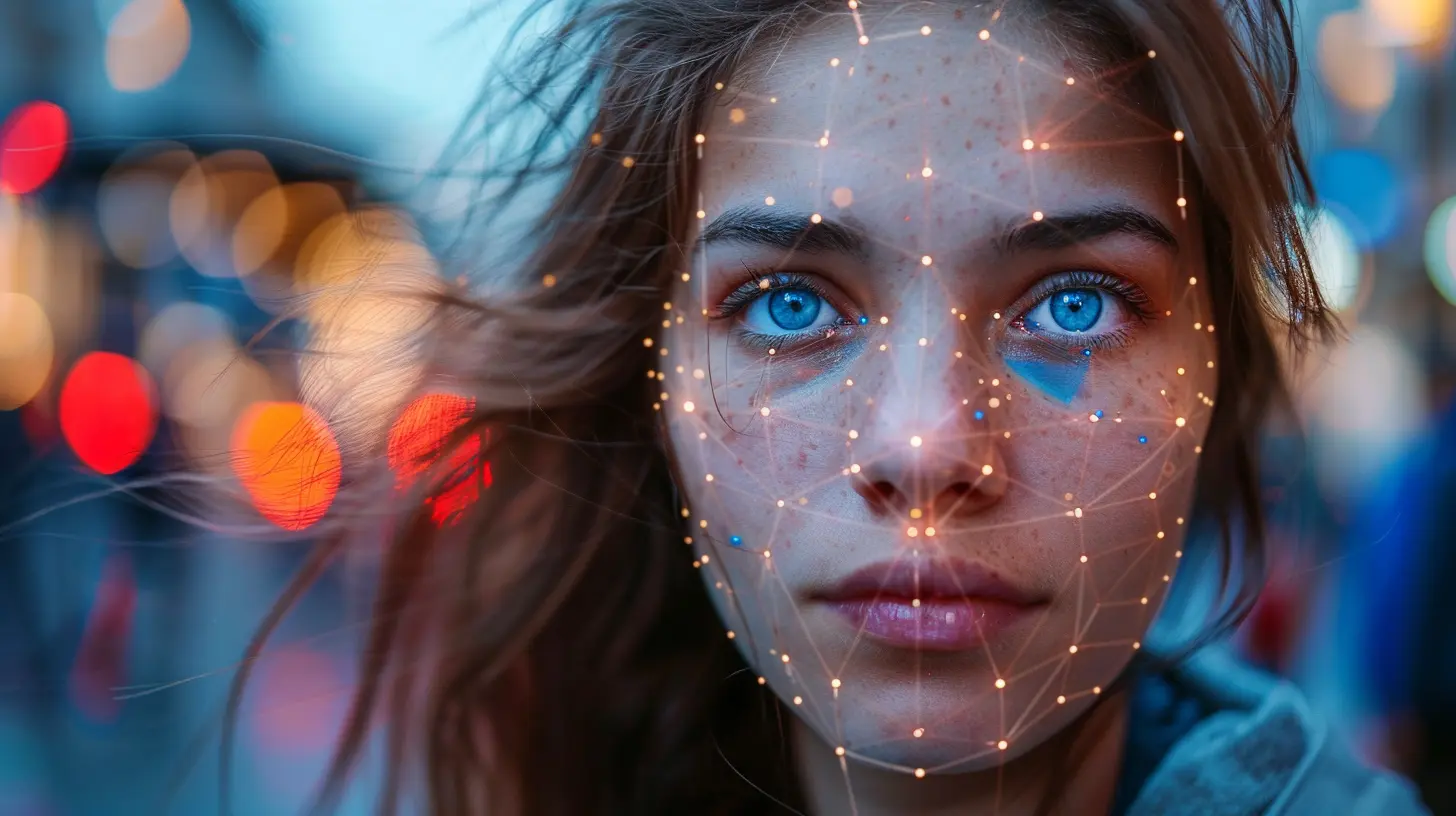
What is Image Recognition, Anyway?
Before we go all tech-savvy, let’s break it down. Image recognition is a subset of computer vision — basically giving machines the ability to "see" and understand images like humans do.Imagine looking at a photo of a dog and instantly knowing it’s a golden retriever, not a Labrador. Now, computers are doing the same thing, and often even more accurately than humans… all thanks to deep learning.
Deep Learning in a Nutshell
Deep learning is a type of machine learning that uses artificial neural networks modeled after the human brain. These networks are made up of multiple layers (hence "deep") that can learn to identify patterns in data — like the features of a cat’s face or the texture of a road.Think of it like teaching a child to recognize objects. You show them tons of pictures, and over time, they start to catch on. Deep learning models do something similar — except they can process and learn from thousands (or even millions) of images at lightning speed.
Why Traditional Methods Just Don’t Cut It Anymore
Before deep learning, image recognition systems relied on manual feature extraction. This means an engineer had to define what features to look for: edges, corners, colors, shapes. It was complex, time-consuming, and not very flexible.Here’s the problem — what if the object is in a different light, at a weird angle, or partially hidden? Traditional systems would often fail.
Deep learning, on the other hand, learns the features by itself. You feed it images, and it figures out the best features to focus on… like a digital Sherlock Holmes sniffing out clues in data.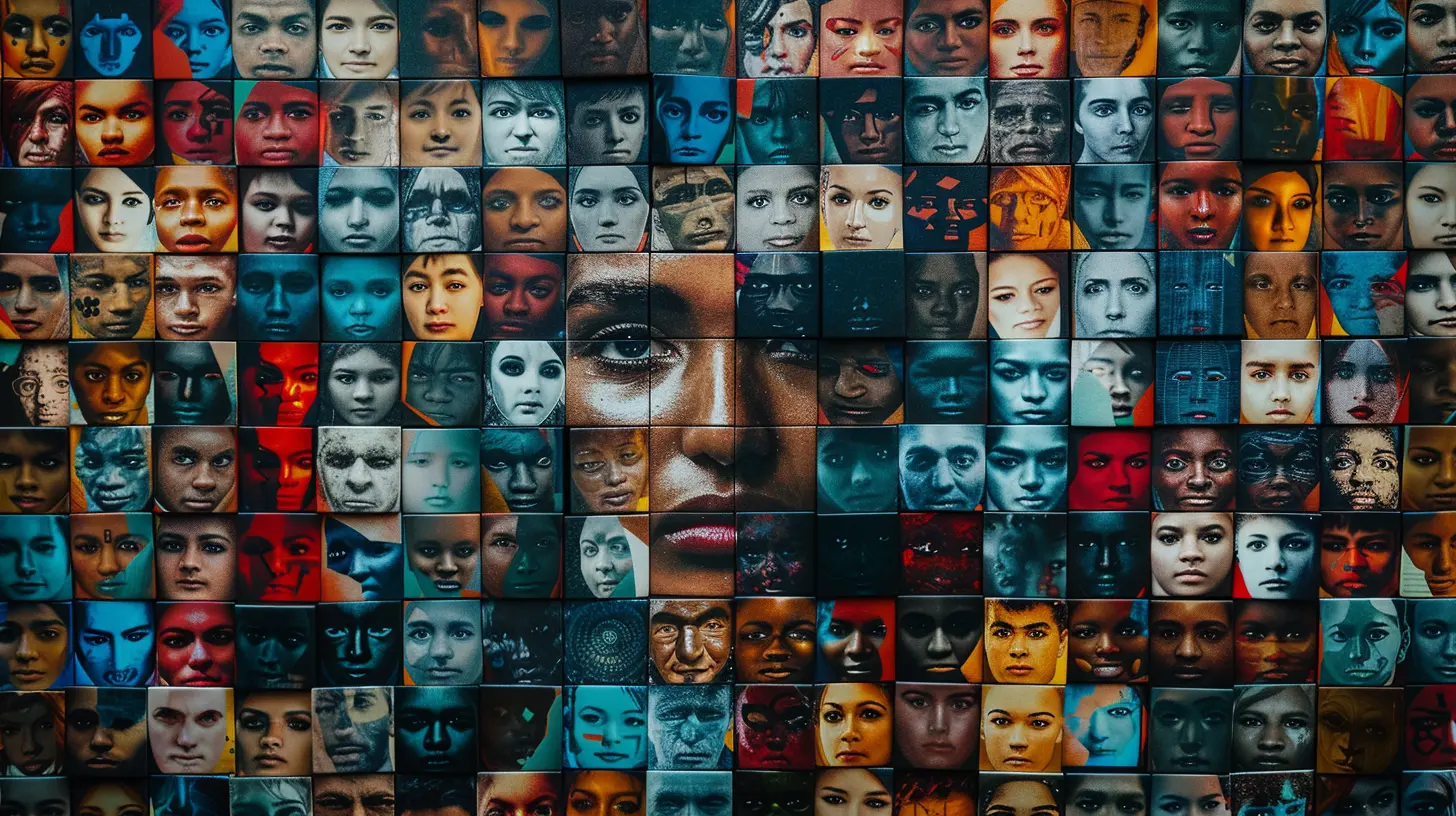
Convolutional Neural Networks (CNNs): The Heroes of Image Recognition
Now, let’s talk about the real MVPs: Convolutional Neural Networks (CNNs). These are the deep learning architectures specially designed to process visual data. They’re crazy good at picking up on patterns like edges, textures, and even complex objects within images.A CNN works by scanning an image in tiny segments (like zooming into a picture piece by piece) and then understanding how all those pieces fit together.
Ever played with Lego bricks? Each brick represents a bit of info. CNNs collect and organize these bricks until they’ve built the full picture — whether it’s a face, a car, or a stop sign.
Real-World Applications: Where Deep Learning Meets Image Recognition
Here’s where things get exciting. Deep learning isn’t just an academic experiment — it’s already working behind the scenes in tons of ways:1. Facial Recognition
From unlocking phones to airport security, facial recognition powered by deep learning is becoming part of daily life. These models can identify faces with uncanny accuracy — even with sunglasses or in low light.2. Self-driving Cars
Autonomous vehicles rely heavily on real-time image recognition. They need to detect pedestrians, road signs, traffic lights, and more to stay safe on the roads. Deep learning makes it all possible.3. Healthcare and Medical Imaging
Doctors are turning to AI-powered tools to analyze X-rays, MRIs, and CT scans. Deep learning can spot signs of disease earlier and with precision, sometimes catching what human eyes might miss.4. E-commerce and Retail
Ever used the “search by image” feature on shopping apps? Deep learning powers that. It helps businesses categorize products, improve search accuracy, and even recommend items based on what you’re looking at.5. Social Media
Platforms like Instagram and Facebook use deep learning for content moderation, tagging friends, and customizing your feed based on images you engage with. It’s all about visual understanding.The Training Process: From Pixel to Prediction
So, how does a deep learning model learn to recognize objects? Here's the general process:1. Data Gathering: First, you need a massive dataset of labeled images — like thousands of cat photos tagged as “cat.”
2. Preprocessing: These images are resized, cleaned up, and sometimes augmented (rotated, zoomed, etc.) to help the model generalize better.
3. Model Training: This is where the magic happens. The CNN adjusts its filters and weights through a process called backpropagation — constantly learning from its mistakes to improve accuracy.
4. Validation and Testing: Once trained, the model is tested on new, unseen images to make sure it generalizes well.
5. Deployment: After successful training and testing, the model can be deployed — in apps, cameras, or even smart glasses.
How Deep Learning Handles the Challenges of Image Recognition
Let’s not pretend it’s all smooth sailing. Image recognition is tough. Lighting, angle, background clutter, and occlusion (i.e., one object hiding another) can confuse even the best models.But here’s where deep learning shines:
- Robustness: Through data augmentation and training on diverse datasets, models learn to handle variations in images.
- Real-time Processing: Thanks to powerful GPUs and optimized architectures, models can now process images in milliseconds.
- Scalability: You can train a deep learning model on millions of images, and it just gets better over time.
Transfer Learning: Shortcut to Greatness
One cool trick in deep learning is "transfer learning." Think of it like borrowing expertise. Instead of training a model from scratch, you take a pre-trained model (trained on a huge dataset like ImageNet), and fine-tune it for your specific task.It’s like hiring an experienced employee instead of training a newbie from the ground up.
This approach saves time, reduces data requirements, and still delivers top-notch performance — especially in industries with limited labeled data (like agriculture or remote sensing).
Ethical Concerns and Bias in Image Recognition
Now, let’s have a heart-to-heart about the elephant in the room.Deep learning isn’t perfect — especially when it comes to fairness and ethics. If a model is trained on biased data, it will make biased predictions. That’s a big issue, especially in sensitive areas like law enforcement or hiring.
We’ve seen cases where facial recognition systems performed worse on people with darker skin tones. That’s not only unfair — it’s dangerous.
The key? Diverse datasets, proper audits, and transparency. AI isn't just tech — it's a reflection of the people behind it.
The Future: What’s Next for Image Recognition and Deep Learning?
We’re just scratching the surface.In the future, expect to see:
- Smarter AI assistants that can truly understand visual cues.
- Augmented Reality (AR) and Virtual Reality (VR) blending seamlessly with real-world imagery.
- Real-time translation of signs and menus via smartphone cameras.
- Interactive shopping experiences where your phone becomes your personal stylist.
As compute power becomes cheaper and data continues to grow, deep learning will only get better, faster, and more intuitive. It's not just about recognizing images — it's about understanding the world visually.
Wrapping It Up
Deep learning has pulled image recognition out of the labs and into the real world — powering everyday tools, saving lives, and making our devices smarter than ever.From facial ID to diagnosing diseases, it’s clear: machines are learning to see, and they’re seeing better every day.
Sure, challenges lie ahead — data privacy, bias, computational cost — but the potential is massive. If deep learning is the engine, image recognition is the vehicle driving us into the future.
And honestly? We’re just getting started.
all images in this post were generated using AI tools
Category:
Machine LearningAuthor:

Ugo Coleman
Discussion
rate this article
2 comments
Amira Abbott
Incredible insights, keep up the great work!
February 11, 2026 at 4:53 AM
Ugo Coleman
Thank you so much for your encouraging words! I'm glad you enjoyed the article.
Meagan Long
Great insights! Deep learning's impact on image recognition is revolutionary.
January 26, 2026 at 1:59 PM
Ugo Coleman
Thank you! I'm glad you found the insights valuable—deep learning truly is transforming image recognition in remarkable ways!