How Space-Based Manufacturing Could Change Industry Forever
23 July 2026
Imagine factories orbiting Earth, building things in zero gravity, and possibly outpacing the capabilities of traditional plants down here. Sounds like the brainchild of a sci-fi movie, right? Well, it’s not as far-fetched as it sounds. In fact, space-based manufacturing might just be the next huge leap in how we produce everything—from advanced electronics to life-saving medical equipment.
As tech keeps evolving and rocket launches become more affordable (thanks to reusable rockets and private space companies), the idea of manufacturing in space is shifting from fantasy to reality. And the ripple effect it could create? Massive.
Let’s break down how this could change the game forever—across industries, economies, and even the way we live our lives.
What is Space-Based Manufacturing, Anyway?
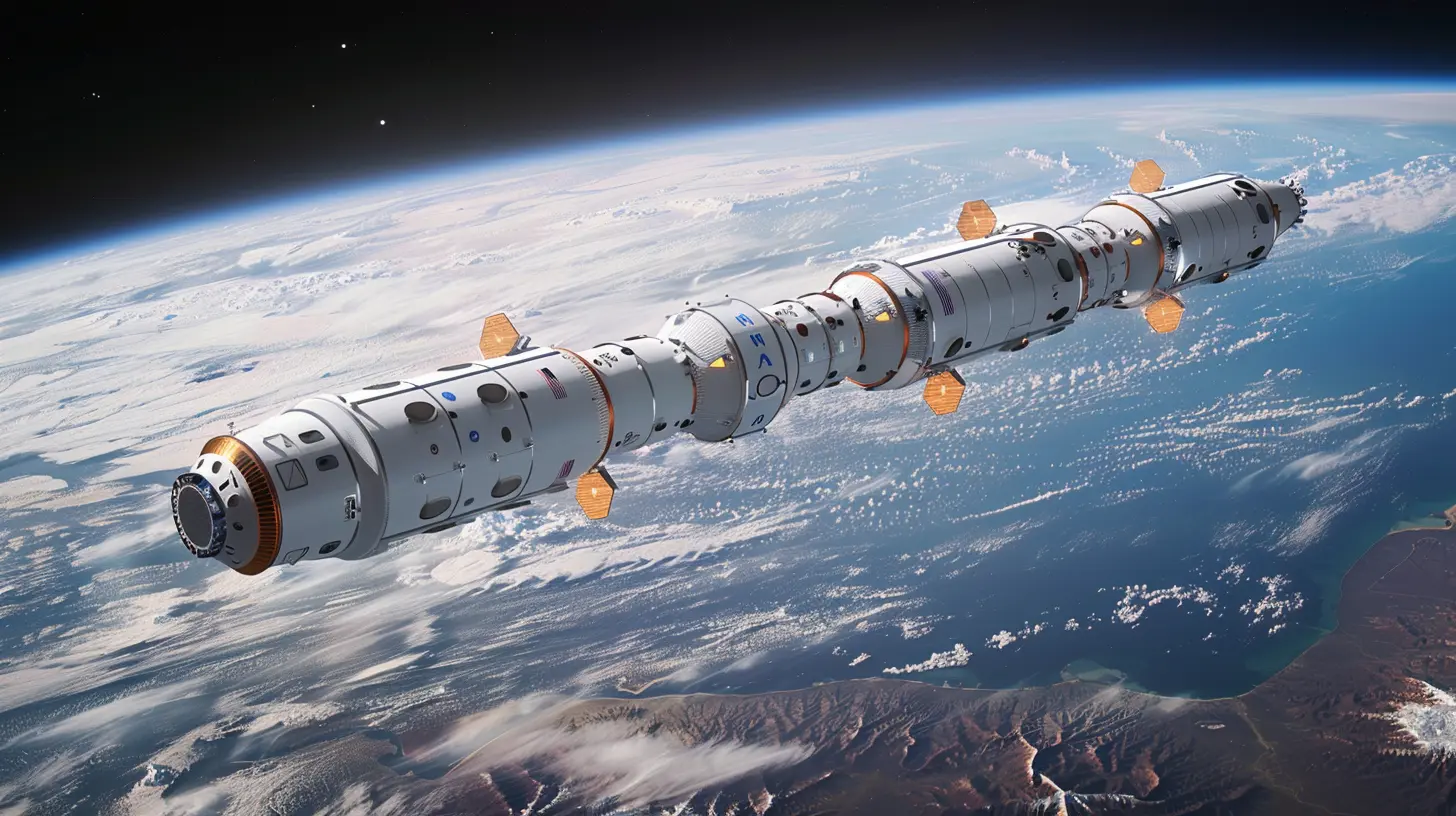
At its core, space-based manufacturing refers to producing goods outside Earth’s atmosphere—usually in orbit. That could mean using the International Space Station (ISS), private space stations, or entirely new platforms designed for industrial use.Instead of building satellites or semiconductors on Earth and launching them into space, why not start building them up there in the first place?
That’s not just efficiency talking. It’s about leveraging the unique environment of space to craft materials and products that simply can’t be made under Earth’s gravity.

Why Zero Gravity Changes Everything
Gravity is great for keeping our feet on the ground, but it’s kind of a pain when you're trying to make certain high-precision products.In zero gravity (or microgravity, to be more accurate), materials behave very differently. Liquids float into perfect spheres, metals mix more uniformly, and manufacturing processes that are tricky or impossible on Earth become super streamlined.
Creme de la Creme of Microgravity Benefits:
- No sedimentation: Solids don’t sink in liquids, making purer mixtures.- Perfect symmetry: Crystals grow more evenly—a game-changer for pharmaceuticals and semiconductors.
- Improved heat transfer: Heat spreads more uniformly, enhancing quality control.
We’re talking next-level precision here. Like, the kind you need for quantum computing components, medical implants, or ultra-efficient solar cells. Stuff where even the tiniest flaw could mean game over.

Real Products Already Made in Space
This isn’t just hypothetical. We’ve already manufactured a few promising products in space. Companies like Made In Space (now part of Redwire) are leading the charge.Some examples that’ve come out of orbital labs:
- ZBLAN fiber optics: This fancy glass fiber loses way less signal than standard fiber optics. But it’s tricky to make on Earth due to gravity-induced crystallization. In microgravity, though? It turns out beautifully.
- Protein crystals: Used in drug production and research, these grow far better in orbit. Better crystals mean better-targeted medicines.
- 3D printed tools: The ISS has already used 3D printers to make handy tools on-site—think wrenches, brackets, and other fixes-on-the-fly.
These are just early prototypes, but they’ve proven the point: manufacturing in space isn't just cool—it works.

The Industries Ready for a Space-Based Shake-Up
Here’s where things start to get juicy. Multiple industries stand to benefit big-time from space-based manufacturing. Let’s run through a few.1. Aerospace and Satellites
Kind of obvious, right? Building satellites and spacecraft in space skips the expense and risk of launching heavy, delicate gear from Earth. Instead of stuffing a satellite into a rocket fairing, we could send up raw materials and assemble stuff right in orbit.Bonus: You can build bigger, more complex structures this way—stuff that wouldn’t survive a rocket launch from Earth.
2. Healthcare and Biotech
This is where things get emotional. Imagine growing organs or producing rare pharmaceuticals in microgravity. Researchers have already seen that heart cells behave differently in space, and that tissues grow more effectively without gravity dragging them down.That opens the door to:
- Lab-made organs for transplant
- Super-pure drugs
- Better understanding of diseases like cancer or Alzheimer’s
We're not just talking productivity—we're talking about saving lives.
3. Electronics and Quantum Tech
Microgravity helps create purer semiconductors, more precise sensors, and even quantum materials that need near-perfect conditions to form. Think of space like the ultimate clean room—all natural, no dust, no gravity issues.This could lead to:
- Faster processors
- Better quantum bits (qubits)
- Safer, longer-lasting batteries
In short: your next phone or laptop might owe its performance to a factory in orbit.
4. Materials Science
Metals, polymers, and glass all act differently without gravity. You can discover new alloys, build stronger materials, and eliminate defects that plague Earth-made versions.In space, you could literally invent a material that doesn’t exist under normal Earth conditions. That’s massive for aerospace, automotive, and construction industries.
What About Costs?
Now, you’re probably thinking: “Sounds awesome, but isn’t this ridiculously expensive?”Fair question.
Yes, launching anything into space used to be painfully pricey. But that’s changing fast. The cost-per-kilogram to orbit has dropped drastically thanks to SpaceX and other commercial launch providers. With reusable rockets and more competition, it’s getting cheaper by the year.
Also, space-based factories won’t need massive infrastructure like those on Earth. No rent. No property taxes. No zoning issues. And heck, you don’t need to worry about weather delays up there.
Sure, the up-front investment is steep. But if you’re making ultra-premium products—like advanced optics or biomedical devices—the reward could far outweigh the cost.
The Sustainability Angle
Believe it or not, space manufacturing could be great for Earth’s environment.Think about it: some industrial processes are filthy. They pump out toxic waste, burn tons of fossil fuels, and leave behind massive carbon footprints.
Imagine moving those pollution-heavy factories off-world. You clean up Earth while expanding your output. Win-win, right?
And if solar power stations get built in space (which some researchers are eyeing), they could beam clean energy back to Earth—no smog included.
Challenges on the Horizon
Let’s be real: this won’t be easy. There are still a ton of hurdles to clear.Launch Logistics
Even with cheaper rockets, launching gear and materials into space isn't pocket change. We’ll need space elevators (futuristic but being studied), better cargo systems, and more launches.Technical Limitations
Running machines in zero-g isn’t always straightforward. Lubricants behave differently, tools float off, and you can’t exactly call a technician when stuff breaks.Human Factor
Astronauts helping run the station? Cool. But long-term, we’ll need space-based robotics and AI to run complex manufacturing autonomously.Legal and Regulatory Issues
Space law is kind of the Wild West right now. Who owns what? Can you build a factory above someone’s country? Who cleans up the space junk?We’ll need treaties, regulations, and international cooperation—fast.
The Road Ahead
Despite the challenges, progress is already happening. NASA, ESA, and private companies are heavily investing in orbital R&D. Commercial space stations like Orbital Reef and Starlab are on the horizon, designed not just for science—but for business too.Imagine “Industrial Parks in Space”—complete with robotic assembly lines, 3D printing bays, and docks for cargo ships shuttling goods back to Earth.
We’re not there yet, but we’re closer than ever.
Final Thoughts: We're at the Start of a New Industrial Revolution
Space-based manufacturing could upend everything we know about how stuff is made. It offers not just efficiency, but entirely new capabilities—products that are impossible to make on Earth, processes that are cleaner and more precise, and a global impact that stretches across tech, healthcare, energy, and beyond.It’s not just about going to space anymore. It’s about building the future up there.
So next time you hear about a rocket launch or a new space mission, don't just think “exploration.” Think economy. Think industry. Think revolution.
Because the future of manufacturing? It might not be grounded anymore.
all images in this post were generated using AI tools
Category:
Space TechnologyAuthor:

Ugo Coleman
Discussion
rate this article
1 comments
Derek Pope
Innovative but practical challenges remain to consider.
July 31, 2026 at 11:39 AM
Ugo Coleman
Absolutely, it's crucial to address those challenges. Ensuring that innovation translates to real-world applications will be key to success.