Exploring the Potential of Holographic Displays on Smartphones
19 December 2025
Remember those futuristic sci-fi movies where people casually swipe through 3D holograms floating in mid-air? Yeah, we all thought, "Wow, I need that in my life!" Well, guess what? Holographic displays on smartphones are creeping closer to reality faster than you can say "Beam me up, Scotty!"
But what does this mean for us regular folks? Will we soon be texting our friends via floating holograms like Tony Stark? Or will this just be another flashy gimmick that fades away faster than 3D TVs? Let’s dive deep into the world of holographic smartphone displays and see if our future really is that cool. 
Wait, What Exactly Is a Holographic Display?
Alright, before we get too excited, let’s break it down. A holographic display is a type of screen that creates 3D images that appear to float in space—without needing any special glasses (looking at you, 3D movies).Unlike our regular flat displays, which trap images behind a glass panel, holographic tech uses light diffraction, lasers, and some serious optical wizardry to make images pop out as if they're actually there. Sounds cool, right? But how do they even work on something as small as a smartphone? 
How Do Holographic Smartphone Displays Work?
Great question! While full-blown hologram projections (like the ones in Star Wars) are still a bit tricky, modern holographic displays use:1. Light Field Technology – This creates 3D visual depth by directing light at different angles, tricking our eyes into seeing depth without glasses.
2. Laser Projection – Some prototypes use laser beams to create floating 3D images in mid-air (yup, it’s as sci-fi as it sounds).
3. Nano-Optic Holography – By manipulating light at a microscopic level, it’s possible to create super-detailed holograms that hover just above your screen.
In simpler terms, your phone’s screen could soon become a tiny magician, making images appear to float out of nowhere. 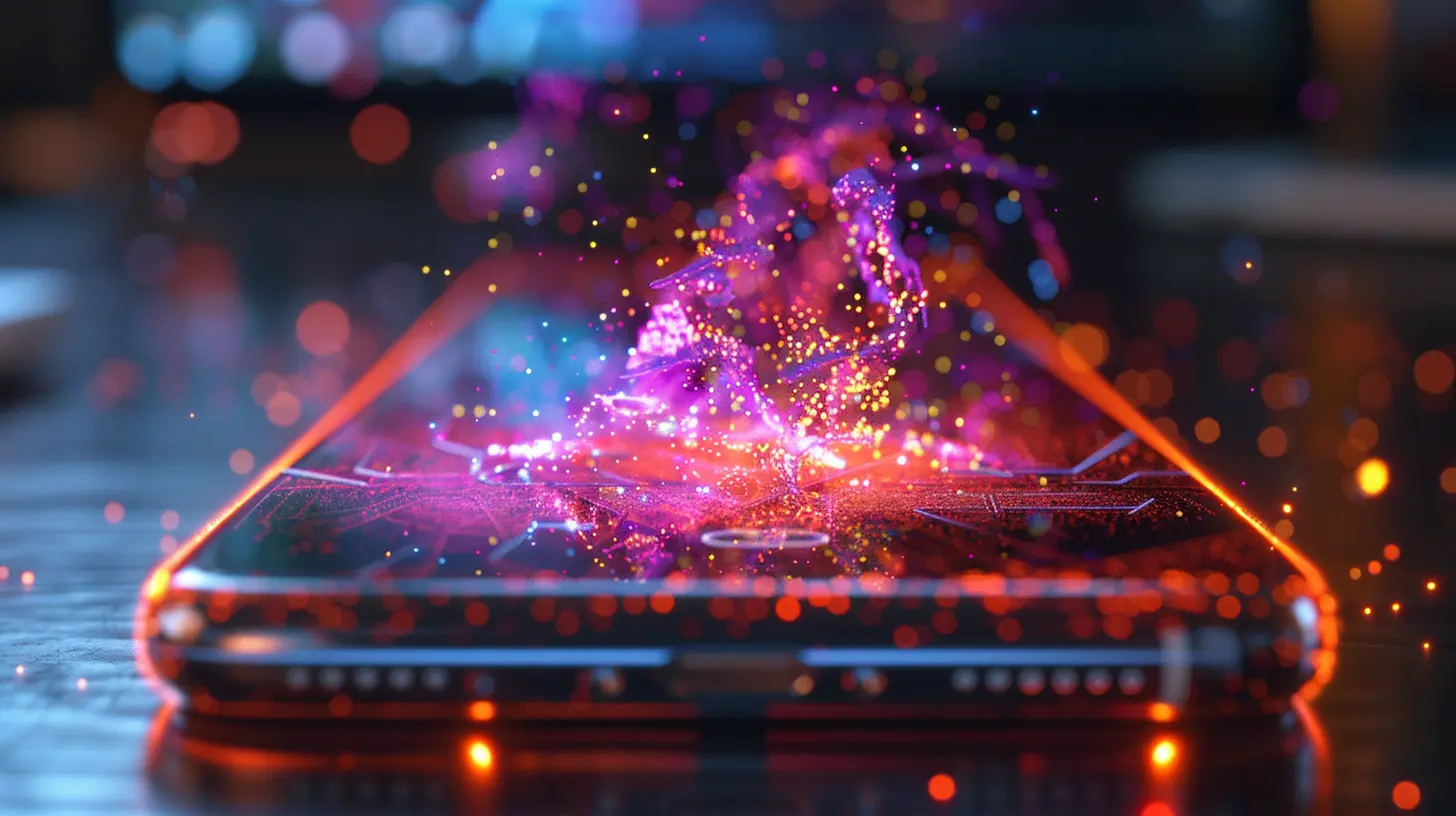
What Would We Use Holographic Displays For?
Okay, now that we know how it works, let’s talk about the fun part—what can we actually do with holographic screens? Spoiler alert: It’s not just about showing off to your friends.1. Next-Level Gaming 🎮
Imagine playing Pokémon GO, but instead of looking through a flat screen, Pikachu is standing right in front of you, in mid-air. Sounds insane, right? Holographic gaming could change how we interact with characters, making games feel way more immersive.2. Holographic Video Calls 📞
Tired of boring video calls? How about having your best friend’s 3D hologram appear right on your desk like a scene from some futuristic spy movie? This could make long-distance relationships feel a little less... distant.3. Super Cool UI & Navigation 🖥️
Forget swiping on a screen—what if your apps floated above your phone? Imagine scrolling through Instagram by literally reaching through the air to swipe. That’d definitely make your phone feel like something out of Blade Runner.4. Medical & Educational Applications 🏥📚
Doctors and students could benefit big-time from holographic visuals. Need to study human anatomy? Instead of looking at 2D images, students could rotate a floating 3D heart right in front of them!5. Holographic Art & Design 🎨
Artists and designers could create 3D models directly on their phones, sculpting digital objects in mid-air. Imagine editing a 3D object without needing a touchscreen—just your fingers, motion, and a little bit of magic.
The Challenges of Holographic Smartphones
Of course, before we start throwing our money at the next holographic phone, it’s important to address some, ahem, small hurdles standing in the way.1. Battery Drain from the Depths of Hell 🔋
Holographic displays aren’t exactly energy efficient. These things require serious processing power, which means your battery might last about as long as a Snapchat streak.2. Price Tags That Hurt Your Wallet 💸
Pioneering technology isn’t cheap. If holographic tech follows the same trend as foldable phones, we might be looking at very expensive devices until it becomes mainstream.3. Limited Content (At First, At Least) 📉
Right now, most apps and games aren’t designed for holographic use. Developers would need to create content specifically for this tech, which could take time.4. Hardware Limitations ⚙️
Unlike our regular OLED and LCD screens, holographic displays require specialized hardware, which means manufacturers would need to redesign phones from the ground up.So, When Can We Expect Holographic Phones?
Ah, the million-dollar question. While we’ve already seen glimpses of this tech (remember the RED Hydrogen One?), truly functional holographic smartphones still have a way to go before they hit the mainstream market.Companies like Samsung, Apple, and Sony have been experimenting with holographic displays for years, so it’s only a matter of time before we see a breakthrough. Some experts predict that by 2026-2030, we could see premium holographic smartphones hitting stores.
Final Thoughts: Holograms—A Gimmick or the Future?
So, are holographic smartphone displays truly the future, or are they just another tech fad? Well, while it might take a few years for this tech to become mainstream, it’s definitely not science fiction anymore.Right now, the biggest obstacles are battery life, price, and content availability. But once those get sorted out, holographic displays could revolutionize everything from entertainment to education, bringing us one step closer to that Jetsons-style future we’ve always dreamed of.
And hey, if nothing else, making a holographic version of yourself pop up during Zoom meetings could be the ultimate work-from-home flex.
all images in this post were generated using AI tools
Category:
Mobile TechnologyAuthor:

Ugo Coleman
Discussion
rate this article
2 comments
Lysander Lamb
Holographic displays will revolutionize smartphone technology, enhancing user experience and visual interaction dramatically.
December 26, 2025 at 5:54 AM
Ugo Coleman
Absolutely! Holographic displays have the potential to transform how we interact with smartphones, offering immersive visuals and enhancing overall user experience.
Rivenheart Reese
Holographic displays on smartphones could revolutionize user experience by providing immersive visuals and enhanced interactivity. As technology advances, we may see applications in gaming, education, and virtual meetings. However, challenges like battery life, production costs, and user adaptation must be addressed for widespread adoption. Exciting times ahead!
December 19, 2025 at 12:14 PM
Ugo Coleman
Thank you for your insights! I completely agree that while holographic displays hold great promise for enhancing user experience, addressing the associated challenges will be crucial for their successful integration into smartphones. Exciting times indeed!