How Telecom Is Enabling Real-Time Translation for Global Communication
27 July 2026
Imagine you're on a video call with someone from halfway across the world—let’s say Tokyo—and you're speaking English while they respond in Japanese. Yet, somehow, both of you understand each other perfectly, with no delay, no need for an interpreter, and no confusion. Sounds like sci-fi? Not anymore. Thanks to cutting-edge advancements in telecom and AI, real-time translation is becoming not just possible but incredibly seamless.
Welcome to the new age of communication where language barriers are collapsing faster than ever before. In this post, we’ll break down how telecom is playing a pivotal role in enabling real-time translation for global communication. Whether you're a techie, a traveler, or someone who works across time zones, you're going to love where this is heading.
The Language Barrier: A Longtime Roadblock
Let’s be real—language has always been one of the biggest hurdles in global communication. Whether it’s closing business deals, collaborating with international teams, or just making new friends while traveling, not speaking the same language has always been a bit of a buzzkill.Sure, we’ve had tools like Google Translate and multilingual dictionaries, but how often have you felt those were good enough in the moment? We’re talking about real-time, natural conversations here. Not something you can pause every few seconds to type out. That’s where telecom steps into the spotlight.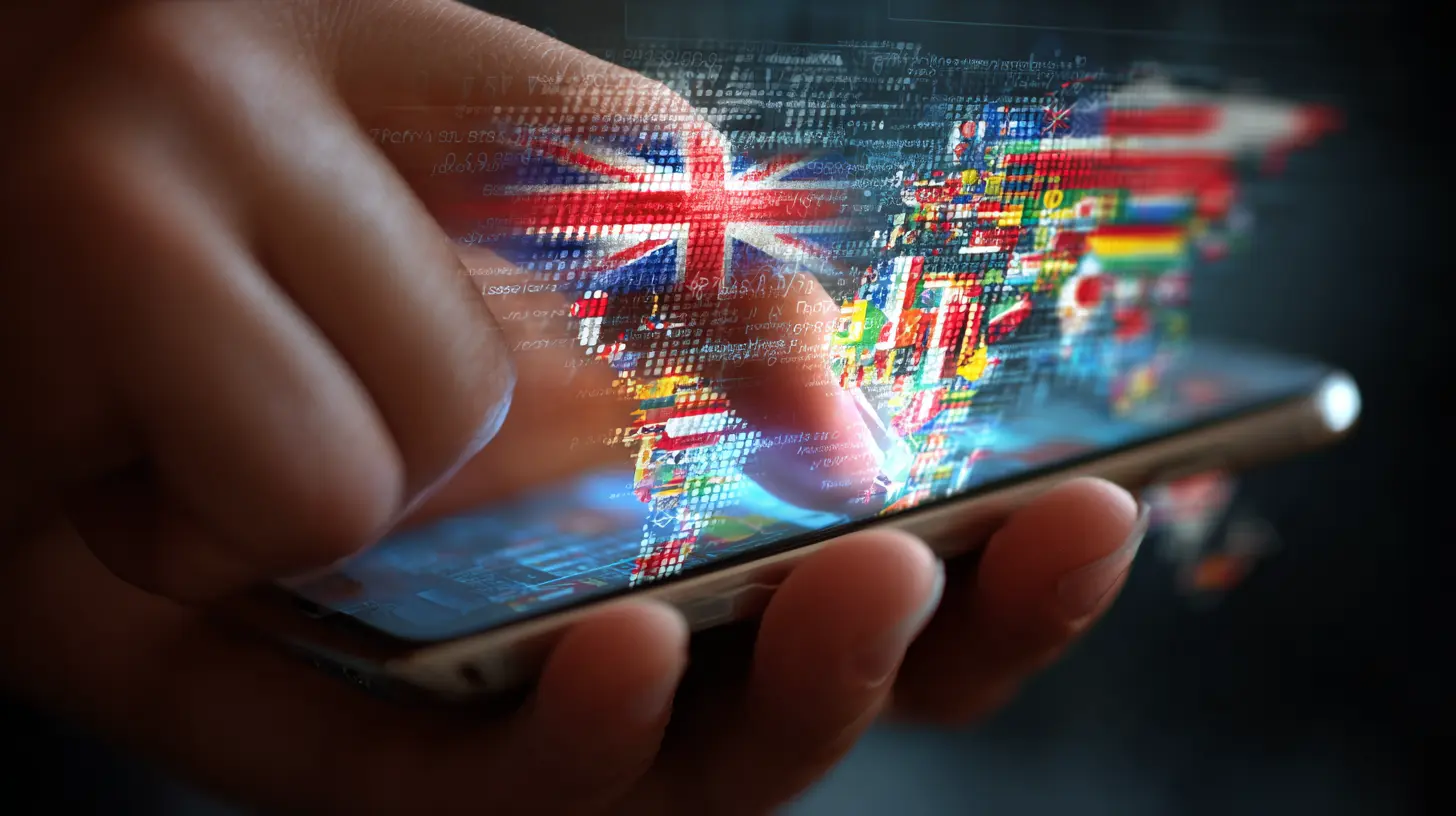
Telecom + AI = Real-Time Magic
Telecom infrastructure is the backbone of real-time communication. It’s the quiet hero that ensures your voice, text, video, or even emoji reaches the other person in milliseconds. Now, pair that with artificial intelligence and machine learning, and you've got a powerful duo capable of translating languages on-the-go.So how does this dream team actually work? Let's break it down.
How Real-Time Translation Works Behind the Scenes
1. Voice Recognition and Speech-to-Text (STT)
First up, your spoken words are picked up by a device—usually a smartphone, computer, or smart speaker. These sounds are converted into text using speech-to-text technology. This step is crucial because it's easier for machines to work with words than with sound waves.2. Language Processing and Translation
Next, here’s where the magic happens. Natural Language Processing (NLP)—a branch of AI—steps in to interpret the sentence. It understands the context, grammar, colloquialisms, and even tone (yes, machines are reading the room now).Then it translates your sentence into the target language, not just word-for-word, but meaning-for-meaning. This is important because languages like Chinese, Spanish, or Arabic don’t always line up neatly with English.
3. Text-to-Speech (TTS)
Finally, the translated text is converted back into speech using text-to-speech technology. The result? The person on the other end hears your words in their own native language as if you were speaking it all along.All this happens in under a second. Crazy, right?
Telecom Infrastructure Is the Unsung Hero Here
Real-time translation is impressive, but it wouldn’t be possible without the robust and ever-evolving telecom infrastructure. Let’s talk about how telecom enables this seamless experience.1. 5G Networks: Speed and Low Latency
If 4G was good, 5G is a game-changer. It offers ultra-fast speeds and incredibly low latency, which is a fancy word for delay. Low latency means less lag—pretty important when you're trying to have a natural conversation.With 5G, real-time translation becomes nearly instantaneous. You speak, and the other person hears your words almost right away, making it feel like a regular conversation.
2. Cloud Computing and Edge Networks
Real-time translation requires some serious computational power. All that speech recognition, translation, and speech regeneration doesn't just happen on your phone. It usually happens in the cloud.Telecom providers now use cloud computing and edge networks (basically local data centers closer to the user) to speed up these processes. This makes the system more efficient, reliable, and scalable.
3. High-Bandwidth Connections for Smooth Video Calls
Let’s not forget real-time translation isn’t just for audio. If you’ve ever been on a Zoom meeting with live subtitles or translation, you’ve seen this in action. High-bandwidth networks allow for smooth video calls with real-time captions or voice translations layered in. No jitters. No buffering.Applications of Real-Time Translation in the Real World
Alright, let’s get practical. Who’s actually using this tech, and how?1. Business and Global Teams
Companies with international teams are already integrating multilingual support through Zoom, Google Meet, or Microsoft Teams. Real-time translation lets teams collaborate without worrying about language differences.Imagine an engineer in Germany working with a designer in Brazil and a marketer in the US—all speaking their native languages while understanding each other perfectly. Productivity to the moon!
2. Travel and Tourism
Ever been in a foreign country, struggling to ask for directions or order food? That’s history now. Apps like Google Translate and iTranslate offer live conversation translation, making travel way less intimidating.Hotels, airports, and tour companies are also jumping on board by offering multilingual customer service through real-time translation tools.
3. Healthcare and Emergency Services
In emergencies, language can make a life-or-death difference. Hospitals, ambulance services, and emergency hotlines are now using instant translation to serve people in crisis more effectively.Telecom-powered translation systems help healthcare professionals communicate with patients who speak different languages, making sure nothing is lost in translation—literally.
4. Education and E-Learning
Online classes can now offer real-time subtitles and translations, allowing students worldwide to attend lectures regardless of language barriers. This opens up massive opportunities for both teachers and learners.Platforms like Coursera and edX already provide translated captions in multiple languages, powered by telecom infrastructure and AI algorithms.
The Future of Real-Time Translation: What’s Next?
We’re just scratching the surface here. Real-time translation is evolving fast, and telecom will keep playing a central role. Here are a few things you can expect to see soon:AI with Cultural Intelligence
Translation is more than just language—it’s about culture. Future AI models will understand cultural context, idioms, and even humor. You'll not only be understood—you’ll also be “felt.”Multi-Device and Wearable Integrations
Imagine smart glasses that translate street signs in real-time. Or earbuds that translate speech directly into your ear, like a real-life Babel fish. Telecom will enable these devices to sync up effortlessly, offering real-time interpretation without even touching your phone.Improved Accuracy and Personalization
As AI learns more about you—your tone, vocabulary, and preferences—translations will get more personal and accurate. You’ll sound like… well, you, even in another language.Expanded Language Support
Right now, most real-time translation tools support major global languages. But what about regional dialects and indigenous languages? Advanced telecom networks and decentralized AI models are helping to bridge that gap.Challenges? Yep, Still a Few
Let’s not pretend everything’s perfect. Real-time translation still faces some hurdles.- Accuracy: It’s good, but not always spot-on—especially with slang or technical jargon.
- Privacy: Your conversations pass through servers, and that raises data security concerns.
- Cost and Accessibility: Advanced translation features may only be available in premium apps or high-end telecom services.
Still, the direction we’re moving in? Extremely promising.
So, What Does This Mean for You?
If you’ve ever wished the world felt a bit smaller, a bit more connected, and a lot less confusing—then real-time translation is your ticket. Whether you’re FaceTiming your cousin in Germany, working with a team across four countries, or backpacking through Southeast Asia, language is no longer a wall—it’s a bridge.And behind that bridge is a powerful, high-speed, quietly humming network built by telecom visionaries and pushed forward by AI innovators. It’s not just about faster calls or sharper video anymore—it’s about understanding each other, no matter where we’re from or what language we speak.
Final Thoughts
Telecom is doing more than just keeping us connected—it’s making global communication genuinely universal. Real-time translation is breaking down barriers and creating a level playing field for businesses, travelers, learners, and everyday people. As telecom infrastructure evolves, we’re heading toward a world where language differences won’t just be solved—they’ll be celebrated.So the next time you’re on a call with someone across the globe, just think: there’s a whole orchestra of telecom networks and AI systems working behind the scenes, making sure you’re both understood. How cool is that?
all images in this post were generated using AI tools
Category:
TelecommunicationAuthor:

Ugo Coleman
Discussion
rate this article
1 comments
Aiden McRae
Innovative tech reshapes global conversations effortlessly.
July 30, 2026 at 3:14 AM
Ugo Coleman
Absolutely! The advancements in telecom are making global conversations smoother and more accessible than ever.