Machine Learning in Space Exploration: Opportunities and Challenges
2 January 2026
Let’s face it — space is massive, mysterious, and downright mind-blowing. We’ve been peeking into the cosmos for decades, launching probes, rovers, and even humans into orbit and beyond. But now, something powerful is joining the mission: Machine Learning (ML). It's not just a buzzword anymore; it's genuinely changing the game in space exploration.
If you're into tech, AI, or just have a bit of curiosity about what lies beyond Earth, this topic is for you. Let’s break it down — no jargon, just straight talk.
What is Machine Learning, Really?
Before diving into satellites and space telescopes, let’s get on the same page.Machine Learning is a type of Artificial Intelligence that teaches computers to learn from data and get better over time — basically like a toddler learning to walk, but with way more data and zero scraped knees.
Instead of being told exactly what to do step-by-step, ML uses algorithms to sniff out patterns and make decisions. The more it sees, the smarter it gets. Cool, right?
Now imagine throwing that learning capability into a spaceship and letting it decide what rocks to study on Mars or how to avoid space debris. That's where the magic happens.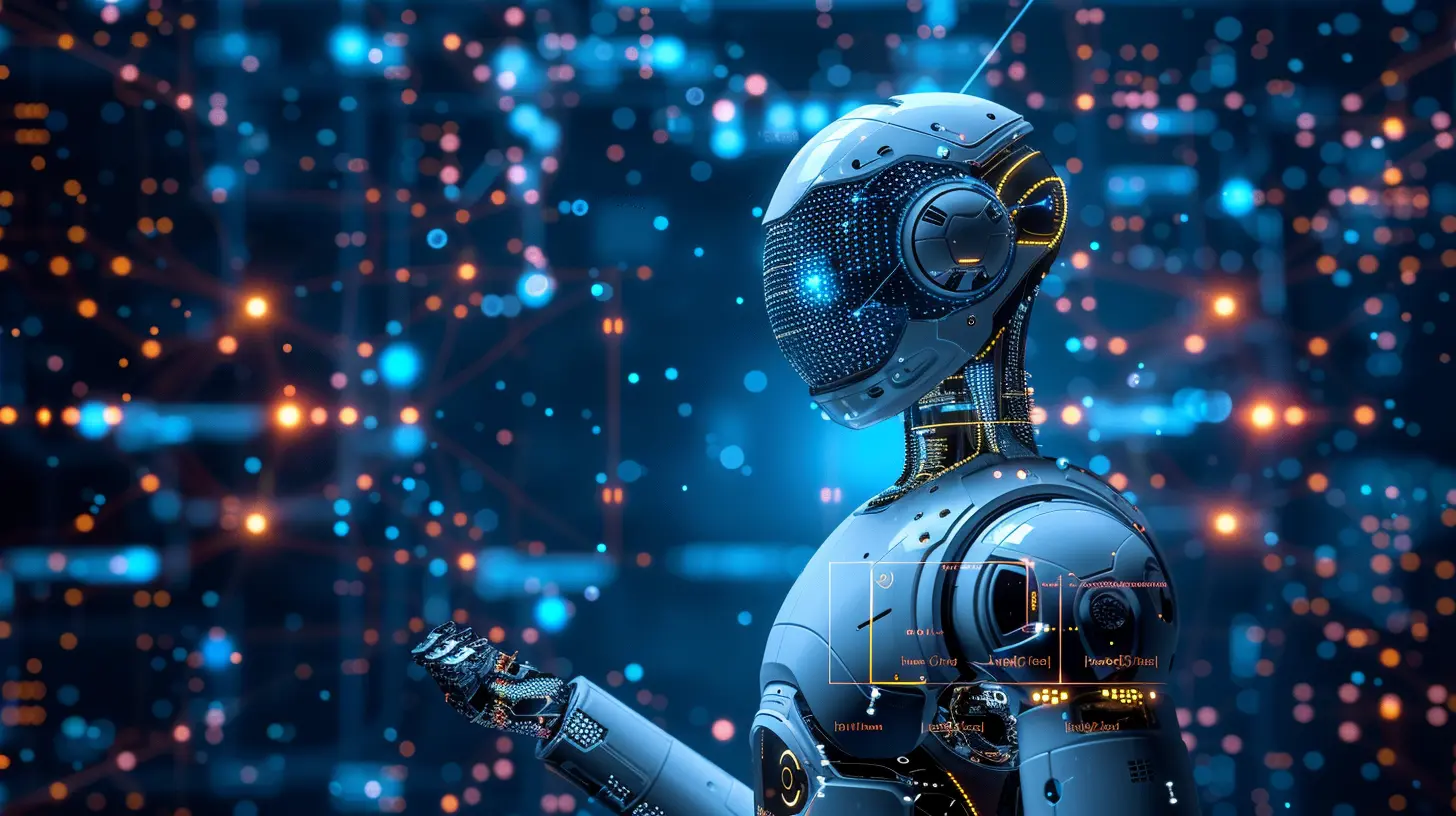
Why Space Exploration Needs Machine Learning
Here’s the thing: Space missions are packed with data. We’re talking gigabytes to terabytes of images, sensor readings, temperature logs, gas samples—you name it. And we can’t analyze all of it manually. Even seasoned scientists can’t look at every single data point.That’s where ML steps in like a rockstar assistant. It processes data super-fast, finds trends, and even flags anomalies that might be interesting or dangerous — think of it as having an ultra-intelligent intern who never sleeps.
But it's not just about saving time. ML helps in making better decisions, often in real time, which is critical when you're 140 million miles away from home and can't just call HQ for help.
Major Opportunities of Machine Learning in Space Exploration
Alright, let’s get into the juicy stuff — the upside. ML is opening up doors in space that were bolted shut just a few years ago.1. Autonomous Navigation
You don’t want to play bumper cars in space. Navigation is a huge deal. ML is helping spacecraft and rovers navigate more efficiently and safely.Take NASA’s Mars rovers, for instance. They use ML algorithms to assess terrain and decide where to go — without waiting for instructions from Earth. That's especially important when it takes 20+ minutes just for a signal to go back and forth.
2. Predictive Maintenance
Things break in space. But sending a mechanic isn’t really an option. ML can predict when a component is likely to fail based on data trends, allowing astronauts or ground control to fix it or replace it before it becomes a problem.Think of it like your car alerting you about a failing brake pad weeks in advance, but in the vacuum of space with zero room for error.
3. Image Processing and Object Detection
Space telescopes snap thousands of images every day. ML helps sift through them at lightning speed, detecting objects like asteroids, exoplanets, or distant galaxies that humans might miss.And it's not just about spotting stuff — it's about understanding it. ML can classify galaxies, detect anomalies, and even help identify materials based on spectral data. It's like having an astronomer with superhuman vision.
4. Communication Systems
Sending data across light-years isn’t exactly smooth. ML optimizes data transmission by compressing, prioritizing, and even cleaning up noisy signals. This means better communication between Earth and spacecraft, even with all the cosmic interference.5. Searching for Extraterrestrial Life
Yep, this is the one everyone’s secretly excited about. ML can analyze atmospheric readings and chemical signatures to detect possible signs of life — like methane spikes or unusual temperature patterns.It’s not quite “E.T., phone home,” but it’s a start.
Challenges That Come Along for the Ride
Okay, while ML sounds like a dream space partner, it’s not all sunshine and zero gravity. There are some real challenges to deal with.1. Limited Data Sets
Machine Learning thrives on data. But in space, data can be scarce or incomplete. You can’t exactly redo a Mars experiment if it goes wrong. So training systems to be accurate with limited and imperfect data is tricky, to say the least.2. Hardware Constraints
Spacecraft have limited computational power. You can’t just slap a gaming PC onto a satellite. ML models often need to be light and efficient, which may sacrifice some of their accuracy or complexity.It’s like trying to run Netflix on a flip phone — not ideal.
3. Reliability and Safety
A false prediction or glitchy algorithm can be catastrophic in space. You don’t want a rover misclassifying a cliff as flat terrain. ML systems need to be incredibly reliable, tested, and verified — especially when they’re making autonomous decisions.4. Black Box Problem
Sometimes, even the smartest data scientists can’t fully explain why an ML model made a particular decision. This lack of transparency is risky in space missions where every action needs to be backed by solid reasoning.Imagine a spacecraft deciding to change course and not being able to explain why. Yeah, not good.
The Human-Machine Combo: Best of Both Worlds
Here’s the sweet spot: ML isn’t replacing humans — it’s amplifying our abilities. Scientists and engineers still make the big calls. But with ML, they can focus on what truly matters instead of getting buried in data.Think of ML as the co-pilot — it handles the controls, keeps an eye out for danger, and learns on the job, all while the human crew sets the destination and mission goals.
Real-World Examples of ML in Space
Want proof this isn't all sci-fi? Check out some of these real missions:- NASA’s Perseverance Rover: Uses ML for terrain navigation and analyzing rock samples to look for signs of ancient life.
- ESA’s Gaia Mission: ML helps map over a billion stars in our galaxy with jaw-dropping accuracy.
- SETI Institute: Applies ML algorithms to filter through radio signals in the search for alien life.
- Hubble & James Webb Telescopes: ML aids in image enhancement and filtering cosmic noise.
The Future Looks... Galactic
We’re just scratching the surface of what's possible. As ML continues to evolve, it'll play a bigger role in deep space navigation, planet colonization, asteroid mining, and maybe even communicating with alien civilizations.Imagine AI-powered probes that explore distant star systems or ML algorithms that help grow sustainable food in Martian soil. Science fiction? Not for long.
So, Where Do We Go From Here?
Space exploration is entering a new era — one where smart algorithms and human curiosity go hand in hand. Machine Learning is like the secret sauce that makes future missions more efficient, safer, and even a little more exciting.Challenges? Sure, they exist. But the opportunities are so vast they’re practically cosmic. The more we integrate ML into our space missions, the faster we’ll understand our place in the universe.
So next time you look up at the stars, think about the code and algorithms humming quietly, helping us get there.
all images in this post were generated using AI tools
Category:
Machine LearningAuthor:

Ugo Coleman
Discussion
rate this article
2 comments
Caden Diaz
Machine learning is our cosmic co-pilot, but navigating its complexities is as vital as charting the stars.
January 28, 2026 at 3:42 AM
Ugo Coleman
Thank you! Indeed, understanding machine learning's complexities is essential to unlock its full potential in enhancing space exploration.
Max Webster
Exciting possibilities await in space exploration!
January 6, 2026 at 3:34 AM
Ugo Coleman
Absolutely! Machine learning can unlock new insights and enhance decision-making in space exploration. The future is bright!