Rethinking Legacy Operating Systems in Modern Infrastructure
20 September 2026
There is a particular smell that hangs around a data center running a twenty-year-old operating system. It is part ozone, part dust, and part the quiet desperation of the one engineer who still knows how the thing boots. I have walked into rooms like that. I have also watched a company pay seven figures to migrate off a platform that was, by every objective measure, doing its job just fine.
Both stories end the same way: someone made a decision about a legacy OS, and that decision shaped the next decade of their infrastructure.
This article is not a eulogy for old systems. It is also not a sales pitch for shiny new ones. It is a practical look at why legacy operating systems persist, when that persistence is a strength, when it becomes a liability, and how to think clearly about the trade-offs instead of defaulting to either panic or nostalgia.

What "Legacy" Actually Means
The word gets thrown around like an insult. In practice, a legacy operating system is not simply an old one. Age is a factor, but it is not the definition.A system is legacy when at least one of these is true:
- It no longer receives security patches from its vendor, or the patches arrive on a schedule so slow that it might as well be abandoned.
- The skills required to maintain it are concentrated in a shrinking pool of people, often close to retirement.
- Its architecture assumes a threat model, a hardware profile, or a deployment pattern that no longer matches reality.
- It cannot run the software your business now depends on, or it runs it poorly.
Notice that "old" is not on the list. A well-maintained long-term support release of a modern Linux distribution can be fifteen years old and still perfectly current. Meanwhile, a five-year-old OS that the vendor dropped after a strategic pivot is legacy in every meaningful sense.
This distinction matters because the wrong definition leads to the wrong response. If you think legacy equals old, you will migrate systems that should have stayed put. If you think legacy equals unsupported, you will make sharper decisions.

Why Legacy Systems Refuse to Die
Engineers love to mock the persistence of old platforms. The mockery is usually misplaced. Legacy systems survive because they deliver something modern replacements struggle to match.They are stable in a way that is hard to replicate
A system that has run unchanged for eight years has had eight years of bugs shaken out of it. Its failure modes are known. Its performance characteristics are predictable. The team knows which log lines to ignore and which ones mean real trouble.Modern platforms offer better tooling, better security models, and better integration. What they do not offer is a decade of accumulated operational intuition. That intuition is not sentimental. It is real capital, and it is expensive to rebuild.
They are often load-bearing in ways nobody documented
I once worked with a financial services firm that ran a critical reconciliation job on an OS so old that the vendor had stopped selling support before some of the current staff were born. Everyone assumed it was a simple batch process. It was not. The job depended on a specific behavior of the system's file locking that no one had replicated anywhere else. Every attempt to port it produced subtle correctness bugs that took weeks to diagnose.This is the norm, not the exception. Legacy systems accumulate undocumented dependencies the way old houses accumulate weird wiring. You do not see the problem until you touch it.
The replacement cost is often underestimated
Vendors quote migration timelines. Those timelines assume everything goes according to plan. In practice, migrations of long-lived systems routinely run two to three times longer than estimated, and the overruns come from the parts nobody knew about.This is not an argument for never migrating. It is an argument for pricing the migration honestly, including the discovery work, the parallel running period, and the inevitable rollback that nobody budgets for.

The Real Risks of Keeping Legacy Systems
If legacy systems were only stable and cheap, the decision would be easy. They are not. The risks are real and they compound over time.Security exposure grows nonlinearly
An unpatched system is not just one vulnerability behind. It is a growing collection of them, and the ones that matter are the ones that get weaponized into automated exploits. Once a vulnerability has a public proof of concept, every unpatched instance on the internet becomes a target.The uncomfortable truth is that many legacy systems sit on internal networks that were assumed to be safe. That assumption has aged poorly. Flat internal networks are now considered a liability in themselves, and a legacy system on a flat network is a gift to anyone who gets a foothold.
Talent attrition becomes a cliff, not a slope
The person who understands the system will eventually leave, retire, or become unavailable. When that happens, the institutional knowledge goes with them. The transition is not gradual. It is a step function.Wise organizations treat this as a risk to be managed proactively, not a surprise to be absorbed later. That means documentation, cross-training, and in some cases, deliberately keeping a system alive longer than strictly necessary just to buy time for knowledge transfer.
Integration friction gets worse every year
Modern tooling assumes modern interfaces. A legacy system that speaks only an obscure protocol or exports data in a format nobody else uses becomes an integration project every time you try to connect it to something new.The cost is not the integration itself. It is the opportunity cost. Every hour spent building a bespoke adapter is an hour not spent on work that moves the business forward.
When Migration Is the Right Answer
Migration is the right call when the risks of staying outweigh the costs of moving. That is a higher bar than most teams assume.Here are the situations where migration usually wins:
- The vendor has ended support and no credible third-party support exists.
- The system handles data subject to regulatory requirements that it cannot meet.
- The business needs capabilities the platform cannot provide, and workarounds have become the dominant cost of ownership.
- The knowledge required to run the system is held by one or two people with no realistic path to transfer.
- The system is exposed to networks or users in ways that make its security posture unacceptable.
Notice that "it feels old" is not on the list. Neither is "the new thing looks nicer."
When Migration Is the Wrong Answer
Sometimes the right decision is to leave the system alone. This is harder to argue for, because it looks like inaction. It is not.Consider keeping a legacy system when:
- It runs in an isolated environment with no external exposure and no path to sensitive data.
- Its replacement would cost more than the risk it represents, even accounting for worst-case scenarios.
- The business value it delivers is stable and the system is not on any critical path that requires modernization.
- The migration would consume resources needed for higher-priority work.
The last point is the one teams miss most often. Migration is not free. It competes for the same engineering hours as everything else. Choosing to migrate a low-risk legacy system while a high-risk one sits untouched is a resource allocation error, not a strategy.
The Middle Path: Containment Instead of Conversion
The binary choice between migrate and ignore is a false one. There is a third option that often makes more sense: containment.Containment means accepting that the system will stay, and then systematically reducing the blast radius of its eventual failure or compromise.
Isolate the network
Put the system on its own segment. Restrict traffic to the specific hosts and ports it actually needs. Log everything. This does not fix the system, but it changes what happens when the system is compromised.Freeze the surface area
Stop adding new integrations. Stop exposing new endpoints. Every new connection is a new attack path and a new dependency that will complicate eventual migration.Document aggressively
If the system is staying, the knowledge about it must not stay in one person's head. Record the boot process, the dependencies, the failure modes, the recovery steps. Treat it like a system you intend to keep forever, because you might.Plan for the end anyway
Containment is not a permanent state. It is a holding pattern that buys time. Use that time to build the replacement, or to accept the risk formally and move on.Common Mistakes and Misconceptions
A few patterns show up again and again in organizations wrestling with legacy systems. Recognizing them early saves a lot of pain.Treating migration as a technical project
Migration is an organizational project with a technical component. The technical part is usually the easier half. The hard part is aligning stakeholders, funding the work, managing the parallel running period, and handling the political weight of retiring something people depend on.Assuming the new system will be simpler
New systems are not simpler. They are differently complex. They trade the complexity of maintaining old code for the complexity of integrating new components, learning new failure modes, and managing new dependencies. Sometimes that trade is worth it. Sometimes it is not.Underestimating the discovery phase
You do not know what a legacy system does until you try to replace it. Budget for discovery. Budget for surprises. Budget for the possibility that the migration reveals work nobody anticipated.Skipping the rollback plan
Every migration needs a rollback plan, and the plan needs to be tested. The moment you need it is the moment you cannot afford to improvise.Letting the perfect be the enemy of the good
You do not have to migrate everything at once. Incremental migration, where you move one function at a time and validate as you go, is often safer and more politically feasible than a big bang cutover. It is also slower, which is a trade-off worth naming explicitly.
A Practical Framework for Decisions
When you are staring at a legacy system and wondering what to do, run it through this sequence.First, classify it. Is it supported, unsupported, or partially supported? Is it exposed to untrusted networks? Does it handle regulated data? Does it sit on a critical path?
Second, quantify the risk. What is the realistic worst case if it fails or is compromised? What is the probability of that happening in the next twelve months? What would recovery cost?
Third, quantify the cost of migration. Include discovery, engineering, testing, parallel running, training, and the opportunity cost of the engineers involved.
Fourth, compare. If the risk is low and the migration cost is high, contain and monitor. If the risk is high and the migration cost is manageable, migrate. If both are high, you have a hard problem and you need executive attention, not an engineering decision.
Fifth, revisit annually. The answer changes. Vendors change their support policies. Threat landscapes shift. The engineer who knew the system retires. A decision that was correct three years ago may not be correct today.
The Cultural Dimension
There is a cultural trap on both sides of this debate.Some organizations treat any legacy system as a moral failing. They migrate aggressively, sometimes recklessly, and they pay for it in outages and lost institutional knowledge.
Others treat legacy systems as sacred. They resist change, accumulate risk, and eventually face a crisis they cannot manage.
The healthy position is neither. It is to treat legacy systems as what they are: long-lived assets with real value and real risk, deserving of clear-eyed analysis rather than reflexive judgment.
The engineers who are best at this are usually the ones who have lived through a migration that went badly. They are skeptical of timelines. They ask about rollback plans. They insist on discovery work. They are not afraid of old systems, and they are not dazzled by new ones.
That is the posture worth cultivating.
Final Thoughts
Legacy operating systems are not a problem to be solved. They are a condition to be managed. Some will migrate, some will be contained, and some will outlive the people who currently worry about them. All three outcomes are acceptable if they are chosen deliberately.The mistake is not keeping a legacy system. The mistake is keeping one without understanding why, or migrating one without understanding what you are giving up. Both errors come from the same root: treating the decision as obvious when it is not.
Do the analysis. Name the trade-offs. Write down the decision and the reasoning. Then revisit it when the facts change.
Your infrastructure will thank you. So will the engineer who inherits it.
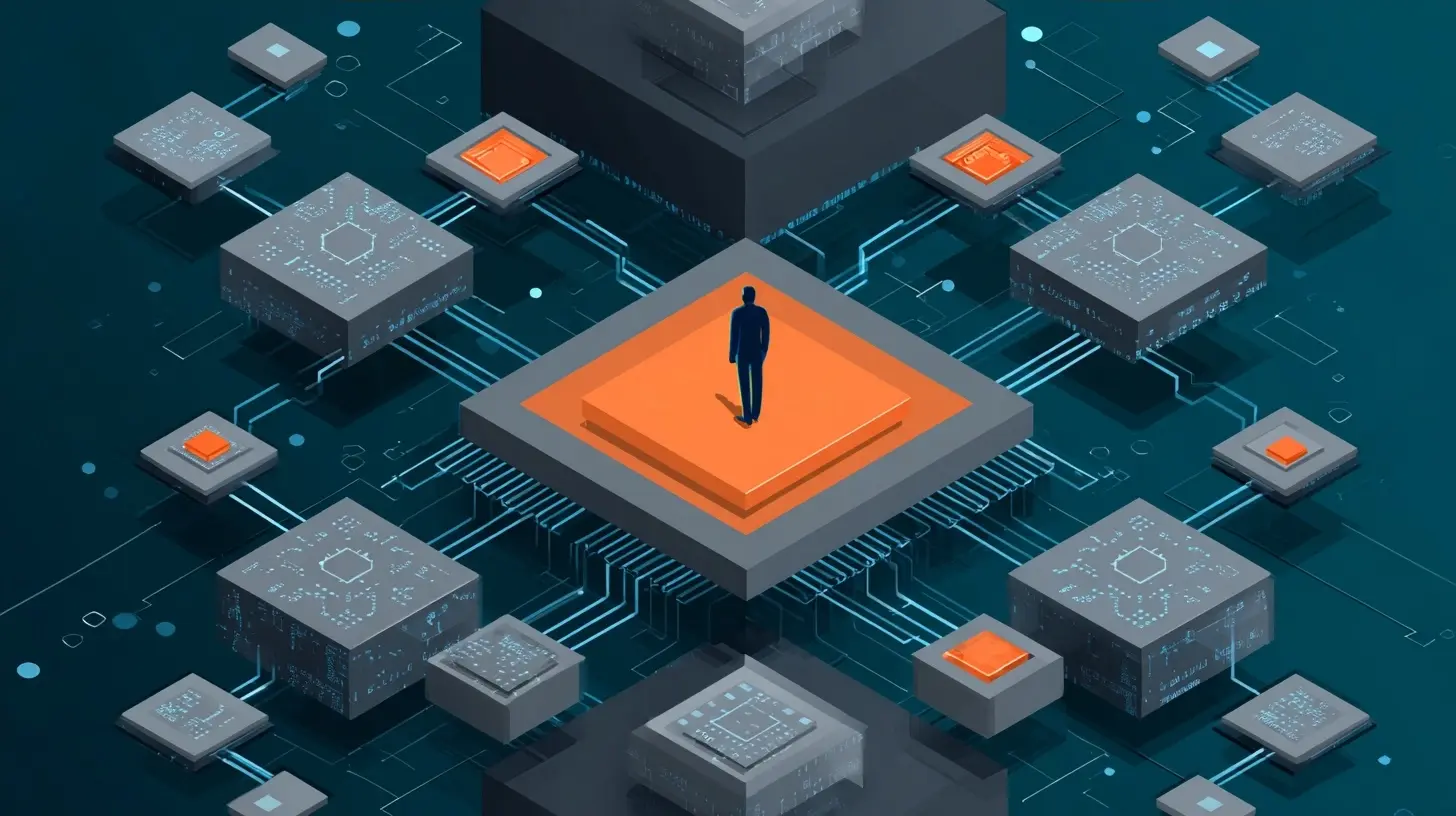
all images in this post were generated using AI tools
Category:
Operating SystemsAuthor:

Ugo Coleman