Smart Home Standards: Why Matter is a Game-Changer for 2027
13 September 2026
Walk into any electronics retailer today and you will find smart bulbs, plugs, cameras, thermostats, and sensors from a dozen different brands. The pitch is always the same: control everything from your phone, automate your routines, make your home smarter. Then you get home, open the box, and realize the bulb only works with one app, the camera needs a different hub, and the thermostat refuses to speak to either of them. This has been the reality of the smart home for over a decade.
Matter is the industry's attempt to fix that. Backed by Amazon, Apple, Google, Samsung, and hundreds of smaller manufacturers, it promises a world where devices from different companies simply work together. That promise has been slow to materialize since the specification launched, but 2027 is shaping up to be the year when Matter stops being a checkbox on a product listing and starts being the foundation of how smart homes actually operate. Here is why that shift matters, what is driving it, and what you should think about before you buy your next device.
What Matter Actually Is, and What It Is Not
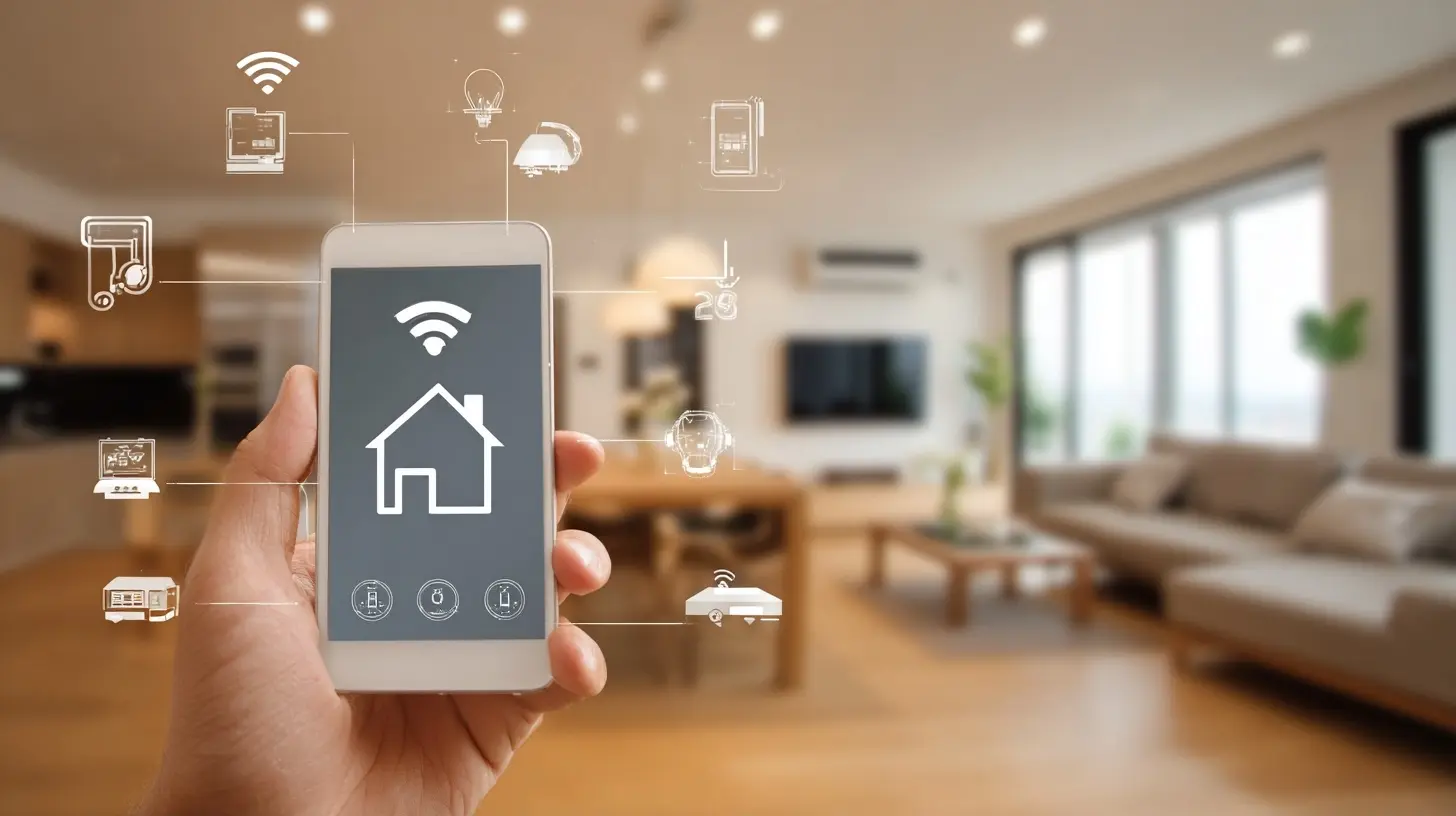
Matter is an application-layer protocol. In plain terms, it is a common language that smart home devices can speak so they can talk to each other and to whatever ecosystem you use to control them. It runs on top of existing network technologies, primarily Wi-Fi, Ethernet, and Thread, a low-power mesh networking standard. It does not replace those networks. It standardizes the conversation happening on top of them.This distinction trips up a lot of people. Matter is not a hub. It is not an app. It is not a cloud service. It is a specification that defines how a light bulb reports its state, how a lock responds to commands, and how a sensor shares data. Any company can implement it, and any ecosystem can support it. That openness is the entire point.
What Matter does not do is equally important. It does not automatically make every device compatible with every feature. A Matter-certified device still needs a controller, sometimes called a border router or hub, to connect to your network. It still needs a Thread border router if it uses Thread rather than Wi-Fi. And it does not eliminate the need for manufacturer apps entirely, though it reduces how often you need to open them.

The Problem Matter Was Built to Solve
To understand why Matter matters, you have to remember how fragmented the smart home was before it. Each major brand built its own ecosystem. Philips Hue used Zigbee and its own bridge. Lutron used its own proprietary wireless protocol. Nest used a mix of Wi-Fi and its own Thread implementation. Samsung's SmartThings tried to be a universal hub, but its compatibility list was inconsistent and often broke after firmware updates.Consumers paid the price. A light bulb bought in 2019 might work with Alexa but not with Apple Home. A door sensor might work with SmartThings but not with Google Home. If you wanted a cohesive setup, you either committed to one brand entirely or you accepted that your home would be a patchwork of apps and hubs that never quite cooperated.
Matter changes the economics of that fragmentation. When a device speaks Matter, it can be commissioned into any compatible ecosystem. You can buy a Matter light from one company, a Matter lock from another, and a Matter sensor from a third, and control all of them from a single app. The manufacturer no longer decides which ecosystems you are allowed to use.
Why 2027 Is the Inflection Point
Matter 1.0 arrived in late 2022. The years since have been a slow grind of spec updates, firmware fixes, and manufacturer adoption. So why single out 2027?Several forces are converging. First, the specification itself has matured. Matter 1.2, 1.3, and subsequent releases added support for appliances, robotic vacuums, energy management, and more nuanced device types. Each revision closes gaps that made early Matter devices feel limited compared to their proprietary counterparts.
Second, Thread border routers are becoming ubiquitous. Apple's HomePod mini and HomePod, Google's Nest Hub and Nest Wifi Pro, Amazon's Echo Hub and newer Echo speakers, and a growing list of third-party routers all include Thread radios. When Thread border routers are everywhere, Thread-based Matter devices become practical for ordinary households, not just enthusiasts.
Third, major manufacturers are shipping Matter as a default rather than an afterthought. Companies that once treated Matter as a marketing bullet point are now building their product lines around it. That shift is gradual, but by 2027 the majority of new smart home hardware at mainstream price points is expected to support Matter natively.
Fourth, the matter of energy management is becoming urgent. Utilities and regulators in several regions are pushing for demand response programs that require homes to communicate with the grid. Matter's energy management capabilities give manufacturers a standard way to build that functionality, which accelerates adoption across the entire ecosystem.
How Matter Works in Practice
The technical details matter less than the user experience, but a basic understanding helps you make better buying decisions.When you buy a Matter device, it comes with a commissioning code, usually a QR code and a numeric pairing code. You scan that code with your smart home app, whether that is Apple Home, Google Home, Amazon Alexa, Samsung SmartThings, or another Matter-compatible controller. The device joins your network, and from that point forward it can be controlled by any Matter controller on the same network.
If the device uses Thread, it needs a Thread border router. The border router bridges Thread and your IP network, allowing the device to communicate with the rest of your home and, if you choose, the internet. If the device uses Wi-Fi, it connects directly to your router. Ethernet is also supported for devices that benefit from a wired connection, such as hubs or bridges.
The key advantage is multi-admin. A single Matter device can be shared with multiple controllers at once. You can add a light to Apple Home and Google Home simultaneously, then control it from either. This is a significant departure from the old model, where a device was typically locked to one ecosystem at a time.
Real-World Benefits You Will Actually Notice
The benefits of Matter are not abstract. They show up in daily use.Consider a household with an iPhone user and an Android user. Before Matter, they often had to choose one ecosystem or run two separate smart home setups. With Matter, both can control the same devices from their preferred apps. The iPhone user opens Apple Home, the Android user opens Google Home, and both see the same lights, locks, and sensors.
Consider a renter who moves frequently. A Matter-based setup is portable. The devices are not tied to a single hub or cloud account. When you move, you take your devices and your automations with you, at least in principle. Some ecosystems still make migration awkward, but the underlying protocol supports it.
Consider someone who wants to avoid cloud dependency. Matter supports local control. When your controller and devices are on the same network, commands can execute without a round trip to a server. That means faster response times and continued operation during internet outages. Not every manufacturer implements local control perfectly, but Matter makes it possible in a way that proprietary protocols rarely did.
Trade-Offs and Limitations You Should Know
Matter is not a magic fix. It has real limitations, and ignoring them leads to disappointment.First, Matter standardizes basic functionality, not advanced features. A Matter light bulb supports on, off, brightness, and color temperature. It may not expose the manufacturer's custom lighting scenes, dynamic effects, or firmware-specific settings through Matter. Those often remain accessible only through the manufacturer's app. If you rely on advanced features, you may still need that app.
Second, Matter's device type coverage is broad but not universal. The specification has expanded significantly, but some categories, particularly complex appliances and certain security systems, are still catching up. Before buying, check whether the specific device type you want is supported in the Matter version your controller uses.
Third, not all Matter implementations are equal. A device can be Matter-certified and still behave poorly. Certification guarantees basic interoperability, not quality. Latency, reliability, and feature completeness vary widely between manufacturers. Reading reviews from other users remains essential.
Fourth, Thread networks have practical limits. Thread is a mesh, and mesh networks can suffer from interference, range issues, and routing problems if not planned well. A single Thread border router may not cover a large home. Adding more border routers helps, but it also adds complexity.
Fifth, multi-admin sounds better than it often works. Sharing a device across ecosystems is supported, but the experience is not always seamless. Some controllers handle shared devices more gracefully than others. Expect occasional friction.
Common Mistakes to Avoid
A few mistakes come up repeatedly when people adopt Matter.The first is assuming that a Matter logo means the device works with everything. It means the device supports the Matter protocol. Your controller must also support the relevant device type and Matter version. Check compatibility before you buy.
The second is buying Thread devices without a Thread border router. A Thread device cannot join your network without one. If you do not already have a border router, factor that into your budget.
The third is mixing too many ecosystems without a plan. Multi-admin is powerful, but managing devices across Apple Home, Google Home, Alexa, and SmartThings simultaneously can become confusing. Pick a primary controller and add others only when you have a clear reason.
The fourth is ignoring firmware update policies. Matter devices need updates to stay compatible with evolving specifications. Manufacturers that abandon firmware support leave you with devices that gradually fall out of step with your controller.
The fifth is over-automating too early. Start with a few devices and simple routines. Add complexity once you understand how your setup behaves. Matter makes automation more portable, but it does not make bad automation design any better.
Best Practices for Building a Matter-Ready Home
If you are planning a smart home purchase in the next year or two, a few principles will save you time and money.Choose a primary ecosystem first. Your primary controller determines your user interface, your automation engine, and your voice assistant. Apple Home, Google Home, Amazon Alexa, and SmartThings each have strengths and weaknesses. Pick the one that fits your household, then build around it.
Invest in Thread border routers strategically. If you have a large home, plan for more than one. Place them centrally to maximize coverage. Many people already own a device that can serve as a border router without realizing it, such as a recent Apple TV or HomePod.
Prefer devices with local control. Matter supports local execution, but manufacturers decide whether to implement it. Look for devices that continue working when the internet goes down. This improves reliability and reduces dependence on cloud services.
Buy for the protocol, not just the brand. Brand loyalty made sense when ecosystems were walled gardens. With Matter, you can mix brands freely. Choose devices based on quality, features, and price rather than ecosystem compatibility.
Keep your controllers updated. Matter is evolving. Controllers that support the latest specification will handle more device types and more features. An outdated controller can hold back an otherwise modern setup.
Document your setup. As your home grows, knowing which devices use Thread, which use Wi-Fi, and which are shared across ecosystems becomes important. A simple list saves hours of troubleshooting later.
What to Expect Beyond 2027
Matter will continue to evolve. The specification is designed to be extensible, and new device types, features, and capabilities are added regularly. Energy management, health monitoring, and deeper integration with utility grids are all areas of active development.The bigger shift is cultural. As Matter becomes the default, manufacturers will compete on quality, design, and user experience rather than ecosystem lock-in. That is good for consumers. It means you can choose the best device for each job without worrying whether it will work with the rest of your home.
It also means the smart home will finally start to feel like a single system rather than a collection of gadgets. That has been the promise for years. Matter is the first serious attempt to deliver on it, and 2027 is when that delivery starts to feel real for ordinary households.
Final Thoughts
Matter is not perfect. It is a young standard with growing pains, inconsistent implementations, and gaps that will take years to close. But it addresses the core problem that has held the smart home back: fragmentation. By giving devices a common language and giving users freedom to choose their controllers, Matter changes the rules.If you are building or upgrading a smart home in the next few years, Matter should be a baseline requirement, not a bonus feature. Check for it. Understand its limits. Plan your Thread coverage. Choose your primary ecosystem deliberately. Do those things, and your home will be ready for whatever comes next.
all images in this post were generated using AI tools
Category:
Smart Home TechnologyAuthor:

Ugo Coleman
Discussion
rate this article
2 comments
Bradley Patterson
Matter's interoperability will simplify smart home setups, enhancing user experience and driving wider adoption by 2027.
September 30, 2026 at 11:50 AM
Ugo Coleman
Absolutely, Matter's interoperability could be a game changer for smart homes. A seamless experience will definitely encourage more users to adopt these technologies.
Ruby Kirkpatrick
Imagine a future where your toaster talks to your fridge about breakfast while your lights negotiate mood settings. Matter might just be the glue that holds this quirky tech family together in 2027!
September 18, 2026 at 4:09 AM
Ugo Coleman
That future sounds both fun and functional! With Matter, seamless communication between devices could make mornings a lot easier and more enjoyable.