Smart Water Management Systems to Watch in 2027
5 September 2026
Let's be honest: water is not the sexiest topic in tech. It does not have the glow of AI chatbots or the thrill of electric vehicles. But without it, none of those things matter. Every data center, every chip fab, every lithium mine, every hydrogen electrolyzer - they all drink water by the millions of gallons. And by 2027, the companies that manage that water intelligently will be the ones that survive the next drought, the next regulatory crackdown, and the next shareholder vote on climate risk.
The smart water management market is no longer about just reading meters remotely. That was 2015. The current wave is about treating water infrastructure as a living data system, with sensors, edge computing, machine learning, and digital twins working together to predict failures, cut energy use, and reduce waste. But here is the catch: most of the products on the market are still overhyped and underdeliver. So what should you actually watch, and more importantly, what should you actually buy or build?
Let's break down the systems that will matter in 2027, not as a shopping list, but as a strategic map. I will cover the core categories, the real trade-offs, the mistakes I see utilities and industrial plants make repeatedly, and how to avoid them.
The Shift from Reactive to Predictive: Why 2027 Is Different
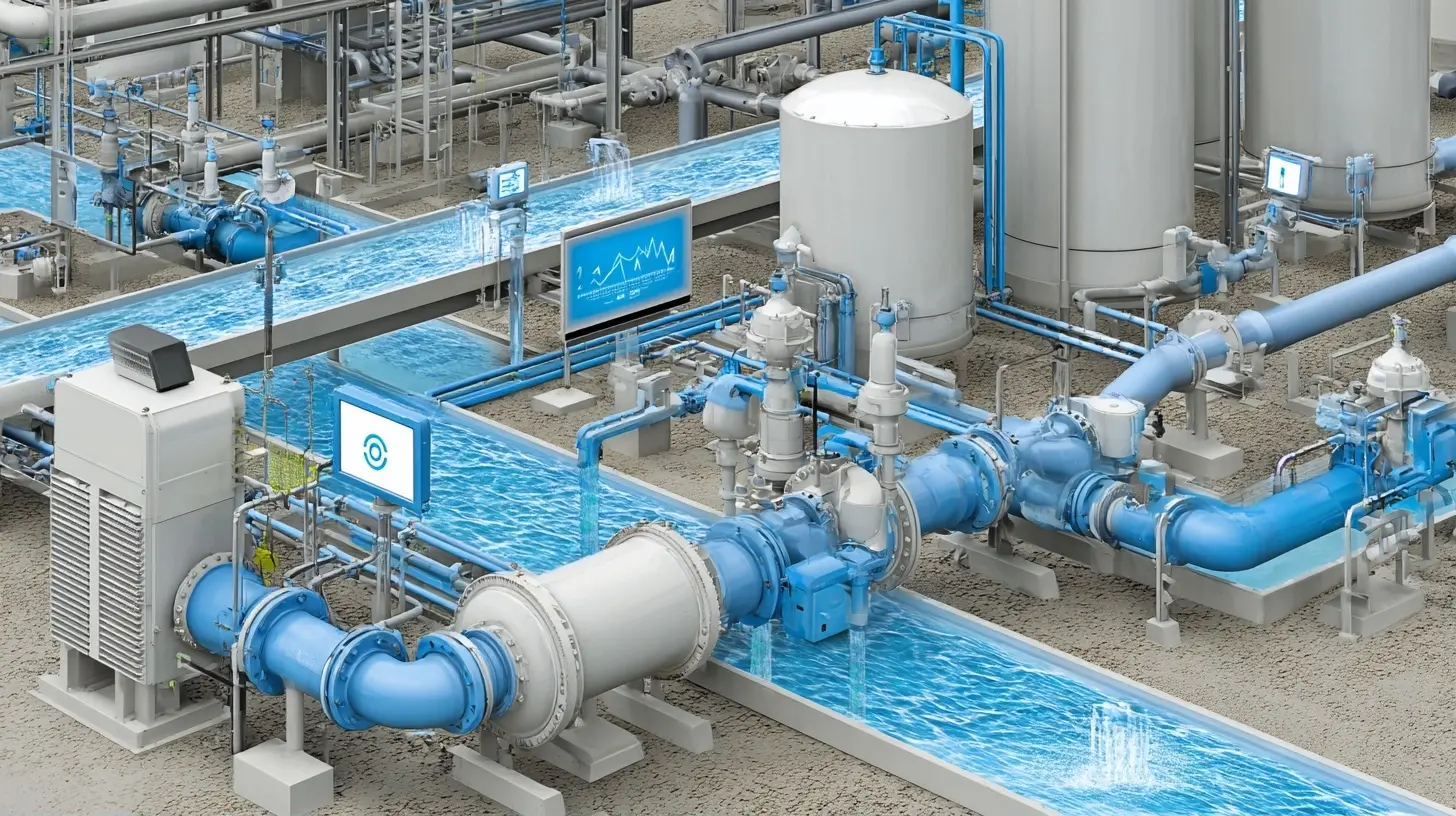
For the past decade, smart water meant supervisory control and data acquisition (SCADA) plus automated meter reading (AMR). You got a bill accurate to the gallon, and you could see a pressure spike in real time. That was genuinely useful, but it was still reactive. You knew a pipe burst after it burst. You knew a pump was failing after the vibration sensor screamed.By 2027, the leaders in this space will be running predictive analytics that does not just flag anomalies but actually recommends the optimal intervention window. Think of it like the difference between a car's check-engine light and a fleet manager who knows a specific belt will fail at mile 12,400 based on temperature trends, load patterns, and material fatigue models.
The key enabler is not the sensor itself. It is the fusion of three data streams: high-frequency acoustic or pressure data from the pipe, operational data from pumps and valves, and environmental data like soil moisture and rainfall forecasts. Systems that only look at one stream are blind. The best systems in 2027 will be those that explicitly model the interaction between these streams.
A practical example: a municipal utility in a Mediterranean climate might see a 3% increase in nighttime minimum flow. A naive system flags a possible leak. A smart system, however, correlates that flow increase with a drop in groundwater temperature and a recent seismic event, then narrows the likely leak zone to a 200-meter stretch of aging cast iron pipe. That is the difference between digging up a street and digging up the right street.
The Rise of the Digital Twin for Water Networks
Digital twins are the most overused term in industrial tech, but for water, they are not just a buzzword. A digital twin is a living simulation of your physical network that updates with real-time sensor data. It lets you run "what if" scenarios without touching a valve.In 2027, expect to see digital twins that are genuinely useful for two specific tasks: pressure management and water quality response.
Pressure Management as a Profit Center
Most water networks run at higher pressure than needed, because the utility wants to guarantee fire flow at the worst-case hydrant. That excess pressure causes leaks, burst pipes, and higher energy bills from pumping. A digital twin can model the network's hydraulics and tell you where you can safely reduce pressure at night, or during low-demand seasons, without compromising fire safety.The trade-off here is real. Lower pressure means less leak stress, but it also means longer filling times for storage tanks and potential customer complaints about weak showers. The best systems in 2027 will not just suggest a pressure setpoint. They will simulate the entire day ahead, including demand curves, tank levels, and even scheduled fire hydrant testing, then adjust pressure dynamically. This is not theoretical. Some utilities in Israel and Australia already do this, and they report double-digit reductions in both leakage and pumping energy.
Water Quality Response, Not Just Compliance
The other killer app for digital twins is contamination response. Current practice is to sample water at fixed points and wait for lab results, which takes hours. In 2027, watch for systems that use online sensors for chlorine residual, turbidity, and conductivity, feeding data into a hydraulic model that predicts where a contaminant plume will travel in the next hour.This is where the "smart" part matters most. A simple sensor network tells you something is wrong. A digital twin tells you which valves to close and which customers to notify first. The nuance is that these models are only as good as their calibration. If your network has changed since the model was built - new housing development, closed industrial loop, changed tank operation - the model will lie to you. The best practice is to recalibrate the model every time you change the network topology, not just once a year.
Edge AI and the Death of the Centralized Control Room
For years, the dream was to send all data to a cloud platform and run analytics there. That works for billing and long-term planning, but it fails for real-time control, especially in remote or bandwidth-constrained areas.By 2027, expect to see more processing happening at the edge, inside the pump station or at the valve pit. This is not just about latency. It is about resilience. If your internet connection drops during a storm, you still need the system to respond to a pressure surge. An edge-based controller with local machine learning can keep the network stable and then sync data to the cloud when connectivity returns.
The practical implication is that you do not need a 5G tower on every hill. You need a ruggedized computer that can run a small neural network on a microcontroller, consuming less than 5 watts. The hardware for this is already cheap. The challenge is software. Most water engineers are not trained in embedded AI, and most AI developers do not understand water hydraulics. The vendors that bridge this gap will dominate 2027.
The Mistake of Buying the Shiniest Sensor
A common mistake I see is organizations buying expensive multi-parameter sensors that measure pH, dissolved oxygen, temperature, and turbidity all in one unit. They install them at a few key points and assume they are now "smart." Then they discover that the sensors need calibration every two weeks, the anti-fouling wipers fail, and the data drift makes the machine learning model useless.The better approach, and what the 2027 leaders will do, is to buy a lot of cheap, single-purpose sensors that are robust and easy to replace. A hundred simple pressure loggers at $200 each will give you more leak detection value than one $20,000 water quality sonde. The trick is not sensor density alone; it is the algorithm that interprets the noisy data from cheap sensors. That is where the real intellectual property lies.
The Energy-Water Nexus: Where Smart Systems Pay for Themselves
Water systems are energy hogs. Pumping water accounts for up to 4% of global electricity consumption. In many cities, the water utility is the single largest electricity consumer. Smart management in 2027 will focus heavily on energy optimization, not just water conservation.Pump Scheduling with Variable Tariffs
Electricity prices are not flat. They spike in the late afternoon and drop at night. A smart system can shift pumping to off-peak hours, filling storage tanks when power is cheap and letting gravity do the work during peak hours. This is not new, but the sophistication is increasing.In 2027, look for systems that integrate with real-time grid signals, not just static time-of-use tariffs. If the grid operator sends a signal that renewable generation is high at 2 PM, the water system can pump then, even if it is not the usual schedule. This requires a control system that can handle uncertainty, because you do not know the exact renewable output hours ahead. This is a perfect use case for reinforcement learning, where the algorithm learns the best pumping policy from historical data and adjusts in real time.
The trade-off is that aggressive off-peak pumping can lead to longer water residence times in tanks, which degrades chlorine residual and can cause disinfection byproduct formation. A good system will balance energy cost against water age, and it will tell you the trade-off explicitly. If a vendor does not mention water age, walk away.
Leak Detection: From Acoustic Loggers to AI-Powered Correlation
Leak detection is the most mature segment of smart water, but it is still evolving. The old way was to send a technician with a listening stick to find leaks at night. The newer way is to install acoustic sensors that listen continuously and correlate signals to pinpoint leaks.The Problem with Acoustic Sensors in Plastic Pipes
Here is a nuance that most marketing materials ignore: acoustic leak detection works brilliantly on metal pipes, but poorly on plastic pipes, especially PVC and HDPE. Plastic dampens acoustic signals, so the leak sound does not travel far. By 2027, expect to see more use of alternative methods for plastic pipes: distributed fiber optic sensing, which detects temperature and vibration changes along the entire pipe length, and in-pipe robots or free-swimming sensors that travel with the flow and log pressure and acoustic data.The free-swimming sensor approach is fascinating. You drop a small device into a hydrant, it travels downstream with the water, logs data continuously, and you retrieve it at another hydrant. It gives you a spatial profile of the pipe condition that fixed sensors cannot match. The downside is that it only gives you a snapshot, not continuous monitoring. So the best strategy is to use free-swimming sensors for periodic surveys and fixed sensors for continuous monitoring of known high-risk areas.
The False Positive Trap
Another mistake is expecting perfect accuracy. A good leak detection system will flag many potential leaks, and most will be false positives. The key metric is not precision but the cost of investigation versus the cost of missed leaks. A system that finds 80% of leaks with a 50% false positive rate is far more valuable than a system that finds 20% of leaks with a 5% false positive rate, because the cost of a missed leak is catastrophic (road damage, service disruption, water loss) while the cost of a false positive is just a technician visit.In 2027, watch for systems that rank leaks by severity and confidence, so you can dispatch crews to the most likely and most damaging leaks first. This is a simple idea, but surprisingly few vendors do it well.
Smart Irrigation: The Overlooked Giant
When people talk about smart water, they focus on municipal supply and industrial processes. But agriculture uses 70% of the world's freshwater, and most of it is wasted through inefficient irrigation. Smart irrigation systems for 2027 are not just about soil moisture sensors that turn sprinklers on and off. They are about full evapotranspiration modeling, weather forecasting, and crop water stress algorithms.The Drip vs. Center Pivot Debate
There is a long-running debate between drip irrigation, which is highly efficient but expensive and clogs easily, and center pivot systems, which are cheaper but waste water through evaporation and overspray. Smart systems are making this debate less relevant. A smart center pivot with variable rate irrigation can apply different amounts of water to different parts of the field, based on soil type, slope, and crop health. This narrows the efficiency gap with drip while keeping the lower capital cost.The key technology is not the pivot itself but the control algorithm that uses satellite imagery or drone data to determine crop water stress. The Normalized Difference Vegetation Index (NDVI) is a common metric, but it is a lagging indicator. By the time NDVI shows stress, the crop has already suffered. More advanced systems use thermal imaging to detect canopy temperature, which rises before visible stress appears. By 2027, expect thermal-based irrigation control to be standard on high-end systems.
The Water Rights Compliance Angle
In many western states and countries, farmers face strict water allocation limits. Exceeding them brings fines. Underusing them means losing the right to that water next year. This creates a perverse incentive to waste water. Smart systems can help by tracking actual water use against allocation in real time, so farmers can make informed decisions about whether to irrigate a marginal field or let it go fallow. This is not a technical problem but a data visualization problem. The best systems will present this information in a simple dashboard that a farmer can check on a phone while sitting on a tractor.The Human Factor: Why Most Smart Water Projects Fail
Here is the uncomfortable truth. Most smart water projects fail not because of bad technology but because of bad organizational change management. A utility buys a fancy analytics platform, hires a data scientist, and then expects the aging workforce of field technicians to trust the algorithm over their gut feeling.The Trust Gap
Field crews have decades of experience. They know which valves stick and which pipes are prone to air pockets. If the AI tells them to dig at a location that they know is wrong, they will ignore it. And they are often right. The best systems in 2027 will be those that incorporate tribal knowledge into the model, either through explicit rules or by learning from technician feedback.This means the software must have a simple interface for technicians to say "this prediction is wrong because..." and that feedback must feed back into the model. This is called human-in-the-loop machine learning, and it is essential for adoption. If a vendor does not offer this, the system will sit unused after the pilot phase.
The Skills Gap
Another issue is that water utilities are not tech companies. They do not have data engineering teams. They have a few IT staff who are busy keeping the billing system running. By 2027, the successful utilities will not try to build in-house AI expertise. Instead, they will buy managed services where the vendor runs the analytics and delivers actionable recommendations, not raw data dashboards.This is a shift from software to outcomes. You do not buy a leak detection platform. You buy a leak reduction service, where the vendor is paid based on the volume of water saved. This aligns incentives and removes the burden of operating complex software. Watch for this as-a-service model to grow significantly by 2027.
Cybersecurity: The Silent Threat
Smart water systems are cyber-physical systems. They control valves, pumps, and chemical dosing. A cyberattack on a water system is not a data breach; it is a potential public health crisis. In 2024, there were already documented attacks on water utilities that tried to change chemical dosing levels. By 2027, this will be a mainstream concern.The Air Gap Is Dead
Many older utilities believed that their SCADA system was safe because it was not connected to the internet. That is no longer true. Even isolated systems are vulnerable through supply chain attacks, compromised laptops, or rogue employees. And as you add smart sensors and cloud connectivity, the attack surface grows.The best practice for 2027 is not to avoid connectivity but to segment your network. Put the control system on a separate VLAN with strict firewalls, and do not allow any direct communication from the internet to the controllers. Use a data diode for one-way data flow from the control network to the analytics platform. This way, even if the analytics platform is compromised, the attacker cannot send commands to the pumps.
The Vendor Risk
A less obvious risk is the vendor itself. Many smart water vendors are startups that may not be around in five years. If the vendor goes bankrupt, your sensors may stop working, and your data may be locked in their cloud. Before signing a contract, ask about data portability and whether the system can run locally without the vendor's cloud. Insist on standard protocols like MQTT or OPC-UA, not proprietary APIs. This is not just a technical detail; it is a risk management decision.What to Actually Do in 2026 to Prepare for 2027
If you are reading this in 2026, you have about a year to get ready. Here is a practical roadmap.Step 1: Audit Your Data
Before buying any new system, understand what data you already have. Many utilities have years of SCADA data, billing data, and maintenance logs that are sitting in silos. The first step is to consolidate this data into a single data lake, even if it is messy. You cannot have a digital twin without a single source of truth.Step 2: Start with One Use Case
Do not try to implement everything at once. Pick one high-value use case: leak detection in a district metered area, energy optimization for a pumping station, or water quality monitoring for a distribution zone. Run a pilot for six months. Measure the baseline and the improvement. Only then scale.Step 3: Demand Interoperability
Do not get locked into a single vendor's ecosystem. Insist that all sensors and software use open standards. The water industry is moving toward the Water Data Exchange (WaterDX) and similar frameworks. If a vendor says they are "open" but cannot export data in a standard format, they are not open.Step 4: Invest in People
Hire or train at least one person who understands both water operations and data analytics. This is a rare combination, but it is the most important hire you will make. This person will be the bridge between the field crews and the data scientists. Without this bridge, the project will fail.
The Bottom Line for 2027
The smart water systems that will matter in 2027 are not the ones with the most sensors or the prettiest dashboards. They are the ones that close the loop between sensing, prediction, and action. They are the ones that respect the physical constraints of water networks, the human expertise of operators, and the financial realities of utilities.The vendors to watch are those that offer outcomes, not just software. The utilities to watch are those that treat digital transformation as a cultural change, not a technology purchase. And the technology to watch is not a single breakthrough but the convergence of cheap sensors, edge AI, digital twins, and open data standards.
Water is too important to be managed with guesswork. By 2027, the guesswork will be gone, and the utilities that embraced smart management will be the ones that are still operating when the next drought hits. The rest will be scrambling, and they will be paying a lot more for water they cannot afford to waste.
all images in this post were generated using AI tools
Category:
Smart Home TechnologyAuthor:

Ugo Coleman
Discussion
rate this article
2 comments
Catherine Fields
Smart water management systems are crucial for sustainable urban growth. As we approach 2027, innovations in technology will play a vital role in conserving resources and ensuring efficient distribution for future generations.
September 14, 2026 at 12:50 PM
Ugo Coleman
I completely agree. The advancements in smart water management will be key to addressing urban challenges and ensuring a sustainable future. Exciting times ahead!
Vienna Curry
Innovate, conserve, thrive!
September 13, 2026 at 4:15 AM
Ugo Coleman
Absolutely! Smart water management is key to a sustainable future. Excited to see what 2027 brings!