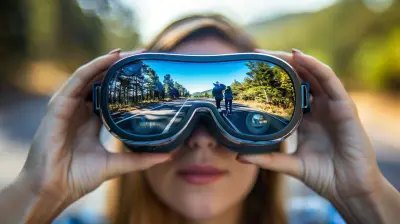
The Evolution of AR Glasses: What’s Next for Wearable Technology
9 April 2026
Augmented Reality (AR) glasses have been a concept in the tech world for quite some time now, and while their development may have had a few bumps in the road, they’re undeniably shaping up to be a game-changer. It’s not just the sci-fi nerd in me that gets excited about the potential of AR glasses. We’re talking about wearable technology that could soon become as common as a smartphone in your pocket.
So, what’s the deal with AR glasses? Why haven’t they become mainstream yet, and more importantly, what’s next? Let’s dive into the evolution of AR glasses and how wearable technology is on the cusp of another revolution.
The Early Days of AR Glasses
Remember the first time you heard about AR glasses? It might have been Google Glass back in 2013, a device that promised to bring the future right to our faces. At that time, it seemed like we were about to enter a new era of technology. You’d walk down the street, and your glasses would show you directions, notifications, and even let you make calls—all without reaching for your phone.But, as we all know, things didn’t go quite as planned.
Google Glass hit a major roadblock. The hype was huge, but the reality didn’t live up to the expectations. The technology was ahead of its time, and people weren't ready to wear something that looked, well, a bit too futuristic. The glasses were clunky, expensive, and let’s be honest, they made you look a little odd. Privacy concerns also played a big role in their downfall. Nobody wanted to be recorded without their knowledge by someone with a camera on their face.
Despite its rocky start, Google Glass laid the foundation for what was to come. It was a glimpse into the future, even if the world wasn’t quite ready for it.

The Resurgence of AR Glasses
Fast forward a few years, and AR glasses have made a resurgence, but this time with a more refined approach. Companies like Microsoft, Magic Leap, and Vuzix have all entered the market, but they’re targeting different audiences and use cases.Microsoft’s HoloLens, for example, has been mostly used in industrial and enterprise settings. It allows workers to visualize 3D models, collaborate on projects remotely, and even get real-time data while working hands-free. The technology is impressive, but it’s not exactly something you’d see people wearing while walking their dog.
Then there’s Magic Leap. They’ve tried to tackle the consumer market with a more stylish, lightweight device. But even they’ve struggled to capture the mainstream. The hardware is still expensive, and most consumers don’t see the need to drop that kind of cash on something they’re not sure they’ll use every day.
It’s clear that AR glasses are evolving, but they’re not quite there yet for the average consumer. However, that doesn’t mean the future isn’t bright.
Why AR Glasses Haven’t Gone Mainstream (Yet)
There are a few reasons why AR glasses haven’t become as ubiquitous as smartphones, and they all tie into the same core issues that plagued early models like Google Glass.1. Cost
AR glasses, let’s face it, are not cheap. HoloLens can set you back several thousand dollars, and even the more consumer-friendly Magic Leap isn’t exactly budget-friendly. Until the price comes down significantly, AR glasses are going to remain a niche product for tech enthusiasts and professionals.2. Design
Let’s be real here—nobody wants to wear something that makes them look like a cyborg. For AR glasses to catch on, they need to be stylish, lightweight, and comfortable. We’re talking about something you’d be happy to wear all day, not just during a quick demo. While companies are making strides in this area, it’s still a work in progress.3. Battery Life
AR glasses need to last longer than a couple of hours on a single charge. Imagine having a pair of AR glasses that dies out in the middle of your workday. That’s not just frustrating—it’s a deal-breaker for most consumers. Improving battery technology is critical for AR glasses to become practical for everyday use.4. Content
The key to AR glasses’ success lies in the content. You can have the most advanced hardware in the world, but if there aren’t any compelling apps or experiences, it’s not going to matter. Right now, the content for AR glasses is limited. Sure, there are cool demos and interesting enterprise applications, but the everyday consumer needs more to justify the investment. Think about it: would you invest in AR glasses just to get a few notifications or play a game? Probably not.
The Future of AR Glasses: What’s Next?
So, what’s next for AR glasses? We’ve seen the early attempts, and while they haven’t been grand slams, they’ve shown us what’s possible. The next generation of AR glasses is going to be a lot more exciting—and here’s why.1. Tech Giants Are All In
You’ve got some of the biggest players in tech throwing their hats into the AR ring. Apple, Facebook (Meta), and Snapchat are all working on AR glasses, and they’re not playing around. Apple, in particular, has a track record of taking existing technologies and making them mainstream (remember the iPhone?). There’s a lot of buzz around their rumored AR glasses, and with Apple’s design and marketing prowess, we could see AR glasses finally hit the mainstream.Meta, on the other hand, is doubling down on its vision of the metaverse. And what better way to access this virtual world than through AR glasses? They’ve already launched Ray-Ban Stories, a pair of smart glasses that allow you to take photos and videos, but that’s just the tip of the iceberg. Meta’s ultimate goal is to create a fully immersive AR experience that blends the digital and physical worlds seamlessly.
2. Advancements in Hardware
One of the biggest barriers to AR glasses has been the hardware. The displays, sensors, and processors required to make AR glasses work are complex, and cramming all of that into a lightweight, stylish package has been a challenge. But technology is catching up.We’re seeing advancements in micro-displays that are thinner and more power-efficient, meaning AR glasses can be smaller and more comfortable. Companies are also working on improving the field of view, so you’re not just looking at a tiny square of augmented reality in front of your eyes but something more immersive.
3. 5G and Cloud Computing Will Play a Role
5G networks are rolling out across the globe, and they’re going to have a huge impact on AR glasses. With ultra-fast, low-latency connections, AR glasses will be able to offload some of the heavy processing to the cloud, meaning the glasses themselves can be lighter and more power-efficient. You’ll be able to stream complex AR experiences in real-time without needing a powerful processor in your glasses.4. Integration with AI
Artificial intelligence is going to be a game-changer for AR glasses. Imagine walking down the street, and your glasses are able to recognize people, places, and objects in real-time. They could provide you with relevant information, suggest routes, or even help you shop by providing product recommendations. AI will allow AR glasses to become more intuitive and useful in everyday life.5. A Focus on Privacy
One of the biggest concerns with AR glasses is privacy. Nobody wants to feel like they’re being recorded or watched without their consent. Future AR glasses will need to address these concerns head-on, and we’re likely to see features like visible recording indicators or even limits on how and when the glasses can record. The key here will be transparency—users (and those around them) need to know what the glasses are doing.How AR Glasses Could Change Our Lives
So, what will life with AR glasses actually look like? Let’s get a little imaginative here.Picture this: you wake up in the morning, and instead of checking your phone, you put on your AR glasses. Instantly, your schedule for the day is displayed in front of you, along with the weather forecast and traffic updates. As you’re making breakfast, your glasses highlight certain ingredients for a new recipe you’ve been meaning to try.
On your way to work, you get real-time navigation updates and even information about landmarks you pass by. Once you’re at the office, your AR glasses allow you to collaborate with colleagues in a virtual space, seeing 3D models and data visualizations as if they were floating right in front of you.
And the best part? Nobody around you has to know you’re doing all this. The glasses are sleek, stylish, and discreet—blending seamlessly into your everyday life.
Conclusion
The evolution of AR glasses has been a wild ride. From the initial excitement of Google Glass to the more refined offerings from Microsoft and Magic Leap, we’ve come a long way. While AR glasses haven’t hit the mainstream just yet, we’re on the cusp of a breakthrough. With tech giants like Apple and Meta entering the fray, advancements in hardware, and the integration of AI and 5G, AR glasses are poised to become the next big thing in wearable technology.It might not happen tomorrow, but the future of AR glasses is bright. As technology continues to improve and prices come down, we could soon be living in a world where augmented reality is just a glance away.
all images in this post were generated using AI tools
Category:
Augmented RealityAuthor:

Ugo Coleman
Discussion
rate this article
2 comments
Stephen Fletcher
Exciting times ahead for wearable technology innovation!
April 12, 2026 at 12:21 PM
Ugo Coleman
Absolutely! The potential for AR glasses is incredible, and I can't wait to see what comes next.
Arwenia Maddox
Great insights on AR glasses! Excited to see how this technology evolves and enhances our daily lives in the future.
April 9, 2026 at 11:04 AM
Ugo Coleman
Thank you! I'm excited too—AR glasses certainly have the potential to transform our experiences!