The Evolution of E-Commerce: AI Personal Shoppers Take Over
19 October 2026
Online shopping has always promised convenience, but for most of its history it delivered something closer to a catalog with a search box. You knew roughly what you wanted, you typed it in, and you scrolled. The burden of finding the right product fell almost entirely on you. That model is now shifting in a fundamental way. AI personal shoppers, powered by large language models and recommendation systems that actually understand context, are moving from novelty to core infrastructure. This is not a small interface tweak. It changes how products get discovered, how stores get built, and how brands compete.
This article breaks down what is actually happening, why it works, where it fails, and what merchants and product teams should do about it.

What an AI Personal Shopper Actually Is
The term gets used loosely, so let us be precise. An AI personal shopper is a system that takes a shopper's intent, expressed in natural language or inferred from behavior, and returns a curated set of recommendations with reasoning. It differs from a traditional recommendation engine in one key way: traditional engines predict what you might click based on patterns across millions of users. AI shoppers interpret what you are trying to accomplish.A classic recommender says "people who bought this also bought that." An AI shopper says "you need a waterproof jacket for a trip to Scotland in October, you run hot, and you want something packable under 300 dollars, here are four options and here is why each one fits."
That distinction matters because it changes the failure modes. Recommenders fail by being irrelevant. AI shoppers fail by being confidently wrong, which is worse. A system that hallucinates a product that does not exist or misstates a return policy destroys trust faster than a bad recommendation ever could.
The three layers behind the curtain
Most production systems combine three components:1. A retrieval layer that pulls candidate products from a catalog using vector search, keyword matching, or structured filters.
2. A reasoning layer, usually an LLM, that interprets intent, compares candidates, and generates a response.
3. A grounding layer that enforces constraints: real inventory, real prices, real policies, real availability.
The third layer is where most projects live or die. Skip it and you get a chatbot that recommends discontinued items and invents discounts. Build it properly and you get something genuinely useful.
How We Got Here
E-commerce personalization is not new. Collaborative filtering powered Amazon recommendations in the early 2000s. Email retargeting, browse abandonment flows, and segment-based merchandising followed. Each wave improved targeting but kept the shopper doing the work of articulating what they wanted.The real inflection point came when language models became good enough to hold a conversation about a product category without losing the thread. Suddenly a shopper could say "I am redecorating a small studio apartment with a warm, minimal aesthetic and a budget of 1,500 dollars" and get a coherent response. That kind of request was previously impossible to serve through filters.
Concurrently, vector databases and embedding models made it practical to search catalogs by meaning rather than exact keywords. A shopper searching for "something cozy for a rainy weekend" can now surface a chunky knit throw even if the product description never uses the word cozy.

Why It Works: The Mechanics of Intent
The core reason AI shoppers outperform traditional search is that they close the gap between how people think and how catalogs are structured. Product data is messy. Attributes are inconsistent across vendors. A jacket might be tagged "water-resistant" in one feed and "DWR coated" in another. A human shopper does not know or care. An AI layer can normalize this.There is also the matter of conversation. Shopping is often iterative. You start with a vague idea, see options, refine, and narrow down. Traditional e-commerce forces you to restart the search each time you refine. A conversational shopper lets you say "cheaper" or "something less formal" and keeps context. That continuity reduces friction dramatically, especially for considered purchases like furniture, electronics, or gifts.
Gifting deserves special mention. Gift shopping is one of the hardest problems in retail because the buyer does not know the recipient's preferences well and cannot evaluate the product directly. An AI shopper that asks two or three clarifying questions, such as the recipient's age range, interests, and your budget, can narrow a catalog of thousands to a shortlist of five. That is a genuine improvement over browsing.

Real-World Examples and What They Reveal
Several patterns have emerged in how retailers deploy these systems.Assisted discovery on product pages. A shopper lands on a product and a panel asks what they are trying to solve. This works well for complex categories like cameras or mattresses where specifications confuse buyers. The AI translates specs into outcomes.
Conversational storefronts. Some brands have built chat-first experiences where the entire browse experience is a dialogue. These tend to work for curated catalogs with strong brand identity, like fashion or home goods. They struggle in broad marketplaces where the catalog is too large and inconsistent for a single conversation to feel coherent.
Post-purchase and support integration. AI shoppers increasingly handle "will this fit my desk" or "does this ship to my region" questions that previously required a support ticket. This is unglamorous but high-value because it reduces returns and support load.
B2B procurement. This is arguably where the impact is largest and least discussed. Procurement involves complex constraints: compatibility, compliance, contract pricing, lead times. An AI assistant that understands these constraints saves buyers hours. The tradeoff is that errors are expensive, so human approval workflows remain essential.
Where AI Shoppers Fall Short
Honest assessment matters here because the hype is thick.They struggle with taste. Style is subjective and culturally specific. An AI can learn that a customer bought minimalist furniture before, but inferring that they want a specific shade of warm oak is a stretch. Systems that pretend to have taste often produce recommendations that feel generic. The best implementations lean on curation by humans and use AI for retrieval and explanation.
They can be manipulated. Prompt injection and catalog poisoning are real risks. If product descriptions are user-generated or vendor-supplied, a malicious listing could contain instructions that hijack the assistant. Any production system needs input sanitization and output constraints.
They add latency and cost. Every conversational turn is an inference call. At scale this gets expensive, and shoppers are impatient. The practical answer is a hybrid: cache common intents, use smaller models for simple turns, and reserve large models for complex reasoning.
They raise privacy questions. A shopper describing their body type, medical needs, or budget is sharing sensitive information. Retention policies, data minimization, and clear consent matter. Regulations in various jurisdictions impose obligations that many early implementations ignored.
They can flatten discovery. If everyone asks the same assistant for "a good pair of running shoes," the assistant may converge on the same handful of popular products. That reduces the long tail that independent brands rely on. Merchants should watch for this and deliberately inject diversity into results.
Trade-offs Merchants Need to Weigh
Build versus buy
Buying a solution gets you to market fast but locks you into someone else's retrieval logic and data model. Building gives you control but requires ML engineering, evaluation infrastructure, and ongoing maintenance. For most mid-market retailers, a hybrid works best: buy the conversational layer, own the product data and evaluation.Chat-first versus chat-assisted
A fully chat-first storefront is a bold bet. It works if your catalog is curated and your brand has a strong voice. It fails if shoppers already know what they want and just need to check out fast. Most successful deployments keep traditional navigation and add AI as an assistive layer rather than replacing the store.Personalization depth versus privacy
The more the system knows, the better the recommendations. But shoppers are increasingly wary of surveillance. The middle path is explicit preference capture: let shoppers tell the assistant what they want rather than inferring everything from behavior. This is more transparent and often more accurate.Common Mistakes and Misconceptions
Mistake: treating the LLM as the source of truth. The model should never be the authority on price, stock, or policy. Those must come from your systems of record at query time.Mistake: launching without evaluation. Teams ship a demo that looks impressive in a scripted demo and collapses under real queries. Build an evaluation set of real shopper questions, score responses for accuracy and helpfulness, and iterate. This is the single highest-leverage investment.
Mistake: ignoring the cold start. A new shopper has no history. The assistant must be useful from the first message. That means strong category knowledge and good clarifying questions, not personalized guesses.
Misconception: AI shoppers replace merchandisers. They do not. They amplify good merchandising and expose bad merchandising. If your product data is thin, the assistant will sound thin.
Misconception: more conversation is better. Shoppers do not want to chat for the sake of chatting. They want to reach a decision. The best assistants are concise and know when to stop asking questions and start recommending.
Best Practices That Actually Hold Up
Ground everything. Every product claim in a response should trace to a record in your catalog. If the model cannot verify it, it should not say it.Design for failure. When the assistant cannot help, it should hand off gracefully to search, filters, or a human. Silent failure is worse than no assistant.
Instrument aggressively. Log queries, responses, conversions, and abandonment. Segment by intent type. You will find that a small number of query patterns drive most of the value and most of the failures.
Keep humans in the loop for high-stakes categories. For health, finance, and safety-related products, require human review or at minimum add clear disclaimers and links to authoritative information.
Test adversarial inputs. Try to make the assistant recommend prohibited items, reveal internal data, or contradict your policies. Fix what breaks before launch.
Measure downstream outcomes, not just engagement. A chat that keeps people talking but does not convert is a cost center. Track add-to-cart rate, return rate, and support ticket deflection.
What This Means for the Next Few Years
The direction is clear even if the timeline is not. Shopping interfaces are moving from search boxes to conversations, and from conversations to proactive assistance. Imagine a system that notices you are running low on a consumable and asks whether you want the same brand or a cheaper alternative, with a clear explanation of the trade-off. That is technically feasible today; the barriers are trust and integration, not capability.The retailers that win will not be the ones with the flashiest chatbot. They will be the ones with the cleanest product data, the strongest evaluation practices, and the discipline to keep AI in an assistive role where it adds value and out of roles where it guesses.
For product teams, the practical takeaway is to start narrow. Pick one category with high consideration and messy data. Build a grounded assistant. Measure it honestly. Expand only when the numbers justify it. The evolution is real, but it rewards patience and rigor over speed.
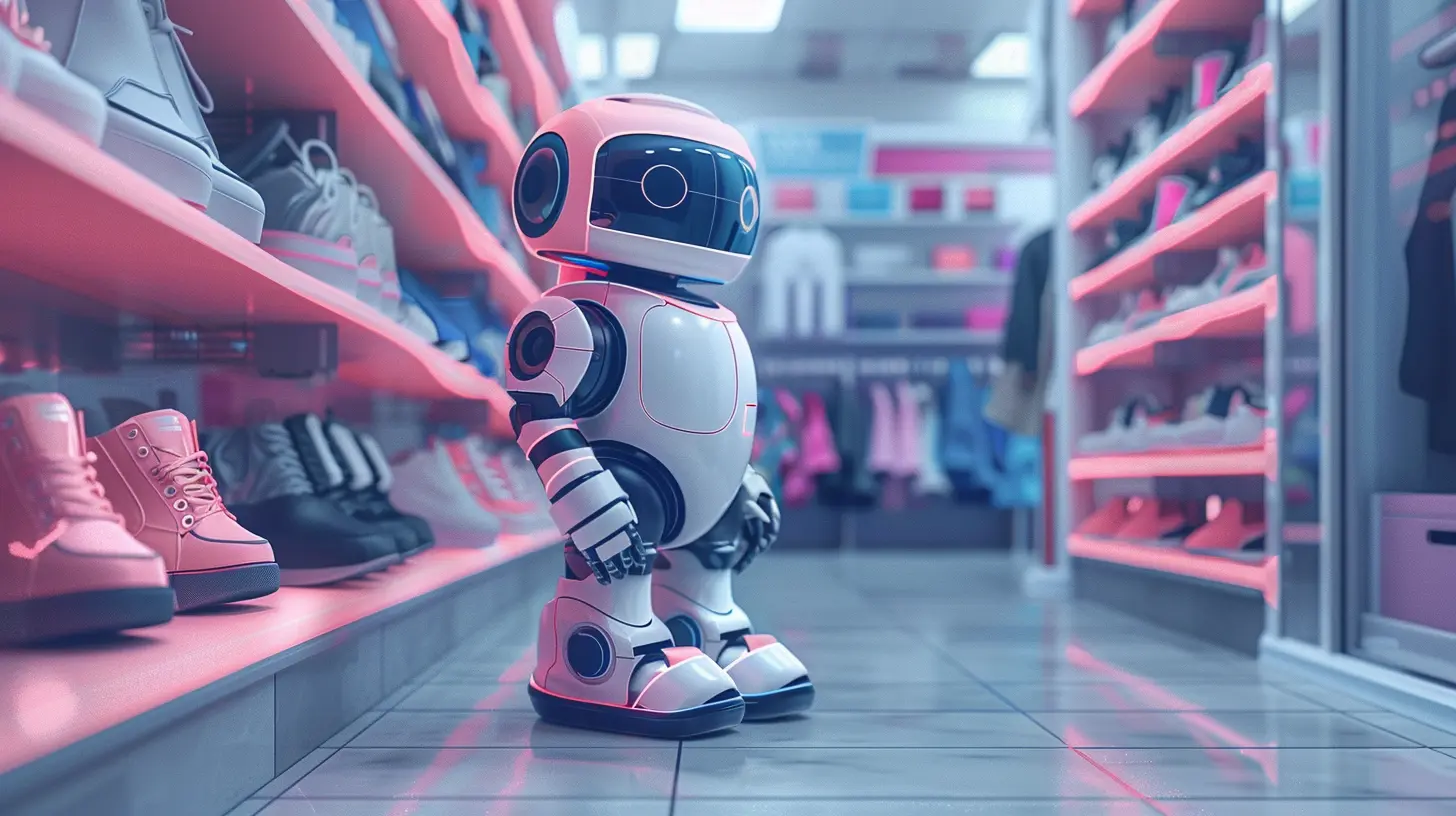
all images in this post were generated using AI tools
Category:
Tech NewsAuthor:

Ugo Coleman