The Tools That Will Power Async Work in 2026
7 September 2026
Async work is not a trend anymore. It is the default operating model for thousands of companies, from fully remote startups to hybrid enterprises with teams spread across twelve time zones. By 2026, the tools we use to support this model will look noticeably different from the patchwork of video calls, chat threads, and shared docs we rely on today. The shift is not about adding more features. It is about changing the fundamental assumptions of how software helps people collaborate when they are not online at the same time.
Most teams still use tools built for synchronous work and force them into async workflows. Video meetings get recorded and watched later. Chat messages pile up overnight. Documents live in one place, decisions live in another, and the actual reasoning behind a choice lives in someone's head. That is not async work. That is delayed synchronous work, and it creates more cognitive load, not less.
The tools that will actually power async work in 2026 will be built around a different set of principles: asynchronous-first communication, persistent context, structured handoffs, and intelligent prioritization. This article breaks down the specific categories of tools that matter, what they will do differently, and how to choose between them without falling for hype.

The Core Shift: From Real-Time Presence to Persistent Context
The biggest change in async work tools is the move away from presence as the primary design driver. Slack and Teams are built around the idea that someone is online and can reply quickly. Async tools assume the opposite. They assume that the person on the other end might read your message in three hours, tomorrow morning, or after returning from a week off.This changes how information is packaged. In a synchronous chat, you can send a short message and clarify in real time. In async, every message must be self-contained. It needs enough context to be understood without a follow-up question. Tools in 2026 will enforce this through design, not just encourage it through etiquette.
For example, instead of a thread where someone says "can we move the deadline?" and then waits for a reply, the tool will prompt the sender to include the reason, the proposed new date, and the impact on other tasks before the message goes out. This is not about policing language. It is about reducing the number of round trips. Every unnecessary round trip in an async team costs a full day.
Why Documents Are Not Enough
Shared documents like Google Docs or Notion are the backbone of async work today. They are good for capturing final thoughts, but they are terrible for capturing the process of thinking. A decision log in a doc is static. It does not tell you why option A was rejected in favor of option B unless someone manually writes that down, and most people do not.In 2026, the tools that win will treat documents as living artifacts with an attached decision trail. Instead of a doc that says "we chose vendor X," the system will link to the original comparison, the comments from each stakeholder, and the timestamped rationale. This is not a feature request. It is a fundamental shift from content management to knowledge management.
The practical implication is that you will stop asking "what did we decide?" and start asking "why did we decide this, and what did we consider?" That second question is where most teams waste time rehashing old arguments because the context is lost.
Asynchronous Video: The End of the Recorded Meeting
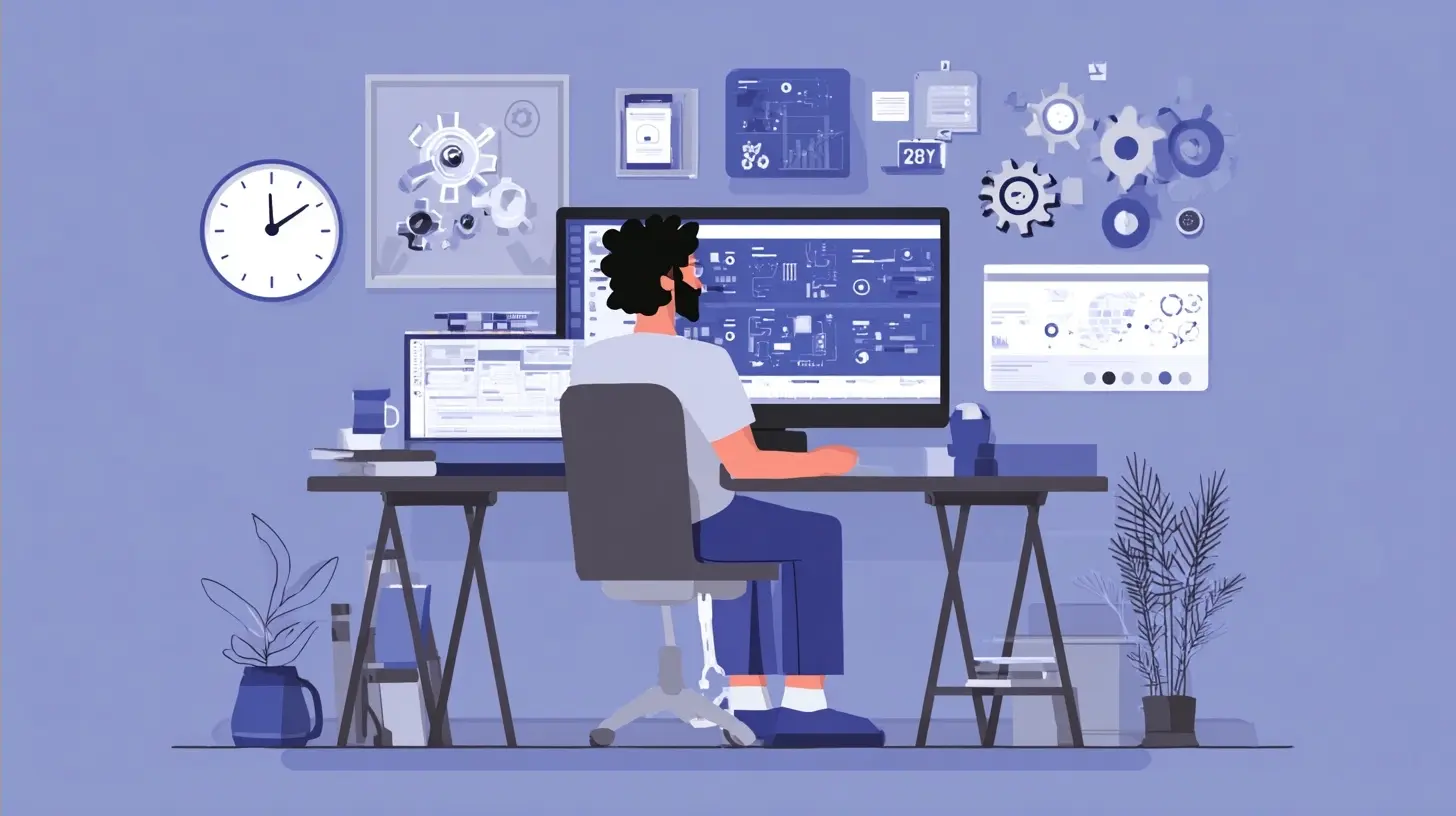
Right now, the standard approach to async video is to record a Zoom call and post the link. That is useful but deeply flawed. A recorded meeting is a synchronous artifact. It assumes the conversation flowed naturally, which means it is full of pauses, tangents, and verbal fillers. Watching a one-hour recording takes one hour. That is not async-friendly.The tools that will power async work in 2026 will be built for video as a primary communication format, not as a byproduct of a live call. Think of tools like Loom or Grain, but much more advanced. The key innovation is structured video. Instead of a single long recording, the tool will let you record short segments, annotate them with timestamps, and attach them to specific tasks or decisions.
For example, a product manager might record a two-minute update on a feature launch. The tool automatically transcribes it, extracts action items, and links each action to the relevant project board item. The viewer does not need to watch the video unless they want the full context. They can read the summary and jump to the exact moment where a key point is made.
This is not about replacing written communication. It is about matching the medium to the message. Complex spatial reasoning, visual design feedback, or emotional nuance are better conveyed in video. Simple status updates are better in text. The 2026 tools will not force everything into one format. They will make switching between formats seamless.
The Bandwidth Problem
One overlooked issue with async video is bandwidth and storage. High-quality video is heavy. If every team member records daily updates, the storage costs explode, and the search function becomes useless because no one wants to scrub through hours of footage.The solution will not be better compression alone. It will be intelligent indexing. The tool will treat video as a database. Every word spoken is searchable, every screen share is captured, and every comment is tied to a specific frame. You will be able to search "what did we say about the login flow on Tuesday" and get a direct link to that exact moment. This is technically feasible today, but it is not yet the default. By 2026, it will be table stakes.
Project Management: Moving from Boards to Systemic Views
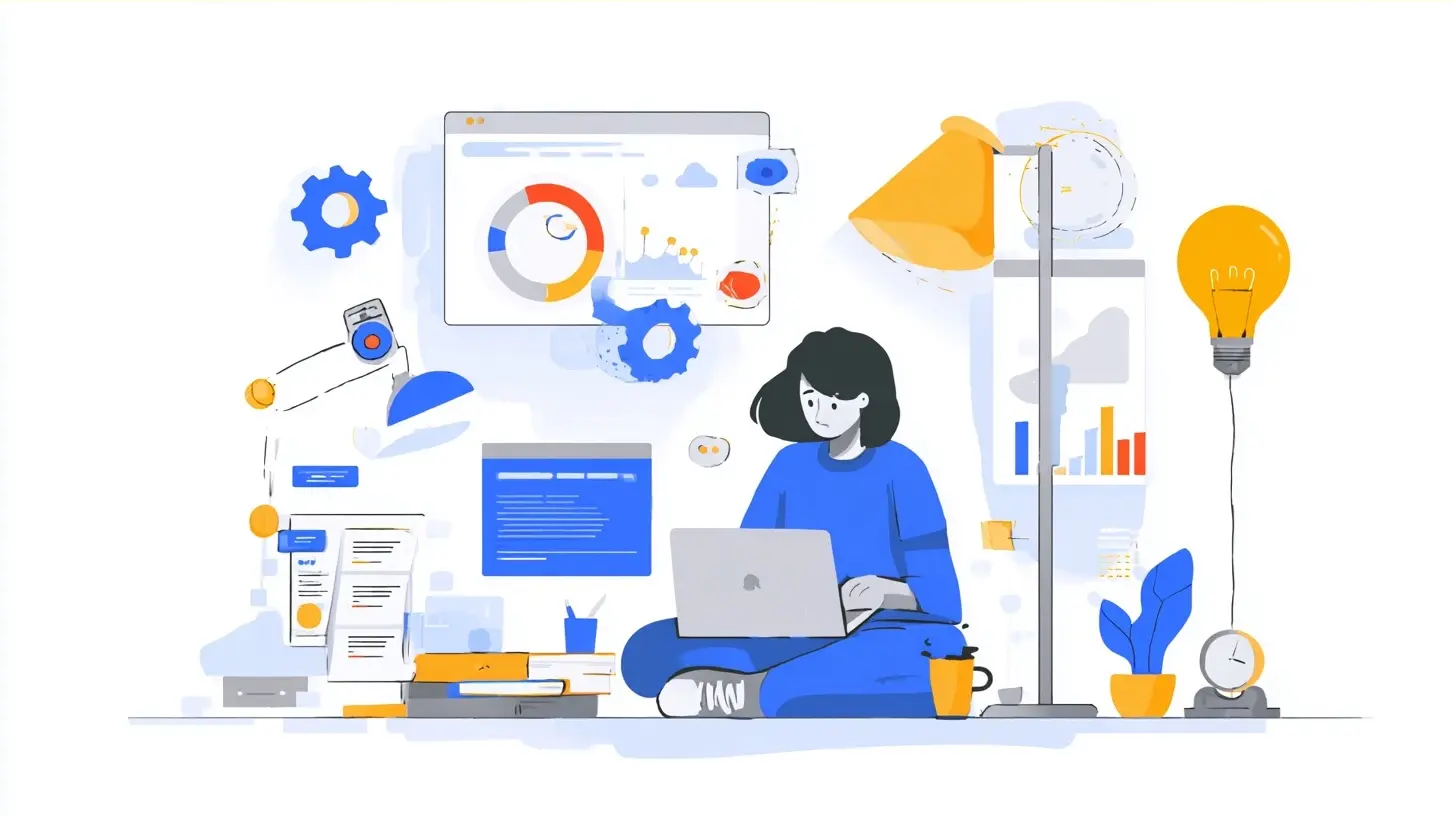
Trello and Jira popularized the kanban board. It is a great visual metaphor for a small team with a clear workflow. But for async work at scale, boards have a serious limitation. They show tasks in columns, but they do not show dependencies, ownership, or the reasoning behind priorities.In 2026, project management tools will move toward a systemic view. Instead of a board, you will see a network of tasks, each with its own context panel. The panel will include the current status, the owner, the linked documents, the async comments, and the decision history. The visual layout will be customizable, but the underlying data structure will be relational.
This matters because async teams cannot rely on the watercooler effect. In an office, you overhear that the marketing team is waiting on the design team, and you adjust your own timeline. In async work, that information must be explicit. The tool should surface bottlenecks automatically, not require someone to notice and mention them.
The Role of Automation
Automation in project management tools has been mostly superficial. Set a reminder when a due date approaches. Move a card when a status changes. That is helpful but trivial. The real opportunity is in automating the boring parts of async coordination.Imagine a tool that detects that a task has not been updated in four days and the deadline is in two days. Instead of just sending a reminder to the owner, it checks the task dependencies, looks at the owner's current workload, and drafts a status request message that the manager can approve with one click. That is not replacing human judgment. It is reducing the mechanical overhead of checking in.
The trade-off is trust. Automation that feels intrusive will be rejected. The best tools in 2026 will be transparent. They will show you what they are doing and why. They will suggest, not command. And they will allow individual teams to set their own thresholds for what counts as "stale" or "at risk."

Async Communication Hubs: Replacing the Chat Free-for-All
Chat tools are the most used and most abused tools in remote work. Slack channels are endless streams of mixed conversations. A serious technical discussion sits next to a meme, which sits next a question about lunch orders. For async work, this is toxic. It forces everyone to scan irrelevant content to find the signal.The 2026 approach will be topic-based communication hubs instead of chronological streams. Think of a forum combined with a wiki, but with the speed of chat. Each topic gets its own space. Replies are threaded. The original post stays at the top with its full context. Old topics are archived but searchable.
This is not a new idea. Tools like Discourse have done this for years. The difference is that 2026 tools will integrate these hubs directly with the rest of the workflow. A decision made in a topic will automatically update the relevant project task. A question answered in a topic will be indexed and suggested to future users who search for the same thing.
The Synchronous Escape Hatch
No team is fully async. There are times when real-time conversation is necessary, like a crisis or a complex negotiation. The 2026 tool will not pretend otherwise. It will offer a seamless transition. You can start an async discussion, and if it becomes clear that a live conversation is needed, you can escalate it to a video call with one click.The key is that the async context must not be lost in the transition. The tool will pre-populate the video call with the relevant conversation history, the documents being discussed, and the list of participants. After the call, the recording and summary are posted back to the async thread. Nothing is siloed.
Knowledge Management: The Death of the Corporate Wiki
Corporate wikis are where information goes to die. They are static, outdated, and rarely used. The problem is that they separate knowledge from work. A wiki page about a process is not linked to the actual project where that process is being used. By the time someone updates the wiki, the project is already over.In 2026, knowledge management will be embedded in the workflow tools themselves. Every task, every document, every decision will have a knowledge layer. When you complete a task, the tool will ask, "What did you learn that others should know?" It will not force you to write a full article. A short note will do. Over time, these notes build up into a searchable base of practical knowledge.
This is sometimes called "working out loud." The idea is that the process of doing work generates knowledge as a byproduct. The 2026 tools will capture that byproduct automatically.
Search Is the Killer Feature
All the knowledge in the world is useless if you cannot find it. The search function in most current tools is primitive. It matches keywords but does not understand context. In 2026, search will be semantic. You will be able to ask a question in natural language, like "what was the reasoning for choosing Postgres over MySQL for the user service?" and get a direct answer, not a list of documents to read.This is an area where AI will have a huge impact. Large language models are already good at summarizing and retrieving information. The challenge is grounding them in your specific company data. The tools that succeed will have strict access controls and clear provenance. You will see not just the answer but the source documents that support it.
The AI Layer: Assistant, Not Autopilot
AI is the buzzword of this decade, but the practical applications for async work are just emerging. The 2026 tools will have an AI layer that does three things well: summarizing, drafting, and routing.Summarizing means taking a long thread or a recorded meeting and producing a concise digest. This is not about replacing human attention. It is about allowing you to triage effectively. You read the summary. If it is relevant, you dive deeper. If not, you move on.
Drafting means helping you write the initial version of an async message. You might say, "Draft a status update for the stakeholder group about the delay in the mobile app release." The AI will generate a draft based on the project data. You then edit it before sending. This saves time but keeps you in control.
Routing means directing information to the right people. In a large team, it is easy to forget who needs to see what. The AI will analyze the content of a message and suggest recipients, flag potential conflicts, and identify missing context. This reduces the chance of important information being buried in the wrong channel.
The Risk of Over-Reliance
There is a real danger that teams start delegating too much thinking to the AI. If you let the AI write all your messages, you lose the nuance of your own voice. If you rely on AI summaries, you might miss the emotional undertones that matter in sensitive discussions.The best practice is to use AI for the mechanical parts and reserve human judgment for the substantive parts. Let the AI draft the initial version, but you rewrite the key sentences. Let the AI summarize the long thread, but you read the critical exchanges in full. The tool is a junior assistant, not a senior leader.
Integration: The End of the Tool Graveyard
One of the biggest complaints about async work is tool fatigue. Teams use Slack for chat, Zoom for calls, Asana for tasks, Notion for docs, Miro for whiteboarding, and Loom for video. Each tool has its own login, its own notification system, and its own search. The result is fragmented context and constant switching.The 2026 solution is not a single monolithic platform that does everything poorly. It is a set of best-in-class tools that share a common data layer. This is sometimes called an "interoperability layer." Information flows between tools without manual export and import.
For example, a decision made in a communication hub will automatically appear in the project management tool as a task update. A document created in the knowledge base will be linked to the relevant project. A video comment will be attached to the specific task it refers to. This requires open APIs and standardized data formats. The industry is moving in this direction, but progress is slow because vendors prefer lock-in.
The Selection Criteria
When choosing tools for 2026, you should not ask "what is the most popular tool?" You should ask "how well does this tool handle the transition from synchronous to async?" and "does this tool treat context as a first-class citizen?"A practical test is to simulate a week of fully async work. Can you make a decision, review a document, and update a project plan without a single live conversation? If the answer is no, the tool is not async-ready. The gaps will show up quickly.
Another test is the handoff test. When a task moves from one person to another, does the new owner have all the context they need without asking the previous owner? If the tool does not support a structured handoff, the answer is no.
Common Mistakes and Misconceptions
The biggest misconception is that async work means everyone works at different times and never talks. That is a recipe for isolation and misalignment. Good async work is intentional. It has clear rhythms. There are regular synchronous touchpoints for alignment, but the bulk of the work happens in a structured, asynchronous manner.Another mistake is copying synchronous meeting culture into async formats. Taking a one-hour meeting and turning it into a one-hour video that people watch is not an improvement. You need to break the content into smaller, digestible pieces. A 15-minute video that covers one topic is better than a 60-minute video that covers ten.
A third mistake is ignoring the social dimension. Async tools are great for task completion but poor for relationship building. In 2026, the tools will include features for informal check-ins, virtual coffee chats, and asynchronous social recognition. But these features will only work if the culture supports them. The tool cannot fix a culture that does not value human connection.
Best Practices for Implementation
Start small. Pick one team and one workflow. Implement the tools for that specific process. Measure the impact before rolling out to the whole organization.Invest in training. Async tools are not intuitive for everyone. People who are used to synchronous work will struggle with the lack of immediate feedback. They need to learn how to write clear, self-contained messages and how to structure their work for review.
Set clear norms. Decide how quickly people should respond to non-urgent messages. Agree on what counts as urgent. Define the expected format for status updates and decision requests. Write these norms down and revisit them regularly.
Review your tool stack every quarter. The market is changing fast. A tool that was best-in-class six months ago may have been overtaken. Be willing to switch, but only if the new tool offers a clear improvement in the specific areas that matter to your team.
The Human Element
At the end of the day, tools are just enablers. The success of async work depends on trust, clarity, and a shared sense of purpose. The best tool in the world will not help a team that does not trust each other or does not have clear goals.The 2026 tools will reduce friction. They will make it easier to communicate, decide, and document. They will free up time for deep thinking and creative problem-solving. But they will not replace the need for good judgment, empathy, and leadership.
The teams that thrive will be the ones that use these tools to create a more humane way of working. A way that respects individual focus time, supports flexible schedules, and still delivers high-quality results. The tools are the means. The outcome is a better work experience for everyone.
If you are evaluating your current stack, start by asking a simple question. When you finish a piece of work, is the knowledge of how you did it captured anywhere besides your own head? If the answer is no, you have found your first gap. Fix that gap, and you are on your way to building an async work system that will not just survive 2026 but will thrive in it.
all images in this post were generated using AI tools
Category:
Tech For Remote WorkAuthor:

Ugo Coleman
Discussion
rate this article
2 comments
John Wilcox
Exciting insights on async tools for 2026. Looking forward to seeing how they transform workflows.
September 12, 2026 at 4:23 AM
Iris Kelly
Async work in 2026? Sounds like a fancy way to say "I'll get to it... eventually." Let's just hope these tools can help us figure out who actually does the work while we binge-watch shows!
September 7, 2026 at 4:41 AM
Ugo Coleman
I get your point! The goal is to enhance productivity, not create excuses. Let's see how these tools evolve.