Top Bluetooth Speakers for Every Budget in 2027
5 October 2026
Buying a Bluetooth speaker in 2027 feels harder than it should. The shelves are crowded, the spec sheets are noisy, and every brand claims to reinvent sound. Yet most people just want one honest answer: which speaker gives me the best experience for the money I actually have?
That question has different answers at $40 than it does at $400, and the reasons are not always obvious. A cheap speaker can outperform an expensive one in the right room. A premium model can disappoint if you use it wrong. This guide walks through what matters at each price tier, why certain features earn their cost, and where manufacturers quietly cut corners.
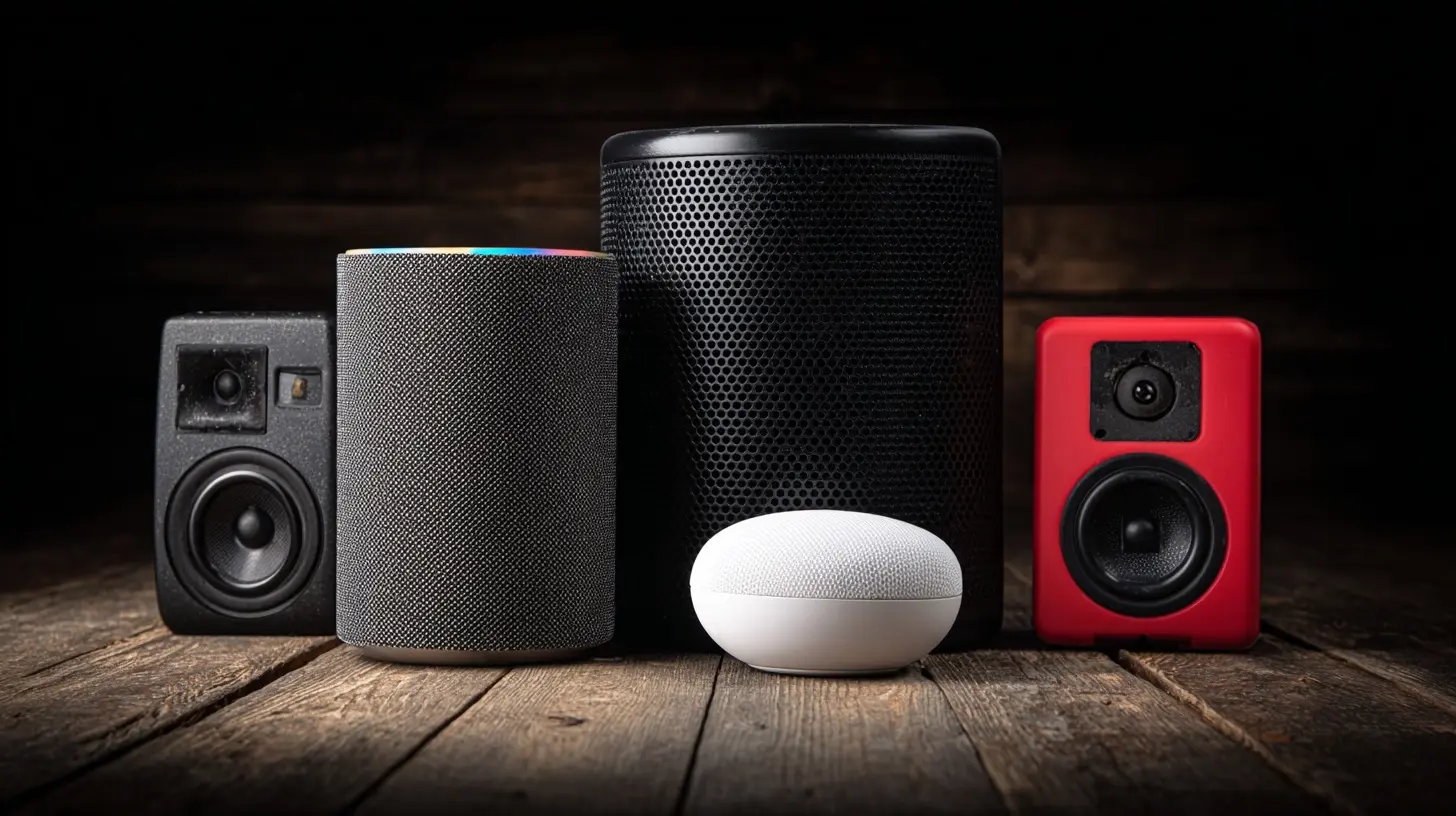
Why Budget Tiers Still Matter in 2027
Bluetooth audio has matured. The codec wars have mostly settled, battery tech has improved, and even entry-level speakers now support reliable wireless pairing. So why does price still matter so much?Because physics does not care about marketing. A speaker's sound quality depends on driver size, cabinet volume, amplifier headroom, and passive radiator design. Those things cost money. When you pay more, you are usually buying one of four things:
- Larger or better-tuned drivers
- More amplifier power for cleaner loud playback
- A bigger battery for longer sessions
- Durability, waterproofing, and better materials
Everything else, including app support, voice assistants, and RGB lighting, is secondary. Some of it is genuinely useful. Much of it is there to justify a higher price.
Understanding this hierarchy helps you avoid paying for features you will never use while making sure you do not compromise on the ones you will.
What Actually Determines Sound Quality
Before sorting speakers by price, it helps to know what you are listening for.Driver size and tuning
A 2-inch driver cannot move as much air as a 4-inch driver. That is not a flaw, it is physics. Small drivers can still sound excellent in the midrange and treble, but they struggle to produce deep bass without distortion. This is why most portable speakers use passive radiators, which are unpowered cones that vibrate sympathetically to reinforce low frequencies. A well-designed passive radiator can make a small speaker sound surprisingly full.Amplifier headroom
Two speakers with identical drivers can sound very different if one has more amplifier power. Headroom means the amp can deliver clean peaks without clipping. A speaker with low headroom sounds fine at moderate volume but turns harsh and compressed when you push it. If you plan to use your speaker outdoors or at parties, headroom matters more than raw wattage numbers.Sealed versus ported designs
Sealed cabinets produce tighter, more accurate bass. Ported cabinets (with a tuned hole or slot) produce more bass but can sound boomy if poorly designed. Neither is inherently better. Sealed designs suit acoustic music and small rooms. Ported designs suit electronic music and open spaces. Knowing which you prefer prevents buyer's remorse.Codec support
AAC, aptX, LDAC, and LC3-based LE Audio all affect how audio travels from your phone to the speaker. In practice, the difference between a good AAC implementation and a mediocre LDAC implementation is smaller than most reviews suggest. What matters more is whether the speaker handles signal dropouts gracefully and whether it supports multipoint pairing, which lets two devices stay connected at once. That feature alone improves daily usability more than any codec upgrade.
Under $50: What You Can Realistically Expect
At this price, you are buying convenience, not fidelity. That is not an insult. A $40 speaker that lives in your shower or clips to a backpack can be genuinely great if you accept its limits.What works at this tier
- Small, rugged designs with IPX5 or better water resistance- 8 to 12 hours of real-world battery life at moderate volume
- Bluetooth 5.3 or newer for stable connections
- Decent midrange and treble for podcasts, audiobooks, and casual music
What does not work
- Deep bass. Anything claiming "deep bass" under $50 is using digital processing to fake it, and the result usually sounds muddy.- High volume without distortion. These speakers hit a ceiling fast.
- Premium materials. Expect plastic, and expect it to feel like plastic.
Common mistakes at this tier
The biggest mistake is buying based on wattage claims. A speaker advertised as "40W" at this price is often quoting peak power, not RMS. Peak power is a marketing number that tells you almost nothing. Look for RMS or continuous power if it is listed at all, and treat its absence as a signal.Another mistake is ignoring the charging port. Micro-USB still appears on some budget models. If you are buying in 2027, insist on USB-C. It is one less cable to carry.
Who should buy here
Buy at this tier if you need a second speaker for a specific task: shower, workshop, kid's room, camping. Do not buy here expecting it to be your main home speaker.
$50 to $150: The Practical Sweet Spot
This is where most people should shop. The jump in quality from $40 to $100 is larger than the jump from $100 to $200. You start getting real bass, better build quality, and batteries that last through a full day.What your money buys
At this tier, manufacturers can afford larger drivers, better passive radiators, and amps with genuine headroom. You will also start seeing features that matter in daily use:- IP67 waterproofing, which means dust protection and survival after accidental submersion
- 20 or more hours of battery life
- Multipoint Bluetooth for switching between laptop and phone
- USB-C power delivery, sometimes with reverse charging so the speaker can top up your phone
The stereo pairing question
Many speakers in this range support pairing two identical units for true stereo. This sounds appealing, but consider the trade-offs. Stereo pairing usually requires both speakers to be the same model, which locks you into that brand. It also doubles your cost and your charging burden. For a single room, one good speaker often beats two mediocre ones. For a party or a large space, pairing can genuinely help.Where manufacturers cut corners
At this price, watch for these compromises:- Bass that is boosted rather than extended. It sounds impressive for ten seconds and tiring after ten minutes.
- Buttons instead of dials. Physical volume dials are faster and more precise than tap-and-hold buttons.
- Apps that add little. If the app does not offer EQ, firmware updates, or stereo pairing, you can ignore it.
Real-world guidance
If you listen to a wide range of music and want one speaker for home, travel, and occasional outdoor use, this tier is where the value concentrates. Spending $120 here usually beats spending $60 twice.$150 to $300: Serious Sound for Enthusiasts
Above $150, you enter territory where sound quality becomes the primary selling point rather than an afterthought. Drivers get larger, cabinets get more rigid, and tuning gets more deliberate.What changes at this level
The most noticeable improvement is clarity at higher volumes. Cheap speakers compress dynamics when pushed. Better speakers maintain separation between instruments and keep vocals forward even when the bass is working hard.You also start seeing:
- Two-way designs with separate tweeters and woofers
- More sophisticated DSP for room compensation
- Better Bluetooth codecs, though the practical benefit varies
- Longer warranty periods, often two years or more
The portability trade-off
Here is a tension worth understanding. Speakers that sound best indoors are often heavy and not fully waterproof. Speakers designed for outdoor abuse often sacrifice refinement for durability. You rarely get both at the highest level.If your speaker will mostly sit on a shelf, prioritize sound. If it will travel to beaches and campsites, prioritize ruggedness and accept a small loss in fidelity. Trying to optimize for both usually means settling for a compromise that excels at neither.
When to skip this tier
If you already own a decent $100 speaker and you are happy with it, jumping to $250 may not transform your experience unless you specifically need more volume or a more refined sound signature. Diminishing returns are real, and they start earlier than most reviews admit.
$300 and Up: Premium and Specialty Speakers
At the top end, you are paying for engineering, materials, and occasionally brand prestige. Some of that money is well spent. Some of it is not.What justifies the price
- Genuine acoustic engineering, such as custom drivers and carefully braced cabinets- Room calibration that adjusts sound based on where the speaker sits
- Wi-Fi streaming alongside Bluetooth, which enables higher-quality audio and multi-room setups
- Premium materials like aluminum, woven fabric, and replaceable batteries
What does not justify the price
- Designer collaborations that add a logo and nothing else- Features you will use once, such as party lighting modes
- Extreme volume claims that only matter in commercial settings
Wi-Fi versus Bluetooth at this tier
Once you cross $300, many speakers add Wi-Fi. This matters because Wi-Fi supports lossless streaming and does not compress audio the way Bluetooth does. It also allows multi-room synchronization. The trade-off is complexity. Wi-Fi speakers need network setup, and they can be fussy when your router changes.If you primarily stream from a phone and value simplicity, Bluetooth remains the better choice. If you want the best possible sound at home and own a streaming service that supports lossless audio, Wi-Fi earns its place.
Matching the Speaker to the Space
A common and expensive mistake is buying a speaker that does not suit the room. A small speaker in a large room will sound thin no matter how good it is. A large speaker in a small room can overwhelm with bass.Small rooms and apartments
Small rooms reinforce bass naturally because of close walls. A compact speaker with modest bass often sounds fuller here than a bass-heavy speaker would. Prioritize clarity and midrange.Open-plan and outdoor spaces
Large or open spaces swallow bass and require more output. Here, a bigger speaker with real amplifier headroom makes an obvious difference. This is one of the few situations where paying more delivers a clearly audible return.The placement rule most people ignore
No speaker sounds its best on the floor in a corner. Elevating a speaker to ear height and pulling it slightly away from walls reduces boominess and improves stereo imaging. This costs nothing and often improves sound more than upgrading to a more expensive model.
Battery, Waterproofing, and Durability: What the Ratings Mean
IP ratings confuse people, so here is the plain version.- IPX4 handles splashes. Good for kitchens and light rain.
- IPX5 handles water jets. Fine for poolside use.
- IPX7 survives submersion in about a meter of water for 30 minutes. This is the rating to look for if the speaker will go near water regularly.
- IP67 adds dust protection, which matters for beaches and workshops.
Battery claims deserve skepticism. Manufacturers often quote runtime at 50 percent volume with features disabled. Real-world use at higher volumes can cut that figure in half. If battery life is critical, look for a speaker that charges over USB-C and supports pass-through charging, so you can use it while plugged in.
Features Worth Paying For and Features to Ignore
Worth paying for
- Multipoint pairing- USB-C charging with power delivery
- Replaceable battery, if available
- IP67 rating
- A physical volume control
Usually not worth paying for
- Voice assistants, which phones already handle better- RGB lighting
- Built-in microphones for calls, unless you actually take calls on a speaker
- Proprietary charging docks
The pattern here is simple. Features that solve a recurring problem earn their cost. Features that impress in a store demo rarely do.
Common Misconceptions That Cost You Money
"More watts means louder and better." Wattage describes power consumption, not sound quality. A well-designed 20W speaker can outperform a poorly designed 50W one."Bigger is always better." A large speaker in a small room can sound worse than a compact one. Match the speaker to the space.
"Newer Bluetooth versions transform sound." Bluetooth versions affect connection stability and range more than audio quality. Codecs matter more, and even then, the difference is subtle.
"Premium brands never cut corners." They do, especially on battery replacement and repairability. Check whether the battery is user-replaceable before committing to a long-term purchase.
How to Test a Speaker Before You Commit
If you can visit a store, bring your own music. Use a track you know intimately, ideally one with acoustic instruments and clear vocals. Listen for these things:1. Can you hear individual instruments, or does everything blur together?
2. Does the bass sound tight or does it bleed into the midrange?
3. At high volume, does the sound stay clean or turn harsh?
4. Does the speaker sound the same at low volume, or does it lose detail?
If you cannot test in person, buy from a retailer with a generous return window. Reviews help, but ears decide.
Final Thoughts on Choosing Well
The best Bluetooth speaker for you is not the one with the highest price or the most features. It is the one that fits how you actually listen. A $70 speaker that lives in your bag and survives every trip may bring more value than a $400 model that stays on a shelf.Start by defining three things: where you will use it most, how loud you need it to go, and whether it needs to survive water or rough handling. Those answers narrow the field faster than any spec comparison. From there, spend as much as it takes to get clean sound at your needed volume, and not a dollar more.
Technology will keep changing, but the fundamentals will not. Drivers, amplifiers, and cabinets still determine what you hear. Everything else is decoration.
all images in this post were generated using AI tools
Category:
Bluetooth DevicesAuthor:

Ugo Coleman