Why Smartwear is the Next Big Thing for Digital Nomads
27 August 2026
The digital nomad lifestyle has always been about compromise. You trade the stability of a fixed office for the freedom of the open road, but you also trade away the infrastructure that makes a traditional workday run smoothly. Reliable power, consistent internet, a quiet room, a comfortable chair - none of these are guaranteed when your office is a hostel bunk in Bangkok or a co-working space in Lisbon. For years, the solution has been to carry more gear. Laptops, portable chargers, battery packs, external drives, noise-canceling headphones - your backpack becomes a mobile data center, and your back pays the price.
Smartwear, or smart clothing and wearable technology integrated into garments and accessories, is changing that equation. It is not about replacing your laptop or your phone. It is about offloading the small, constant tasks that drain your attention and your battery throughout the day. It is about turning your body into a more efficient node in your personal network. And for someone who lives out of a bag, that efficiency is not a luxury. It is the difference between a productive month and a frustrating one.
This article is not a list of gadgets to buy. It is a practical analysis of why smartwear matters specifically for the nomadic workflow, where it genuinely helps, where it fails, and how to think about integrating it into your life without wasting money or adding bulk.

The Real Problem Smartwear Solves: Attention and Energy
Most people think the biggest challenge for a digital nomad is finding Wi-Fi. That is a solvable problem. You can buy a local SIM, rent a portable hotspot, or camp out at a café with a strong signal. The harder problem is managing your physical and cognitive energy when your environment is in constant flux.Every time you move cities, you spend mental energy on logistics. Where do I sleep? Where do I work? How do I get food? How do I do laundry? That overhead does not disappear when you sit down to work. It lingers in the back of your mind. Your body is also adjusting to new time zones, new food, new climate, and new sleep surfaces. Your attention is fragmented, and your energy levels are unpredictable.
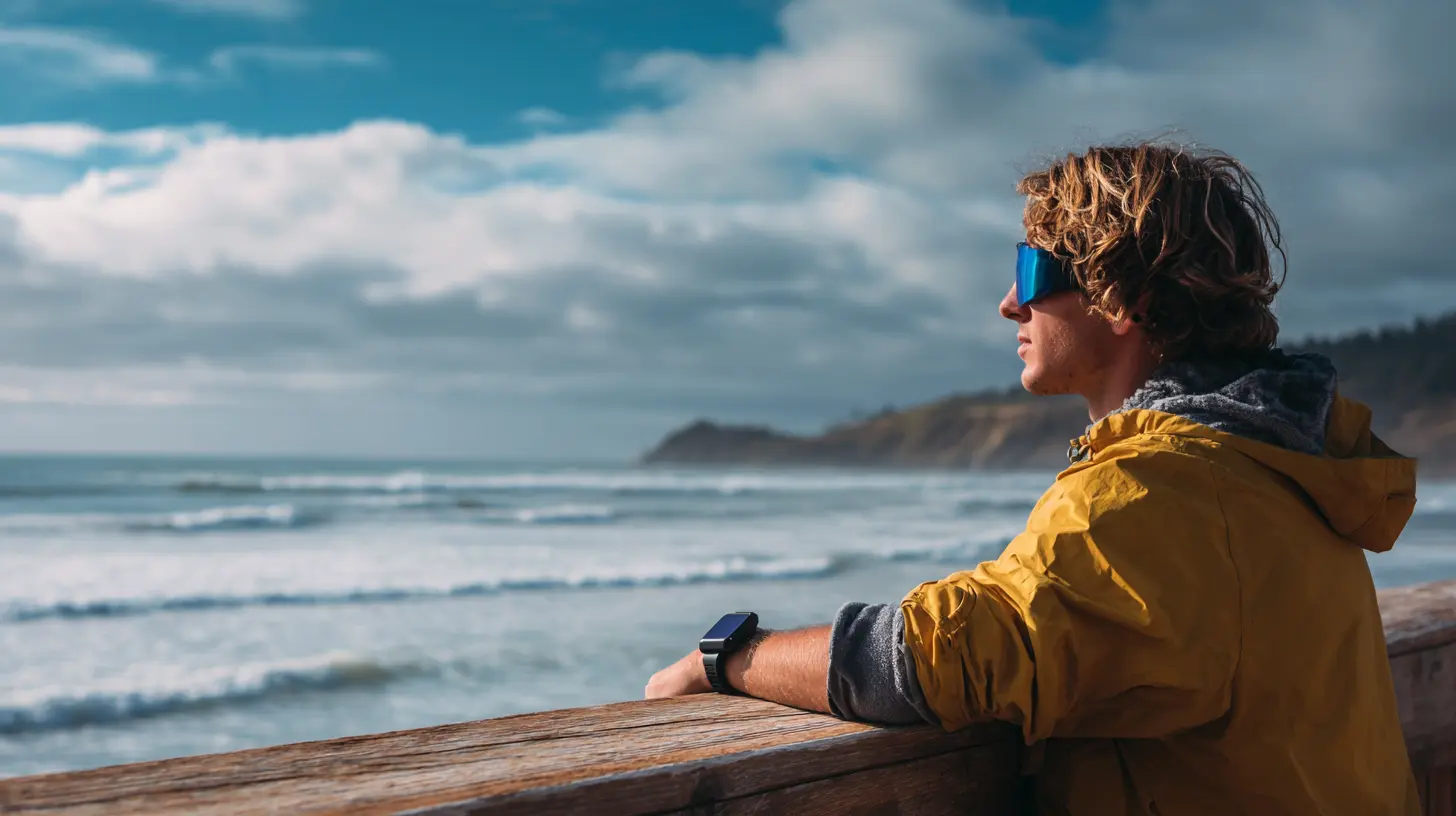
Smartwear addresses this on two fronts. First, it reduces the number of devices you need to manage. A smart jacket with integrated heating, a smartwatch that handles payments and notifications, and smart socks that track your steps and foot fatigue can replace separate gadgets and chargers. Second, it provides passive data collection that helps you understand your own rhythms better. When did you actually sleep well? How many steps did you take today? Is your heart rate elevated because of stress or because of that extra espresso?
The value here is not the data itself. It is the reduction of decision fatigue. You stop guessing and start knowing. That is a huge win when your entire life is a series of small decisions made in unfamiliar contexts.
Beyond the Smartwatch: What Actually Exists and Works
The smartwatch is the gateway drug for smartwear, and it is genuinely useful. But it is also the most obvious and the most limited. The next tier of smartwear is where the real opportunity lies for nomads.Smart Clothing for Climate Control
Consider the climate problem. You land in Chiang Mai in April. It is 38 degrees Celsius with 90 percent humidity. You are sweating through your shirt before you reach the taxi stand. Two weeks later, you are in Medellín, where it is 22 degrees and rainy. Your wardrobe needs to handle both, but you only have room for a few items.Heated jackets and vests are the most mature smart clothing category. They use carbon fiber or metal fiber elements woven into the fabric, powered by a small battery pack. You can adjust the temperature with a phone app or a button on the cuff. For a nomad, this replaces a heavy winter coat with a lightweight shell that can be worn in varying conditions. You wear it unheated in mild weather, and you crank it up when the temperature drops. This does not just save space in your bag. It saves your back from carrying a parka that you only use for three weeks a year.
There are also cooling vests, though they are less common and less effective. Most use phase-change materials or evaporative cooling, and they require access to water or ice. They work for outdoor activities, but they are not yet practical for a day of sitting in a café. Do not buy a cooling vest expecting a miracle. The technology is still in its early stages.
Smart Footwear for Daily Grind
The daily step count for a nomad is higher than you think. You are not driving to work. You are walking to the metro, walking to the co-working space, walking to find lunch, walking to see the city after work. Your feet take a beating, and foot fatigue affects your posture, your energy, and your focus.Smart shoes and insoles measure steps, distance, and pressure distribution. Some models have built-in haptic feedback that nudges you when your stride is off or when you have been standing too long. The practical benefit is not just tracking. It is learning how to pace yourself. If you know that you typically hit a wall of exhaustion after 12,000 steps, you can plan your day around that. You can schedule your deep work in the morning and your walking tours for the afternoon.
The trade-off is that smart shoes are expensive, and the electronics are not easily replaceable. The battery life is measured in months for the tracking functions, but the haptic motors and connectivity will drain faster. You also cannot machine-wash them the way you would a normal pair. If you are the type of person who wears shoes until they disintegrate, this might not be for you. But if you are willing to treat footwear as a piece of tech that needs care, the insights are worth it.
Smart Bags and Luggage
The backpack is the nomad's office, bedroom, and storage unit. Smart backpacks integrate USB charging ports, anti-theft alarms, GPS tracking, and even built-in scales that tell you how much your bag weighs. The GPS tracking is the killer feature. If your bag gets lost on a flight or stolen from a hostel, you can locate it on your phone. That is not a convenience. It is insurance for your entire livelihood.The USB charging ports are more of a mixed bag. Some are powered by a separate battery pack that you insert, which adds weight. Others are connected to a solar panel on the outside, which sounds great until you realize that solar panels need direct sunlight for hours to generate a meaningful charge. A solar backpack is not going to keep your laptop alive. It might keep your phone from dying, but only if you are walking in the sun all day. Treat solar charging as a trickle feature, not a primary power source.
Anti-theft features are useful, but they add weight and complexity. Lockable zippers and hidden compartments are lighter and more reliable than electronic alarms. Do not pay extra for a bag that beeps when someone opens it. The beeping will annoy you more than the thief.

The Connectivity Layer: Wearables as Hotspots and Hubs
One of the most underrated smartwear categories for nomads is the wearable hotspot. There are smartwatches with eSIM capabilities that can share their cellular connection with your laptop or tablet. This is a game-changer in countries where buying a separate hotspot device is expensive or where local SIM registration is a bureaucratic nightmare.Imagine landing in a new country. Instead of hunting for a SIM card vendor, you just activate a local eSIM on your watch, and your laptop connects to it via Wi-Fi or Bluetooth. You are online within minutes of landing, and you do not need to carry a separate hotspot. The watch stays on your wrist, and it is always with you.
The downside is battery life. Running a personal hotspot from your watch will drain it quickly. You will get maybe four to six hours of tethering before you need to recharge. That is fine for a few hours of work in a café, but it will not get you through a full workday. You need to be strategic about when you use this feature. Turn it on for checking email and messaging, then switch back to a local Wi-Fi network for heavy lifting.
Some smart glasses also have built-in audio and microphones, which makes them useful for taking calls without holding a phone. The audio quality is surprisingly good in quiet environments, but it falls apart in noisy streets or crowded co-working spaces. They are not a replacement for a good headset. They are a convenience for short calls when you need your hands free.

Health and Recovery: The Nomad's Hidden Edge
The most overlooked aspect of smartwear is its role in recovery and health management. Nomads are prone to burnout because they do not have the usual cues that signal it. You do not have a commute that separates work from home. You do not have a boss watching you. You just have a laptop and an endless to-do list. You can work for 14 hours straight and not realize it until your eyes start twitching.Wearable health trackers, from rings to bands to smartwatches, provide that missing feedback loop. They measure heart rate variability (HRV), sleep stages, and resting heart rate. A declining HRV over several days is a reliable indicator of accumulated stress, whether physical or mental. If you see that trend, you know to back off. You know to take a rest day or to skip the late-night work session.
This is not about optimizing every metric. It is about catching the downward spiral before it becomes a crash. For a nomad, a crash is worse than for someone in a stable environment. You do not have a support network. You do not have a doctor you know. You are alone in a foreign city, and you need to be your own health manager.
The best practice is to track for a baseline for two weeks when you are feeling normal. Then watch for deviations. If your resting heart rate is 10 beats per minute above your baseline and your HRV is dropping, that is a signal to slow down. Do not obsess over daily fluctuations. Look at the weekly trend.
Practical Recommendations: What to Buy and What to Skip
Let me be direct. You do not need a full smart wardrobe. You need a few high-impact items that solve specific problems.First, get a smartwatch or a smart ring that has solid battery life and basic health tracking. The ring is better for sleep tracking because it is less intrusive, but the watch is more versatile because it can handle payments and notifications. Choose based on your priorities. If you are a minimalist, the ring wins. If you want a single device that does everything, the watch wins.
Second, invest in a heated vest or jacket if you travel to cold climates. This is the single most space-saving purchase you can make. It replaces a bulky winter coat and gives you more control over your comfort. Look for one with a washable battery compartment and a good app interface. The app matters because you will want to adjust the heat without fumbling with buttons.
Third, consider a smart backpack with GPS tracking. This is non-negotiable for anyone who checks their bag on flights. The peace of mind is worth the extra cost. Make sure the GPS works without a subscription, or at least that the subscription is reasonable. Some bags require a monthly fee, which is a rip-off.
Skip the smart socks unless you are a runner or a hiker. Skip the smart shirts with heart rate monitors unless you do intense workouts. These items are niche and often overpriced for the data they provide. A basic chest strap or a smartwatch gives you the same information with less hassle.
Skip the solar panels. They are heavy, slow, and unreliable. Carry a power bank instead. A good 20,000 mAh power bank weighs less than a solar panel and charges your devices ten times faster.
Common Mistakes and Misconceptions
The biggest mistake nomads make is treating smartwear as a substitute for basic gear. A smart jacket will not keep you warm if the battery dies in freezing weather. You still need a proper base layer. A smart bag with GPS will not protect your laptop from a thief who grabs it and runs. You still need to use the lock and keep your bag close.Another mistake is buying devices that require proprietary apps and cloud accounts. You are a nomad. You move across borders. You might not have reliable internet for days. If your smart jacket only works with a specific app that requires an account and a login, and the app crashes or the company shuts down, you have a dumb jacket. Look for devices that have local controls as a fallback. A button on the cuff is more reliable than an app on your phone.
There is also a misconception that smartwear is fragile. It is not, but it does require different care. You cannot throw a smart jacket in the washing machine with bleach. You cannot fold a smart backpack in a way that pinches the wires. You need to read the care instructions and follow them. This is a discipline issue, not a design issue.
Finally, do not fall for the idea that more data is always better. Tracking your steps, heart rate, sleep, stress, and location is only useful if you act on it. If you are not going to check the data and adjust your behavior, you are just carrying sensors for no reason. That is wasted weight and wasted money.
The Future: Where Smartwear Is Heading
The next few years will bring more integration. Smart fabrics with embedded sensors will become washable and more durable. Battery technology will improve, allowing for longer use between charges. Wireless charging will become more common, so you can drop your jacket on a pad overnight instead of plugging in a cable.The bigger shift will be in software. Right now, each device has its own app and its own data silo. The future is a unified health and productivity dashboard that combines data from your watch, your clothing, your bag, and your phone. That will give you a complete picture of your day. You will see how your sleep affects your focus, how your activity affects your energy, and how your environment affects your stress. That kind of holistic view is exactly what a digital nomad needs to make smart decisions about where to go and when to rest.
There are also experiments in smart fabrics that can regulate temperature passively, without batteries. Phase-change materials that absorb heat when you are warm and release it when you are cold are already used in some outdoor gear. As these materials become cheaper and more flexible, they will replace battery-powered heating for many use cases. That will make smart clothing lighter and more practical.
Making the Decision: Is It Worth It for You?
Before you spend money on smartwear, ask yourself a few questions. How often do you move between climates? If you stay in one region with stable weather, a heated jacket is useless. How much do you value data about your body? If you are the type of person who ignores your sleep and pushes through fatigue, the tracking will not change your behavior. How much weight and bulk are you willing to add? Every smart item has a cost in terms of charging cables, apps, and maintenance.For the right person, smartwear is transformative. It reduces the number of things you carry, it gives you insights that help you manage your energy, and it provides a safety net for your gear. For the wrong person, it is just another set of gadgets that need charging and troubleshooting.
My honest recommendation is to start small. Get a smartwatch or a ring. Use it for a month. See if the data changes how you plan your days. If it does, then consider a heated jacket for your next cold-weather trip. If you find yourself constantly worried about your bag, then get a smart backpack. Build your smartwear kit based on real needs, not on hype.
The nomad life is about freedom. The right smartwear gives you more of it by automating the small stuff and giving you the information you need to stay healthy and productive. The wrong smartwear just adds another layer of complexity. Choose wisely, and the technology will fade into the background, letting you focus on the work and the world around you.
all images in this post were generated using AI tools
Category:
Digital Nomad TechAuthor:

Ugo Coleman
Discussion
rate this article
1 comments
Kova Frye
Smartwear is a game changer for digital nomads-comfort and tech on the go. Embrace the future!
September 1, 2026 at 1:03 PM
Ugo Coleman
Absolutely! Smartwear is revolutionizing how we travel and work, making comfort and connectivity essential for the modern nomad. Exciting times ahead!