Lunar Rovers: Pioneers of the Next Human Moon Missions
31 December 2025
When you think about moon missions, what's the first image that pops into your mind? Probably a suited-up astronaut kicking moon dust, right? But have you ever stopped to consider who—or rather, what—is doing a lot of the heavy lifting behind the scenes (or behind the helmets)? Yup, it's the lunar rover. These high-tech moon buggies are more than just cool rides; they’re the unsung heroes paving the way for human exploration.
In this article, we’re diving headfirst into the world of lunar rovers: what they are, why they matter, how they’ve evolved, and what their future looks like in the new era of moon missions. Buckle up—it’s going to be a wild ride.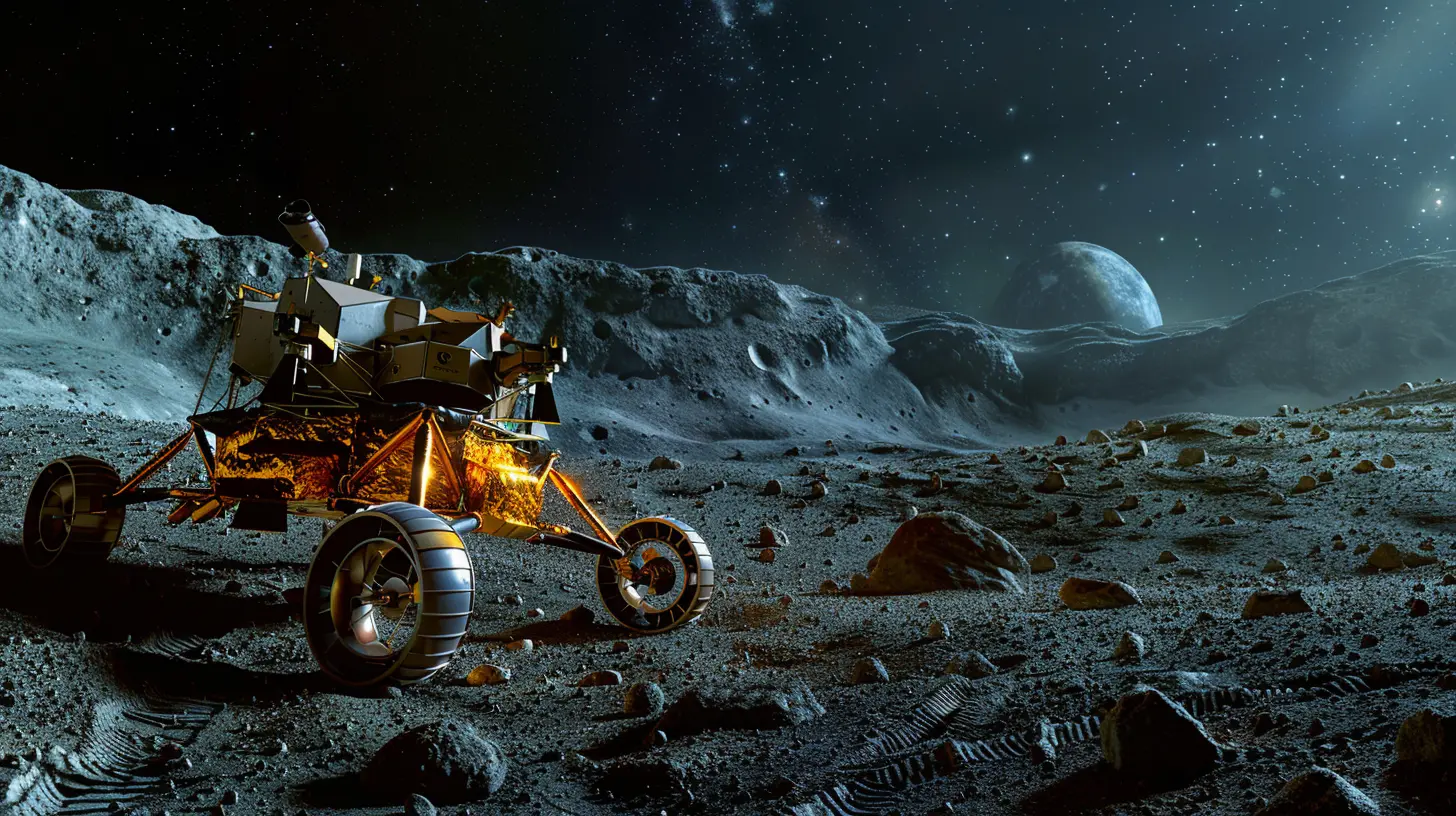
🚀 What Exactly Is a Lunar Rover?
Alright, let’s keep it simple: a lunar rover is a vehicle designed to move around on the moon’s surface. Think of it as a space-age off-road vehicle, except instead of rocky mountain trails, it cruises over craters, lunar dust, and extreme terrain.There are two main types:
- Unmanned Rovers: These are robotic and operate without humans inside. They’re either remote-controlled or semi-autonomous.
- Manned Rovers: These are designed for astronauts to hop in and drive around.
Just like your car helps you get from point A to B, lunar rovers help astronauts cover more ground than they could on foot. And on a place as vast and unforgiving as the moon? That’s a big deal.
🌑 A Brief History of Lunar Rovers
Let’s rewind the space-time tape to the 1970s.NASA’s Apollo missions were the first to bring lunar rovers into our collective consciousness. In Apollo 15, 16, and 17, astronauts used the legendary Lunar Roving Vehicle (LRV), a kind of electric buggy, to explore more of the lunar surface than ever before.
These missions proved something crucial: if we want to understand the moon in detail, we need mobility. Rovers expanded the range of exploration and increased the scientific return tenfold. Imagine being able to explore your entire neighborhood instead of just your front yard—game-changer, right?
Fast forward to today, and the rovers are smarter, more rugged, and packed with tech that'll make your smartphone look like a flip phone from 2003.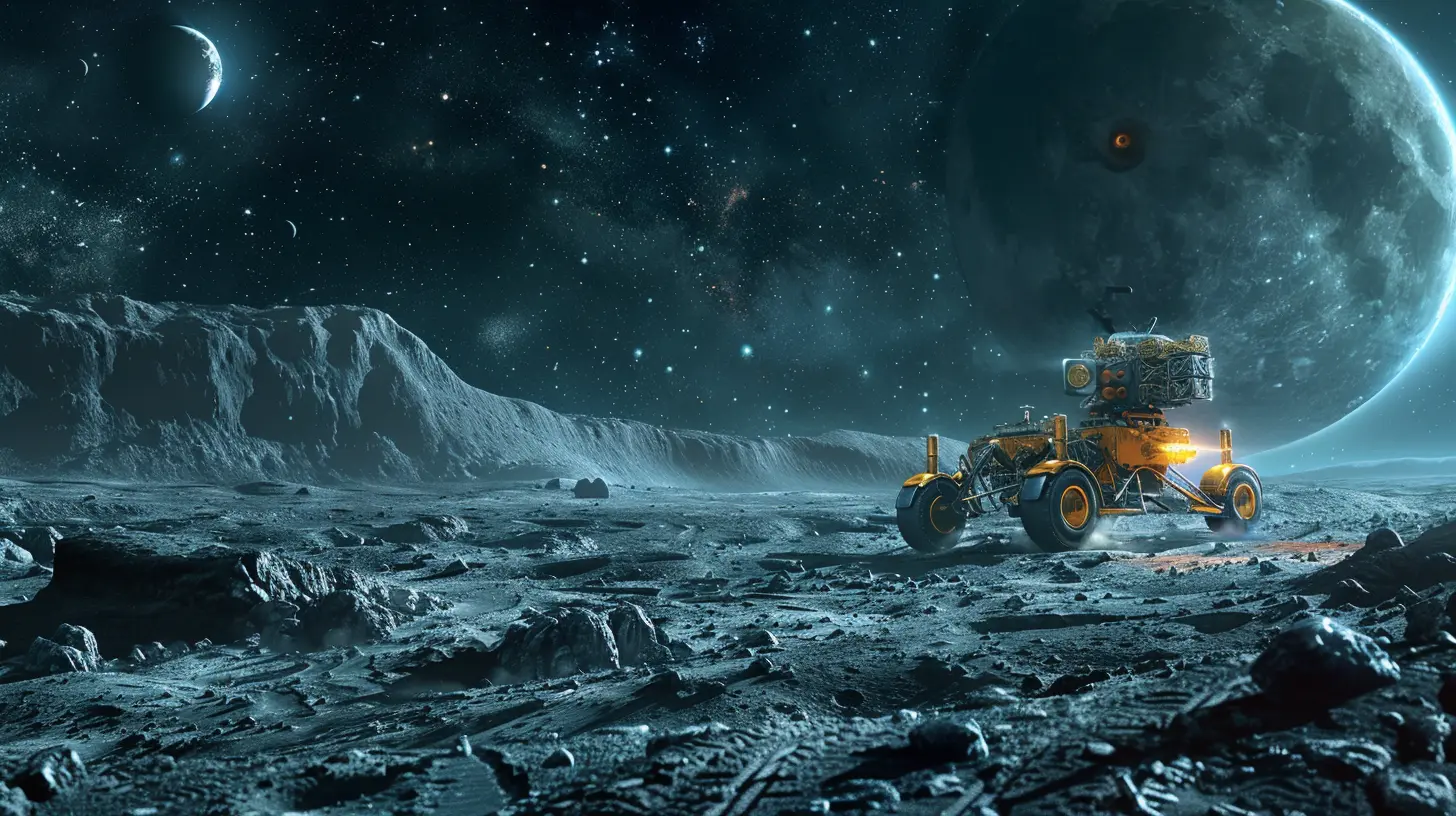
🛠️ How Lunar Rovers Work
Let’s get a bit nerdy—but not too much. The terrain on the moon is harsh. We're talking extreme temperatures, jagged rocks, and a fine, clingy dust that gets everywhere.So, what makes a lunar rover moon-worthy? Here's the scoop:
1. Power Systems
Most rovers use solar panels to harness sunlight—because there’s plenty of that on the moon. But some missions also use radioisotope thermoelectric generators (RTGs), which convert heat from radioactive decay into electricity. Sounds like science fiction, but it's 100% real.2. Mobility and Suspension
Wheels aren’t just tires here—they’re engineering marvels. They’re designed to grip dusty surfaces without sinking or skidding. Some even have a flexible mesh instead of rubber tires to deal with the moon's unique terrain.3. Navigation and Control
Rovers either follow pre-programmed routes or get commands from Earth. The newer ones can even make decisions in real-time using AI. Yep, your next Tesla might owe a big thank you to lunar exploration.4. Scientific Instruments
These babies are like toolboxes on wheels. Cameras, drills, spectrometers, and sensors are loaded on board to collect data, study rocks, and look for water or ice—without human intervention.
🌍 Why Lunar Rovers Are a Big Deal for the Future of Moon Missions
We’re not just sending astronauts to the moon to bounce around and take selfies anymore. The next wave of missions (like NASA’s Artemis or China's Lunar South Pole plans) is all about sustainable exploration and, dare I say it, colonization.And guess what? Lunar rovers are at the center of it all.
Imagine This:
You’ve landed on the moon. You need to build a base, scout out resources, and maybe even grow food one day. Are you going to do all that on foot in a 300-pound spacesuit?Nope. You’re gonna need a rover.
Key Roles of Future Rovers:
- Scouting Landing Sites: Before humans even get there, rovers can scope out the safest, most resource-rich spots.- Transporting Cargo: They’ll carry heavy supplies from the lander to the base. Think of them as moon Ubers for gear.
- Scientific Research: The more data we collect, the better decisions we can make. Rovers will handle tons of that dirty—and dusty—work.
- Building Infrastructure: Some future rovers will be equipped with robotic arms or 3D printing tools to help build lunar habitats.
🛰️ Upcoming Rovers You Should Know About
Let’s talk about the new kids on the block. Here are some exciting rover projects that are shaping the future of lunar exploration:1. NASA’s VIPER (Volatiles Investigating Polar Exploration Rover)
VIPER is set to launch soon and its mission? To map water ice near the moon’s South Pole. Why’s that important? Because water is the key to survival—and maybe even rocket fuel.2. JAXA & Toyota’s Lunar Cruiser
Yes, Toyota—the car company. Partnering with JAXA (Japan’s space agency), they’re building a pressurized rover that astronauts can live and work in for up to 30 days. It’s like an RV, but for the moon.3. ESA’s European Large Logistic Lander (EL3) Rover Missions
ESA’s focusing on multipurpose rovers that can deliver cargo and run experiments. They’re building the lunar equivalent of a Swiss Army knife.4. Astrobotic and Intuitive Machines (Commercial Rovers)
Private companies are stepping in too. These small, nimble rovers will mostly be robotic scouts and testers—kind of like interns for future missions.🧠 AI + Autonomy: Rovers Are Getting Smarter
Here’s where things really start to feel sci-fi. AI and machine learning are being baked into modern rover designs. Why? Because the moon is far—really far—and you can’t joystick your way to smooth driving from 239,000 miles away.Self-driving tech will let rovers:
- Avoid hazards in real-time
- Map surfaces autonomously
- Make decisions without waiting for Earth-based commands
Basically, they’re becoming the lunar versions of self-driving Teslas—but without the traffic jams.
👨🚀 Lunar Rovers and Human Survival: Not Just a Cool Gadget
Here’s the thing—rover tech isn’t just about science experiments. It’s about survival.Let’s Talk Essentials:
- Water: Rovers will find and potentially extract water, a non-negotiable for any long-term mission.- Shelter: Some rovers may help build protective dwellings using lunar regolith (that’s the moon’s soil).
- Commutes: Astronauts won’t need to walk miles to collect samples or check equipment.
- Emergency Evacuation: In case something goes wrong (and space is full of curveballs), rovers could be the lifeline back to safety.
In short? Rovers are the MVPs of lunar survival.
🌌 Beyond the Moon: A Testing Ground for Mars and Beyond
Think of the moon as our cosmic backyard. Before we go trekking off to Mars or even farther, we need to learn how to live and work on another celestial body.Lunar rovers are perfect for this. They offer a real-world sandbox to test:
- Remote operations
- Power management in harsh environments
- Communication systems without real-time feedback
- Life support integration for manned vehicles
If we can build a rover that thrives on the moon, Mars doesn't seem quite so far away, does it?
🧩 Challenges Ahead
It’s not all moonlight and roses. Rovers still face some hefty challenges:- Extreme Temperatures: Nights on the moon can hit -250°F. That's the kind of cold that kills batteries and freezes circuits.
- Lunar Dust: This stuff is like glitter on steroids—once it gets into joints and systems, it’s almost impossible to get out.
- Communication Delays: Even with today’s tech, there’s a time lag. Semi-autonomous features need to get even better.
- Energy Management: Solar power isn’t always reliable if you’re in the shadows or during the long lunar night.
But here’s the kicker: overcoming these challenges is exactly what drives innovation. And if history tells us anything, space engineers love a good problem.
🌠 The Final Word: Lunar Rovers Are the Real Trailblazers
Let’s be honest—astronauts get most of the spotlight. But without rovers, future moon missions would be like hiking Everest without a Sherpa. These machines are the quiet pioneers, the road builders of our lunar future.As the new space race heats up, and the goal shifts from short-term missions to sustainable moon living, lunar rovers are becoming the backbone of everything. They carry the tools, scout the land, and maybe one day, build the homes.
So next time you see a sleek moon rover sketch in the news, don’t just scroll past. That little vehicle might just be the thing driving us forward in space—for real.
all images in this post were generated using AI tools
Category:
Space TechnologyAuthor:

Ugo Coleman
Discussion
rate this article
2 comments
Liam McGowan
Great read! Lunar rovers are truly fascinating. It’s incredible to think how these robotic pioneers will pave the way for future human exploration. Excited to see how they’ll help us uncover more about the Moon and our potential for living beyond Earth!
January 27, 2026 at 5:52 AM
Ugo Coleman
Thank you! I share your excitement about the potential of lunar rovers to enhance our understanding of the Moon and support future human missions.
Melissa Fields
Exciting advancements for lunar exploration ahead!
January 16, 2026 at 3:41 AM
Ugo Coleman
Thank you! Exciting times indeed as we pave the way for future lunar exploration!