Navigating Time Zones with Smart Tools in 2027
22 May 2026
Have you ever tried to schedule a meeting with someone in Tokyo while you're sitting in New York, only to realize your brain has turned into a soggy mess of numbers? You're not alone. Time zones are the silent saboteurs of global collaboration. They've been messing with us since the railways forced the world to agree on Greenwich Mean Time back in the 19th century. But here we are in 2027, and you'd think we'd have this nailed by now. We don't. The problem is getting worse, not better.
Remote work isn't a trend anymore. It's the default. Teams are scattered across continents like puzzle pieces that never quite fit. Your morning coffee is someone else's midnight snack. Your deadline is their sunrise. And the old tricks-like mentally adding or subtracting hours-are for masochists. The good news? Smart tools have evolved. They're not just calendars anymore. They're digital co-pilots that think ahead, adapt to chaos, and even whisper the right time to call your client in Dubai without you asking.
Let's dive into the messy, wonderful, and sometimes terrifying world of time zone navigation in 2027. I'll show you how the tools we use today are rewriting the rules of global coordination. But first, let's admit something: time zones are a lie. They're a human invention, not a law of physics. And in 2027, we're finally starting to treat them that way.

The Old Nightmare: Why Time Zones Still Suck
Picture this: it's 2023, and you're staring at a spreadsheet with columns labeled "EST," "PST," "GMT+8," and "IST." You've got three sticky notes on your monitor, a world clock widget on your phone, and a vague hope that you'll get it right. Spoiler: you won't. Someone shows up an hour late because of daylight saving time. Someone else forgets to convert. The meeting is a disaster.Fast forward to 2027. The same problem exists, but it's been weaponized by complexity. We've got more time zones now-did you know some countries have shifted their offsets by half an hour or even 15 minutes? Venezuela did it. Nepal did it. And daylight saving time? It's a patchwork quilt of chaos. Some places abolished it. Others changed the start dates. A few states in the US are still arguing about it. You can't rely on memory anymore.
The real issue isn't math. It's context. Knowing that it's 3 PM in London doesn't tell you if your coworker is awake, or if they're in a meeting, or if it's a public holiday in their country. The old tools treated time zones like static coordinates. They ignored the messy human reality. That's why they failed.
Enter the Smart Tools of 2027
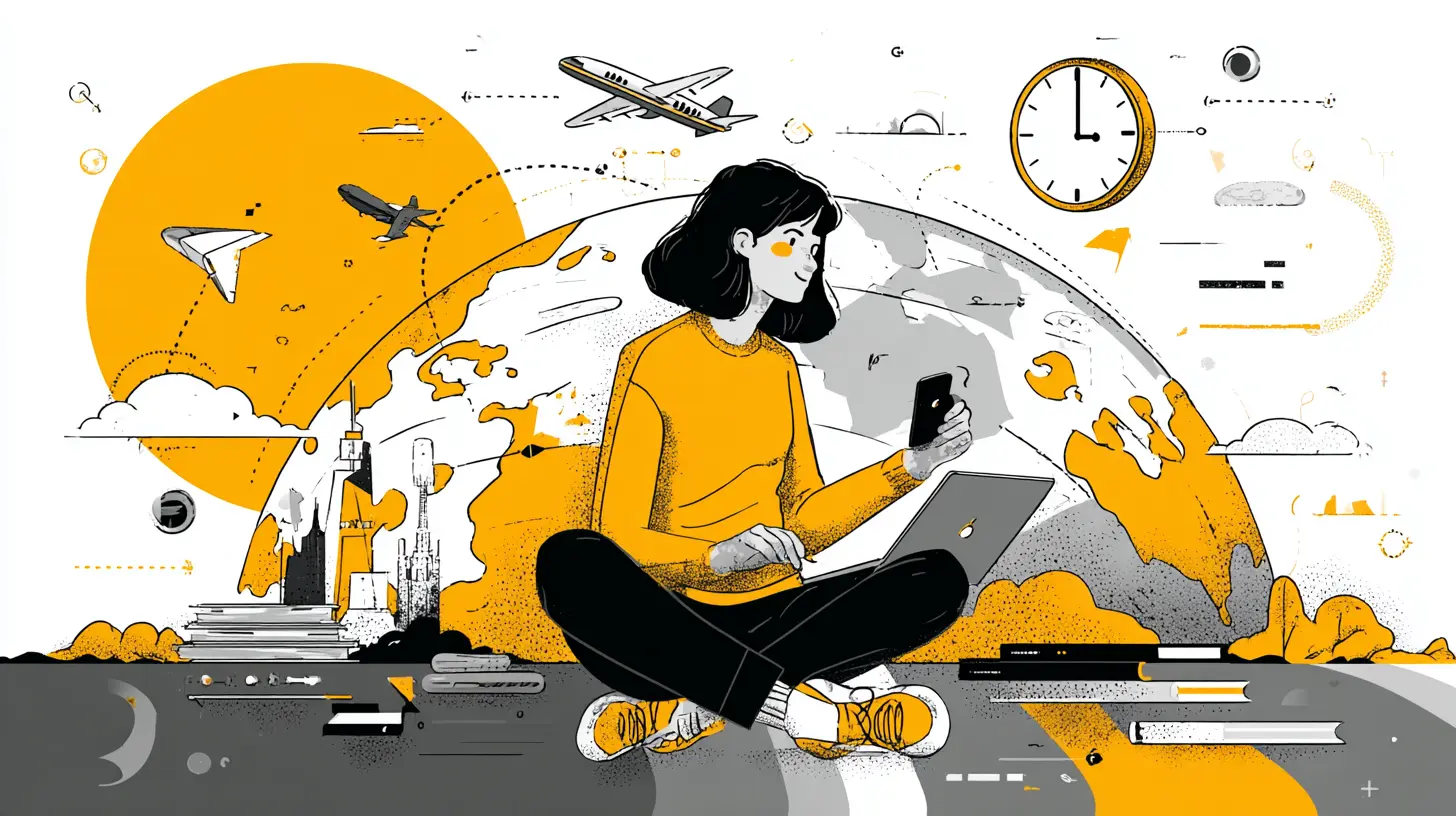
Here's where things get interesting. In 2027, we've moved beyond simple world clocks and calendar invites. The smart tools I'm talking about are AI-native. They don't just show you the time difference. They predict, optimize, and even negotiate for you.Think of them like a personal assistant who never sleeps. You tell the tool, "I need a 30-minute call with people in San Francisco, Berlin, and Mumbai this week." It scans everyone's calendars, checks their local time zones, and-here's the kicker-also checks their sleep patterns, their typical focus hours, and even their lunch breaks. It knows that your Berlin colleague is most productive between 10 AM and 2 PM local time. It knows that your Mumbai teammate prefers to avoid meetings after 6 PM because of family commitments. The tool doesn't just find a slot. It finds the best slot.
And it does this in seconds. No back-and-forth emails. No "does this work for you?" threads that go on for days. The tool sends a proposal, and everyone can approve it with a single tap. It feels like magic, but it's just good engineering.
The Rise of Predictive Scheduling
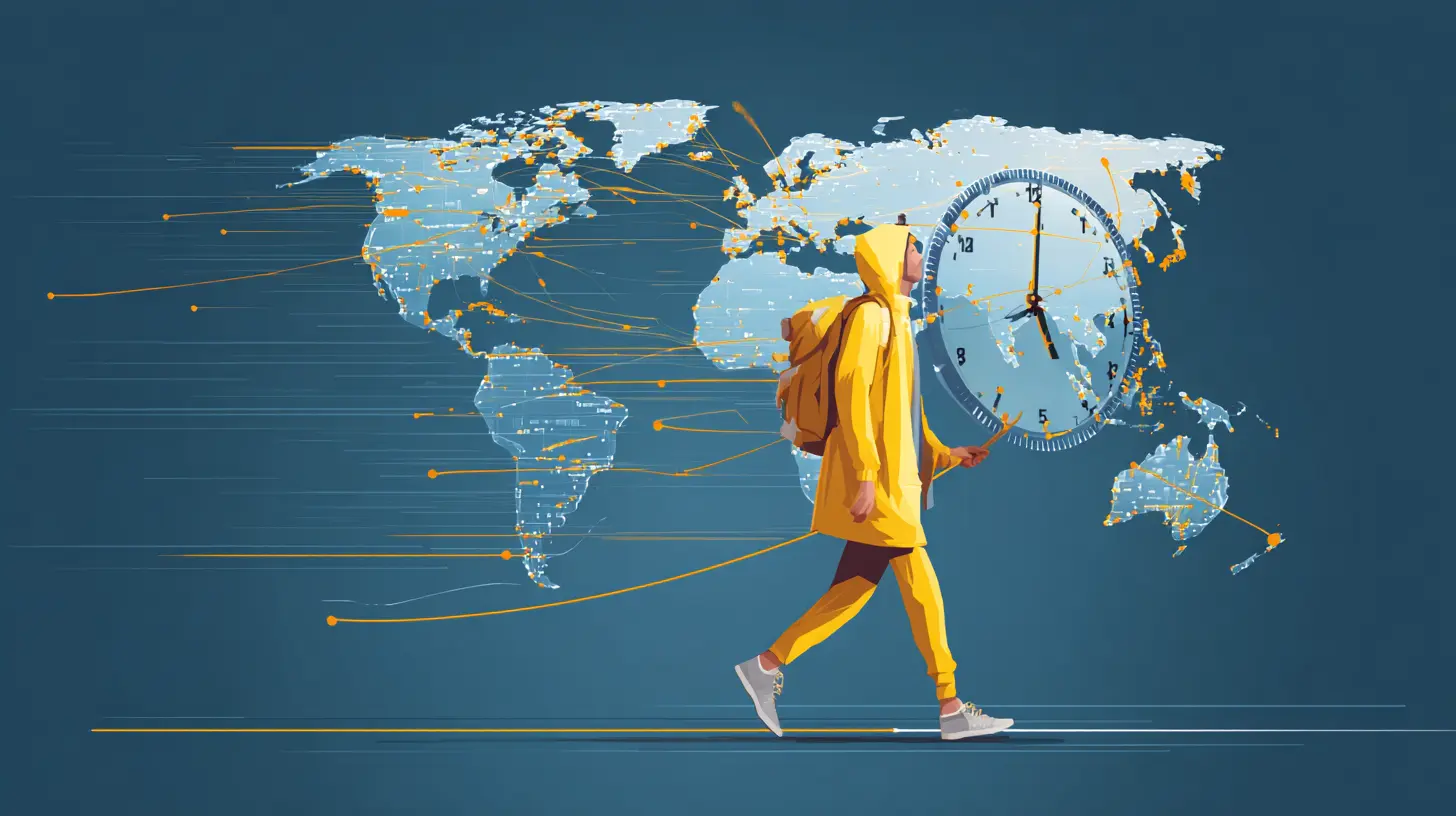
One of the coolest features in 2027 is predictive scheduling. This isn't about robots taking over your calendar. It's about the tool learning your habits and anticipating your needs.Let's say you're a project manager who regularly coordinates with a team in Australia. The tool notices that you always schedule your calls at 9 AM your time, which is 11 PM in Sydney. After a few weeks, it flags this. "Hey," it says, "your Australian team might be burning out. Would you like to shift the meeting to 8 AM your time? That would be 10 PM for them, which is still tough, but it's an improvement." It doesn't judge. It just offers data.
This kind of nudging is subtle but powerful. It helps you become a better global citizen without you having to think about it. The tool also learns when you're most likely to make mistakes. For example, if you're booking a flight that crosses multiple time zones, the tool will warn you about jet lag and suggest a buffer day. It's like having a time zone guru in your pocket.
The Death of the Static World Clock
Remember those ugly world clock widgets on your phone? They're gone in 2027. Replaced by something far more elegant: a dynamic timeline.Imagine a horizontal bar that represents your day. On that bar, you see colored blocks for each time zone you care about. You can drag and drop events directly onto the timeline. The tool instantly recalculates the time for everyone involved. It's visual, intuitive, and forgiving. If you accidentally drag a meeting into the middle of the night for someone, the block turns red and a warning pops up. "This might be disruptive. Are you sure?"
This isn't just about avoiding embarrassment. It's about building trust. When your team knows you respect their time, they'll respect yours. The dynamic timeline makes that respect automatic.
The Cultural Layer: Beyond the Clock
Here's something most people overlook: time zones aren't just about numbers. They're about culture. In 2027, smart tools are starting to incorporate cultural nuances.For example, in some countries, meetings start exactly on time. In others, the first 15 minutes are for small talk. In Japan, punctuality is almost sacred. In Brazil, it's more relaxed. A good tool in 2027 knows this. When you schedule a meeting with a Japanese partner, the tool might suggest starting five minutes early to account for their preparation time. When you schedule with a Brazilian team, it might recommend a longer slot to allow for casual conversation.
This cultural layer is still evolving. It's based on user feedback and local data. But it's already making a difference. I've seen teams that used to clash over timing suddenly start cooperating better. The tool acts as a translator for expectations.
The Privacy Question
Of course, with great power comes great creepiness. How much do we want our tools to know about our habits? In 2027, this is a hot debate.Some tools are hyper-transparent. They show you exactly what data they're using and why. Others are black boxes. They just give you the result. The best ones let you choose. You can set your preferences: "Allow my tool to see my sleep schedule" or "Only use my calendar data." You can also set limits on what gets shared with your team. For example, you might let the tool know you're unavailable after 8 PM, but you don't have to explain why.
Trust is the currency here. If a tool abuses your data, you'll ditch it fast. The market in 2027 is ruthless. Privacy-friendly tools win.
What About Daylight Saving Time?
Ah, the eternal headache. In 2027, daylight saving time (DST) is still a mess, but smart tools handle it like a pro.Here's how it works: the tool knows the exact DST rules for every location. When a country changes its clocks, the tool automatically adjusts all your scheduled events. No manual updates. No panic. And if you're traveling, the tool tracks your current time zone based on your phone's GPS. It even accounts for the fact that you might be in a different time zone than your home base.
For example, you're in Paris on business, but your home office is in New York. Your tool sees you're in CET (Central European Time) and adjusts your meeting invitations accordingly. When you fly back, it switches you back to EST. Seamless.
The Future: Time Zone as a Service
Looking ahead, I think we're moving toward a model where time zone management is a subscription service. It's already starting. Some companies offer premium features like "time zone analytics"-dashboards that show you how your team's time is distributed across the globe. You can spot bottlenecks, like a team member who's always in late-night meetings, and fix them before burnout sets in.There's also the concept of "time zone as a service" (TZaaS, for the acronym lovers). This means your tool integrates with everything: your email, your project management software, your CRM, your video conferencing app. It's a unified layer that ensures every time-related interaction is frictionless. No more double-booking. No more confusion.
A Personal Story
Let me tell you why this matters. I used to work with a developer in Ukraine. We had a 7-hour time difference. Every morning, I'd send him a message, and he'd reply at midnight his time. We were burning the candle at both ends. Then I started using a smart tool that suggested shifting our stand-up to 10 AM my time (5 PM his). It was a small change, but it saved his evenings and improved my mornings. The tool didn't just schedule a meeting. It saved a working relationship.That's the real power of these tools. They're not about efficiency for efficiency's sake. They're about making global collaboration humane. In a world where we're more connected than ever, time zones are the last barrier. Smart tools in 2027 are tearing that barrier down.
The Bottom Line
So, where does that leave us? If you're still doing time zone math in your head, stop. You're wasting brainpower. In 2027, the tools are smarter than you. Let them do the heavy lifting. Embrace the dynamic timelines, the predictive scheduling, and the cultural layers. Your team will thank you. Your sanity will thank you.Remember: time zones are a human invention. We made them. We can unmake them-or at least make them manageable. The smart tools of 2027 are proof that we're finally getting it right. Don't be left behind.
all images in this post were generated using AI tools
Category:
Digital Nomad TechAuthor:

Ugo Coleman
Discussion
rate this article
2 comments
Ace Graham
In 2027, we might finally have time zone navigation figured out. With all these smart tools, I can already hear them arguing about whose time zone is the best. Just remember, if it's 2 PM somewhere, it must be brunch o'clock for me!
September 7, 2026 at 11:34 AM
Bryce Gates
Smart tools are essential for managing time zones in our increasingly globalized world. As technology evolves, these tools will offer better synchronization and automation, reducing the confusion that often arises from time differences. Embracing this tech will make remote work and international collaboration more efficient in 2027 and beyond.
May 25, 2026 at 11:54 AM
Ugo Coleman
Absolutely, the right tools will transform how we handle time zones, making global collaboration seamless and efficient. Exciting times ahead!