The Impact of 5G on Smart Home Integration by 2027
26 May 2026
You know that feeling when you yell at your smart speaker for the third time, and it still plays the wrong song? Or when your smart lights take a solid five seconds to turn on after you walk through the door? Yeah, we have all been there. The promise of a smart home has always felt just a little bit out of reach, like a movie trailer that looks amazing but the actual film is just okay. The culprit? Latency, bandwidth, and reliability. But here is the thing: 5G is not just about faster downloads on your phone. By 2027, it is going to fundamentally rewrite the rules of how your house thinks, talks, and reacts. And I am not talking about incremental improvements. I am talking about a shift that will make your current setup look like a flip phone in a smartphone world.
Let me be clear: the smart home of 2019 was a collection of gadgets that tried to work together. The smart home of 2027, powered by 5G, will be a single, living organism. That sounds dramatic, I know. But stick with me.
The Real Problem: Wi-Fi is a Traffic Jam
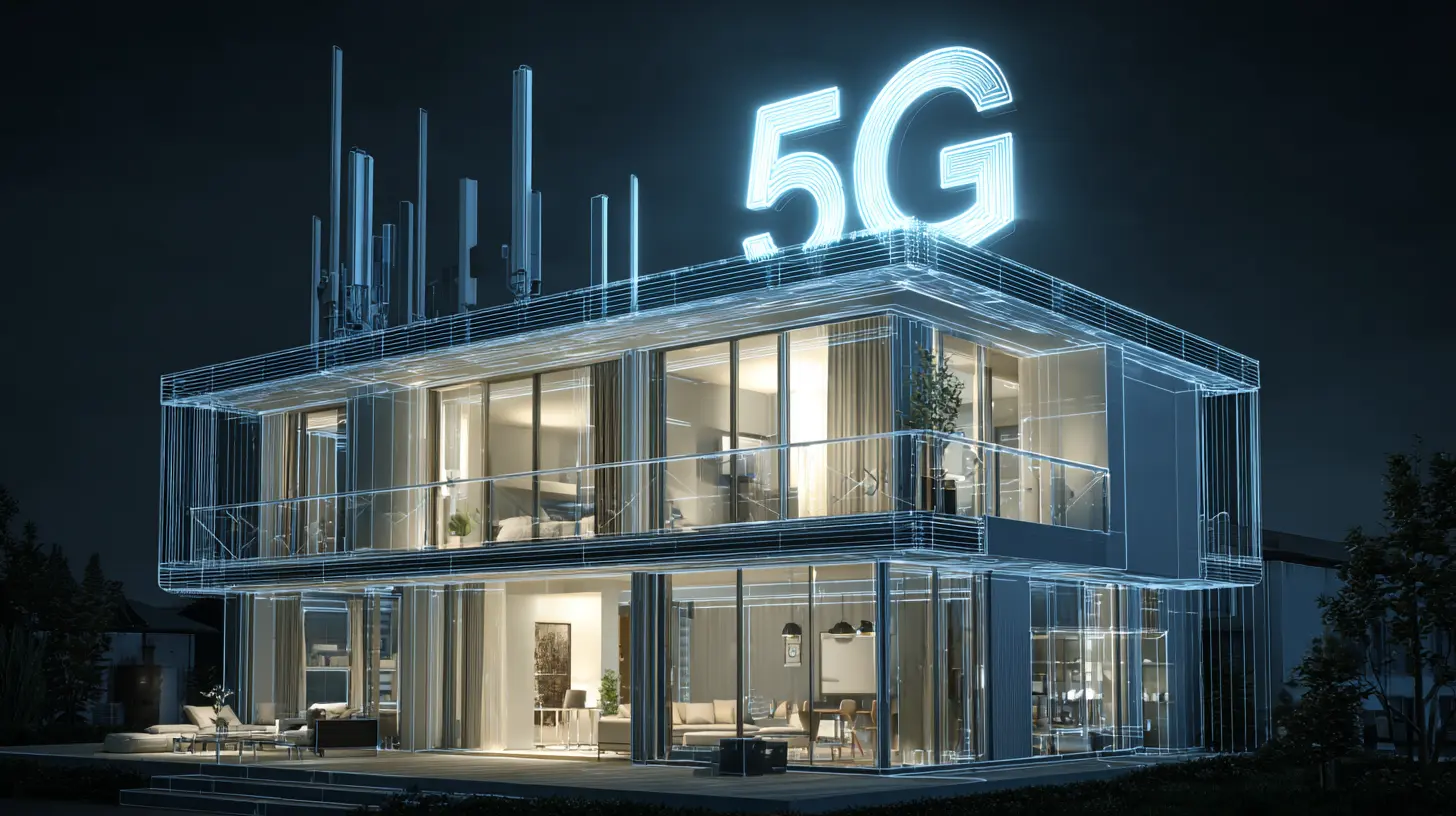
Before we dive into the future, we need to be honest about the present. Wi-Fi 6 is good. Wi-Fi 6E is better. But they both suffer from a fundamental problem: congestion. Think of your home network as a busy two-lane road. Every device in your house - your laptop, your TV, your phone, your kid's tablet, your smart fridge, your thermostat - is a car trying to get on that road. When everyone tries to move at once, you get a traffic jam. That is why your video call stutters when your spouse starts streaming a 4K movie.5G, specifically the standalone (SA) 5G networks that will be widespread by 2027, is like building a 20-lane superhighway with a dedicated express lane for every single car. It is not just faster; it is designed for massive device density. We are talking about supporting up to one million devices per square kilometer. In your home, that means every single sensor, every light bulb, every lock, and every appliance can have its own dedicated, low-latency connection without fighting for airtime.
The End of the "Hub" Era
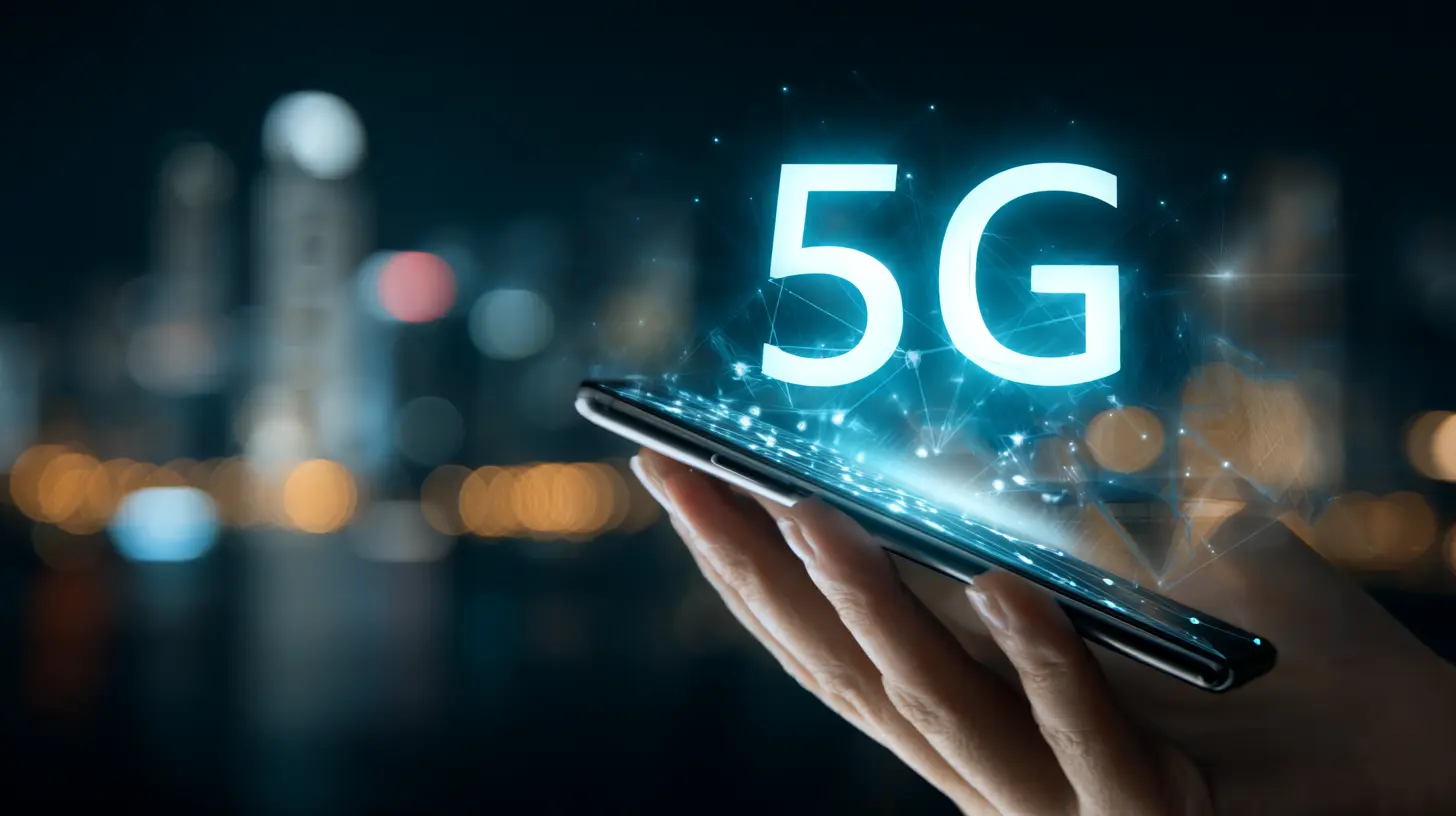
Right now, most smart homes rely on a central hub - a bridge, a smart speaker, or a dedicated controller. This hub acts as a translator and a traffic cop. It receives commands from your phone, translates them into Zigbee, Z-Wave, or Wi-Fi, and sends them to your devices. This adds a step. It adds delay. And if the hub goes down, your whole house goes dumb.By 2027, 5G will eliminate the need for that middleman. Your devices will connect directly to the cellular network, just like your phone does. This is called "native 5G" or "5G IoT" (Internet of Things). A smart lock from one company will talk directly to a smart light from another company, sharing data and commands without needing a translator. It is like everyone suddenly speaking the same language fluently, instead of relying on a single interpreter who keeps getting tired.
This shift has huge implications. First, it means reliability. Your smart home will not be dependent on your home internet connection or your power supply to the hub. As long as the 5G tower is up, your house works. Second, it means speed. We are talking about latency dropping from the 50-100 milliseconds (typical on Wi-Fi) to under 10 milliseconds, and often under 1 millisecond. That is the difference between a light turning on "after you flip the switch" and it turning on "the exact instant you think about it."
Real-Time, Not Near-Time
Let me give you a concrete example of what this latency difference actually feels like. Imagine you have a smart security camera. On Wi-Fi, there is a noticeable delay between the motion happening and you seeing it on your phone. It is usually a second or two. That is "near-time." With 5G, that delay drops to almost nothing. You are watching the event as it happens, not a second after. For security, that is a game changer.But it goes deeper. Think about a smart thermostat. Today, it learns your schedule. It turns the heat down when you leave and up when you come home. That is reactive. With 5G, the thermostat can talk to your car's GPS, your calendar, and the local weather service in real time. It knows you are stuck in traffic and will be 15 minutes late. It adjusts the temperature not based on a schedule, but on your actual, real-time arrival. It is predictive, not reactive. The house is already comfortable by the time you walk in, not starting to warm up when you are three blocks away.
This kind of seamless, real-time integration is only possible with the ultra-reliable low-latency communication (URLLC) that 5G provides. By 2027, this will be standard. Your home will not just follow commands; it will anticipate your needs.
The Bandwidth for the Bandwidth-Hungry
Let's talk about the stuff that eats data. We are moving toward 8K video, high-resolution spatial audio, and immersive AR/VR experiences. Imagine putting on a pair of lightweight AR glasses in your living room. You see a virtual screen floating in the air, playing a movie. You see virtual furniture placed in your actual room to see how it fits. You see a holographic video call from your friend who is "standing" right there in front of you.This is not science fiction. It is coming, and it requires massive bandwidth. Wi-Fi struggles with a single 4K stream. By 2027, your home will need to handle multiple 8K streams, multiple spatial audio feeds, and multiple AR/VR overlays simultaneously. 5G's enhanced mobile broadband (eMBB) is the only technology that can deliver that kind of throughput without choking. It is the difference between trying to drink a milkshake through a coffee stirrer and using a fire hose.
Your smart home will become a media powerhouse. Your living room will transform into a cinema, a concert hall, or a virtual office with a single voice command, and the transition will be instant.
The Privacy and Security Tightrope
Now, let's get real for a second. All this connectivity comes with a massive elephant in the room: privacy and security. We are talking about every single device in your home having its own direct cellular connection. That is a lot of data flowing out of your house. And if a bad actor gets into the 5G network, they are not just messing with your Wi-Fi; they are potentially controlling your locks, your cameras, and your appliances.By 2027, this will be the central tension of the smart home. On one hand, 5G offers better security than Wi-Fi because it uses SIM-based authentication and network slicing. A "slice" of the network can be dedicated to your home, making it much harder for outsiders to intercept. On the other hand, the sheer number of endpoints creates a massive attack surface.
The industry will have to solve this. I expect to see widespread adoption of zero-trust architectures where every device is constantly verified. I also expect to see a push for local processing (edge computing) where sensitive data is analyzed on the device itself, not sent to the cloud. The smart home of 2027 will be smarter about what it shares and with whom. But make no mistake: you will have to make conscious choices about how much convenience you are willing to trade for privacy.
The Smart Home as a Utility
Here is another way to think about it. Right now, your smart home is a hobby. You buy gadgets, you set them up, you troubleshoot when they break. It is a project. By 2027, it will become a utility, like electricity or running water. You will not think about your smart home any more than you think about your water heater. It will just work.This shift is driven by the fact that 5G is a carrier-grade service. Your internet service provider (ISP) and your mobile carrier will merge offerings. You will buy a "home connectivity plan" that includes your 5G home internet, your mobile data, and your smart home device management. The carrier will handle the setup, the security, and the updates. You will just plug in a device, and it will automatically join your network. No more fumbling with apps and passwords.
This integration will extend beyond the four walls of your house. Imagine your car, your office, and your home all sharing a single, seamless network. You start a movie in your car on the way home, and it automatically pauses and resumes on your living room TV when you walk in. Your office calendar syncs with your home's energy management system to pre-cool the house before you arrive. This is the "ambient computing" that everyone has been talking about, and 5G is the backbone that makes it possible.
The Cost: The Great Divide
I would be lying if I said this future was for everyone. The rollout of 5G smart home technology will be expensive. The devices themselves will cost more initially. The data plans will likely be tiered, with premium plans for heavy smart home users. And the coverage will not be equal. Rural areas will lag behind urban centers, creating a "smart home divide."By 2027, we will see a two-tier system. In dense cities, your home will be a fully integrated, 5G-powered ecosystem. In rural areas, you will still be relying on Wi-Fi and maybe a slower 5G connection. This is a reality we need to acknowledge. The technology is incredible, but it is not a magic wand that fixes infrastructure gaps.
However, the cost will come down. As 5G chips become cheaper and more energy-efficient, even basic devices like smart plugs and sensors will adopt them. The economies of scale will kick in. By 2030, a 5G-enabled smart light bulb will cost the same as a Wi-Fi one does today. But in 2027, we will be in the early adopter phase where the best integration comes at a premium.
A Personal Prediction
I think the biggest change by 2027 will not be the technology itself, but how we interact with it. Today, we talk to our devices. We give commands. "Alexa, turn off the lights." "Hey Google, set the thermostat to 72." This is a command-and-control interface. It is clunky. It is like having to tell your butler to do everything.By 2027, you will not need to talk to your devices. They will just know. The combination of 5G, AI, and a dense network of sensors will create a home that observes, learns, and acts. You will walk into a room, and the lights adjust to your preferred brightness and color temperature based on the time of day. The music changes to your mood, detected by your wearable. The temperature adjusts based on your body heat. You will not say a word. The house will just... respond.
That is the real impact of 5G on smart home integration. It is not about making your gadgets faster. It is about making them invisible. It is about removing the friction between you and your environment. By 2027, the smart home will stop being a collection of smart devices and start being a truly intelligent space. And honestly? I cannot wait.
all images in this post were generated using AI tools
Category:
Smart Home TechnologyAuthor:

Ugo Coleman
Discussion
rate this article
2 comments
Rory Jones
Great article! The potential of 5G to enhance smart home integration by 2027 is exciting. It's inspiring to think about how these advancements can improve our daily lives and create more connected environments.
September 14, 2026 at 2:56 AM
Ugo Coleman
Thank you! I'm glad you found it inspiring. The future of smart homes with 5G is indeed thrilling.
Vanta Hunter
The article presents a thoughtful look at 5G's potential to enhance smart home technology by 2027. Its insights on speed and connectivity challenges are particularly relevant for future developments.
May 27, 2026 at 4:43 AM
Ugo Coleman
Thank you for your thoughtful comment! I'm glad you found the insights on speed and connectivity challenges useful for future developments in smart home technology.