The Real Cost of Owning an Electric Vehicle After Five Years
29 November 2026
The sticker price of an electric vehicle tells you almost nothing about what it will cost to own. Five years is the window where the real financial picture emerges: warranties start expiring, tires wear out, insurance premiums settle into a pattern, and the gap between early-adopter enthusiasm and everyday ownership becomes impossible to ignore. Plenty of EV owners come out ahead. Plenty of others get surprised by costs they never modeled. This article breaks down where the money actually goes, why the numbers move the way they do, and how to run your own math before you sign anything.
Why the Five-Year Mark Matters
Most ownership analyses focus on the first year or two, when a new EV is under full warranty and the novelty masks the economics. By year five, several things have changed simultaneously.The bumper-to-bumper warranty, typically three to four years, is gone. The high-voltage battery warranty, usually eight years or 100,000 miles, is still active but approaching its later stages. Factory tires, which are often chosen for low rolling resistance rather than longevity, have been replaced at least once. Insurance rates have had time to reflect real repair data for your model. And if you financed the car, you are likely past the steepest part of the depreciation curve but still carrying a balance that may exceed the car's market value.
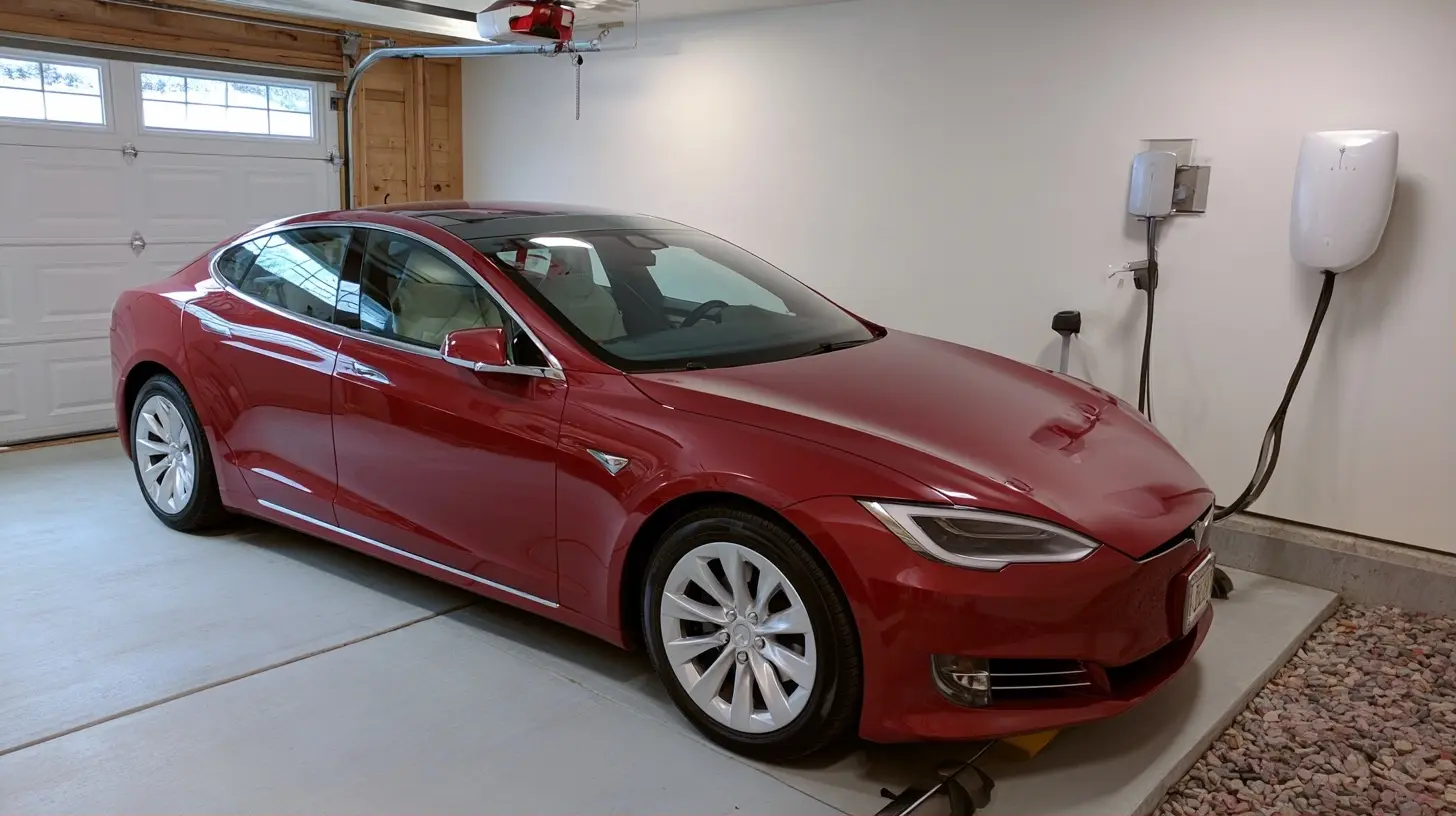
Five years is also long enough for the ownership experience to expose the difference between theoretical and actual costs. A driver who planned to charge at home but ended up relying on public fast charging will have a very different five-year total than someone with a garage and a level 2 charger. That divergence is where most budget projections fail.
Depreciation: The Largest Line Item Nobody Talks About
Depreciation is almost always the biggest cost of new car ownership, electric or not, and EVs have had a volatile depreciation story.Early EVs depreciated hard, partly because of generous federal and state incentives that pushed down effective transaction prices, and partly because rapid technology turnover made older models feel obsolete. A three-year-old EV with 200 miles of range looked dated next to a new model with 300. That dynamic has softened as range improvements have slowed and the used EV market has matured, but it has not disappeared.
The practical consequence: if you buy new and sell at year five, depreciation can easily represent 40 to 55 percent of what you paid, depending on the model, the market, and how the incentives you claimed affected your effective purchase price. A $48,000 EV that sells for $24,000 at year five has cost you $24,000 in depreciation alone, or roughly $400 per month before you have paid for a single kilowatt-hour of electricity.
Two nuances matter here.
First, incentives distort the math in your favor if you keep the car. A $7,500 federal credit (subject to eligibility rules that have changed repeatedly) reduces your effective purchase price, but it also tends to depress used values because the next buyer cannot claim it. If you plan to sell at year five, part of that credit effectively gets handed to the next owner through a lower resale price. If you plan to keep the car for eight to ten years, you capture more of it.
Second, depreciation is not uniform across models. Vehicles from brands with strong software support, over-the-air updates, and a reputation for battery longevity tend to hold value better. Models that were discontinued, had well-publicized battery or charging problems, or came from brands that exited the market depreciate much faster. Before buying, check three-year-old resale values for the previous generation of the model you are considering. That is your best available proxy.
Fuel: Electricity Costs More Than the Brochure Suggests
The headline claim, that charging costs far less than gasoline, is true in many cases but not all. The variance is enormous, and it is entirely dependent on where the electrons come from.Home charging
If you have a garage or dedicated parking with access to a 240-volt outlet, home charging is the cheapest way to run an EV. Residential electricity rates in the United States commonly fall somewhere between roughly 12 and 25 cents per kilowatt-hour, with significant regional variation. An efficient EV might use 28 to 32 kWh per 100 miles. At 16 cents per kWh, that works out to roughly $4.50 to $5.10 per 100 miles.Compare that with a gasoline car getting 30 mpg at $3.50 per gallon, which costs about $11.70 per 100 miles. Over 12,000 miles per year, the EV saves roughly $800 annually at those rates. Over five years, that is about $4,000, before accounting for any home charger installation.
Installation is a real cost. A level 2 charger plus electrical work commonly runs $500 to $1,500, sometimes more if your panel needs upgrading or the run from the panel to the parking spot is long. Some utilities offer rebates that offset part of this. Factor it in as a one-time year-one expense.
Time-of-use rates can push home charging costs lower still, sometimes to 6 to 10 cents per kWh overnight. If your utility offers such a plan and your schedule allows overnight charging, the savings compound meaningfully over five years.
Public fast charging
This is where budgets break. DC fast charging prices vary widely by network, region, and membership status. Rates of 35 to 60 cents per kWh are common, and some networks price by the minute in states that allow it, which penalizes vehicles with slower charging curves. At 45 cents per kWh and 30 kWh per 100 miles, you are paying about $13.50 per 100 miles, which is more than the gasoline comparison above.A driver who cannot charge at home and relies primarily on fast charging should not assume an EV will save money on fuel. In some cases it will cost more than a efficient hybrid. Run the numbers with your actual charging situation before assuming the fuel savings.
The five-year blend
Most owners fall somewhere in between: home charging most of the time, fast charging on road trips. A realistic five-year fuel estimate for a typical owner might be $2,500 to $4,500 in electricity, compared with $5,000 to $7,000 in gasoline for a comparable vehicle. The savings are real but rarely as dramatic as marketing suggests, and they evaporate entirely for apartment dwellers without reliable home charging.
Maintenance: Lower, But Not Zero
The "no maintenance" claim is overstated. EVs do have fewer moving parts, no oil changes, no transmission fluid, no spark plugs, and no exhaust system. Regenerative braking extends brake pad life considerably. Over five years, this adds up to genuine savings, often $1,500 to $3,000 compared with a gasoline vehicle of similar size.But EVs are not maintenance-free, and several costs catch owners off guard.
Tires
EVs are heavier than comparable gasoline cars because of the battery pack, and electric motors deliver torque instantly. Both factors accelerate tire wear. Many owners find they replace tires every 25,000 to 35,000 miles rather than the 40,000 to 50,000 they might get on a lighter car. EV-specific tires, designed for low rolling resistance and higher load ratings, often cost more per tire. Budget $800 to $1,400 per set, and expect at least one replacement within five years, possibly two if you drive aggressively or cover high mileage.Cabin air filters and brake fluid
These are minor but real. Cabin filters typically need replacement annually or every 15,000 miles, at $30 to $80 depending on whether you do it yourself. Brake fluid should be flushed every few years regardless of brake pad wear, because moisture absorption is a time-based issue, not a wear-based one.Coolant
Many EVs use liquid cooling for the battery and drive units. Coolant service intervals vary by manufacturer, but some models require it within the first five years. Check your specific model's schedule rather than assuming it never comes up.The inspection question
Some states require annual safety inspections. EVs generally pass easily, but make sure tires, brakes, lights, and suspension components are in order. Suspension wear is worth watching because the extra weight of an EV stresses bushings and dampers more than a lighter car would.Insurance: The Quiet Budget Killer
Insurance is the cost category where EV owners most often get blindsided. Premiums for EVs tend to run higher than for comparable gasoline vehicles, and the reasons are structural rather than temporary.Repair costs are higher. Battery packs are expensive, and even moderate collision damage can total a vehicle if the pack is compromised. Aluminum-intensive construction on some models raises body repair costs. Parts availability has improved but remains uneven for some brands, which extends repair times and increases the cost of rental car coverage during repairs.
The result: a five-year insurance total for an EV might run $1,000 to $2,000 higher than for a comparable gasoline car, depending on your location, driving record, and the specific models compared. That is not a rounding error. Get quotes for the exact EV you are considering before you buy, using your actual address and driving history, and compare them against quotes for a gasoline alternative. Do not rely on national averages.
Battery Degradation: The Cost That May or May Not Arrive
Battery degradation is the great unknown in EV ownership economics, and it is the topic most likely to generate more anxiety than the data warrants.Real-world data from fleet vehicles and high-mileage owners suggests that most modern EV batteries lose somewhere in the range of 8 to 15 percent of their original capacity over the first five years, with the steepest decline early on and a slower taper afterward. That means a car rated at 250 miles when new might realistically deliver 215 to 230 miles at year five. For most daily driving, that difference is invisible.
The cost only becomes real in three scenarios.
First, if your daily range needs sit close to the vehicle's original range, a 10 to 15 percent decline can push you into more frequent public charging or make winter driving stressful. Buyers should build in a buffer rather than sizing the battery to their exact commute.
Second, if the battery fails outright within the warranty period, the manufacturer replaces it, usually at no cost, though you may wait weeks for parts. Outside the warranty, replacement costs vary enormously by manufacturer and pack size, and can run into the tens of thousands of dollars on some models. This is a tail risk, not an expected cost, but it is worth understanding before purchase.
Third, degradation affects resale value. A five-year-old EV with a health report showing 88 percent capacity will sell more easily than one showing 78 percent. Some manufacturers now provide battery health diagnostics through the app or at service centers, and third-party services have emerged to certify battery condition. If you plan to sell at year five, having that documentation helps.
The practical advice: favor vehicles with active thermal management for the battery, avoid habitual DC fast charging if you can, and do not store the car at very high or very low states of charge for extended periods. These habits are widely recommended by manufacturers and supported by battery chemistry research, and they cost nothing to follow.
Repairs and Warranty Gaps
Years four and five are when the bumper-to-bumper warranty ends and you start paying for failures yourself. What tends to break on an EV in that window?Infotainment and software issues are common, and while many are fixed by over-the-air updates, hardware failures like screens, control modules, and sensors are not cheap. A failed charge port door mechanism, a malfunctioning onboard charger, or a sensor failure in an advanced driver assistance system can each run several hundred to over a thousand dollars.
Extended warranties are a personal decision. The math depends on the model's reliability record, your risk tolerance, and the cost of the specific plan. For EVs from brands with strong reliability histories and long battery warranties, many owners reasonably skip them. For models with a spotty service record or expensive electronics, a plan can make sense. Read the exclusions carefully; some plans exclude the very components most likely to fail.
The Home Charger and Electrical Upgrade
The charger itself is a modest cost, but the electrical work behind it is where budgets can swing by thousands of dollars.A straightforward install, with a short run from a panel that has capacity, might cost $500 to $900 including the unit. If your electrical panel is full or outdated, you may need a panel upgrade, which can add $1,500 to $3,000 or more. If your parking is detached or far from the panel, conduit and trenching costs add up quickly.
Renters and apartment dwellers face a different problem: they may not be able to install a charger at all. Some landlords and property managers are increasingly willing to allow installations, and some states and utilities offer programs to support multifamily charging, but availability is uneven. If you cannot charge at home or at work, factor in a much higher public charging cost and more time spent charging. That time has value even if it does not appear on a receipt.
Incentives: Use Them, But Do Not Let Them Distort Your Math
Federal, state, and utility incentives can meaningfully reduce the cost of an EV, but they change frequently and eligibility rules are specific. The federal clean vehicle credit has been revised multiple times, with income caps, price caps, domestic assembly requirements, and battery sourcing rules that affect which vehicles qualify. State programs vary from generous rebates to nothing at all. Utilities sometimes offer charger rebates or discounted overnight rates.The trap is buying a car because the incentive makes it look affordable in year one, without modeling years two through five. An incentive is a one-time discount, not an ongoing subsidy. If the car's insurance, tires, and charging costs do not fit your budget without the credit, they will not fit with it either.
Also check whether your state charges EV owners an annual registration fee to offset lost gas tax revenue. Several states have implemented such fees, typically $100 to $250 per year, and more are considering them. Over five years, that is $500 to $1,250 that belongs in your model.
Putting the Five-Year Numbers Together
Here is a realistic illustrative comparison for a mid-priced EV versus a comparable gasoline vehicle, assuming 12,000 miles per year, home charging for most needs, and average insurance and maintenance patterns. These are planning estimates, not quotes.| Cost category | EV (5 years) | Gasoline (5 years) |
|---|---|---|
| Depreciation | $22,000 to $26,000 | $18,000 to $22,000 |
| Fuel/energy | $2,500 to $4,500 | $5,500 to $7,000 |
| Insurance | $7,500 to $9,500 | $6,000 to $7,500 |
| Maintenance and tires | $2,500 to $3,500 | $4,000 to $5,500 |
| Home charger install | $500 to $1,500 | $0 |
| Registration fees | $500 to $1,250 | $300 to $600 |
| Approximate total | $35,500 to $46,250 | $33,800 to $42,600 |
The takeaway is not that EVs are always cheaper or always more expensive. It is that the two totals land in a similar range for many buyers, and the outcome depends heavily on individual circumstances: whether you can charge at home, which models you compare, your insurance profile, and how long you keep the car.
Buyers who charge at home, choose a model with strong resale value, and keep the car beyond five years tend to come out ahead. Buyers who rely on public fast charging, choose a rapidly depreciating model, and sell at year five often find the savings did not materialize.
Common Mistakes and How to Avoid Them
Comparing sticker prices instead of total cost of ownership. The purchase price is the starting point, not the answer. Build a five-year spreadsheet with depreciation, energy, insurance, maintenance, tires, fees, and charger installation.Assuming home charging is available when it is not. Confirm you can install a charger, or that your building has reliable charging, before you buy. Verbal assurances from a landlord are not enough.
Ignoring insurance quotes until after purchase. Get quotes for the specific model with your specific details before you commit. A difference of $100 per month changes the five-year math by $6,000.
Overbuying battery capacity. Larger packs cost more, weigh more, and often depreciate harder. Buy the range you need with a buffer for winter and degradation, not the maximum available.
Skipping the pre-purchase battery health check on used EVs. If you are buying used, request a battery health report or have a qualified technician inspect the pack. This is the single most important diligence step for a used EV.
Forgetting state EV fees and toll policies. Some states charge annual EV fees, and some toll authorities offer EV discounts or exemptions. Check both.
Treating incentives as permanent. They are not. Model your budget as if the incentive did not exist, then treat any credit as a bonus.
The Bottom Line
Owning an electric vehicle for five years is neither the financial slam dunk of the marketing brochures nor the money pit of the skeptics. It is a set of trade-offs that reward planning. The biggest costs, depreciation and insurance, are the ones buyers research least. The costs that get the most attention, fuel and maintenance, are real but smaller and more variable than most people expect.The single most useful thing you can do is build your own five-year model before you buy, using your actual electricity rate, your actual insurance quotes, your actual charging situation, and realistic resale estimates for the specific model. If the numbers work with conservative assumptions, they will almost certainly work in practice. If they only work with optimistic ones, that is your answer.
all images in this post were generated using AI tools
Category:
Electric VehiclesAuthor:

Ugo Coleman